


How Much Do Influencers Cost? Pricing Benchmarks for 2026
How much do influencers cost? This guide will help you navigate influencer marketing deals and make strategic decisions for your brand.
Table of Contents
When it comes to creator campaigns, "How much do influencers cost?" is often the question that makes brands pause. Influencer pricing isn't fixed like a menu. It varies based on factors such as engagement, follower count, and other performance metrics, as well as the specifics of the campaign (whether it's a 45-second TikTok, an in-depth Instagram tutorial, or a series of posts across multiple platforms). Costs can also change depending on usage rights or exclusivity agreements.
Understanding these variables can help brands set realistic budgets and choose partnerships that deliver the best return on investment (ROI). In this guide, we'll provide pricing estimates for hiring an influencer and lay out the key elements that influence those costs.
How Much Do Influencers Cost: Pricing Benchmarks
Brands are increasingly prioritizing engagement and audience quality over pure reach. However, follower count is still a useful metric when it comes to influencer pricing because most will take their reach and popularity level into account when charging brands.
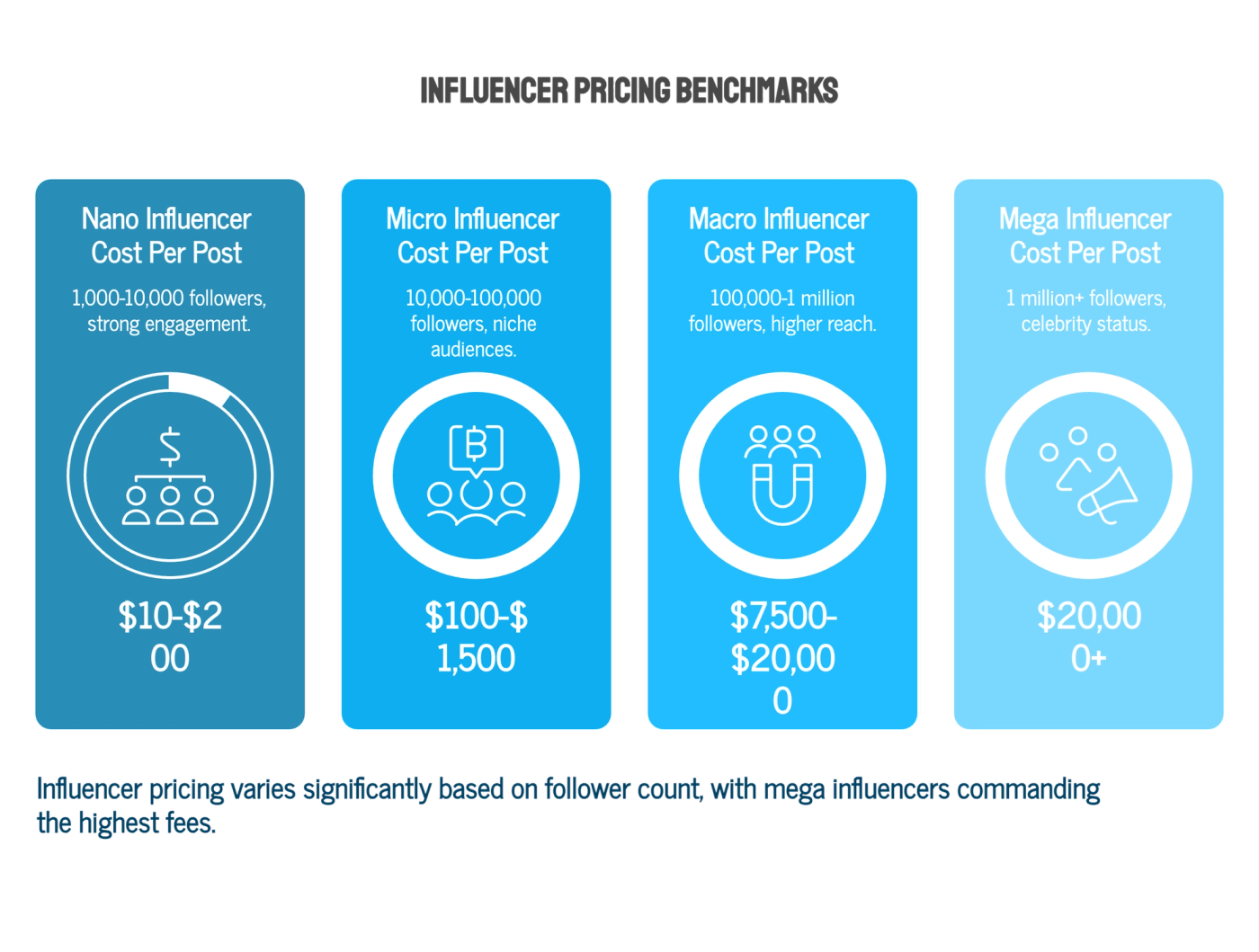
- Nano influencers (1,000-10,000 followers) are often the most affordable option as they typically charge anywhere from $10 to $200 per post. Despite their smaller audiences, nano influencers normally have strong engagement rates and loyal followers.
- Micro influencers (10,000-100,000 followers) generally charge between $100 and $1,500 per post. They are popular among brands because they balance affordability and reach. Their audiences are often more niche-focused, making them ideal for targeted campaigns.
- Macro influencers (100,000-1 million followers) have larger audiences and often work with established brands. Their reach and content production quality is usually higher, which can increase pricing. Macro influencers typically charge between $7,500 and $20,000 per post.
- Mega influencers' (1 million+ followers) fees can range from $20,000 to hundreds of thousands of dollars per post or campaign. These are creators who have grown to the point where they became celebrities within the influencer industry and real celebrities who earn money from endorsements in addition to their main profession (e.g. athletes, actors, musicians).
As you can see, the follower count already gives a broad idea of how much influencers cost per post. But partnerships with brands often involve other important factors such as engagement, deliverables, and exclusivity agreements.
UGC Creators: A Different Pricing Model
When it comes to UGC creators, brands pay per video or for monthly video packages. The cost of a UGC creator ranges from $50 to $300 per video, with newer and emerging creators typically costing less than established ones.
Monthly packages can cost anywhere from $100 to $2,000 for smaller brands building an online presence. For growth-stage companies running higher-volume campaigns with multiple creators and formats, monthly packages typically range from $3,000 to $10,000.
How Costs Vary Across Social Media Platforms
Not all platforms command the same rates. First, audience behavior is not the same everywhere. For example, a nano influencer might have more engagement on their TikTok, where they share their daily vlogs or immediate thoughts and opinions, than their Instagram. On the other hand, mega influencers might have more views and reactions on their Instagram stories, which feels more up close and personal than the produced photos and videos on their feed.
Want to put this into practice?
SideShift connects you with vetted UGC creators who actually deliver. Start your free trial and post your first job in under 10 minutes.
Second, the platform pretty much determines the content format. For example, YouTube is a video-only platform ideal for long-form content, whereas TikTok focuses on short and dynamic videos. This content takes different amounts of time, production, editing, and overall effort to make and all of that affects pricing.
Content that demands more effort will typically cost more than content that is easier to make. In this scenario, you may find macro influencers that will charge less for a static post on Instagram than a micro influencer will charge for a Reel or YouTube video.
Here's a ballpark price range per social media platform:
Instagram is a versatile territory, with three main content formats that can be included in a brand deal, and prices normally vary by the effort level each demands.
- Static image: For a static image, you can expect a price range from $10-$100 with nano influencers, from $100 to $1,000 with micro influencers, from $5,000 to $10,000 with macro influencers, and from $10,000 to $100,000+ with mega influencers.
- Reels: The average price for a Reel ranges from $20 to $150 with nano influencers, from $200 to $1,500 with micro influencers, from $7,500 to $20,000 with macro influencers, and from $20,000 to $250,000+ with mega influencers.
- Story: For a Story you can expect a price range from $5 to $50 with nano influencers, from $50 to $500 with micro influencers, from $2,500 to $7,500 with macro influencers, and from $7,500 to $50,000+ with mega influencers.
TikTok
TikTok videos are mostly short and dynamic, although the platform now also supports videos up to 10 minutes long. They tend to perform better when they feel less like an ultra-produced ad and more native to the platform. The average pricing for nano influencers ranges from $10 to $50, from $50 to $500 with micro influencers, from $5,000 to $15,000 with macro influencers, and from $15,000 to $250,000+ with mega influencers.
YouTube
YouTube is generally one of the most expensive influencer platforms, as creating long-form videos requires significant time, planning, filming, and editing. A sponsored YouTube video can cost from $200 to $2,000 per video with nano and micro, from $10,000 to $50,000 with macro influencers, and from $50,000 to $500,000+ with mega influencers.
Other Factors That Influence Pricing
Engagement, niche, usage rights, and exclusivity agreements can significantly affect how much influencers cost for a brand.
- Engagement rate: An influencer with highly engaged followers may charge more than another creator with a larger audience but lower engagement. Likes, comments, shares, and saves all indicate how actively an audience interacts with content.
- Niche or industry: Certain industries skew higher than others. For instance, beauty and fashion creators are known for being more expensive because these niches are competitive and have a high consumer demand.
- Content production: Professional photography, video production, editing, and creative direction all increase the value of influencer content. The more an influencer is expected to put into creating sponsored content, the more they will charge for it, naturally.
Want to put this into practice?
SideShift connects you with vetted UGC creators who actually deliver. Start your free trial and post your first job in under 10 minutes.
- Usage rights: If a brand wants to use an influencer's content in paid ads, on its website, in other marketing materials, or reuse influencer-created content in any shape or form, additional licensing fees may apply.
- Exclusivity agreements: Brands sometimes require influencers to avoid promoting competitors for a specific period. These exclusivity clauses typically increase campaign costs.
What Brands Should Consider Before Hiring an Influencer
Investing in influencer marketing and evaluating pricing becomes easier when you analyse a few key points.
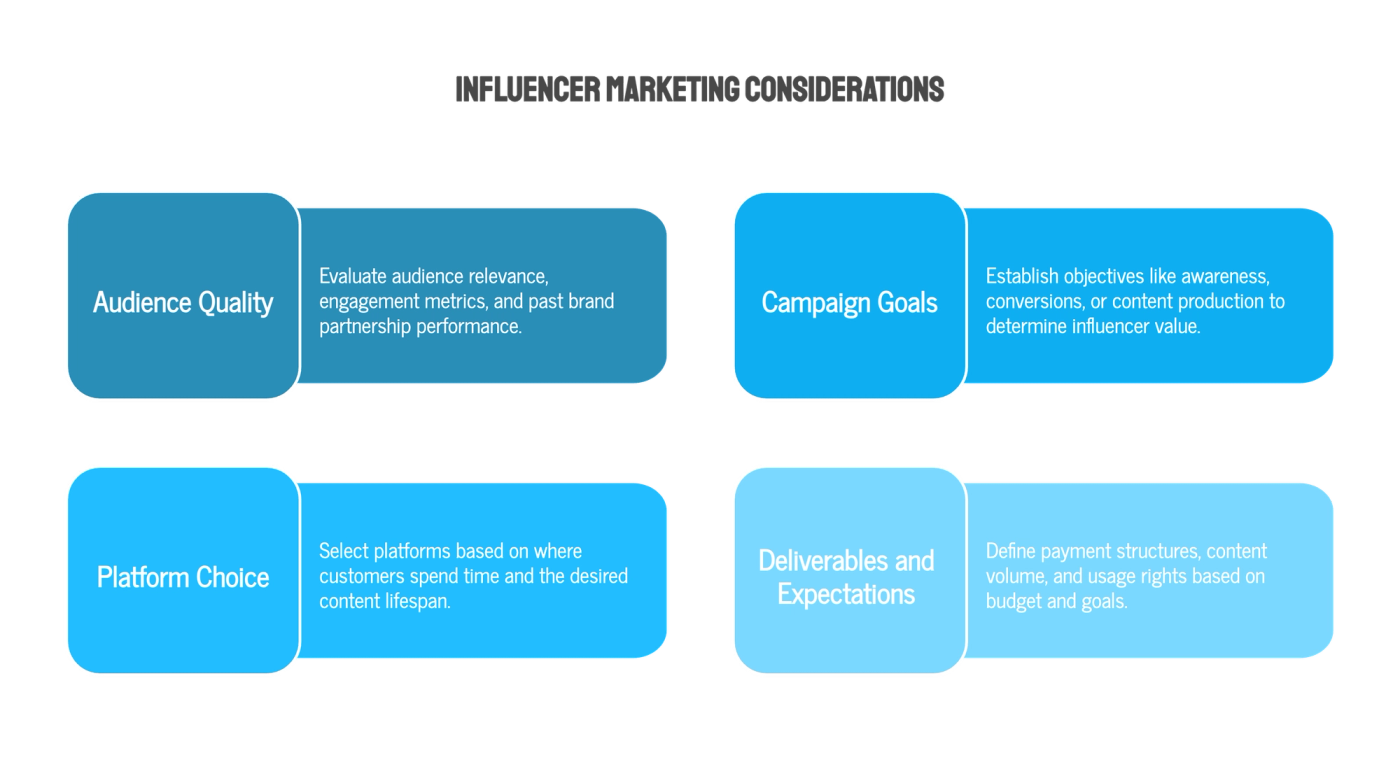
Audience Quality
Evaluate whether the influencer's audience matches your target customer. A creator with fewer followers but a highly relevant audience can often outperform a larger influencer with broader appeal.
Next, review engagement metrics. High follower counts can look impressive, but engagement provides a better indication of audience trust and influence. A quick way to check: look at the quality of the comments, not just the comment count. Are people tagging friends and asking questions, or just dropping emojis? Genuine conversation in the comments is a much stronger signal than a high like count alone.
It's also worth examining previous brand partnerships. Look for creators who produce authentic sponsored content that feels natural to their audience, and check how their followers reacted to past sponsored posts versus their organic ones. A big drop in engagement on branded content is a red flag worth asking about.
Campaign Goals
Establish clear campaign goals before negotiating pricing. Whether the objective is brand awareness, website traffic, lead generation, or direct sales, your goals will determine which influencers offer the best value for that specific purpose.
- If the goal is brand awareness, prioritize reach, video views, and creators with strong storytelling skills. Follower count and impressions matter more here than a hard conversion metric.
- If the goal is conversions or sales, look for creators with high engagement rates, a track record of driving link clicks or promo code usage, and an audience that closely matches your customer profile. Trust matters more than reach.
- If the goal is content production at scale, prioritize creators with strong production quality and brand alignment over following size, since reach isn't the objective here. UGC creators are often the right fit.
Matching the influencer to the goal rather than defaulting to whoever has the biggest following is usually what separates a campaign that performs from one that just looks good on paper.
Platform Choice
You should evaluate where your customers spend the most time rather than automatically choosing the largest platform. On top of that, it's worth considering where that content will live longer.
Each platform tends to be best suited for different outcomes:
- TikTok is strong for fast reach and virality. A creator with a modest following can generate millions of views in a matter of days if a video performs well. It's a good fit for awareness and trend-driven campaigns.
Want to put this into practice?
SideShift connects you with vetted UGC creators who actually deliver. Start your free trial and post your first job in under 10 minutes.
- Instagram works well for a mix of goals thanks to its variety of formats (Reels, Stories, static posts). It is a solid choice for brands that want both reach and engagement.
- YouTube content tends to have a longer lifespan, which can increase its overall value, especially if you're promoting a product or service that is a staple in your industry. It's often better suited for in-depth reviews, tutorials, or campaigns built around consideration rather than quick impressions.
You'll also find that a mix of platforms, rather than a single-platform strategy, often delivers the best results. For example, using TikTok or Instagram for reach and top-of-funnel awareness, and YouTube for deeper engagement and longer-term visibility. The right combination depends on your budget and campaign goals.
Deliverables and Expectations
Influencers can be paid a flat fee per post or a series of posts, on the same platform or across platforms, or based on their content conversion performance. Some creators might be willing to negotiate a discount if a brand is bundling multiple deliverables, depending on the scope of the job.
If you're running your first campaign, a common starting point is one to three pieces of content from a handful of creators (for example, a mix of nano and micro influencers) rather than a single large placement with one mega influencer. This gives you a chance to test messaging, formats, and creator fit before committing to a bigger budget.
When choosing deliverables, work backward from your goal and budget:
- Limited budget and awareness-focused? A few Stories or Reels from micro or nano influencers can stretch further than a single expensive post.
- Need something reusable? Factor usage rights into your deliverable count from the start, since that often affects price more than the content itself.
- Testing a new product or message? Consider a smaller batch of deliverables across multiple creators first, then double down on what performs before scaling.
Performance-based payment has lower risk for the brand and is more scalable. However, this type of deal is more widely accepted by nano influencers, micro influencers, and UGC creators. Macro and mega influencers will often require a flat fee installment plus the commission.
How to Negotiate the Cost with Influencers
Once you have a sense of typical pricing, the next step is figuring out how to negotiate a rate that works for your budget and reflects the value the influencer actually brings.
Go To the Conversation Prepared
When negotiating directly with creators, a few things tend to make these conversations go more smoothly.
- Come prepared with a budget range. A budget instead of a single number gives the influencer room to work with you rather than immediately countering.
- Be clear about deliverables and usage rights upfront. Influencers often price based on what's included and ambiguity is one of the most common reasons negotiations stall or rates end up higher than expected.
- Consider offering something beyond money. For example, free products, longer-term partnerships, or affiliate commissions, especially when working with nano or micro influencers who may value the relationship as much as the payout.
Want to put this into practice?
SideShift connects you with vetted UGC creators who actually deliver. Start your free trial and post your first job in under 10 minutes.
- Be open to their input. Influencers know their audience best and they may suggest a content format or approach that performs better than what you originally had in mind, sometimes at a lower cost.
Consider a Creator Marketing Platform
As campaigns grow in scale, negotiating with each creator individually becomes time-consuming, especially when you're managing partnerships across multiple platforms or working with dozens of influencers at once. A creator marketing platform centralizes the process: sourcing vetted creators, managing contracts, tracking deliverables, and processing payments in one place, so the operational side of running campaigns doesn't eat into the strategic side.
Find the Right Creators for Your Campaign with SideShift
The most successful creator partnerships are usually built on audience alignment, strong engagement, and authentic content, not just whoever has the biggest following. Finding creators who combine all of those qualities manually takes time most brands don't have.
SideShift connects brands with 800,000+ vetted creators across Instagram, TikTok, and YouTube. Post a campaign brief, review applications, manage contracts, and track performance, all in one place.
Join SideShift for free today.
FAQs
1. What is the average cost of an influencer?
On average, influencer costs range from $10 to $1,500 per post for nano and micro influencers, and climb into the thousands or tens of thousands for macro and mega influencers. Platform, content format, and engagement rate all play a role, so "average" really depends on the type of creator and campaign you're running.
2. How much do micro influencers cost?
Micro influencers often cost from $100 to $1,500 per post. However, this is simply a directional estimate. There are multiple variables that affect the total cost of working with micro influencers, such as content format, platform, and whether usage rights are included.
3. How much do Instagram influencers cost?
As a rough guide, nano and micro influencer posts on Instagram typically range from $10 to $1,500 depending on format, while macro and mega influencer posts start in the thousands and climb from there.
4. How much does it cost to advertise with influencers?
Advertising with influencers can range from as little as $10 for a nano influencer's post to $200,000+ for a large-scale campaign with a mega influencer or celebrity. Costs also depend on whether you're paying for a single post, a bundle of deliverables, or ongoing usage rights for ads. For most small to mid-sized brands, a reasonable starting budget falls somewhere between a few hundred and a few thousand dollars per campaign. Brands with tighter budgets may also want to consider UGC creators, who can offer a more cost-effective option since you're paying for the content rather than access to their audience.