


How to Find Micro Influencers on Instagram, TikTok, YouTube, and Facebook
Micro influencers drive real engagement, but finding the right ones takes strategy. Here's how to source them on Instagram, TikTok, YouTube, and Facebook.
Table of Contents
Micro influencers are one of the most underutilized assets in modern brand marketing, and many brands still go about finding them the hard way. Most default to follower count as a proxy for value. The logic is that a bigger audience equals more reach, which equals more impact. But reach without relevance rarely converts.
These types of creators operate in specific niches like fitness, home organization, personal finance, or sustainable fashion, and their audiences follow them because they consistently deliver credible, focused content in that space. That specificity is the real asset.
When a micro influencer recommends a product to an audience that trusts their opinion on exactly that category, it lands differently than a celebrity endorsement or a broad lifestyle post. It feels like a recommendation from someone who actually knows what they're talking about.
The result is higher engagement, stronger trust signals, and in most cases, better returns per dollar spent than partnerships with much larger creators.
Small-scale influencers, with their niche appeal, generate up to 60% more engagement than their more prominent counterparts. This is why brands that previously chased reach are increasingly shifting toward niche relevance and creator volume, with micro influencers sitting at the center of that model.
This guide breaks down exactly how to find them on the four biggest social platforms, what to look for once you do, and why many brands are skipping the manual search entirely in favor of platforms that handle the heavy lifting at scale.
What Counts as a Micro Influencer
Before you start searching, it helps to know what you're actually looking for. Micro influencers typically fall between 10,000 and 100,000 followers, but follower count alone is a weak filter. What makes micro influencers genuinely valuable is their engagement rate, niche relevance, and audience trust.
Their audiences often feel a personal connection, which means product recommendations land more like advice from a friend than an ad. For brands running performance-driven campaigns, that combination of credibility and engagement translates directly into clicks, conversions, and lower cost-per-acquisition.
How to Find Micro Influencers on Instagram
Instagram remains one of the richest ecosystems for micro influencer discovery, but it requires a deliberate approach rather than casual browsing.
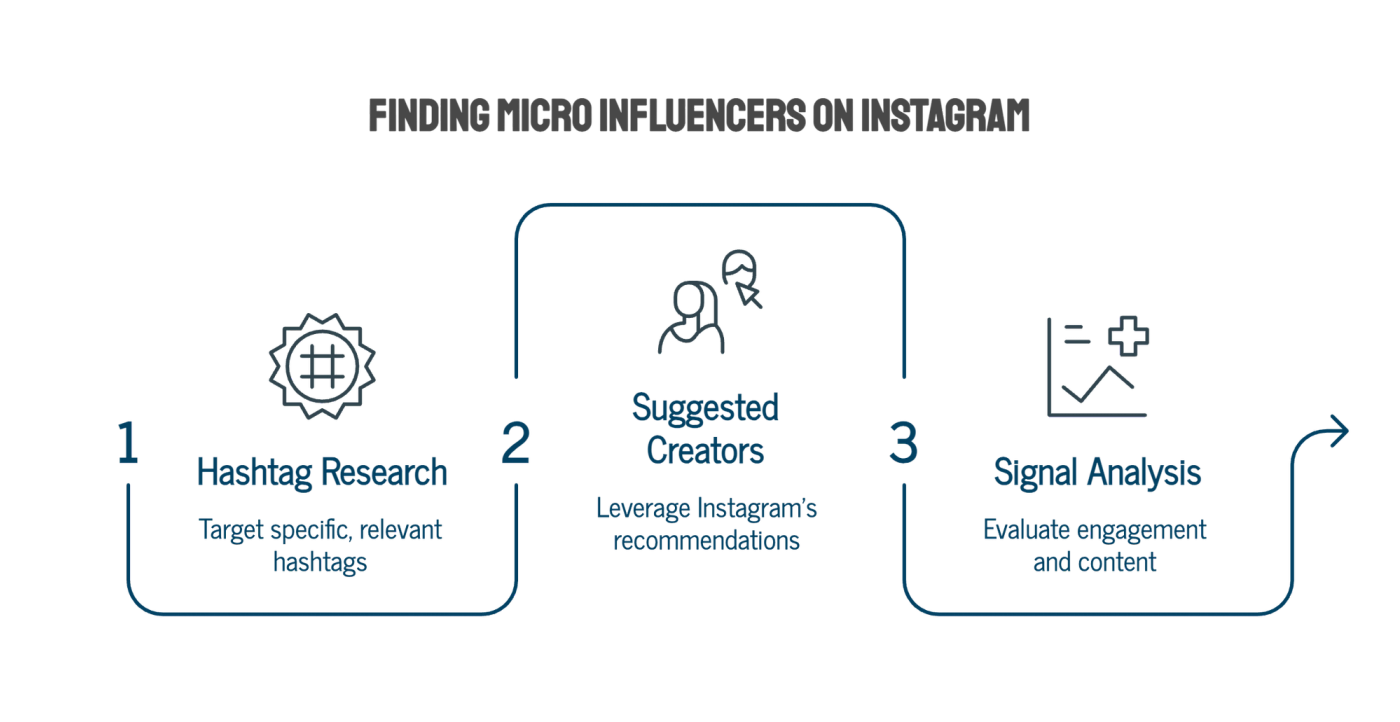
Start With Hashtag Research
Search hashtags that are specific to your brand category or customer problem rather than broad, generic tags. The goal is to look for communities and conversations that naturally align with your brand, not just creators with large audiences.
A hashtag like #dryskinroutine can help skincare brands find creators already making content around the exact concerns their products address.
Spend time in the “Recent” tab, not just “Top Posts,” because Recent surfaces active creators who are consistently posting but may not yet be heavily amplified by the algorithm. These creators are often more engaged, easier to reach, and more open to partnerships.
Use Instagram's Suggested Creators Feature
When you find a creator who fits your criteria, visit their profile and tap the arrow next to the follow button. Instagram will suggest similar accounts. This snowball method can help you build a list quickly without starting from scratch every time.
Want to put this into practice?
SideShift connects you with vetted UGC creators who actually deliver. Start your free trial and post your first job in under 10 minutes.
Look for These Signals Before You Reach Out
Not every creator who looks right on the surface will perform. These are the indicators that separate an engaged, conversion-ready audience from a passive one:
- Engagement rate above 3% (likes + comments divided by followers)
- Comments that look real and specific, not just emojis
- Content that stays consistently on-topic rather than jumping between trends
- A bio that mentions brand partnerships or collaboration interest
- Stories and Reels activity, not just static posts
Instagram’s native search is functional but limited. You can’t filter by engagement rate, location, or niche in any meaningful way. That often means a lot of manual scrolling and guesswork when trying to build lists quickly. Third-party tools or platforms built for creator discovery, like SideShift, can streamline the process and help you make more informed decisions faster.
How to Find Micro Influencers on TikTok
TikTok's algorithm creates a unique advantage for brands. Content from small creators can go viral just as easily as content from accounts with millions of followers. That means micro influencers on TikTok can punch well above their weight class.
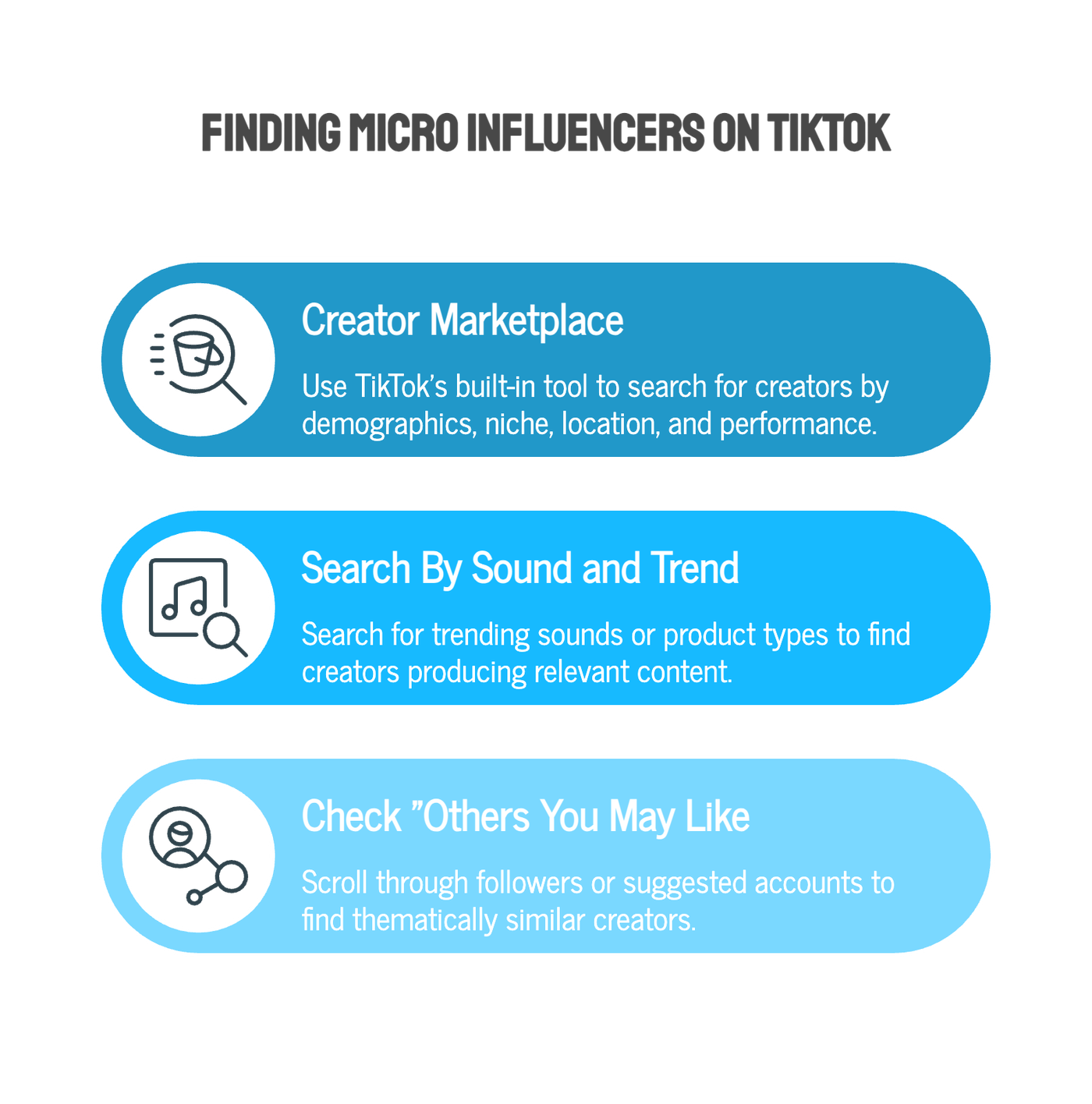
Use TikTok's Creator Marketplace
TikTok has a built-in Creator Marketplace that allows brands to search for creators by audience demographics, niche, location, and performance metrics. This is the most direct native tool available, though it's primarily designed for paid partnerships through TikTok's ad ecosystem. For brands running organic UGC campaigns, it's a useful research tool even if you don't execute through the platform.
Search By Sound and Trend, Not Just Hashtag
TikTok's search works differently than Instagram's. Searching for a trending sound or a specific product type (e.g., “Stanley Cup review” or “protein powder taste test”) will surface creators producing content in that exact format. The creators making that content regularly with solid view counts but modest follower counts are your micro influencer sweet spot.
Check the “Others You May Like” Section
After finding a strong creator, scroll through their followers or check TikTok's suggested accounts. TikTok's recommendation engine is powerful enough that it will surface thematically similar creators quickly.
One thing worth noting on TikTok is that views matter more than followers. A creator with 25,000 followers averaging 50,000 views per video is delivering more reach than their follower count suggests. Factor average views into your evaluation, not just subscriber numbers.
How to Find Micro Influencers on YouTube
YouTube micro influencers are particularly effective for product categories where demonstration matters like tech, beauty, fitness and food. The longer format gives creators room to build genuine credibility around a product rather than just flash it on screen.
Search With Specific Long-Tail Terms
Instead of only searching direct product terms, look for broader problem-solving or lifestyle queries your customers would naturally explore, like “how to layer skincare products,” “morning routine for dry skin,” or “best carry-on setup for weekend travel.” These searches often surface creators making highly relevant content even if they’re not directly reviewing products yet.
Want to put this into practice?
SideShift connects you with vetted UGC creators who actually deliver. Start your free trial and post your first job in under 10 minutes.
Creators with under 50,000 followers or subscribers who consistently rank for these niche searches are usually building strong audience trust in a crowded space, which makes them valuable partnership candidates.
Filter by Upload Date
After searching, use YouTube's filter to show results from the last six months or year. This tells you which creators are actively producing content right now, which matters more than historical performance when you're about to reach out for a partnership.
Evaluate the Comment Section Seriously
YouTube audiences are vocal, and the comment section reveals a lot. Look for creators whose audience asks follow-up questions, debates the content, or tags friends. That kind of engagement signals a community, not just an audience.
How to Find Micro Influencers on Facebook
Facebook's micro influencer landscape looks different from the other platforms. Much of the action happens inside Facebook Groups rather than on public creator profiles. This makes discovery harder but the opportunities more targeted.
Mine Facebook Groups in Your Niche
Search for active groups related to your product category. Within those groups, look for members who post consistently, get high engagement on their posts, and clearly have influence within that community. These aren't always people who call themselves influencers, which can actually work in your favor when it comes to authenticity and outreach.
Look at Facebook Pages With Consistent Engagement
Focus on Facebook Pages (not personal profiles) that cover your niche. Filter for pages with under 100,000 followers and look at their post engagement. A page with 20,000 followers getting 300+ reactions per post is a strong signal of an engaged micro community.
Facebook also allows you to run paid partnership content through creator pages, which gives you an additional distribution channel beyond organic reach.
The Problem With Platform-by-Platform Searching
Manual discovery for influencer marketing strategy can feel like a full-time job without the right tools. Searching hashtags, vetting profiles, calculating engagement rates, sending cold outreach, negotiating terms, and then managing contracts and payments across dozens of creators is an operational nightmare before you've even thought about content quality or campaign performance.
Growing brands are increasingly moving away from individual platform searches and toward creator marketplaces like SideShift that give them access to vetted talent at volume. Instead of finding one micro influencer at a time, they're building content armies.
Discover Micro Influencers for Instagram, TikTok, and YouTube on SideShift
SideShift connects brands with over 800,000 Gen Z UGC creators across the U.S. Built for modern influencer marketing at scale, it helps teams find dozens of creators at once, manage campaigns across Instagram, TikTok, and YouTube simultaneously, and use performance analytics to identify which creators, hooks, and content styles are actually driving results.
The reality is that finding good creators manually takes time, and scaling creator campaigns without systems quickly becomes difficult. The brands seeing the strongest results today are building repeatable creator pipelines, testing content continuously, and doubling down on what performs.
Want to put this into practice?
SideShift connects you with vetted UGC creators who actually deliver. Start your free trial and post your first job in under 10 minutes.
If your brand is ready to stop manually searching for creators and start building a scalable influencer marketing engine, SideShift gives you the infrastructure to do it.
FAQs
1. What is the best way to find micro influencers for free?
The most effective free methods are platform-native: hashtag searches on Instagram, keyword searches on TikTok and YouTube, and group mining on Facebook. The tradeoff is time. Manual discovery requires significant ongoing effort and provides no guarantees around engagement quality or creator reliability without deep individual vetting. Some platforms like SideShift also offer a trial period if you want to speed up the process.
2. How many followers does a micro influencer have?
Micro influencers typically have between 10,000 and 100,000 followers, though some definitions start as low as 1,000 (nano influencers). The more important metric is engagement rate. A highly engaged creator with 15,000 followers will usually deliver better results than a disengaged one with 80,000.
3. Is it better to work with micro influencers or UGC creators?
They serve different functions. Micro influencers distribute content through their own audience, so reach depends on their following. UGC creators produce content that brands own and deploy through their own channels or paid ads. For brands that need high content volume and control over placement, UGC is typically more scalable and cost-effective.
4. How to reach out to micro influencers once you’ve found them?
Keep outreach short and specific. Reference their content directly, explain what the brand does, and make the opportunity clear up front (paid vs gifted, expected deliverables, timeline). Generic copy-paste DMs get ignored. Creators respond to outreach that shows you've actually watched their content.
5. What should you pay a micro influencer?
Pay varies widely by platform, niche, and deliverable type. A rough range for a single sponsored post from an Instagram micro influencer is $100 to $500, with TikTok often running lower per post but higher for packages. For ongoing UGC campaigns, SideShift recommends hybrid pay structures: a monthly retainer of $300 to $900 combined with performance bonuses based on views or conversions, which attracts stronger creators and ties costs to results.