


Instagram Influencer Marketing: A Beginner's Guide
Instagram influencer marketing works best when you pair the right creators with real content. Here's how brands actually build campaigns that convert.

Table of Contents
Instagram influencer marketing sounds simple until you're three weeks into a campaign, down several thousand dollars, and staring at a post with 47 likes. Most brands start in the wrong place by chasing follower counts instead of content quality.
A creator with 500,000 followers posting generic lifestyle content will likely underperform a niche creator with 15,000 followers whose audience actually trusts their recommendations, and the price difference between those two partnerships can be significant.
This guide breaks down how Instagram influencer marketing actually works, what separates campaigns that convert from ones that drain budget, and how brands can scale creator-driven content without the guesswork.
What Is Instagram Influencer Marketing?
Instagram influencer marketing is the practice of partnering with creators who have built audiences on the platform to promote your brand, product, or service. The arrangement can take many forms like a long-term ambassador relationship, a one-off sponsored post, a UGC content deal, or a paid media partnership where creator content runs as ads. Either way, you're borrowing trust that someone else has built with an audience you want to reach.
The “influencer” part of that definition covers more ground than most brands expect. It can mean a mega-creator with 5 million followers posting a single polished Reel, or it can mean 50 micro-creators each posting authentic short-form content to engaged niche communities every day for a month.
The format, the creator tier, and the content type all sit under the same umbrella, which is part of why Instagram influencer marketing looks so different from one brand to the next.
How Instagram Influencer Marketing Has Evolved in 2026
Influencer marketing on Instagram has changed significantly from the era of celebrity endorsements and glossy sponsored posts. Today, it spans a wide spectrum of creators, budgets, and content formats, and the brands winning on the platform are the ones who understand that spectrum.
Many are finding stronger ROI by working with smaller influencers who have highly engaged audiences rather than celebrity-level ambassadors. The shift toward authenticity is not accidental. Instagram's algorithm favors content that feels native to the feed, and audiences are sharper than ever at identifying ads that don't feel real.
This is why user-generated content (UGC) has become so central to modern influencer strategy: it performs because it doesn't look like an ad.
Different Types of Instagram Influencers
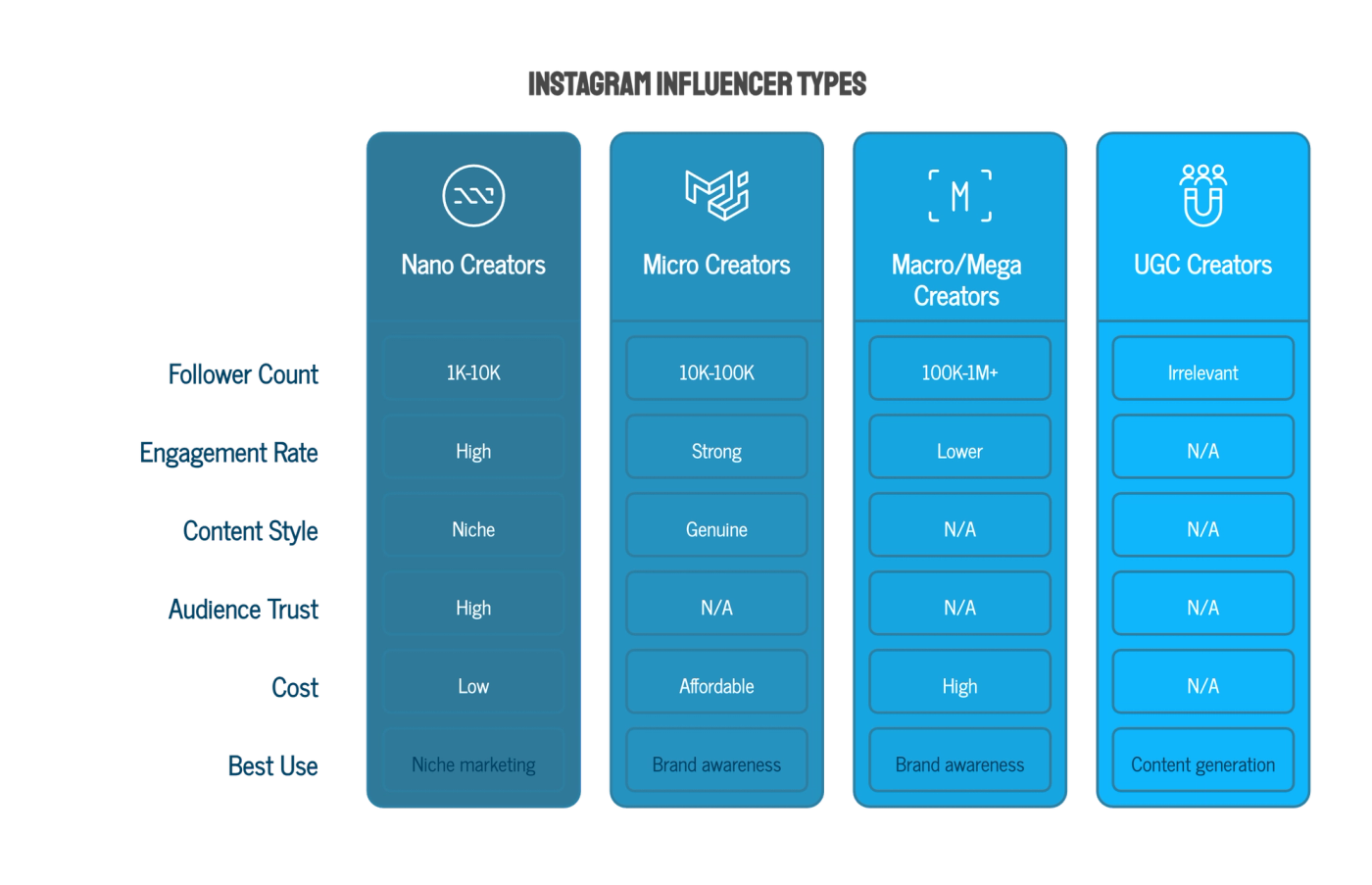
There's no single type of Instagram influencer, and the differences between tiers go well beyond follower count. Engagement rates, content style, audience trust, and cost all vary significantly, and the tier that looks most impressive on paper isn't always the one that delivers the best results for your specific objective.
Nano Creators (1K-10K followers)
These creators have small but highly engaged audiences, often built around a specific niche. They're trusted voices in their communities, which means their recommendations carry weight. Cost per post is low, but reach is limited.
Micro Creators (10K-100K followers)
The sweet spot for most brands starting out. Micro creators combine meaningful reach with strong engagement rates, and they're far more affordable than macro-level talent. They also tend to produce content that feels genuine rather than performative.
Want to put this into practice?
SideShift connects you with vetted UGC creators who actually deliver. Start your free trial and post your first job in under 10 minutes.
Macro and Mega Creators (100K-1M+ followers)
High reach, high cost, and often lower engagement rates relative to smaller creators. They’re best used for brand awareness plays, not necessarily for driving conversions.
UGC Creators (Follower count is irrelevant)
This is a distinct category worth calling out. UGC creators produce content for brands to use in their own channels and paid ads, not necessarily posted to the creator's own feed. They're hired for content quality, not audience size. This is one of the fastest-growing segments in Instagram creator marketing because brands can generate high volumes of authentic content without the overhead of traditional influencer deals.
How to Build Your First Instagram Influencer Campaign
If you're figuring out how to start influencer marketing on Instagram, the process is more straightforward than most brands expect, but only if you build it in the right order. The steps below walk you through exactly that, from locking in your goal before touching a single creator profile to scaling what the data shows is working.
Step 1: Define the Goal Before the Creator
The biggest mistake beginners make is finding a creator they like and then reverse-engineering a goal around them. Start with clarity on what you're actually trying to accomplish.
- Brand awareness: You want reach and impressions. Larger creators or broad distribution of UGC content makes sense here.
- Conversions: You want click-throughs, sign-ups, or purchases. Micro creators with niche audiences and strong trust signals tend to outperform here.
- Content library: You need authentic visual assets for your own ads, organic posts, or website. UGC creators are often your best option. If you plan to reshare a creator's post to your brand's own Story, check out how to repost a story on Instagram for the correct method.
Step 2: Set a Realistic Budget
Influencer marketing doesn't require a Fortune 500 budget to get results, but it does require honesty about what different budgets can deliver.
- Nano creators: $50-$200 per post
- Micro creators: $200-$1,500 per post
- Macro creators: $5,000-$25,000+ per post
- UGC creator content (for brand use): $100-$500 per video depending on scope
Hybrid pay structures that combine a flat retainer with performance bonuses tend to attract higher-quality creators and produce better output, because the creator has real skin in the game.
Step 3: Find and Vet Creators
There are a few ways to source creators: manual outreach through Instagram search and hashtags, influencer databases, and creator marketplaces.
Manual outreach is slow and inconsistent. Databases give you volume but often lack quality control. Marketplaces with built-in vetting, like SideShift, give you access to pre-qualified creator pools without the hours of back-and-forth.
When vetting any creator, look at:
- Engagement rate (likes + comments divided by followers): Anything above 3% is solid for Instagram.
- Comment quality: Are people actually responding to the content, or is it all generic emoji reactions?
- Content consistency: Does their posting style match your brand's tone and visual identity?
Want to put this into practice?
SideShift connects you with vetted UGC creators who actually deliver. Start your free trial and post your first job in under 10 minutes.
- Audience demographics: Make sure their followers align with your target customer.
Step 4: Brief the Creator Properly
A vague brief produces vague content, and vague content is the most common reason a technically well-matched creator partnership still underdelivers. The brief is where you set the creative conditions for success. It doesn't need to be long, but it does need to be specific.
- Explain what the product is and what problem it solves. Don't assume the creator will figure this out from a product page. Spell out the core value proposition in plain language (i.e. what it does, who it's for, and why it matters). A creator who understands the problem they're solving will write copy that sounds natural. One who doesn't will sound like they're reading a label.
- Keep it to two or three key messages. The temptation is to load the brief with everything you want the audience to know. Resist it. Creators who are given too many messages to hit end up hitting none of them well. Pick the two or three that matter most and let the creator work with those.
- Outline what to avoid. Be explicit about any claims, comparisons, or visuals that are off-limits whether for legal reasons, brand positioning, or past creative that didn't work. This is the section most brands skip, and it's the section that causes the most revision cycles.
- Specify format preferences. What is your desired Reel length and aspect ratio, do you want text overlays, should the product appear in the first three seconds? All of these details matter more than brands usually acknowledge. A technically well-written script that gets cut off before the CTA because the video ran long is a wasted brief.
- Define a clear call to action. “Link in bio,” “use code [___],” “swipe up.” Only pick one and make it unambiguous. Creators who aren't told what action to drive for will default to a generic close, and generic closes don't convert.
- Set revision expectations and timeline. State upfront how many revision rounds are included and what the deadline is. Ambiguity here creates friction at the end of the process when you have the least time to deal with it.
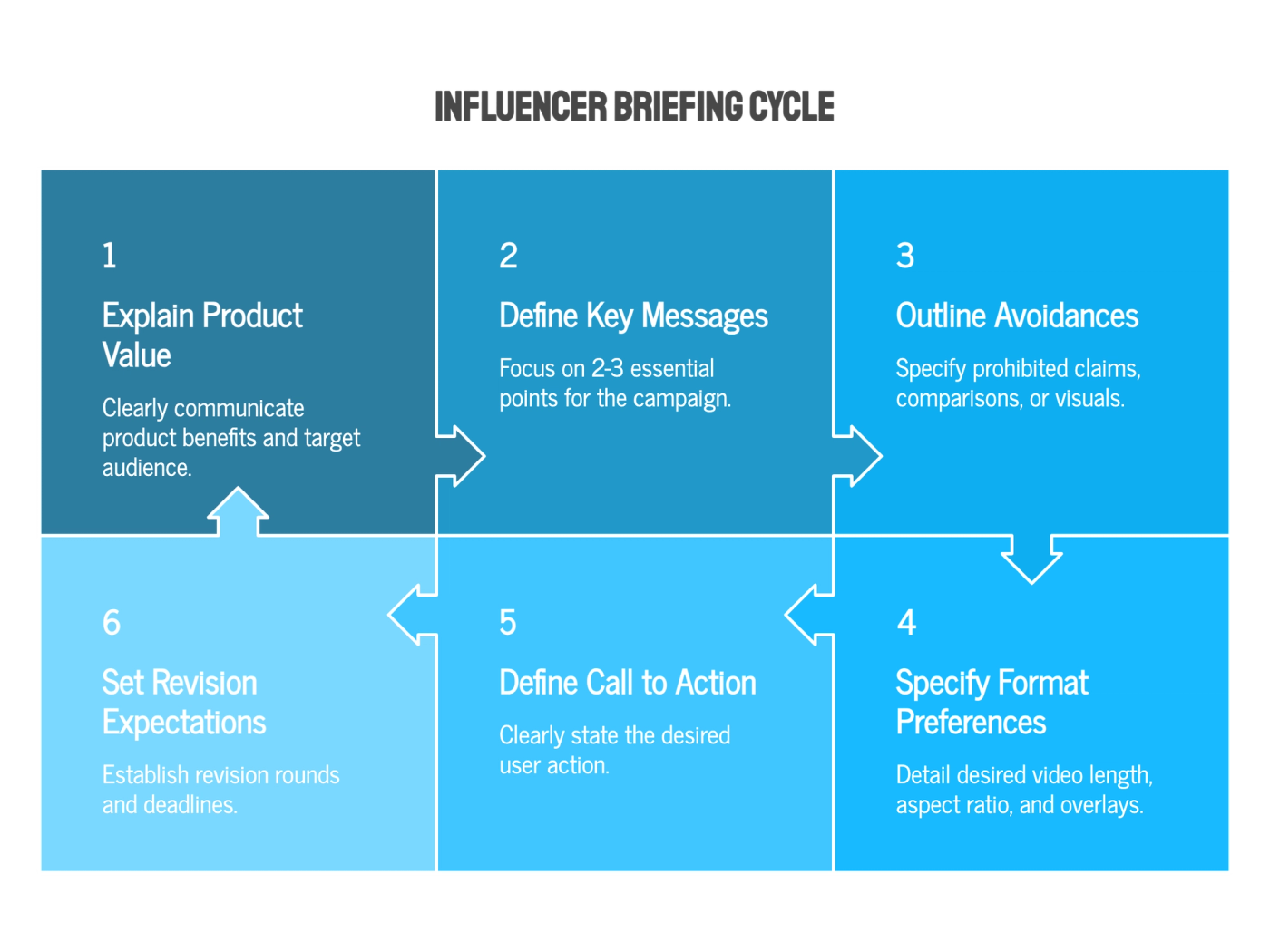
The best briefs give creators a defined structure to work inside and genuine creative latitude within it. Trying to script every word kills the authenticity that made the creator worth hiring in the first place. The goal is a brief that removes the guesswork without removing the voice.
Step 5: Track What Actually Matters
Vanity metrics like likes and follower counts are easy to watch but often misleading. Build your reporting around:
- Reach and impressions for awareness goals
- Link clicks and promo code redemptions for conversion goals
- Saves and shares as signals of content resonance
- Cost per result as your north star for ROI
For conversion tracking, the most reliable method is giving each creator a unique promo code or UTM-tagged link. This lets you attribute sales and clicks directly to individual creators rather than to the campaign as a whole, which matters when you're trying to figure out who to re-engage and who to cut. Without creator-level attribution, you're left averaging performance across the whole roster and losing the signal in the noise.
Want to put this into practice?
SideShift connects you with vetted UGC creators who actually deliver. Start your free trial and post your first job in under 10 minutes.
For content performance, Instagram's native insights give you reach, impressions, and engagement data on organic posts. But if you're repurposing creator content as paid ads, you'll want to track performance at the ad level inside Meta Ads Manager, where you can see CTR, cost per click, and cost per acquisition broken down by creative.
The challenge at any meaningful scale is that tracking this manually across multiple creators becomes unmanageable fast. SideShift's campaign management platform centralizes creator performance data in one place tracking content output, engagement, and conversion metrics across your full roster without the spreadsheet overhead.
That visibility is what makes it possible to iterate quickly: double down on the creators and formats that are working, cut the ones that aren't, and build a content engine that improves with every campaign cycle.
UGC vs. Influencer Marketing on Instagram
This distinction matters more than most beginners realize, and conflating the two leads to misaligned campaigns.
Traditional influencer marketing relies on the creator's audience. You're renting their distribution. When the post goes up, you get access to their followers, and that's the primary value exchange.
UGC creator marketing is about the content itself. The creator produces authentic short-form video or photo content that your brand owns and can distribute across your own channels, including Instagram ads, your organic feed, your website, and email. The creator's follower count is essentially irrelevant.
If you're a brand that needs a constant pipeline of authentic content for paid social, UGC creator campaigns are often more cost-effective and scalable than traditional influencer deals. You can work with dozens of creators simultaneously, test different hooks and formats, and iterate quickly based on what's performing.
This is the model that platforms like SideShift are purpose-built to support. Rather than one big bet on a single influencer, you build a content engine.
Start Scaling Your Instagram Creator Campaigns with SideShift
If you've made it through this guide, you already have a clearer framework than most brands do when they first start spending on Instagram creator marketing. The next step is execution, and that's where the platform you use matters.
SideShift connects brands with a network of over 800,000 U.S.-based Gen Z creators, ranging from UGC specialists to niche micro-influencers across every vertical. For brands starting out, the Starter plan at $299/month gives you access to job posting, creator recruitment, contracts, and payouts in one place, without the overhead of managing it all manually. For brands ready to run high-volume campaigns at scale, the infrastructure is already built.
Try SideShift for free today and hire your first creators within the week.
FAQs
1. How much does Instagram influencer marketing cost for beginners?
Starting budgets vary widely, but brands can run meaningful micro-influencer campaigns for $1,000-$5,000/month if they're strategic about creator selection and content goals. UGC creator campaigns tend to cost less per asset and offer more flexibility for testing. SideShift's Starter plan at $299/month gives brands a low-cost entry point for managing creator campaigns at scale.
Want to put this into practice?
SideShift connects you with vetted UGC creators who actually deliver. Start your free trial and post your first job in under 10 minutes.
2. What's the difference between a UGC creator and an Instagram influencer?
An influencer's value comes primarily from their audience: you're paying for access to their followers. A UGC creator's value is the content itself. UGC creators produce authentic short-form content that brands own and use across their own channels, including paid ads. Follower count doesn't matter for UGC. Content quality and style do.
3. How to find Instagram influencers for your brand?
Start by defining your niche and ideal audience, then search Instagram using relevant hashtags, product category terms, and competitor mentions to surface creators who are already talking about your space. Vet any shortlisted creator for engagement rate, comment quality, and audience demographics before reaching out. For brands that need volume or want to skip the manual process, creator marketplaces like SideShift provide access to pre-vetted creator networks with filtering tools built specifically for brand-creator matching.
4. How many creators should you work with as a beginner?
Starting with three to five micro or UGC creators gives you enough content variation to learn what resonates without overextending your budget. As you identify what's working, you can scale the creator count and content volume systematically. Brands running high-volume UGC campaigns on SideShift often work with 20 to 100+ creators simultaneously.
5. What content formats perform best for Instagram influencer marketing in 2026?
Short-form Reels between 15 and 45 seconds consistently outperform longer content for reach and engagement on Instagram. Authentic, low-production content that mirrors the platform's organic look and feel tends to outperform polished, ad-like posts. Hooks in the first 2 seconds are critical: if you don't stop the scroll immediately, the rest of the video doesn't matter.