
Niche Influencers: Find Micro-Creators That Convert
Niche influencers drive higher engagement and better ROI than big accounts. Here's how to find, vet, and partner with micro-creators that actually convert.
Table of Contents
The era of chasing follower counts is over. Brands that are winning at creator marketing right now are not the ones signing deals with celebrities or macro-influencers with millions of followers. They're the ones building systematic partnerships with niche influencers: creators with smaller, highly specific audiences who trust them deeply and act on their recommendations at rates that larger accounts simply can't match. This article breaks down what niche influencers actually are, why they consistently outperform bigger names on ROI, how to find the right ones for your brand, and how to build partnerships that convert.
What Are Niche Influencers and Why Do They Outperform
A niche influencer is a creator whose content is focused on a specific topic, community, or lifestyle category, and whose audience follows them precisely because of that focus. Think of a creator who posts exclusively about sourdough baking, van life budgeting, minimalist skincare, or competitive disc golf. The more specific, the better.
Their following might be 5,000 people or 80,000 people, but those people are there for one reason: they care deeply about the same specific thing the creator cares about. This is the structural advantage that niche influencers hold over macro accounts. Engagement.
When a lifestyle influencer with 2 million followers posts about a product, their audience is broad and diffuse. Engagement exists, but purchase or conversion intent is diluted across demographics, interests, and levels of trust. When a niche influencer with 12,000 followers in that same product category posts about it, they're speaking directly to an audience that already has high intent and considers that creator a genuine peer authority. The numbers bear this out consistently.
Micro and niche influencers typically generate engagement rates two to three times higher than macro influencers, and conversion rates on affiliate links and promo codes from niche creators regularly outperform those from larger accounts by a significant margin. The trust dynamic is simply different at a smaller scale, and trust is what converts.
The Different Tiers of Niche Influencers
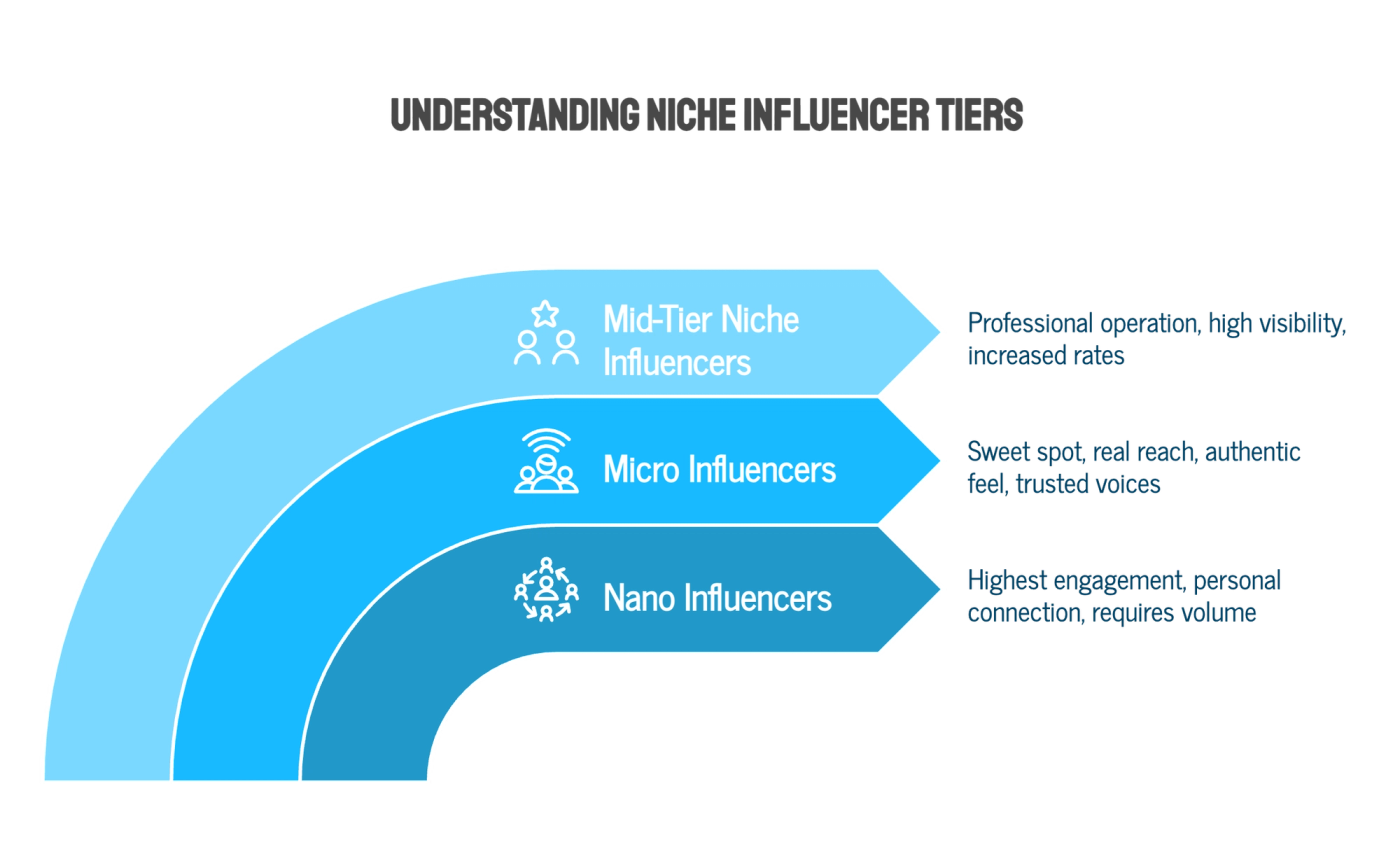
Not all niche influencers are the same, and understanding the different types of influencers helps brands allocate budget intelligently rather than treating every small creator as interchangeable.
Nano Influencers (1,000 to 10,000 followers)
Nano influencers have the highest engagement rates of any tier and the deepest personal connection with their audience. Many of their followers know them personally or feel like they do. Recommendations from nano influencers carry strong word-of-mouth energy because the creator's audience sees them as a peer rather than a public figure.
The trade-off is reach. Individual nano influencers move small audiences, so brands need volume to generate meaningful scale. The smart approach is running campaigns with 20 to 50 nano influencers simultaneously rather than betting on one.
Micro Influencers (10,000 to 100,000 followers)
Micro influencers are the sweet spot for most brand campaigns. They've built enough of an audience to generate real reach while maintaining the authentic, community-driven feel that drives conversion.
Micro influencers in a specific niche are often the most trusted voices in that space. A micro influencer who has been posting about clean beauty for three years has built genuine credibility with their audience that no amount of ad spend can replicate.
Want to put this into practice?
SideShift connects you with vetted UGC creators who actually deliver. Start your free trial and post your first job in under 10 minutes.
Mid-Tier Niche Influencers (100,000 to 500,000 followers)
At this level, creators have typically built a professional content operation and have a more formalized approach to brand partnerships. They still carry niche credibility if their content focus has remained consistent, but rates increase significantly, and the volume-based partnership model becomes less practical. These creators are best used for high-visibility campaign moments rather than the sustained content volume that nano and micro tiers can provide.
How to Find Niche Influencers That Are Actually a Fit
Finding niche influencers is not the hard part. Finding ones that are genuinely aligned with your brand, produce content that converts, and are professional enough to deliver on a brief reliably is where most brands struggle. If travel is your focus niche, our guide on how to become a travel influencer breaks down how creators build audiences and land brand deals in this space.
Start With Platform-Native Search
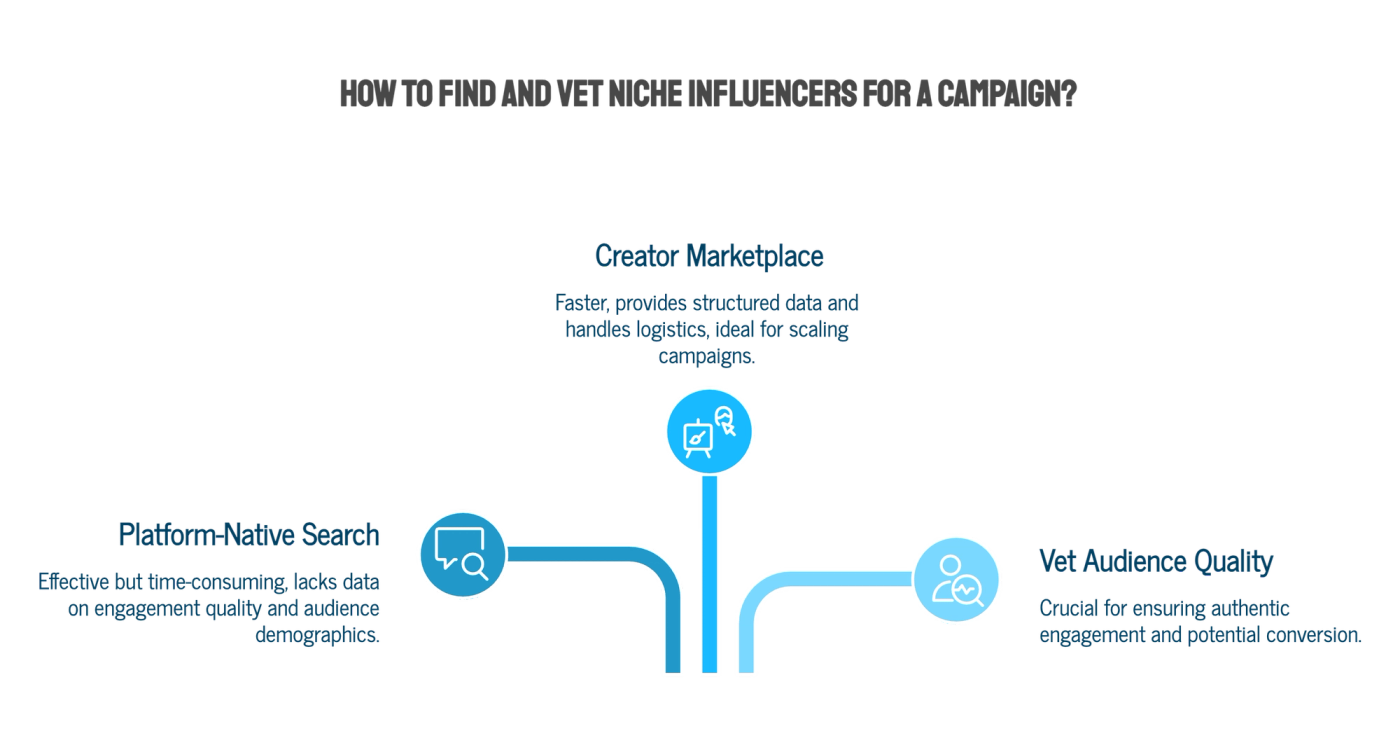
Every major platform has search and discovery functionality that can surface niche creators if you know how to use it. On TikTok, searching your product category terms and filtering by recent videos surfaces creators who are actively posting in your space. On Instagram, hashtag exploration and the Reels discovery feed work similarly. The limitation of manual platform search is time: it's effective but slow, and it gives you no data on engagement quality, audience demographics, or past brand partnership performance.
Use a Creator Marketplace Built for Scale
The faster, higher-signal approach is working through a creator marketplace that pre-vets creators and provides structured data for each one. SideShift's network of 800,000+ U.S.-based Gen Z creators means brands can filter by content category, platform, posting frequency, and engagement profile without spending hours on manual discovery.
More importantly, the infrastructure handles the partnership logistics, from outreach and contracts to payments and performance tracking, so brands can run niche influencer campaigns at volume without the operational overhead that kills most DIY attempts.
This matters because the real power of niche influencer marketing is not any single creator. It's the compounding effect of many niche creators posting consistently across a campaign window. One niche influencer is a tactic. Fifty niche influencers running simultaneously is a content army.
Vet for Audience Quality, Not Just Numbers
Before reaching out to any niche influencer, spend five minutes auditing their engagement quality. High follower counts with low engagement, generic comments like "great post" or emoji-only replies, and sudden follower spikes are all signals of an audience that was purchased or incentivized rather than earned. What you're looking for is specific, conversational engagement: comments that reference the content directly, questions about the product or topic, and replies that suggest the creator has a real back-and-forth relationship with their community.
For example, this creator is sharing a DIY home photo frame project that may have a smaller following, but the comments reveal real interest in the process and materials used. Followers are asking questions, sharing their opinions on the products, and expressing intent to try or purchase similar items, all of which signal authentic engagement and stronger potential for conversion.
Want to put this into practice?
SideShift connects you with vetted UGC creators who actually deliver. Start your free trial and post your first job in under 10 minutes.
A quick checklist for vetting niche influencers:
- Engagement rate above 3% for micro tier, above 5% for nano tier
- Comments that are specific and conversational, not generic
- Consistent posting history in one niche, not frequent topic shifts
- Audience demographics that match your target customer
- No obvious signs of purchased followers or engagement pods
Structuring Niche Influencer Partnerships That Convert
Finding the right niche influencers is half the work. The other half is structuring the partnership in a way that actually produces content worth paying for.
Give Creative Direction Without Killing Authenticity
The biggest mistake brands make in niche influencer partnerships is over-scripting the content. Niche influencers convert because their audience trusts them. That trust is rooted in the creator's authentic voice, and a heavily scripted post sounds exactly like what it is: an ad, not a recommendation.
The most effective brand briefs give creators clear guardrails, required talking points, and disclosure requirements, then leave the creative execution entirely to the creator.
Brief the outcome, not the script. Tell the creator what you want the audience to feel or do after watching, and let them figure out how to get there in their own voice.
Use Retainer Models for Sustained Impact
One-off sponsored posts have their place, but the partnership structure that consistently delivers the best ROI with niche influencers is the retainer model. A creator posting about your brand once a month for four months builds familiarity and trust with their audience in a way that a single post simply cannot. Audiences need repeated exposure to a brand through a trusted voice before they act, and a retainer structure makes that repetition economically feasible for both sides.
SideShift's hybrid pay structure, which combines a monthly retainer with performance-based bonuses tied to views or conversions, is designed exactly for this dynamic. It gives creators income stability while aligning their incentives with brand performance outcomes.
Track the Right Metrics
Niche influencer campaigns should be evaluated on metrics that reflect their actual mechanism of impact: engagement rate, click-through rate on tracked links, promo code redemption, and content performance when repurposed in paid ads. Reach alone is the wrong metric for niche influencer campaigns because reach is not what you're paying for. You're paying for trust, relevance, and conversion intent, and those show up in different numbers.
Run Niche Influencer Campaigns at Scale on SideShift
Running niche influencer campaigns the right way means managing a lot of moving pieces simultaneously: finding creators, vetting them, sending briefs, reviewing content, processing payments, and tracking performance across dozens or hundreds of partnerships at once. Doing that manually is how brands burn budget and time without seeing proportional results.
SideShift was built to handle exactly this operational load. With a network of 800,000+ U.S.-based Gen Z creators and campaign infrastructure that covers everything from recruitment and contracts to analytics and payouts, brands can run high-volume niche influencer campaigns without the overhead.
Want to put this into practice?
SideShift connects you with vetted UGC creators who actually deliver. Start your free trial and post your first job in under 10 minutes.
Scale your content army with SideShift, where brands and niche creators win together.
Join SideShift for free today.
FAQs
1. What is a niche influencer?
A niche influencer is a content creator whose audience is built around a specific topic, interest, or community rather than general lifestyle content. Their follower counts are typically smaller than macro influencers, but their audience engagement and conversion rates are significantly higher because of the focused trust they've built within their niche.
2. How many followers does a niche influencer need?
There is no minimum follower threshold for a niche influencer. Nano influencers with as few as 1,000 followers can drive meaningful results for brands if their audience is highly engaged and relevant to the product category. The niche focus and engagement quality matter far more than raw follower count.
3. How much does it cost to work with niche influencers?
Costs vary based on tier, platform, deliverable type, and usage rights. Nano influencers may charge $50 to $200 per post, while micro influencers typically range from $200 to $1,500, depending on their engagement metrics and content quality. UGC-only arrangements where creators produce content without posting to their own channels often cost less and can be sourced at volume through platforms like SideShift.
4. How do I find niche influencers in my product category?
Manual platform search using hashtags and keyword discovery works, but is slow and provides limited data. Creator marketplaces like SideShift offer filtered access to large, pre-vetted creator pools with data on content focus, engagement, and posting history, making it significantly faster to find and activate niche influencers at scale.
5. What is the difference between a niche influencer and a micro influencer?
A micro influencer refers to a follower count range, typically 10,000 to 100,000. Niche influencer refers to content focus: a creator whose content is concentrated in a specific topic area. The two overlap frequently, but a niche influencer can exist at any follower tier, from nano to mid-level, as long as their content and audience are tightly focused on a specific category.