


How to Get More Views on YouTube: 10 Strategies for Growth
Learn how to get more views on YouTube with proven strategies that cover niche, playlists, collaborations, editing, and SEO, based on how the algorithm works.
Table of Contents
You started a channel, have been putting out content consistently, but none of your tactics are driving results. Now you're stuck wondering how to get more views on YouTube.
YouTube views have always been the metric everyone obsesses over and almost nobody fully understands. Where growth on the platform once came down to who could post the most frequently, today it's a far more nuanced game of signals, session time, and audience matchmaking.
If your numbers won't budge, or you're just trying to get more eyes on great content you're already making, this guide breaks down how YouTube decides what to show people, why channels stall out, and which strategies actually move the needle.
How the YouTube Algorithm Distributes Views
YouTube isn't one algorithm. It's a collection of recommendation systems, each tuned for a different surface: the homepage, search, suggested videos, and Shorts. But they all share the same underlying goal, which is to keep people watching for as long as possible.
What the platform does is try to predict which video a specific viewer is most likely to watch, enjoy, and stick around for, instead of finding the "best video" in an objective sense.
Every view your video earns is essentially part of a testing process: YouTube shows your content to a sample audience, watches how they react, and decides whether to expand distribution based on the results.
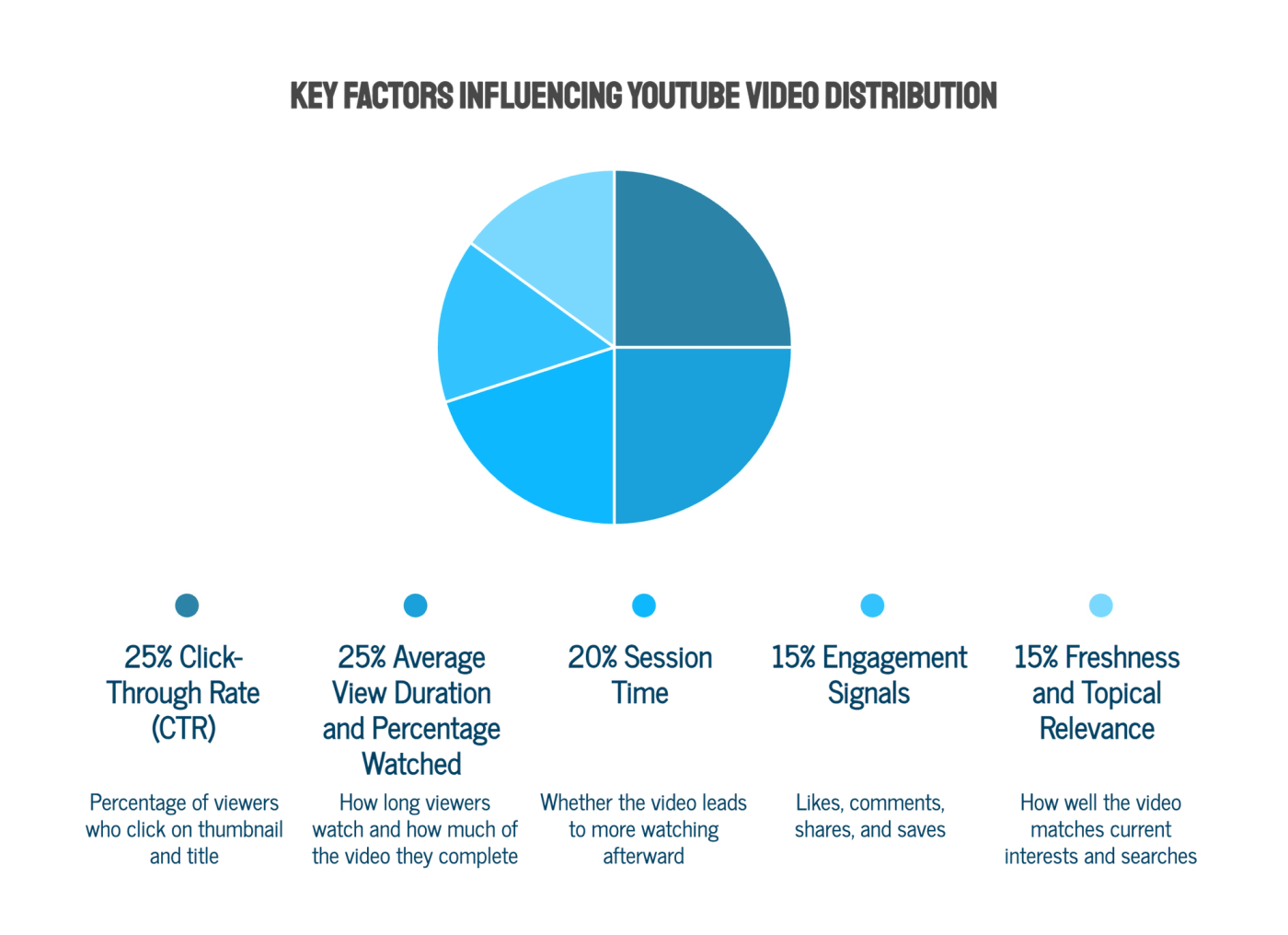
The signals that matter most in that experiment include:
- Click-through rate (CTR): how many people who see your thumbnail and title actually click
- Average view duration and percentage watched: whether people stick around or bail in the first 15 seconds
- Session time: whether your video leads to more watching afterward, either on your channel or elsewhere
- Engagement signals: likes, comments, shares, and saves, which act as a secondary confirmation that the content resonated
- Freshness and topical relevance: how well your video matches what people are actively searching for or interested in right now
When a new video performs well with an initial test audience, YouTube widens the pool, pushing it to suggested feeds and home pages of viewers with similar interests. When it underperforms, distribution quietly fades off.
It's also worth understanding that YouTube optimizes per viewer, not per video. The same video might be heavily promoted to one audience segment and almost invisible to another, depending on what those viewers have shown interest in.
This is why niche consistency matters so much: the algorithm needs a clear, repeatable signal about who your content is for before it can confidently recommend it.
What Causes Low or Stuck Views on a Channel
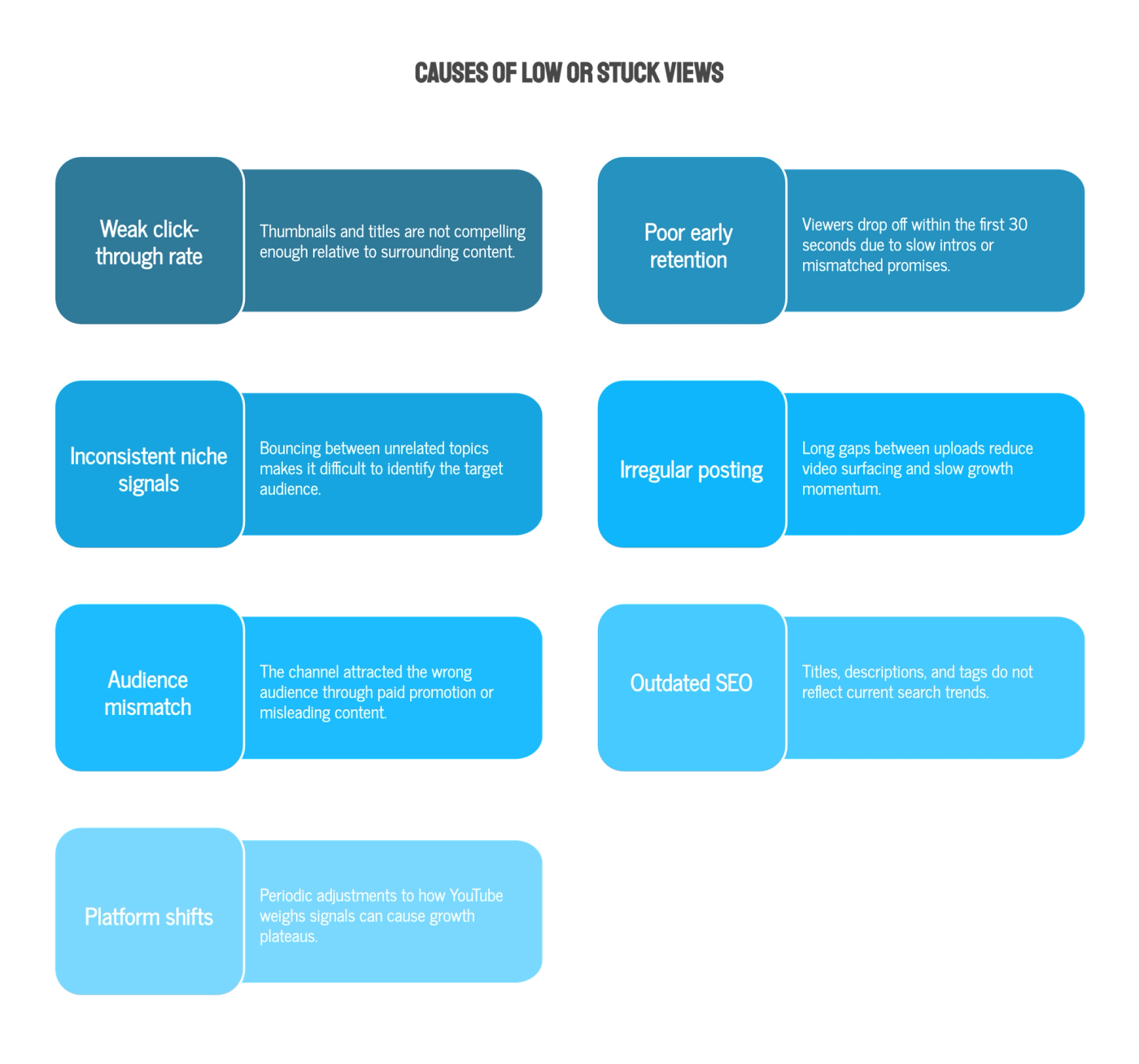
Most creators assume a view plateau means the algorithm is broken or working against them. In reality, it's usually one of a handful of fixable issues.
- Weak click-through rate: If your thumbnails and titles aren't compelling enough relative to what's around them, YouTube won't keep testing your content with new audiences. A video can be genuinely great and still get buried because nobody is clicking on it.
Want to put this into practice?
SideShift connects you with vetted UGC creators who actually deliver. Start your free trial and post your first job in under 10 minutes.
- Poor retention in the first 30 seconds: YouTube tracks exactly where viewers drop off. Slow intros, unnecessary preambles, or a mismatch between what the thumbnail promised and what the video delivers will tank retention fast, and retention is one of the most heavily weighted signals in the system.
- Inconsistent topic or niche signals: Bouncing between unrelated topics makes it harder for YouTube to know which audience to test your videos on. A channel that jumps from cooking to gaming to finance gives the algorithm a confusing signal, which also leads to less content distribution.
- Irregular or sparse posting: This doesn't mean you need to post daily, but long gaps between uploads reduce how often your videos are surfaced, which slows growth momentum.
- Audience mismatch: Sometimes views are low because the channel attracted the wrong audience early on, often through paid promotion, unrelated collaborations, or clickbait that doesn't match the channel's actual content.
- Outdated Search Engine Optimization (SEO) and metadata: Titles, descriptions, and tags that don't reflect what people are currently searching for will limit your search and suggested traffic, even if your content itself is strong.
- Algorithm or platform shifts: YouTube periodically adjusts how it weighs certain signals. A channel that was previously growing steadily can plateau simply because the platform's priorities shifted, not because anything changed on the creator's end.
Diagnosing which of these applies to your channel usually starts in YouTube Studio. CTR, average view duration, and traffic source breakdowns will point you toward the actual bottleneck instead of leaving you guessing.
10 Ways to Grow Your YouTube Views
The strategies below consider the most important signals for YouTube views distribution, from CTR to topical relevance.
1. Create Clear and Catchy Thumbnails and Titles
The thumbnail earns the glance, the title closes the click. A viewer should understand what they're about to watch in under two seconds. Use a single focal point and make sure any text is readable at a small size and contrasts with the title. For titles, lead with the strongest keyword or hook and keep it under 60 characters so it doesn't get cut off in search results. Resist the urge to be mysterious or to click-bait your viewers.
For example, a personal finance channel testing two thumbnails for the same video, one showing a stock graph and one showing a shocked face next to the number "$47,000," will almost always see the latter outperform. Not because it's flashier, but because it communicates a specific, curiosity-triggering outcome at a glance.
2. Get Your Viewers' Attention in the First 30 Seconds
YouTube tracks retention at the frame level and the steepest drop-off on most videos happens in the first 30 seconds. That window is your actual audition. Skip the lengthy intro, the "welcome back to the channel," and anything that could be edited out without losing information.
Instead, open with a preview of the payoff, a bold claim, a surprising stat, or a quick cut that makes the viewer feel they're already mid-story. Think of it like a cold open in a TV show.
Want to put this into practice?
SideShift connects you with vetted UGC creators who actually deliver. Start your free trial and post your first job in under 10 minutes.
For example, a cooking channel that opens with "this is the best pasta I've ever made and it takes 12 minutes" and immediately cuts to the finished dish will retain far more viewers through the actual recipe than one that spends 45 seconds thanking subscribers and explaining what the channel is about.
3. Build a Tight Niche Identity
YouTube's recommendation engine is essentially a matchmaking system. It learns who your audience is by watching which kinds of viewers show up, engage, and stick around across multiple videos.
The more consistent your topic and format, the clearer that signal becomes, and the more confidently the algorithm places your content in front of the right people. A channel that covers one subject in depth becomes a go-to resource, while a channel that covers everything confuses the audience and the platform.
This doesn't mean you can never branch out. But you should have a recognizable core identity and be intentional with the content you're creating. For instance, if you're a fitness influencer who also loves to cook and want to post your recipes, you can link it to your diet, what you eat before and after a workout, or maybe healthy treats you make from scratch.
4. Leverage SEO Strategies
As a creator, you want your videos to appear in the search results of YouTube. And you do that by using the right keywords in the title, description, and tags. The first step is identifying what keywords to target with tools like TubeBuddy, VidIQ, or even YouTube's own autocomplete in the search bar.
For example, a fitness creator targeting "home workouts for beginners" would start by confirming that phrase has a decent search volume. Then, build a title like "10-Minute Home Workout for Beginners (No Equipment)," then write a full breakdown of the workout in the description, or give a brief summary of the content naturally including the main keyword in text.
When it comes to tags, you should use them strategically as they matter less than they used to, but they still help YouTube understand context. Focus on five to eight highly relevant tags: your exact keyword, a few close variations, and one or two broader category terms.
It's also worth considering naming your files before uploading. A file named "home-workouts-for-beginners.mp4" is a small but real SEO signal compared to "final_video_export.mp4."
5. Use Playlists to Turn Single Views Into Viewing Sessions
Getting viewers to watch three videos in a row instead of just one can create a compound effect that increases your views over time. Also, YouTube measures session time (meaning how long a viewer watches across your channel in one sitting) and rewards creators whose content keeps people on the platform. Playlists are one of the most underused tools for making this happen.
Group your videos into logical series or topic clusters, give each playlist a keyword-rich title, and make the order intentional so one video naturally feeds into the next. Then use end screens and cards to point viewers directly to the next relevant video while they're still engaged. The goal is to eliminate the moment where they have to decide what to watch next. Make that decision for them.
Want to put this into practice?
SideShift connects you with vetted UGC creators who actually deliver. Start your free trial and post your first job in under 10 minutes.
6. Post on a Consistent and Sustainable Schedule
Consistency matters more than frequency. Posting three times a week for a month and then going dark for six weeks is far less effective than posting once a week, every week, without fail.
Regular uploads give YouTube more frequent chances to test and distribute your content. It also conditions your existing audience to come back on a predictable cycle. The right schedule is the one you can actually maintain at quality.
7. Collaborate with Creators Your Audience Already Watches
When you appear on another channel, you're borrowing trust. Their audience already likes and trusts that creator and that goodwill can transfer to you.
Collaborations introduce your content to viewers who are already primed to watch videos in your niche, which means higher retention and more meaningful engagement. The most effective collaborations are between channels of similar size where both audiences genuinely overlap, and where both creators add value rather than just cross-promoting.
8. Engage with Comments in the First Few Hours
The comment section is also an active ranking signal. Comments, likes, and shares that happen shortly after a video goes live feed into YouTube's early-window test, influencing how widely the platform decides to push the video next.
Reply to comments in the first two to three hours after publishing to keep that engagement window active longer and encourage more viewers to join the conversation. Engaging with your audience also helps create a community and build loyalty, potentially turning casual viewers into subscribers who show up for every video.
9. Analyze What's Already Working and Do More of It
YouTube Studio contains useful information that you can use to take your channel to the next level. Before chasing new formats or topics, spend time understanding what your existing data is telling you.
Which videos have the highest click-through rates? Which has the best average view duration? The answers usually reveal a pattern that will explain why those videos worked, giving clues on how to structure and invest your next videos.
10. Use YouTube Shorts to Feed Your Long-Form Channel
Shorts live on a separate algorithm surface from regular videos, which means they represent a second chance to get discovered. A Short can pull in viewers who would never have encountered your long-form content through search or suggested videos.
Make Shorts that are genuinely self-contained and valuable, not just trailers or chopped-up previews of a longer video. Each one should deliver a quick, satisfying insight or moment that encourages viewers to visit your channel and watch more of your content.
Take Your Content to the Next Level with SideShift
Creators landing brand partnerships aren't always the ones with the biggest audiences. They're the ones with strong retention, genuine engagement, and content that naturally fits a brand's category.
Want to put this into practice?
SideShift connects you with vetted UGC creators who actually deliver. Start your free trial and post your first job in under 10 minutes.
For brands, the best-performing creative is often made by people who already speak their audience's language: authentic, native-feeling content that doesn't come across like a traditional ad. That's where UGC creators come in. They create content brands can use across their marketing channels, without needing a large following of their own.
SideShift brings both sides together. Creators can apply to campaigns, sign contracts, and get paid through the platform, with no cold outreach or endless back-and-forth. Brands get access to 800,000+ vetted creators and can launch UGC campaigns without the manual sourcing process.
FAQs
1. Is 2,000 views in one day good on YouTube?
Generally, yes, but it depends on the size of your YouTube channel. For new and small channels with 0–5,000 subscribers, 2,000 in one day is exceptional. But for large channels with more than 50,000 subscribers, this number would be considered too low.
2. How to get more views on YouTube shorts?
To get more views on YouTube shorts, first focus on clickability. Use a compelling opening frame and optimize your title where applicable. When editing your videos, avoid slow introductions. Keep your content dynamic and invoke the curiosity of your viewers. You should aim to grab the attention in the first two seconds of the video.
3. Does YouTube pay you for views, and how many do you need?
YouTube doesn't pay per view directly. Revenue comes through the YouTube Partner Program, which requires at least 1,000 subscribers and 4,000 watch hours in the past 12 months or 10 million Shorts views. Once monetized, most channels earn between $1–$5 per 1,000 views through ads, but that varies widely by niche, audience location, and video length.
4. How to tag YouTube videos for more views?
Focus on five to eight tags. You should include your exact target keyword (e.g "pilates workout at home"), two or three close variations (e.g "at home pilates workout, wall pilates workout"), and one or two broader category terms (e.g "pilates workout, pilates workout plan"). Don't stuff dozens of loosely related tags hoping to cast a wider net, it dilutes the signal and doesn't meaningfully improve reach.
5. How to promote your YouTube channel?
Start with the platforms where your audience already lives. For example, share new videos to relevant Reddit communities, Instagram Stories, X, or a newsletter if you have one. Show up in the same spaces regularly. It helps build more sustainable traffic than occasional blasts. Collaborating with creators in adjacent niches is also one of the highest-ROI promotion moves you can make, since you're borrowing an audience that's already primed for your content.