
How to Become a Content Creator on Youtube
Learn how to become a content creator on YouTube with our step-by-step guide. Tips on starting, growing your channel, and engaging your audience effectively.
Table of Contents
Remember when music still played on MTV? How about when Coachella was just about the music?
Before TikTok, Reels, or livestreams rewired online content, YouTube was where creators learned to build communities from scratch. YouTube hasn’t gone away, though. It's still one of the most powerful and lucrative platforms for anyone looking to start a career in content creation.
In this guide, we’ll show you exactly how to get started as a YouTube content creator, grow your audience, and stand out online.
The History of Content Creation on Youtube
YouTube gave us viral moments like “Charlie Bit My Finger” and “David After Dentist”, and preserved the fleeting chaos of Vine through endless compilations. Long before the term “influencer” existed, there were YouTubers. In the early 2000s, pioneers like Jenna Marbles, Fred., and Cimorelli were already shaping internet culture from their bedrooms.
The first golden age of YouTube was from 2012-2017. In the early 2010s, the beauty guru era exploded with creators like NikkieTutorials, Tati Westbrook, Jeffree Star, and James Charles redefining the path to monetization for digital creators. At the same time, vloggers like the Dolan Twins, David Dobrik, Emma Chamberlain, and Liza Koshy built massive audiences by picking up a camera, sharing unfiltered stories, and editing creatively, turning everyday life into entertainment. Authenticity beat polish and community mattered more than algorithms. These creators laid the groundwork for today’s short-form content culture.
As audiences grew, brands took notice. Creators who started with a smart phone camera and free editing software were suddenly partnering with Fortune 500 companies, and even traditional celebrities launched YouTube channels. YouTube has evolved from a hobbyist platform into a legitimate career path.
Why You Should Become a YouTube Content Creator
YouTube remains one of the most powerful platforms for long-form content and it now doubles as a hub for short-form videos through YouTube Shorts. The barriers to entry are low, the global audience is massive, and the potential for growth is huge. Simply put: if you’re a self-starter with a creative eye and a willingness to commit, YouTube offers an unparalleled opportunity to build a platform, share your ideas, and even turn content creation into a career.
But it’s not for everyone. Being a YouTube content creator requires discipline, ownership, and a knack for producing content that provides real value. It’s for those who see opportunity, take initiative, and can consistently engage an audience.
The numbers speak for themselves:
- YouTube’s worldwide advertising revenue reached $10.26 billion in Q3 2025, a 15% increase over the previous quarter (Statista).
- Over 20 million videos are uploaded daily, giving creators endless opportunity to be discovered (YouTube Press).
- YouTube Shorts now averages 70 billion daily views, reflecting the explosive growth of short-form content (YouTube Press).
With such scale and opportunity, YouTube is becoming more of a launchpad for building a brand, reaching audiences worldwide, and turning creativity into long lasting success.
Want to put this into practice?
SideShift connects you with vetted UGC creators who actually deliver. Start your free trial and post your first job in under 10 minutes.
How to Become a Content Creator on Youtube: Step By Step
Step 1 – Planning Your YouTube Channel
Define Your Niche and Audience
Don’t be vague, lock in your focus and know exactly who you’re talking to. Who are they? What do they care about? What problem are you solving or what entertainment are you giving them? Do the work to understand your why in the initial planning phase. Clarity now saves you wasted time later. Most importantly, stay true to yourself. Pick a niche you genuinely care about. Anything else and burnout hits fast.
Research Competitors and Trends
Check out creators you respect across different industries to see what works and what doesn’t. Then dive into competitive research within your own content vertical. What’s missing? Where can you fill the gap? Let that be your angle.
Step 2 – Setting Up Your YouTube Channel
Create a New YouTube Account
Start fresh. Don’t use your old personal account if you have one. This is your brand now. Give it the dedicated space it deserves. Use a clear, memorable name that matches your niche and is easy to find. Make sure your business email, profile, and all linked accounts are professional and consistent. First impressions matter.
Optimize Your Channel for Success
Think of your channel as your storefront. Add a clean banner, professional profile picture, and a compelling “About” section that tells viewers who you are and why they should subscribe. Organize playlists, highlight your best content, and make sure your links (socials, website) are easy to find. This sets the tone and builds trust from day one.
Step 3 – Creating Your First Videos
Plan Your Content and Scripts
Before hitting record, it’s important to plan your content and scripts carefully. Decide what each video is meant to do, educate, entertain, or inspire, and outline the key points you want to cover. Breaking your content into short, digestible sections keeps viewers engaged, while a strong hook in the first few seconds draws them in. Writing a detailed script or at least a structured outline ensures you stay focused and confident during recording.
Recording and Editing Tips
When recording, focus on clarity and presentation. Choose a quiet, well-lit space, natural light works best, and speak clearly at a steady pace. Don’t worry if you need multiple takes; it’s normal to redo clips to get the best version. Editing is where your video comes together, so learn the basics of trimming, adding transitions, overlaying text, and including background music that enhances the video without being distracting.
Equipment & Tools
While you don’t need professional equipment to start, having the right tools improves video quality. A decent camera or smartphone, an external microphone, and a tripod can make a noticeable difference. For editing, beginner-friendly software is enough to get started, but as your skills grow, you can explore more advanced tools to polish your videos and add creative touches.
Step 4 – Uploading and Optimizing Videos
Thumbnails
Thumbnails are the first thing viewers notice, so creating an eye-catching and relevant image is crucial. Use bright colors, clear images, and readable text to make your video stand out in search results and suggested feeds. A well-designed thumbnail can significantly increase your click-through rate, so spend time making it engaging and representative of your content.
Want to put this into practice?
SideShift connects you with vetted UGC creators who actually deliver. Start your free trial and post your first job in under 10 minutes.
SEO
Optimizing your videos for search is essential to reach a wider audience. Use relevant keywords in your title, description, and tags, and include a concise, informative summary of your video. Adding closed captions, timestamps, and links to related content can also improve discoverability. Good SEO practices help your videos rank higher on platforms like YouTube and make it easier for viewers to find your content.
Step 5 – Growing and Engaging Your Audience
Building an audience goes beyond just posting videos—it's about creating a community. Engage with viewers by responding to comments, asking for feedback, and encouraging interaction through likes, shares, and subscriptions.
Collaborating with other creators in your niche is also a powerful way to grow and strengthen your community. Making content together follows the same logic as crossover episodes like That’s So Suite Life of Hannah Montana, or the iconic collabs from YouTube’s early days with the Sister Squad, Dolan Twins, James Charles, Emma Chamberlain, or the Magcon boys of the Vine era. It’s a fun way to introduce your content to new viewers and tap into different fan bases. This same principle explains why content houses like Hype House and Sway House blew up in the early 2020s, bringing creators together under one roof to amplify their reach.
Consistently posting on a schedule keeps your audience coming back, and authentic engagement paired with understanding what your audience enjoys is key to sustainable growth.
Step 6 – Monitor YouTube Analytics
Keeping an eye on your YouTube analytics is key to understanding how your content is performing and how your audience is engaging with it. Metrics like watch time, audience retention, traffic sources, and viewer demographics give you insight into what’s working and what isn’t. By analyzing this data, you can see which topics, formats, and video lengths resonate most with your audience. Regularly reviewing your analytics allows you to make informed decisions, refine your content strategy, and focus on creating videos that drive growth and engagement. Think of it as having a backstage pass to your audience’s preferences. Use it to guide your creative decisions and keep your channel thriving.
Step 7 – Monetizing Your YouTube Channel
To start earning directly from your content, you’ll need to meet the eligibility requirements for the YouTube Partner Program (YPP):
- 1,000 subscribers
- 4,000 valid public watch hours in the past 12 months
- Or 10 million valid public Shorts views in the past 90 days
It might sound like a lot, but if you’re consistently creating content and attracting new viewers, you’re likely closer than you think. Once eligible, you can apply through YouTube Studio by heading to the ‘Earn’ section and selecting ‘Get notified.’ You’ll receive an email when you meet the criteria. Monetizing on YouTube carries no upfront cost, though YouTube does take a cut of revenue depending on the feature.
Want to put this into practice?
SideShift connects you with vetted UGC creators who actually deliver. Start your free trial and post your first job in under 10 minutes.
How YouTube Monetization Works
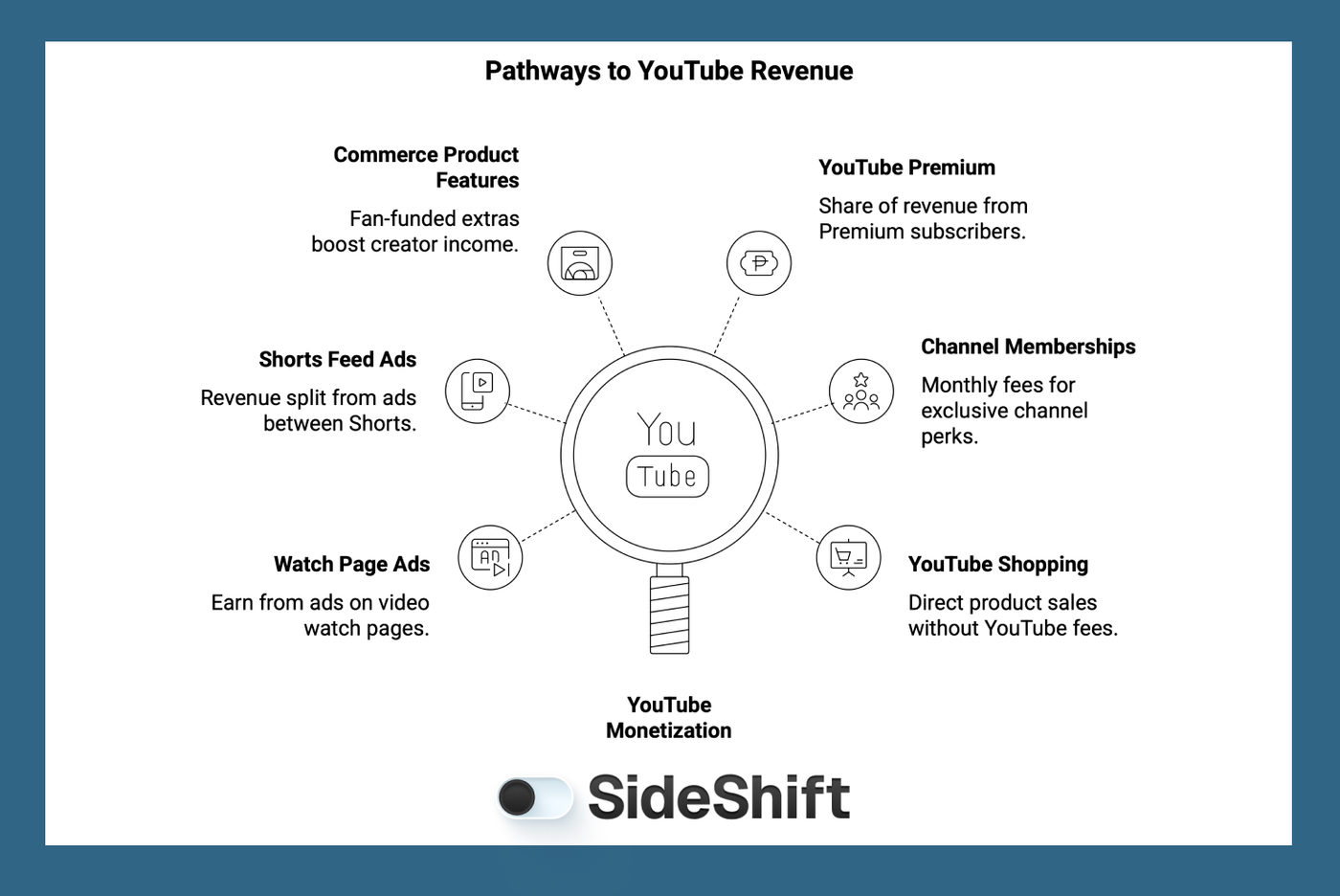
Once activated, you can earn through multiple avenues:
- Watch Page Ads: Ads shown before, during, or after your videos. You earn each time a viewer watches an ad-supported video, livestream, or embedded video.
- Shorts Feed Ads: Ads displayed between Shorts. Revenue is split 55% to YouTube, 45% to creators.
- Commerce Product Features: Fan-funded extras like Super Chat, Super Stickers, and Super Thanks. You keep around 70% of earnings.
- YouTube Premium: You earn a share of revenue when Premium subscribers watch your content.
- Channel Memberships: Offer perks like exclusive content, badges, and emojis for a monthly fee. YouTube takes a 30% cut, and memberships can range from $0.99 to $100 per month.
- YouTube Shopping: Sell products directly through your videos, Shorts, or channel store. YouTube and AdSense don’t take a cut; fees only come from your storefront provider.
Earnings Expectations
Average ad revenue ranges from $0.10 to $0.30 per view, or roughly $10–$30 per 1,000 ad-supported views. Shorts generally earn less, around $0.03–$0.07 per 1,000 views. Because of this, many creators combine YouTube’s built-in monetization with alternative streams like merch, affiliate marketing, brand deals, or UGC creation to make a full-time income.
Alternative Ways to Earn Money on YouTube
Once your channel meets YouTube’s eligibility requirements, monetization opens the door to earning directly from your content through ad revenue, channel memberships, Super Chats, and brand sponsorships. However, even if you haven’t reached those thresholds yet, there are several alternative ways to start earning money as a content creator on YouTube:
- Merch: Selling branded merchandise like apparel, stickers, or digital products can provide income while strengthening your community.
- Affiliate Links: Promote products or services you love and earn a commission on sales generated through your unique affiliate links.
- UGC (User-Generated Content): Platforms like SideShift connect creators with brands looking for authentic content. You can get paid to create sponsored videos, social posts, or campaigns using your existing skills and style and it doesn’t require an existing following to land brand deals.
- Clipping: Short-form content is in high demand. Platforms like SideShift connect brands and high-profile creators with a network of clippers who can turn longer videos or streams into shareable, attention-grabbing highlights. By creating these clips, you can monetize your skills either by selling the content directly or providing ready-to-use clips to brands looking for viral-ready material.
- Editing: Many creators earn income by offering editing services for other YouTubers, influencers, or small businesses. Your skills can be turned into freelance work or part-time gigs.
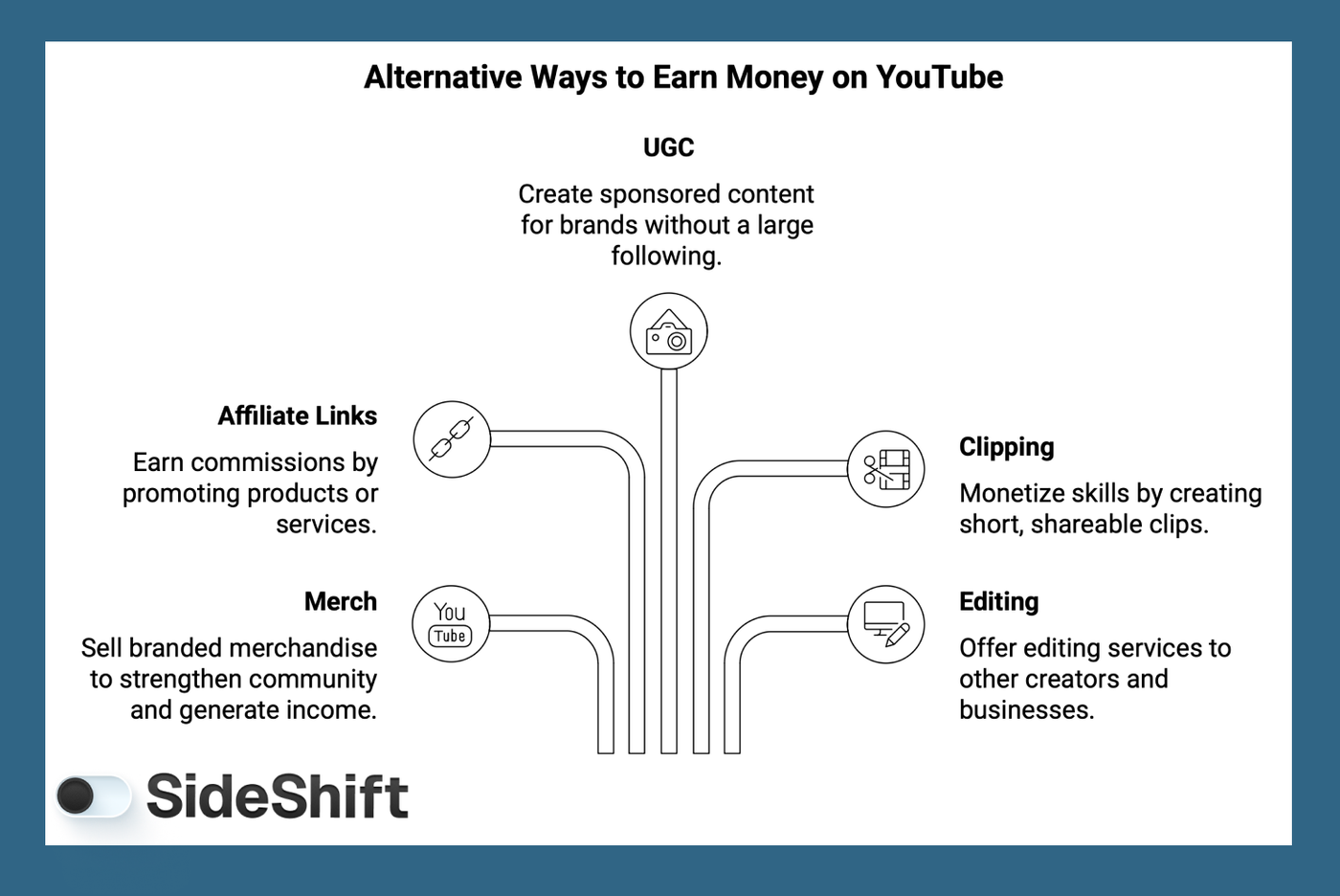
These alternative avenues allow creators to start earning even before hitting YouTube’s official monetization thresholds, giving you more flexibility to grow your channel sustainably.
Tips for Long-Term Success on YouTube
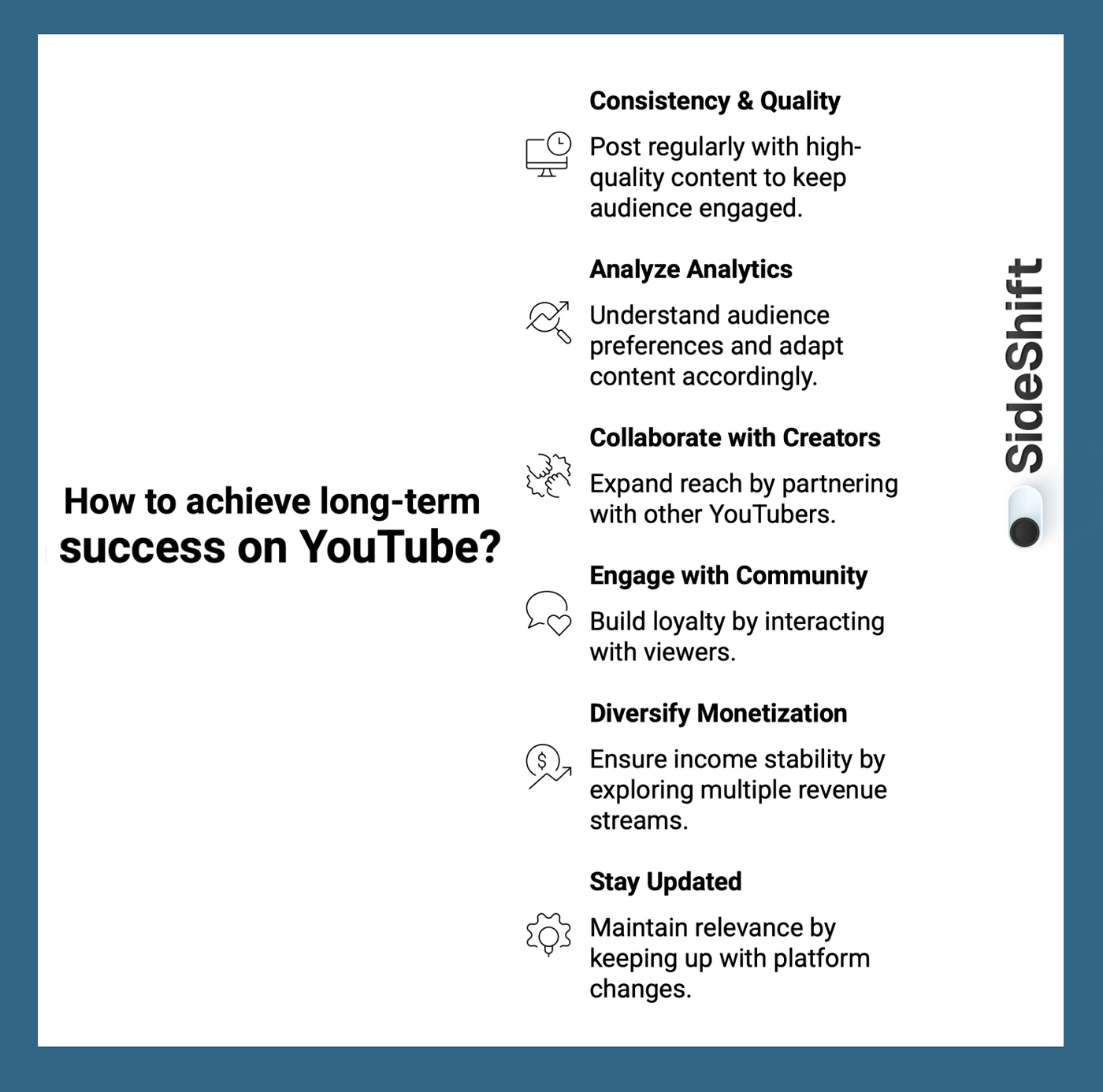
Consistency and strategy are key to sustaining a successful YouTube channel. Post regularly to keep your audience engaged, but prioritize quality over quantity. Viewers return for value and entertainment. Continuously analyze your analytics to understand which content resonates and adapt accordingly. Collaborate with other creators to expand your reach and tap into new audiences. Engage authentically with your community by responding to comments, asking for feedback, and creating content that meets their interests. Finally, diversify your monetization strategies so your income isn’t reliant on a single source, and stay up to date with platform changes and trends to maintain relevance.
Want to put this into practice?
SideShift connects you with vetted UGC creators who actually deliver. Start your free trial and post your first job in under 10 minutes.
Key Takeaways
Building a community is just as important as producing content for YouTube success, because authentic engagement drives growth and keeps viewers coming back. Regularly monitoring your analytics helps you understand audience preferences, allowing you to optimize your content strategy for maximum impact. While monetization through the YouTube Partner Program is a key goal, alternative methods - such as selling merch, creating UGC through SideShift, clipping, and securing brand deals - can supplement earnings and help you start generating revenue sooner. Collaboration and cross-promotion with other creators accelerates growth and expands your audience, while long-term success depends on consistent content creation, meaningful engagement, and strategic monetization.
Start implementing these strategies today to grow your channel, connect with your audience, and unlock new opportunities for earning and creative impact.
Get started with SideShift to turn your content into revenue right away.
FAQs
1.How many followers do I need to monetize on YouTube?
To join the YouTube Partner Program and start earning ad revenue, you need at least 1,000 subscribers and 4,000 watch hours on your channel in the past 12 months. Once eligible, you can also explore monetization through Super Chats, memberships, and YouTube Shorts Fund.
2. What equipment do I need to start a YouTube channel?
You don’t need expensive gear to get started. At a minimum:
- A smartphone or camera capable of recording HD video
- Microphone for clear audio
- Lighting, even a simple ring light can help
- Editing software, which can be free (i.e., iMovie, DaVinci Resolve) or paid
You can scale up as your channel grows, but content quality and consistency matter more than equipment.
3. How often should I upload videos to grow my channel?
Consistency is key. Most successful creators post 1–3 videos per week, but it depends on your content style and production time. Focus on a schedule you can maintain without sacrificing quality. Regular uploads keep your audience engaged and help the YouTube algorithm notice your content.
4. Can I become a successful content creator without showing my face?
Absolutely. Many creators thrive with faceless channels, such as:
- Tutorials or explainer videos
- Gaming content
- Animation or motion graphics
- Voiceover commentary
The key is providing value, good storytelling, and engaging visuals, even if you stay off-camera.
5. What are the best ways to promote my YouTube videos and gain subscribers?
Promote strategically by:
- Sharing videos on social media (Instagram, TikTok, Twitter, LinkedIn)
- Optimizing video titles, descriptions, and tags for search
- Creating eye-catching thumbnails
- Engaging with your audience through comments and community posts
- Collaborating with other creators to reach new audiences
Want to put this into practice?
SideShift connects you with vetted UGC creators who actually deliver. Start your free trial and post your first job in under 10 minutes.
Remember, growing subscribers takes patience—focus on building a loyal community rather than chasing numbers.