
Best Ecommerce Influencer Marketing Platform
Find the best ecommerce influencer marketing platform to source creators, manage campaigns, track ROI, and scale revenue with data-driven insights.
Table of Contents
As paid acquisition costs rise and performance channels become saturated, ecommerce brands are shifting budget toward creator-led growth. The right influencer marketing platform enables brands to discover creators, manage partnerships, automate outreach, track ROI, and scale performance-based campaigns from a single system.
This guide breaks down what defines the best influencer marketing platform for ecommerce brands in 2026, and how to evaluate one through a performance and automation lens.
What is an Ecommerce Influencer Marketing Platform?
An ecommerce influencer marketing platform is software that helps brands identify creators, launch campaigns, manage communication, distribute products, track performance, and measure return on investment.
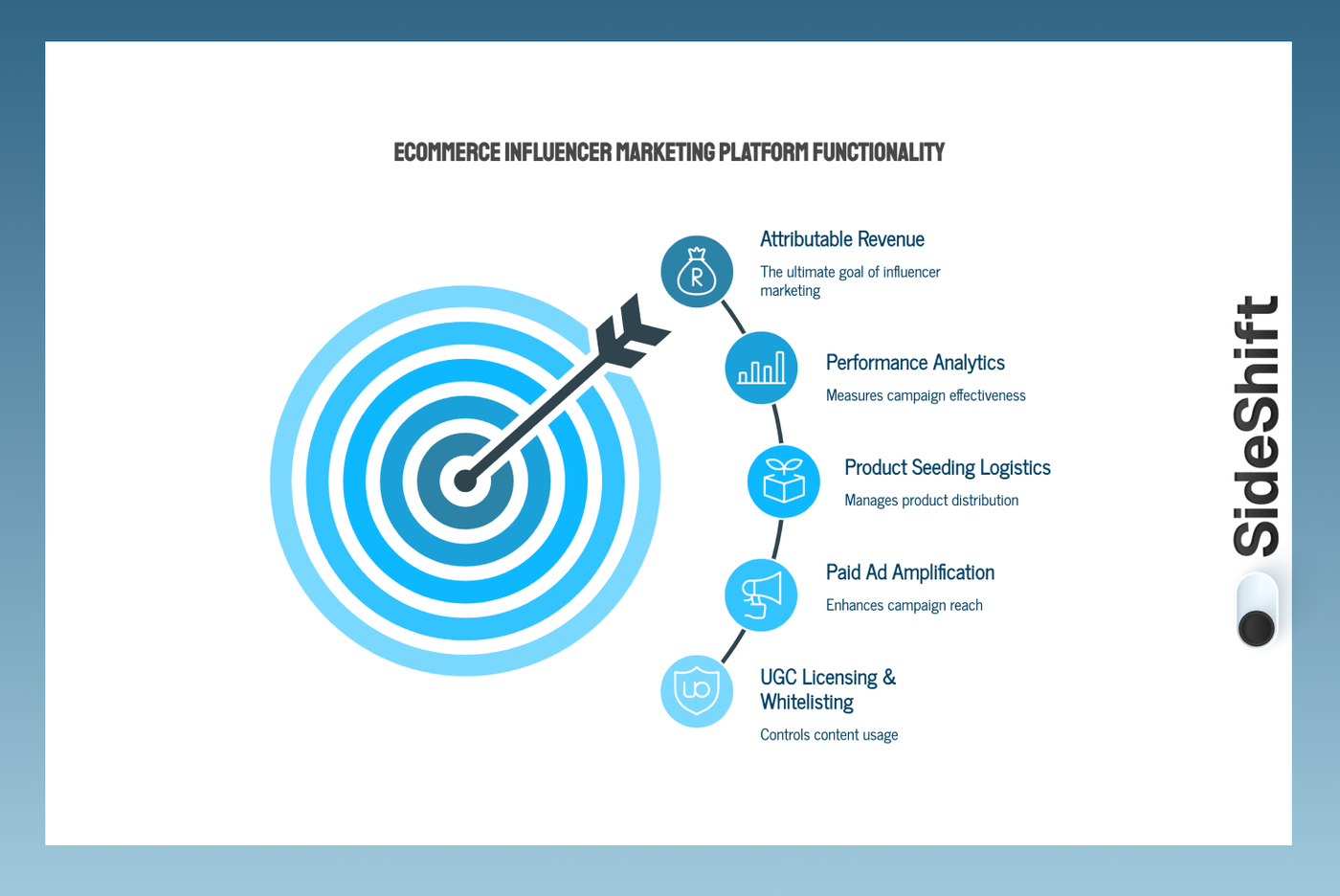
For ecommerce brands, this extends beyond basic influencer discovery. A true ecommerce influencer marketing software integrates with platforms like Shopify to support:
- Shopify order tracking
- Affiliate or commission infrastructure
- UGC licensing & whitelisting workflows
- Paid ad amplification
- Product seeding logistics
- Performance analytics
The goal is attributable revenue.
What is the best ecommerce influencer marketing platform?
The best ecommerce influencer marketing platform connects creator discovery, campaign management, Shopify integration, influencer ROI tracking, and paid ad amplification into a single system.
For ecommerce brands focused on measurable revenue, SideShift stands out as a performance-driven creator marketing platform built specifically for online stores.
It combines:
- Creator sourcing from a large U.S.-based network
- Automated outreach and onboarding
- Product seeding infrastructure
- Affiliate tracking and commission management
- UGC licensing workflows
- Real-time revenue attribution
Unlike generic marketplaces, SideShift is designed to turn ecommerce creator partnerships into a predictable acquisition channel, not just a brand awareness play.
What Makes an Influencer Marketing Platform The Best for Ecommerce?
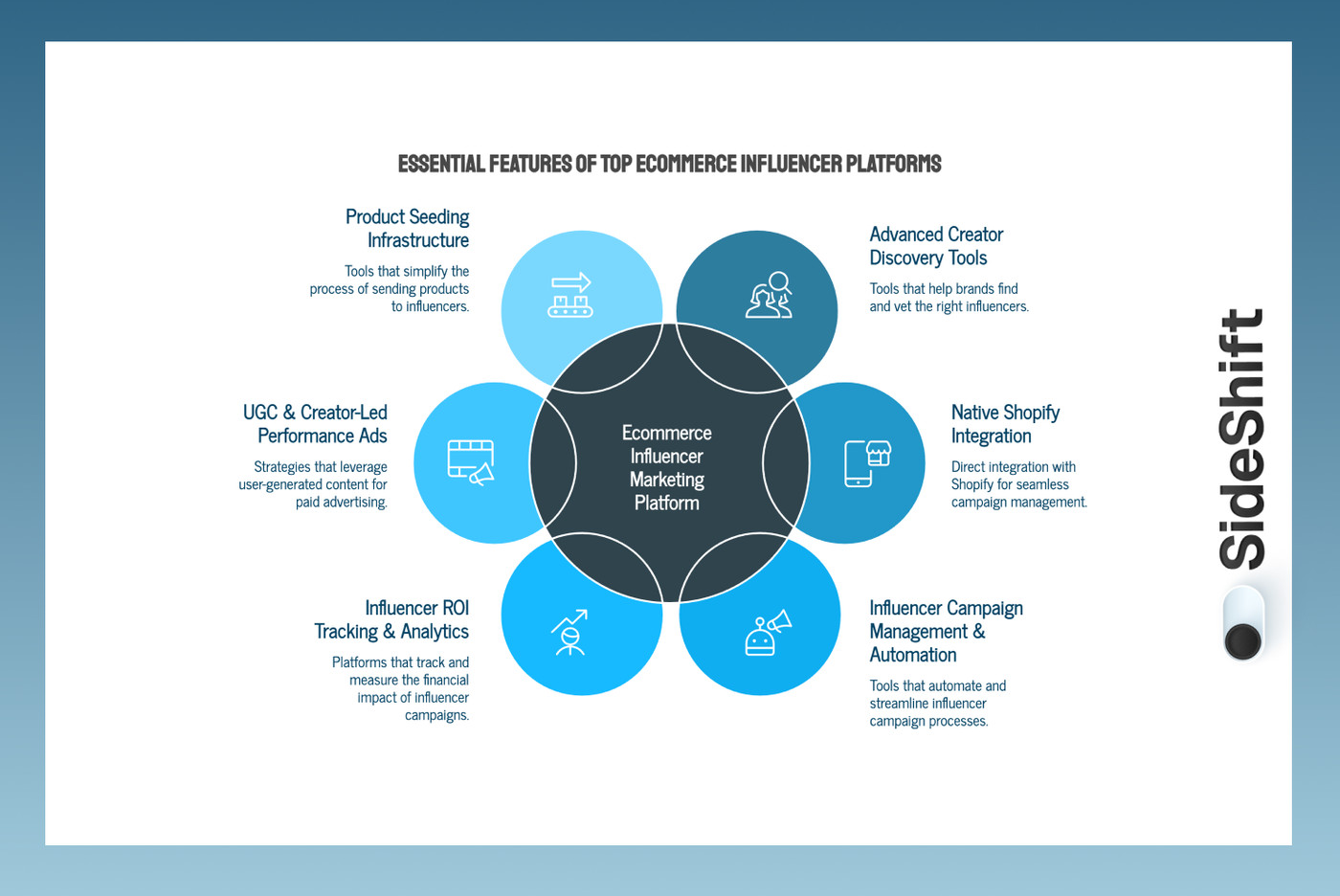
1. Advanced Creator Discovery Tools
The best platforms go beyond surface-level search filters. They allow brands to:
- Filter by niche, engagement rate, and audience demographics
- Identify UGC creators vs. traditional influencers
- Analyze historical content performance
- Detect fake followers and engagement pods
High-quality influencer discovery tools reduce wasted outreach and increase campaign ROI.
2. Native Shopify Integration
If you're running Shopify influencer marketing campaigns, direct integration is critical.
A true influencer marketing platform for Shopify enables:
- Automatic discount code creation
- Commission tracking
- Affiliate payouts
- Real-time revenue attribution
- SKU-level performance analysis
Without ecommerce integration, performance-based influencer marketing becomes guesswork.
3. Influencer Campaign Management & Automation
Scaling creator partnerships requires automation.
Leading platforms function as a full influencer campaign management tool and creator collaboration software by offering:
- Automated outreach sequences
- Bulk creator invitations
- Contract & content approval workflows
- Product seeding tracking
- Centralized campaign dashboards
Influencer marketing automation eliminates spreadsheets and manual follow-ups, allowing teams to scale without adding headcount.
4. Influencer ROI Tracking & Analytics
Modern ecommerce brands demand measurable performance.
An effective influencer analytics platform should track:
- Revenue per creator
- Cost per acquisition (CPA)
- Return on ad spend (ROAS)
- Lifetime value (LTV) impact
- Blended paid + organic performance
If a platform cannot connect content directly to revenue, it’s not built for ecommerce scale.
5. UGC & Creator-Led Performance Ads
The most successful ecommerce creator partnerships blend organic influence with paid media.
Top platforms support:
- UGC creator platform access
- Content usage rights management
Want to put this into practice?
SideShift connects you with vetted UGC creators who actually deliver. Start your free trial and post your first job in under 10 minutes.
- Whitelisting workflows
- Paid ad amplification
- Creative performance testing
This transforms influencer marketing automation into a scalable growth engine rather than a one-off sponsorship tactic.
6. Product Seeding Infrastructure
For brands running high-volume gifting campaigns, a built-in product seeding platform streamlines:
- Shipping logistics
- Address collection
- Creator follow-ups
- Content tracking
This is especially important for ecommerce brands testing multiple creators monthly.
Who Needs an Ecommerce Influencer Marketing Platform?
An ecommerce influencer marketing platform is essential for:
- Shopify-first brands scaling beyond paid ads
- DTC brands launching affiliate programs
- Ecommerce teams investing in UGC ads
- Brands running product seeding at scale
- Growth teams focused on attributable revenue
If your brand is manually tracking creators in spreadsheets, you’re limiting scalability and performance visibility.
Scale Ecommerce Influencer Marketing with SideShift
The best influencer marketing platform for ecommerce brands in 2026 is both a marketplace and an integrated creator operating system.
SideShift combines influencer discovery tools, campaign management automation, Shopify integration, influencer ROI tracking, and paid amplification into one unified workflow.
Brands that adopt a performance-first creator marketing platform gain a compounding growth channel that blends organic trust with paid media efficiency. Check out our solutions for brands page for a complete overview of what SideShift offers.
If you’re ready to turn creator partnerships into a measurable revenue engine, choose a platform built specifically for ecommerce scale.
Start your free trial on SideShift today.
FAQs
1. How does an influencer marketing platform help ecommerce brands grow?
It centralizes creator discovery, outreach, campaign management, and revenue tracking, turning influencer partnerships into an attributable acquisition channel instead of a manual branding tactic.
2. What should I look for in an influencer analytics platform?
Look for revenue attribution, CPA, ROAS, affiliate tracking, and Shopify integration, not just follower counts or engagement metrics.
3. Is influencer marketing better than paid ads for ecommerce?
They work best together. Influencer content builds trust, and paid ads scale distribution. Combined, they typically lower CPAs and improve conversions.
4. How does influencer marketing automation work?
It automates outreach, product seeding, affiliate tracking, approvals, and performance reporting, eliminating spreadsheets and manual follow-ups.
5. Can small ecommerce brands use an influencer marketing platform?
Yes. Smaller brands can use affiliate-based or product-seeding models to launch performance-driven creator campaigns without large upfront budgets.