
Influencer Whitelisting Explained: Benefits and Best Practices
Influencer whitelisting allows brands to run ads through creators’ accounts, target the right audiences, optimize content, and track performance metrics.
Table of Contents
Influencer whitelisting allows a creator to give a brand permission to run paid ads using their social media account. Instead of relying solely on organic posts, brands can promote content directly from the creator’s handle, combining authenticity with the precision of paid advertising.
This method offers several advantages over traditional influencer marketing campaigns. Brands can target specific audiences with greater accuracy, make minor tweaks to messaging or visuals, and extend the visibility of content, which is especially valuable for short-lived formats like Instagram Stories. The result is a more controlled, measurable, and scalable way to leverage creator partnerships.
By leveraging whitelisting, brands can amplify reach, target the right audiences, optimize campaigns in real time, and measure performance more accurately, all while maintaining the creator’s authentic voice.
In this guide, we’ll walk through how influencer whitelisting works, its benefits, best practices, and examples of successful campaigns.
What is Influencer Whitelisting?
Influencer whitelisting is a strategy where a creator is compensated by a brand to grant access to their social media account, allowing the brand to run paid ads under the creator’s name instead of the brand’s.
Unlike standard sponsored posts, which rely on organic reach, whitelisted ads give brands control over targeting, optimization, and budget management while preserving the creator’s authentic voice and leveraging the trust of peer-to-peer recommendations rather than traditional brand-owned messaging.
How Does Influencer Whitelisting Work?
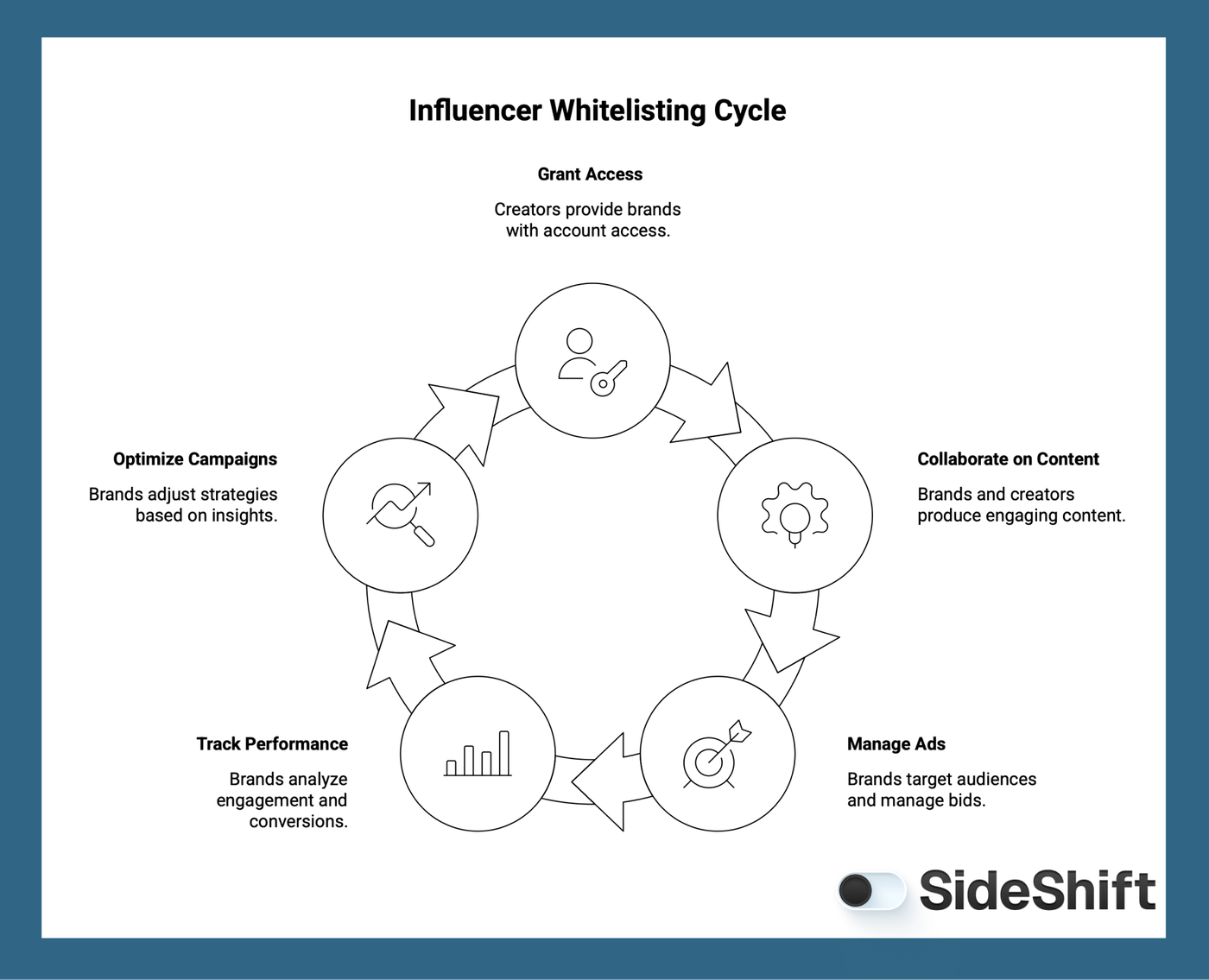
Influencer whitelisting works by giving brands approved access to a creator’s social media account so they can run paid campaigns directly from the creator’s handle. This approach combines the creator’s authentic content with the brand’s targeting and optimization capabilities.
Here’s how it typically works:
- Permission and Access: Creators provide brands with approved access to run paid campaigns on their Instagram and Facebook accounts.
- Content Collaboration: The brand works with the creator to produce engaging content that aligns with both the creator’s style and brand goals.
- Ad Management: Brands can then manage audience targeting, bidding, and analytics for the posts as if they were their own ads.
- Performance Tracking: Detailed insights on engagement, clicks, and conversions help optimize campaigns in real time.
Benefits of Influencer Whitelisting
Influencer whitelisting offers several advantages over traditional influencer marketing campaigns, making it a powerful tool for brands looking to maximize ROI.
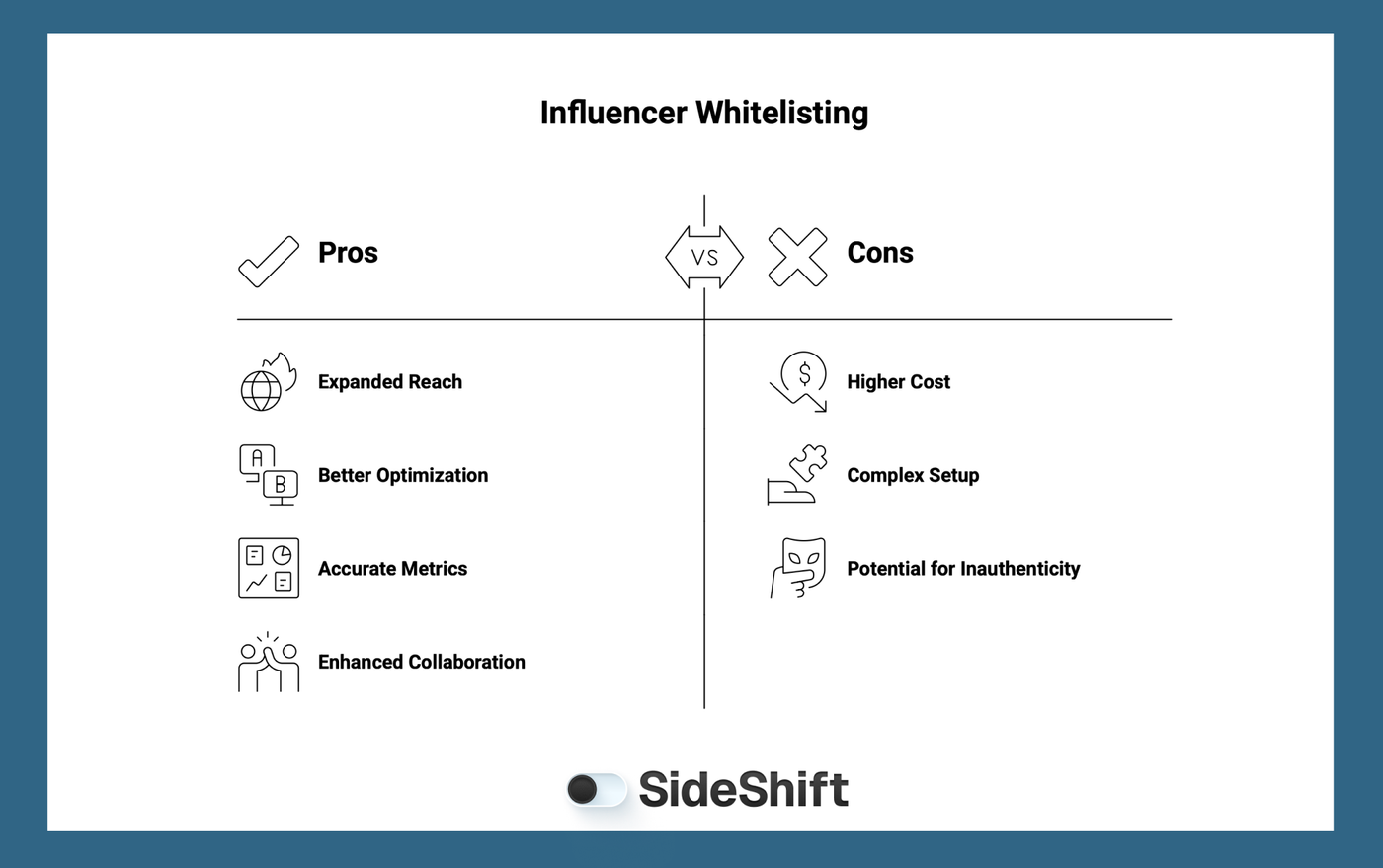
Expanded Reach
Whitelisted ads allow brands to target audiences beyond a creator’s existing followers. This means your content can reach highly specific demographics that are most likely to convert, expanding the campaign’s impact far beyond organic reach.
Better Optimization
Brands can A/B test different audience segments, captions, visuals, and ad formats to identify the most effective combination. This level of control allows campaigns to continually improve and deliver stronger results.
Accurate Metrics
Whitelisted ads provide detailed analytics on engagement, clicks, and conversions directly to the brand. This makes it easier to measure ROI and understand exactly which creatives and audiences are driving performance.
Enhanced Brand-Creator Collaboration
Whitelisting strengthens the value of creator partnerships by involving them in campaign strategy while preserving the authenticity of their content and leveraging their name in the ad space.
Want to put this into practice?
SideShift connects you with vetted UGC creators who actually deliver. Start your free trial and post your first job in under 10 minutes.
This approach results in campaigns that feel natural to audiences and maintain the creator’s unique voice, ultimately driving better performance. According to a recent Tomoson report, influencer marketing initiatives generate an average ROI of $6.50 for every $1 spent, highlighting the effectiveness of authentic, creator-driven campaigns.
Cross-Platform Potential
Whitelisted ads can be deployed across multiple platforms and creators simultaneously, including Facebook, Instagram, and TikTok, allowing brands to scale campaigns efficiently while maintaining consistent messaging and reaching different segments of their ideal target audience.
How to Use Influencer Whitelisting in Your Campaigns
Influencer whitelisting can be a game-changer when executed strategically. Here’s how to incorporate it effectively into your campaigns:
- Identify the Right Creators: Focus on influencers whose audiences closely align with your target demographic to maximize relevance and engagement.
- Develop Authentic Content: Collaborate with creators to produce posts that feel natural, engaging, and true to their style. Avoid content that feels overly promotional.
- Set Clear Objectives: Define KPIs such as reach, clicks, or conversions so you can measure campaign success accurately.
- Gain Whitelisting Access: Work with creators to secure proper permissions on platforms like Facebook, Instagram, or TikTok. Being clear and upfront about usage rights, licensing terms, and whitelisting access is essential when selecting creators and preparing for an influencer campaign.
- Launch & Monitor Campaigns: Use paid social tools to manage targeting, budgets, and optimization in real time, adjusting campaigns as needed for maximum performance.
How to Launch an Influencer Whitelisting Campaign
Launching a whitelisting campaign is straightforward if you follow these steps:
1. Select Creators
Choose influencers with high engagement rates and audiences that closely match your target demographic. Prioritize creators whose content aligns with your brand values and resonates with your ideal customer.
2. Create Content Briefs
Develop clear content briefs that guide creators on messaging, tone, and visual style while leaving room for their authentic voice. This ensures campaigns feel natural, engaging, and aligned with both the brand and the creator’s style.
3. Secure Permissions
Complete any platform-specific whitelisting requirements, such as through Facebook Business Manager or Instagram’s branded content tools. Ensure all legal and access permissions are in place before launching campaigns.
4. Set Up Ads
Once content is approved and permissions are granted, set up your ads. Customize audience targeting, placements, and budgets according to your campaign objectives. Use A/B testing to identify the best-performing creatives and messaging.
5. Analyze Results
Track campaign performance using detailed metrics like engagement, clicks, conversions, and ROI. Use these insights to optimize current campaigns and inform future influencer whitelisting strategies.
Best Practices for Effective Product Seeding
Product seeding is a foundational part of influencer marketing, helping brands place their products with creators who can showcase them in a way that feels genuine and relatable. When done strategically, product seeding goes beyond simple gifting, and it becomes a testing ground for messaging, creative formats, and long-term creator partnerships. A thoughtful approach leads to stronger engagement, higher conversion rates, and more sustainable relationships with creators. Here are some best practices to follow:
Want to put this into practice?
SideShift connects you with vetted UGC creators who actually deliver. Start your free trial and post your first job in under 10 minutes.
- Start Small: Begin with a few trusted creators before scaling campaigns to test messaging, creatives, and audience fit.
- Use Analytics: Identify top-performing content, creators, and audiences to refine future campaigns.
- Maintain Transparent Communication: Clearly share goals, expectations, timelines, and deliverables with creators to ensure alignment and authenticity.
- Test Multiple Creatives and Messaging Styles: Experiment with formats, captions, visuals, and messaging to determine what resonates best with audiences.
- Align Products with the Right Creators: Choose creators whose followers are most likely to engage with and convert for your product.
A Real Example of Influencer Whitelisting
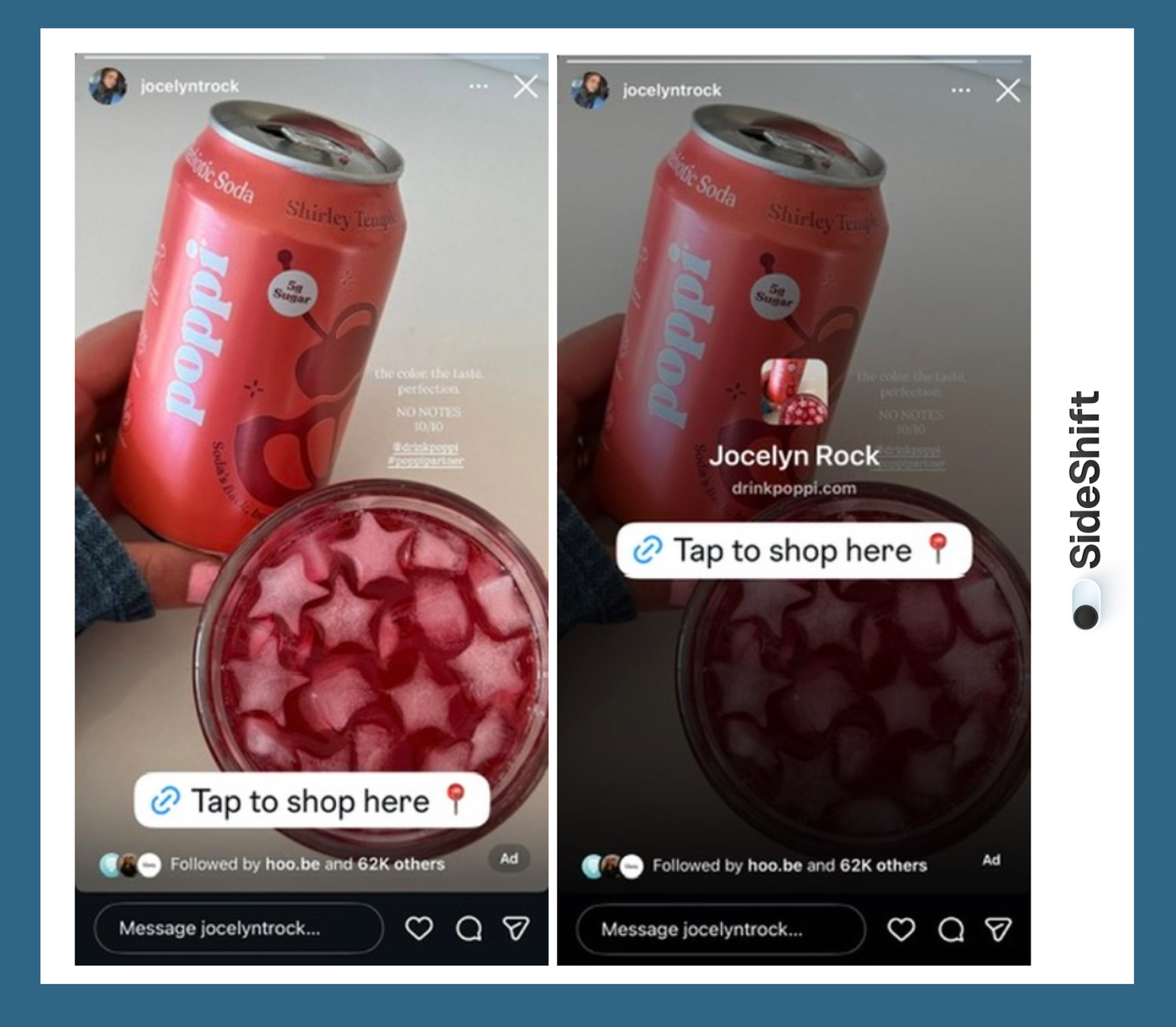
In the above example, Poppi, the beverage brand that sells functional sparkling tonics, has whitelisted with jocelyntrock, allowing them to run ads with her handle and platform-native UGC content, but ultimately benefiting their bottom line and driving traffic to their landing page.
When a brand whitelists and runs ads through a creator’s account, they’re not just licensing a video - they’re leveraging the creator’s name, presence, and audience-facing profile for a social media advertising campaign.
Through this whitelisting partnership, Poppi can reach new audiences, optimize campaigns in real time, and drive traffic effectively, all while keeping the content authentic and creator-driven.
Streamline Influencer Whitelisting With SideShift
Managing influencer whitelisting campaigns can be complex, but SideShift makes it simple. With access to a network of 500,000+ creators, SideShift helps brands find the right influencers, post detailed campaign briefs, manage usage rights and payouts, produce high-quality platform-native content, and track real-time campaign performance all in one place.
From creator discovery and campaign management to content delivery and performance insights, SideShift enables brands to scale influencer whitelisting efficiently while maintaining authentic, high-impact creator partnerships.
Join SideShift for free and start scaling your influencer marketing campaigns today.
FAQs
1. What is influencer whitelisting and why should I use it?
Influencer whitelisting allows brands to run paid campaigns through a creator’s account, offering enhanced targeting, content control, and performance tracking.
2. How do whitelisted ads differ from standard sponsored posts?
Whitelisted ads give brands direct access to a creator’s account for paid campaigns, while standard posts rely solely on organic reach.
3. Which creators should I whitelist for maximum impact?
Focus on creators with engaged audiences that match your target demographic and whose content aligns with your brand.
4. How can I measure ROI from influencer whitelisting campaigns?
By tracking engagement, clicks, and conversions using analytics from the advertising platform, you can evaluate campaign performance in real time.
5. Can whitelisted ads be used across multiple platforms simultaneously?
Yes, platforms like Facebook and Instagram allow brands to run whitelisted ads across multiple channels to maximize reach and impact.