
How to Use Product Seeding in Influencer Marketing
Use product seeding by sending products to influencers, selecting creators who align with your brand, and encouraging authentic content for high engagement.
Table of Contents
How to Use Product Seeding in Influencer Marketing
Influencer marketing is evolving fast, and one of the most effective ways to get authentic content is through product seeding. Instead of relying solely on paid ads or sponsored posts, brands can send products directly to creators and let them share their honest opinions with their audiences. Done right, product seeding builds credibility, drives engagement, and often sparks organic virality.
At SideShift, we’ve seen hundreds of brands, from startups to Fortune 500 companies, use product seeding as part of high-volume UGC campaigns. Our platform connects brands with thousands of Gen Z creators, streamlining gifting, outreach, and content production.
Let’s break down what product seeding is, why it works, and how to execute campaigns that actually deliver results.
What is Product Seeding?
Product seeding is the practice of sending free products to creators, influencers, or brand advocates, with the hope - but not the requirement - that they’ll share content about the product on social media in return. Unlike traditional sponsored campaigns or paid creator partnerships, product seeding doesn’t always involve payment or formal agreements between brands and creators. Instead, the goal is to increase reach, generate authentic content, build brand alignment, and encourage organic promotion.
Key distinctions:
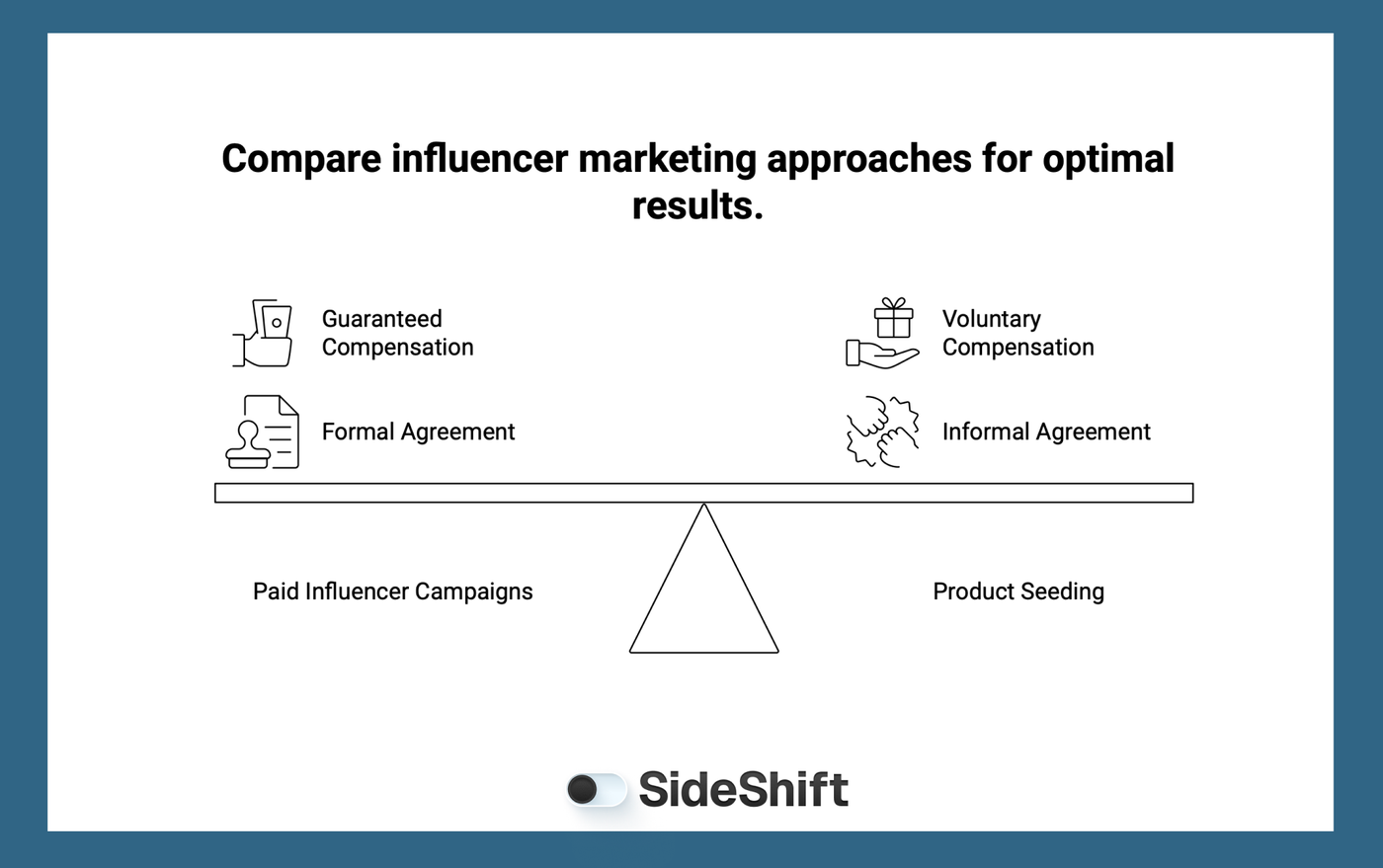
- Paid Influencer Campaigns: The brand and creator enter a contract in which the creator provides content in exchange for payment, product, or another agreed-upon form of compensation.
- Product Seeding: The brand provides the product, and the creator shares feedback or content voluntarily, without a formal agreement or guaranteed compensation.
Product seeding works best when the product is genuinely useful to the influencers and audiences you are targeting. Well-targeted product seeding is essential. Brands should carefully define their target audience and identify influencers or social media content creators whose content, style, and audience align with their product market.
Qualifying potential recipients and considering factors like engagement, niche relevance, and audience demographics ensures that products are sent to people who are genuinely interested and most likely to create authentic and enthusiastic content.
Benefits of Product Seeding
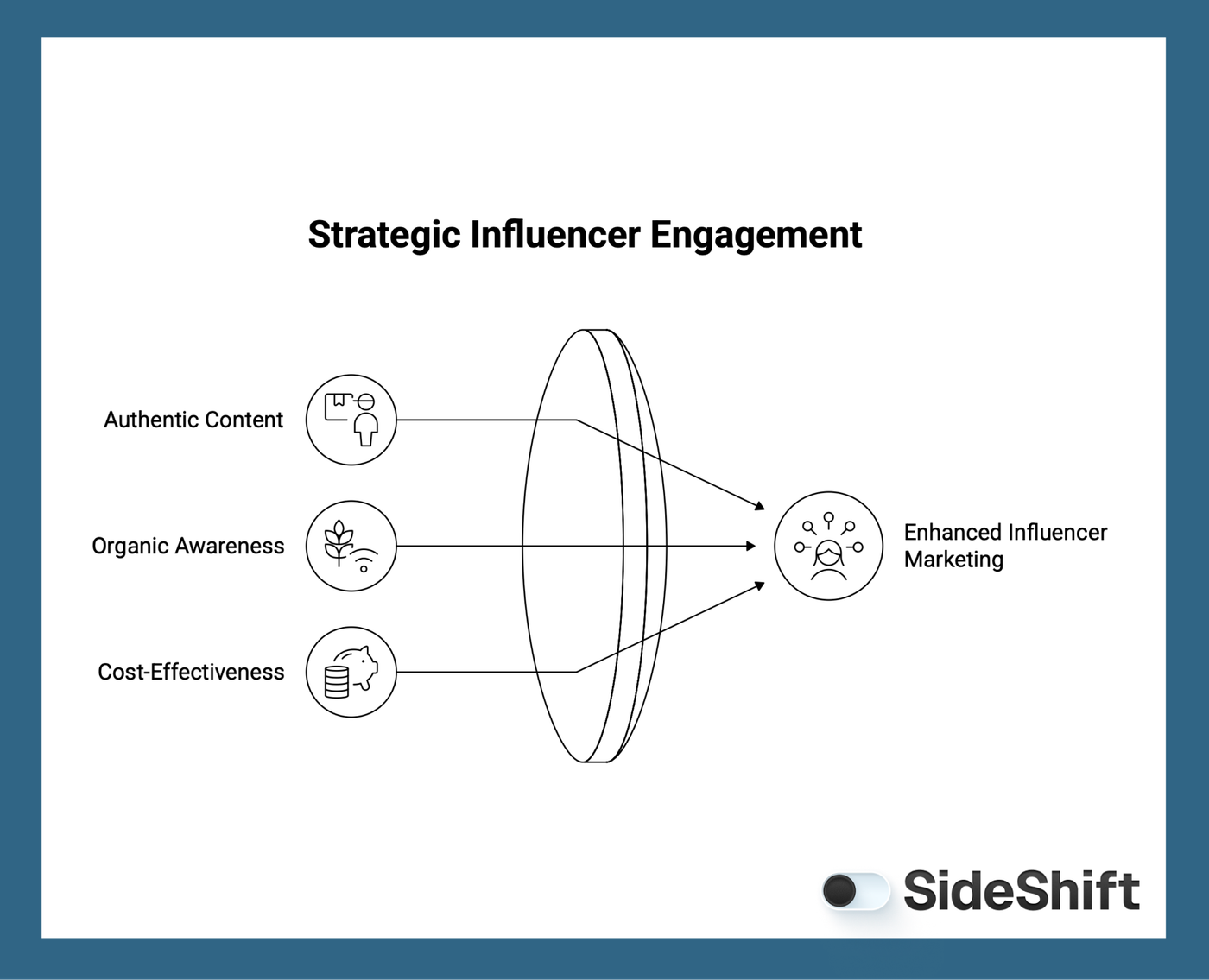
Authentic Content Creation
Creators are more likely to produce honest, engaging content when they genuinely like a product. When creators share about your brand voluntarily, without contractual obligations, it enhances authenticity. This kind of genuine content resonates with audiences and typically drives higher engagement than scripted or paid campaigns.
Organic Brand Awareness
Seeding encourages influencers to share content across TikTok, Instagram, and YouTube without the brand needing to push paid placements. This spreads awareness naturally and often more cost-effectively.
Cost-Effective Influencer Strategy
Brands can distribute products to many influencers at a lower cost than traditional, big-ticket influencer campaigns. Instead of paying for every post or engagement, product seeding allows brands to reach multiple creators simultaneously with minimal investment.
Because UGC output isn’t guaranteed in product seeding, carefully qualifying influencers is crucial to ensure the product lands with people likely to share it. When done well, this approach maximizes exposure, diversifies content across different audiences, and often generates more organic buzz than a single paid partnership, all while keeping marketing budgets lean.
Want to put this into practice?
SideShift connects you with vetted UGC creators who actually deliver. Start your free trial and post your first job in under 10 minutes.
Data & Insights
Even without paid placements, seeded content provides brands with valuable metrics and insights. Engagement rates, reach, sentiment analysis, and other qualitative feedback allow brands to see how audiences respond to their products and messaging.
Over time, this data helps identify top-performing creators that can be used in future influencer campaigns, understand which product features resonate most, and refine future campaigns for greater impact. Additionally, analyzing trends in user-generated content can inform marketing strategies, product development, and messaging for more authentic and effective campaigns.
How to Execute a Product Seeding Campaign
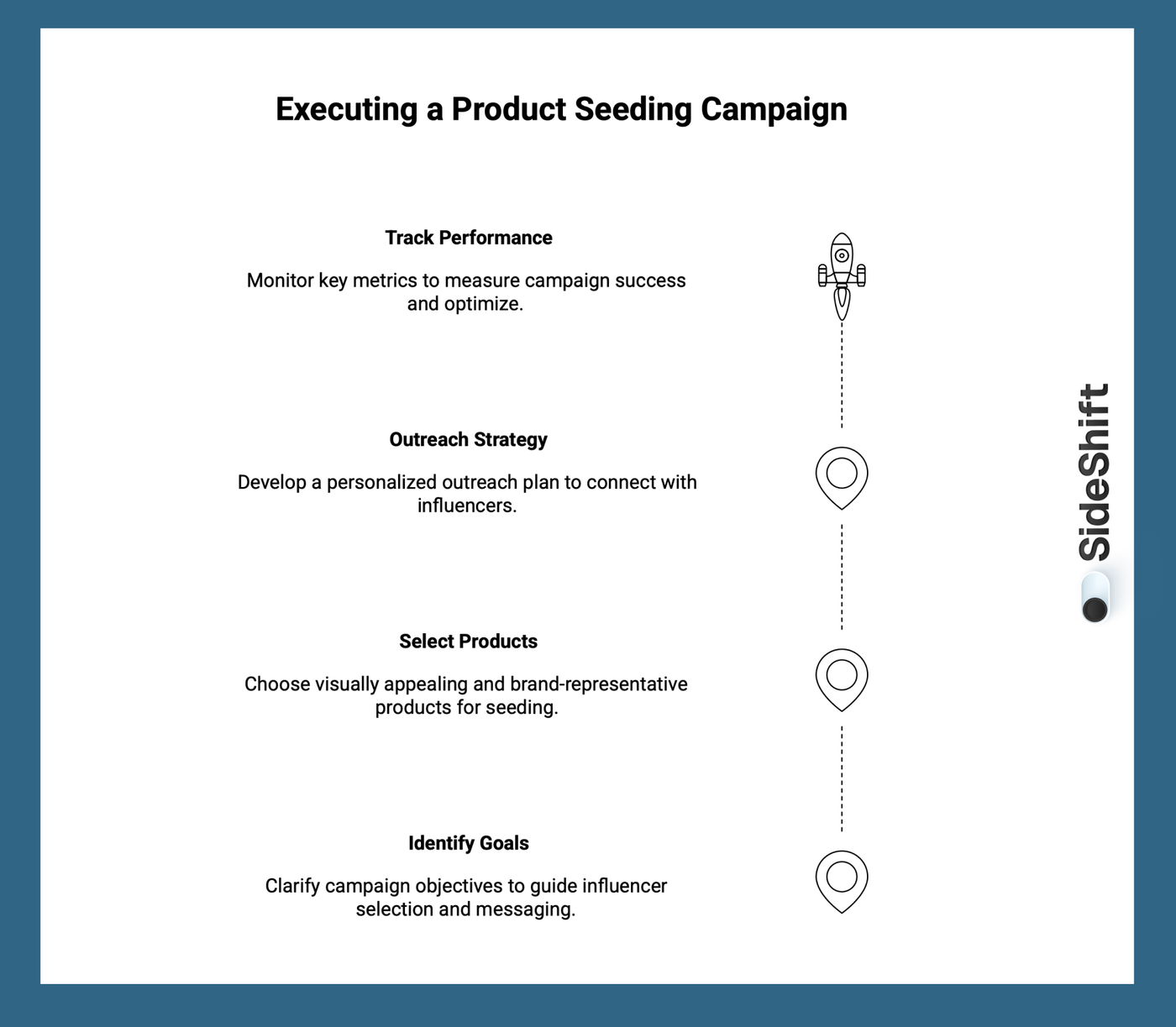
Step 1: Identify Your Goals
Start by clarifying what you want from your campaign:
- Boost brand awareness
- Drive sales
- Collect UGC for future ads
- Launch a new product
Goals determine which influencers you target, the messaging you use, and the type of content you request.
Step 2: Select Products for Seeding
Choose products that:
- Represent your brand’s unique value
- Are visually appealing or “shareable.”
- Can be delivered safely to multiple creator
SideShift recommends sending products that can be unboxed, styled, or demonstrated on camera - visual appeal is very important for driving social engagement.
Step 3: Outreach Strategy
You can find influencers through:
- UGC platforms like SideShift to filter creators by audience, style, and engagement
- Direct outreach via email or DMs with personalized messaging
- Public announcements or brand ambassador pages to attract creators proactively
Pro tip: Include a clear, concise message highlighting why the product aligns with the creator’s niche and what’s in it for them.
Step 4: Track Performance Metrics
To measure the success of your product seeding campaign, track key performance indicators, including:
- Engagement metrics: likes, comments, shares
- Traffic: clicks to your product page or website
- UGC production: number of posts, quality of content
- Conversion: referral codes or links
SideShift’s analytics dashboard makes tracking easy, letting brands optimize campaigns in real time.
Who Should You Send Products to?
Choosing the right creators is crucial for a successful product seeding campaign.
- Micro-influencers (10k–50k followers) often deliver higher engagement and more authentic content, as their smaller, tightly-knit audiences trust their recommendations.
- Macro-influencers (100k+ followers) can provide broader reach and visibility, but their content may feel less personal or organic.
With SideShift, brands can work with UGC creators of all sizes who consistently produce content that resonates and converts. These creators are agile, authentic, and skilled at producing relatable content that feels natural on social platforms and are perfect for product exchange UGC campaigns.
Above all, prioritize audience alignment when selecting creators for product seeding. Even the most creative posts won’t drive results if they’re not in front of the right people. Look beyond follower counts and consider engagement rates, audience interests, creator story, and platform fit. By sending products to creators who genuinely connect with your brand and audience, you maximize both authenticity and impact.
Additional Tips for Selecting Creators
- Review past content to gauge style, tone, and quality
- Consider niche relevance, selecting creators whose content naturally aligns with your product category
Want to put this into practice?
SideShift connects you with vetted UGC creators who actually deliver. Start your free trial and post your first job in under 10 minutes.
- Track engagement metrics on previous posts to identify creators with high interaction rates
- Favor creators who produce content consistently, indicating reliability and dedication
Best Practices for Effective Product Seeding
Executing a successful product seeding campaign requires building relationships, creating excitement, and turning every product into shareable content. Small touches, thoughtful communication, and strategic incentives can make a huge difference in how creators respond and how audiences engage with the content.
Here are some proven best practices to maximize the impact of your product seeding campaigns:
Personalization & Messaging
Address the creator by name and reference their content. Explain why your product aligns with their style and audience.
Packaging & Unboxing Experience
A well-packaged product creates excitement and encourages creators to film unboxing videos, increasing shareability.
Follow-Ups & Engagement
Check in after sending products. Encourage feedback and ask if they need support. Don’t over-message, but show genuine interest.
Incentives for Authentic Content
Consider performance bonuses, affiliate codes, or featuring the creator on your brand channels to motivate high-quality posts.
Track & Iterate
Use insights from seeded content to improve future campaigns. Which products drove the most engagement? Which creators produced content that resonated?
Streamline Product Seeding With SideShift
SideShift makes product seeding simple, fast, and scalable. Instead of juggling spreadsheets, DMs, and shipments, you can find the right creators, send products, manage approvals, and track content performance all in one place.
Campaigns that once took months can now be launched in weeks, reaching dozens or even hundreds of creators without losing authenticity. With SideShift, every seeded product becomes an opportunity for real, engaging content that drives brand awareness, audience trust, and measurable results.
Sign up for your free trial on SideShift today.
FAQs
- What is product seeding in influencer marketing?
Product seeding is the practice of sending free products to influencers or creators to encourage authentic content creation. Unlike paid sponsorships, the focus is on organic promotion and genuine engagement rather than contractual deliverables.
2. How do I choose the right influencers for product gifting campaigns?
Look for creators whose content style, audience, and values align with your brand. Micro-influencers often offer higher engagement and authenticity, while UGC creators provide fast, scalable content at volume. Platforms like SideShift make it easy to filter and find the perfect fit.
3. What types of products work best for influencer seeding?
Products that are visually appealing, easy to use, and “shareable” tend to perform best. Anything that sparks excitement, storytelling, or unboxing experiences encourages creators to produce high-quality, engaging content.
4. How can I measure the success of a product seeding campaign?
Track engagement metrics (likes, comments, shares), traffic and conversions, and UGC production volume. Insights from seeded content help optimize future campaigns and determine ROI, even if the posts aren’t paid placements.
5. Can product seeding be combined with paid influencer campaigns?
Absolutely. Many brands start with product seeding to generate organic buzz and then amplify top-performing content through paid campaigns. This hybrid approach maximizes reach while keeping content authentic.