


Whitelisting vs. Allowlisting: Influencer Marketing Terms Explained
Whitelisting vs. allowlisting: they're the same influencer marketing tactic. Here's what it means, why the term changed, and how it works by platform.
Table of Contents
You've seen "whitelisting" vs. "allowlisting" being compared, but you've also heard both being used to describe the same influencer marketing tactic. Now you're wondering whether they're actually different things. Answer: They're not.
Both terms describe the same practice: A brand runs paid ads directly from a creator's handle, using the creator's face, voice, and social proof, instead of running the ad from the brand's own account.
However, the confusion is understandable. Two different words pointing at one concept usually means something changed along the way, and in this case, it did. The industry shifted its vocabulary, and both terms are still in active use depending on who you ask, which platform's documentation you're reading, or how recently a team updated its internal glossary.
Stay with us to learn what the tactic actually involves, why the terminology changed, how it works across the main social media platforms, and when it makes sense for a brand to use it.
Whitelisting vs. Allowlisting in Influencer Marketing: What It Means
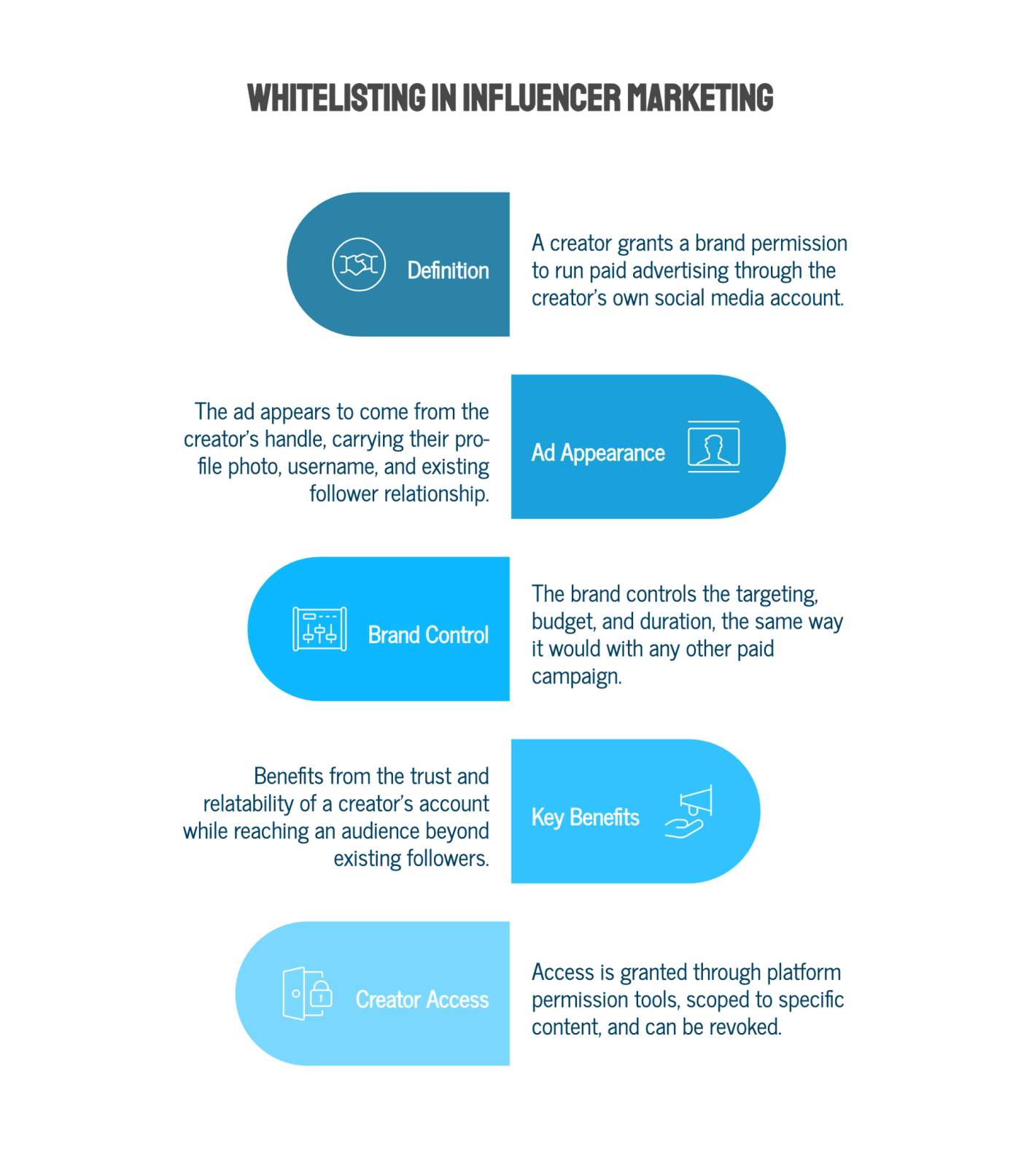
Whitelisting, also called allowlisting, is when a creator grants a brand permission to run paid advertising through the creator's own social media account.
The ad appears to come from the creator's handle, carrying their profile photo, username, and existing follower relationship, but the brand controls the targeting, budget, and duration, the same way it would with any other paid campaign.
Because whitelisting keeps the creator's identity attached to the ad, it benefits from the trust and relatability of a real creator's account while reaching an audience well beyond that creator's existing followers, since the brand is paying to put it in front of a much larger group of people.
The creator doesn't lose control entirely. Access is granted through the platform's own permission tools, it's scoped to specific content or ad accounts, and it can typically be revoked once the agreed period ends.
From Influencer Whitelisting to Allowlisting: Why Did the Term Change?
"Whitelist" and "blacklist" originated as IT security terms, used to describe approved and blocked items on any list, long before either word had anything to do with influencer marketing. Over the past years, much of the tech and marketing industry moved away from that terminology because of its racial connotations, replacing it with more neutral alternatives like "allowlist" and "denylist," or "allowlist" and "blocklist."
Some social media platforms have followed that shift in their own documentation and product naming. Meta, for instance, now refers to the underlying feature as Partnership Ads rather than whitelisting. Even so, "whitelisting" remains widely used in day-to-day conversation across the influencer marketing industry, especially among people who learned the tactic under its original name.
For a brand or creator working through a partnership today, the practical takeaway is simple: whichever term shows up in a brief or contract, it refers to the exact same mechanism, but it's worth confirming that both sides mean the same thing before assuming.
How Whitelisting Works by Platform
The core mechanism, a creator granting a brand ad access to their account, is consistent across platforms, but the exact setup differs depending on where the campaign runs.
Want to put this into practice?
SideShift connects you with vetted UGC creators who actually deliver. Start your free trial and post your first job in under 10 minutes.
Meta (Instagram and Facebook)
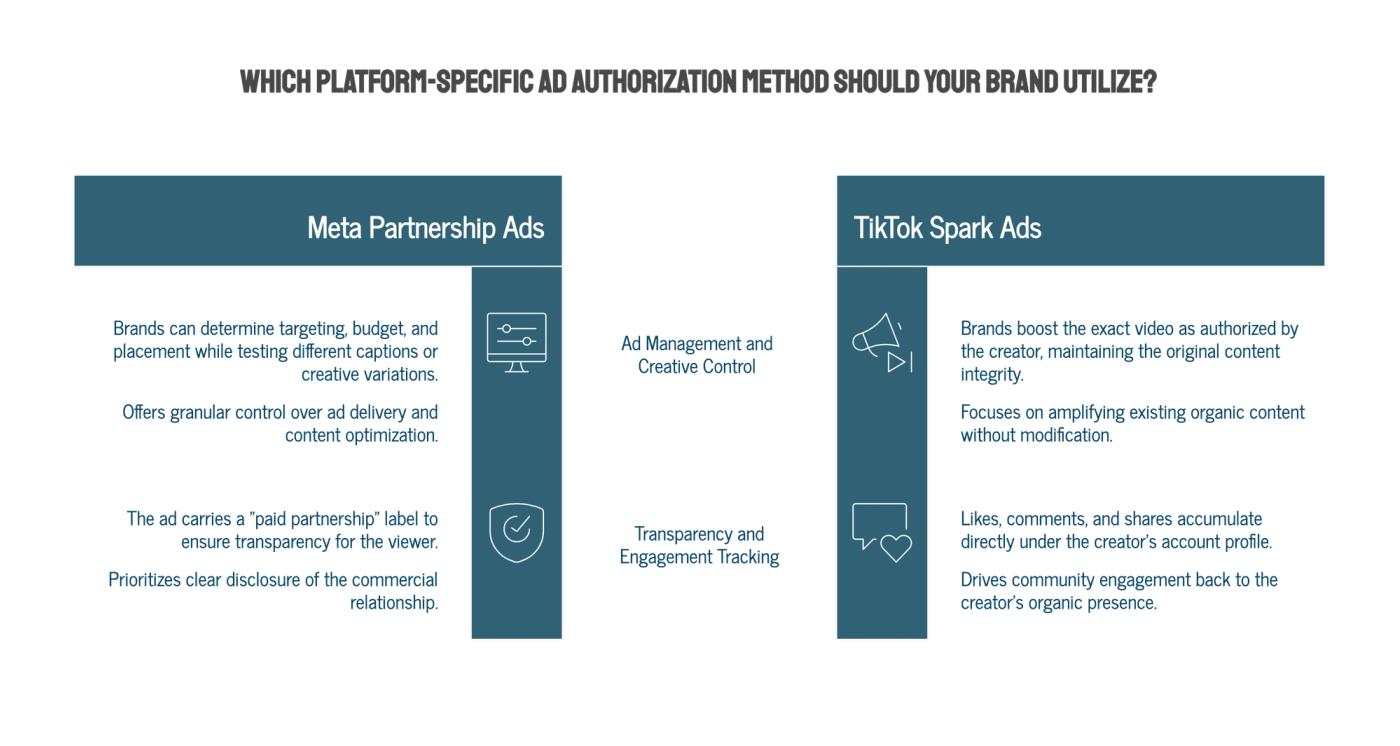
On Meta platforms, influencer allowlisting is handled through a feature called Partnership Ads. The creator tags the brand as a business partner on a specific post through Meta's built-in ad management tool, which grants the brand permission to run that post as a paid ad from the creator's account. The ad still carries a "paid partnership" label, keeping the relationship transparent to viewers.
Brands can determine targeting, budget, and placement, and in many cases can also test different captions or creative variations of the same underlying content, all while it continues to display the creator's handle.
TikTok
TikTok's version is called Spark Ads. The creator generates an authorization code from within the TikTok app for a specific video, then shares that code with the brand. Once the brand applies the code in TikTok's Ads Manager, it can boost that exact video as a paid ad. The video remains visible on the creator's own profile the entire time, with likes, comments, and shares accumulating under the creator's account rather than on a separate ad-only post.
YouTube
YouTube doesn't have as standardized a whitelisting workflow as Meta or TikTok. Most YouTube creator partnerships that involve paid amplification are handled through separate arrangements, such as a brand running its own ads that link to or reference a creator's video, rather than a direct account-level ad permission. Because of this, whitelisting in the strict sense is far less common on YouTube than on Instagram or TikTok.
Whitelisting vs. Sponsored Posts vs. UGC Ads
Whitelisting (or allowlisting) can get mixed up with sponsored posts and UGC, but those are separate formats with differences that matter for budgeting and expectations.
- Sponsored posts involve a creator posting content on their own account, reaching their existing followers organically, with no additional ad spend behind it.
- Whitelisting takes that same content, or a version built specifically for it, and puts paid budget behind it, expanding its reach to a much larger, brand-targeted audience while keeping the creator's handle attached.
- UGC creators produce content specifically for the brand to own and run as an ad from the brand's own account, meaning the creator's handle doesn't appear on the final ad.
In practice, brands often use more than one of these together. A creator might publish a sponsored post first, and if it performs well organically, the brand then negotiates whitelisting rights to extend that same content with paid reach. A separate UGC deal might run in parallel, supplying content for the brand's own paid channels that doesn't depend on any single creator's account access.
When Whitelisting Makes Sense
Whitelisting isn't the right tool for every campaign, but it's worth considering when:
- An organic post from a creator is already performing well and a brand wants to extend its reach with paid targeting rather than starting from scratch
- A brand wants a real person's face and voice behind an ad without producing entirely new creative
Want to put this into practice?
SideShift connects you with vetted UGC creators who actually deliver. Start your free trial and post your first job in under 10 minutes.
- A brand is running performance tests across several creators to see which voice, style, or audience converts best before committing a larger budget
- A creator's account carries more built-in trust with a target audience than the brand's own account currently does, which is common for newer brands or categories where peer recommendation matters more than brand messaging
When one of these applies, whitelisting is usually worth the extra setup it takes to put in place.
Scale Your Whitelisting Campaigns with SideShift
What whitelisting adds is the credibility that comes from keeping the creator's identity attached to the ad, which frequently shows up as stronger click-through and engagement rates than the same creative running from a brand handle.
But results only show up when you work with a roster of reliable creators who can deliver content that performs and connects with the audience.
SideShift connects brands with 1M+ pre-vetted creators, with a verified track record and response rates before you hire. Contract terms, access permissions, and payments are also managed inside our platform, so key pieces of your campaigns are organized in one place instead of scattered across platform tools and spreadsheets.
FAQs
1. Is whitelisting the same as allowlisting?
Yes. Both terms describe the exact same practice: running paid ads through a creator's own account with their permission. Allowlisting has become the more common term in formal contracts and platform documentation, while whitelisting remains widely used in casual conversation.
2. Do creators get paid extra for whitelisting?
Usually, yes. Granting ad access is typically treated as a separate line item from the fee for the original content, since it involves ongoing use of the creator's account and identity rather than a one-time post.
3. How long does a whitelisting agreement typically last?
Terms vary widely, but 30 to 90 days is common for a single campaign, with some ongoing partnerships renewing access periodically. The exact duration should always be specified in the contract rather than left open-ended.
4. Can a brand run ads from a creator's handle without permission?
No. Both Meta's Partnership Ads and TikTok's Spark Ads require the creator to actively grant access through the platform's own tools, and that access can be revoked by the creator at any time. A brand cannot run ads from a creator's account without that explicit authorization.
5. What's the difference between whitelisting and simply boosting a post?
Boosting a post through the brand's own ad account still shows the ad coming from the brand's handle. Whitelisting runs the ad from the creator's handle instead, which keeps the creator's identity and social proof attached to the ad the whole time.