


What is a Sponsored Post? FTC Rules & How They Work (2026)
A sponsored post is paid content from a creator promoting a brand. See how sponsored posts work, FTC disclosure rules, and what they cost in 2026.
Table of Contents
A sponsored post is social media content that a creator publishes in exchange for compensation from a brand. That compensation can take the form of a flat fee, free products, an affiliate commission, or another agreed-upon arrangement. While the term can also refer to paid or boosted social media posts run directly by brands, it's most commonly used to describe influencer and creator partnerships.
Regardless of how the creator is compensated, sponsored content must be clearly disclosed under FTC guidelines so audiences know there's a commercial relationship.
So how do sponsored posts actually work? What do the FTC's 2026 disclosure rules require, and how much are brands paying creators today? This guide breaks it all down.
How Do Sponsored Posts Work?
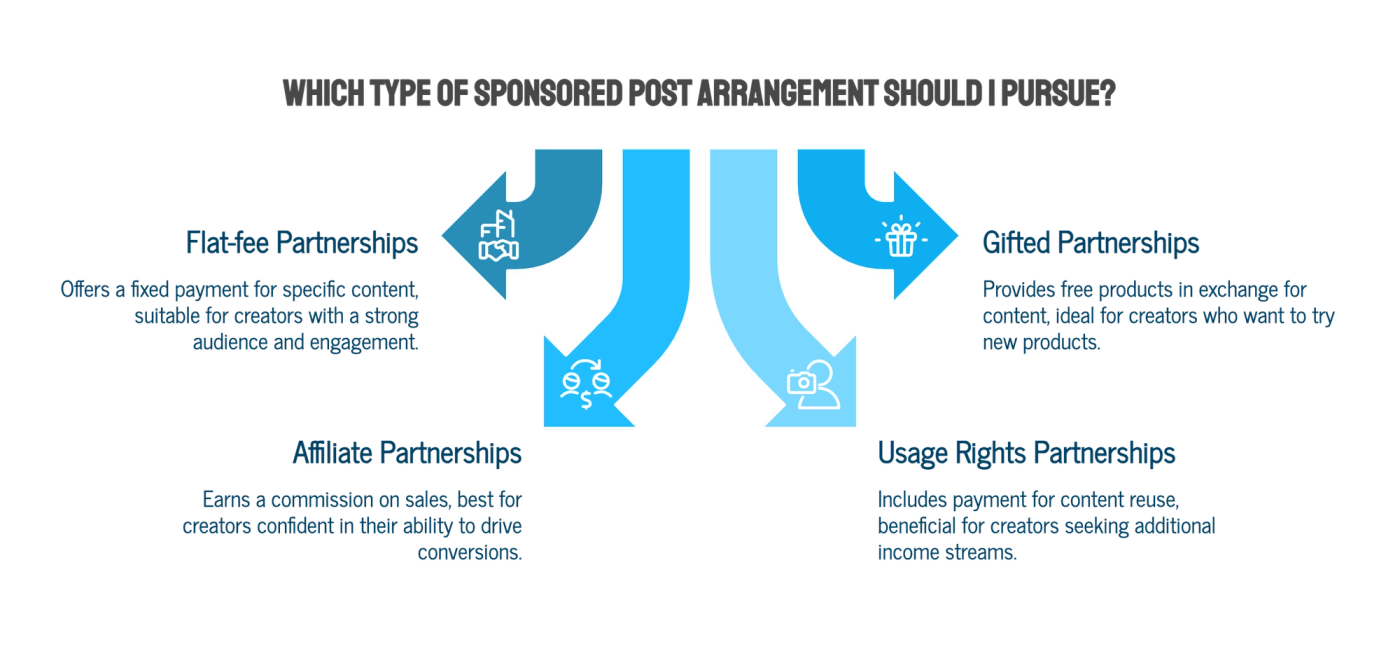
Most sponsored content falls into one of four arrangements.
- Flat-fee partnerships: The brand pays a fixed rate for a specific deliverable, such as one TikTok video or an Instagram Reel with three Story frames. Pricing typically depends on the creator's audience size, engagement rate, niche, and content quality.
- Gifted partnerships: The brand provides free products instead of cash in exchange for content. Even when no money changes hands, the FTC still considers product seeding and sending “free” products compensation, so creators must disclose the partnership.
- Affiliate partnerships: The creator earns a commission for each sale generated through a tracked link or promo code. Brands like the performance-based model, while creators often choose affiliate deals for products they genuinely believe will convert.
- Usage rights partnerships: The brand pays not only for the sponsored post but also for permission to reuse the creator's content in paid ads, email marketing, or on its own social channels.
What Are the FTC Rules for Sponsored Posts in 2026?
The Federal Trade Commission (FTC) requires creators to clearly and conspicuously disclose any material connection they have with a brand. A material connection is intentionally broad and includes more than just cash payments. Free products, discounts, affiliate commissions, travel, event invitations, employment, family relationships, or any other benefit that could influence an endorsement all qualify.
The guiding principle is simple: if the relationship could affect how consumers evaluate your recommendation, it should be disclosed. The disclosure should be difficult to miss, written in plain language, and placed where viewers will see it before or alongside the endorsement, not buried in a list of hashtags or hidden behind a “See more” button.
The FTC also makes it clear that built-in platform labels, such as a “Paid Partnership” tag, may not be enough on their own. Creators should include an easy-to-understand disclosure in the content itself or in the caption using language like “Ad,” “Sponsored,” or “Paid partnership with [Brand].” Vague phrases like “#sp,” “#collab,” or simply tagging the brand don't clearly communicate that the content is advertising.
The same rules apply across formats. Whether you're publishing an Instagram Reel, TikTok, YouTube video, livestream, Story, podcast, or affiliate link, the disclosure should be presented where viewers are likely to notice it. For video and audio content, that often means stating the partnership verbally in addition to including a written disclosure on screen or in the description.
Want to put this into practice?
SideShift connects you with vetted UGC creators who actually deliver. Start your free trial and post your first job in under 10 minutes.
For brands, compliance doesn't stop with the creator. The FTC expects advertisers to educate creators about disclosure requirements and monitor sponsored campaigns to help ensure those disclosures are being made correctly.
Is UGC a Sponsored Post?
It depends on why the content was created.
If someone buys a product with their own money and posts about it simply because they love it, that's traditional user-generated content (UGC). There's no payment, no free product, and no agreement with the brand, so FTC sponsorship disclosures aren't required.
For example:
- You buy a new coffee maker and share it on Instagram because you genuinely recommend it.
- You post a restaurant review after paying for your own meal.
- You upload an unboxing video without ever speaking to the brand.
Organic recommendations can have a powerful influence regardless of the creator's audience size. Whether it's a customer sharing their favorite skincare product with friends or a creator posting about a local café they genuinely enjoyed, authentic recommendations can increase awareness, drive purchases, and spark conversations without any involvement from the brand.
Because there is no payment, free product, an affiliate agreement, or other material connection between the creator and the business, these recommendations do not require an FTC disclosure.
This is user-generated content in its traditional sense: authentic people sharing products and experiences they genuinely enjoy. It's social media functioning as modern-day word-of-mouth marketing.
However, the evolution of the creator economy has changed how the term UGC is used. Today, many brands hire creators to produce content that looks organic and authentic but is actually part of a paid collaboration. The creator may receive a flat fee, free products, affiliate commission, or another form of compensation, even if they have a very small following and wouldn't traditionally be considered an influencer.
Because there's a material connection between the creator and the brand, this type of UGC is considered sponsored content.
What Do Sponsored Posts Cost in 2026?
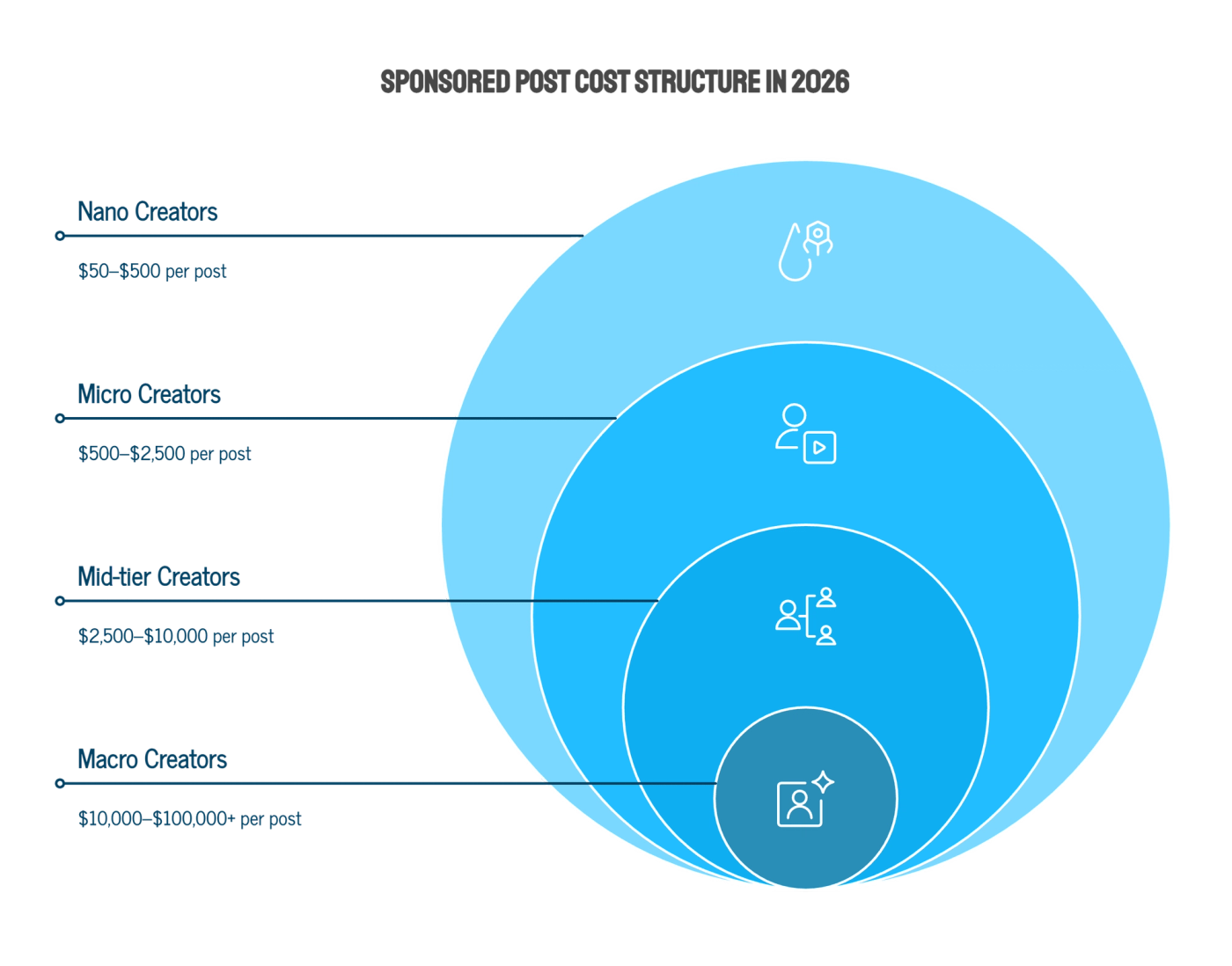
Rates vary by platform, niche, engagement rate, and deliverables, but audience size still sets the baseline in most negotiations. Typical per-post ranges in 2026 look like this:
- Nano creators (1,000–10,000 followers): typically $50–$500 per sponsored post. Many are still open to gifted collaborations or hybrid compensation.
- Micro creators (10,000–100,000 followers): typically $500–$2,500 per post. This is where many DTC brands concentrate their spend thanks to strong engagement and highly targeted audiences.
- Mid-tier creators (100,000–500,000 followers): typically $2,500–$10,000 per post, depending on platform, engagement, niche, and content requirements.
- Macro creators and above (500,000+ followers): typically $10,000–$100,000+ per post, with top creators and celebrities negotiating custom rates based on campaign scope, exclusivity, and usage rights.
Video commands a premium over static posts on every platform, and usage rights typically add 25% to 100% on top of the content fee.
Paying more for reach in follower count is only rational if reach is what you're optimizing for, and our guide to moving beyond vanity metrics makes the case that it usually shouldn't be. If you want to model what a creator budget could return before committing one, our free ROI calculator runs conservative projections built on real case study data.
Want to put this into practice?
SideShift connects you with vetted UGC creators who actually deliver. Start your free trial and post your first job in under 10 minutes.
What Does a Good Sponsored Post Look Like?
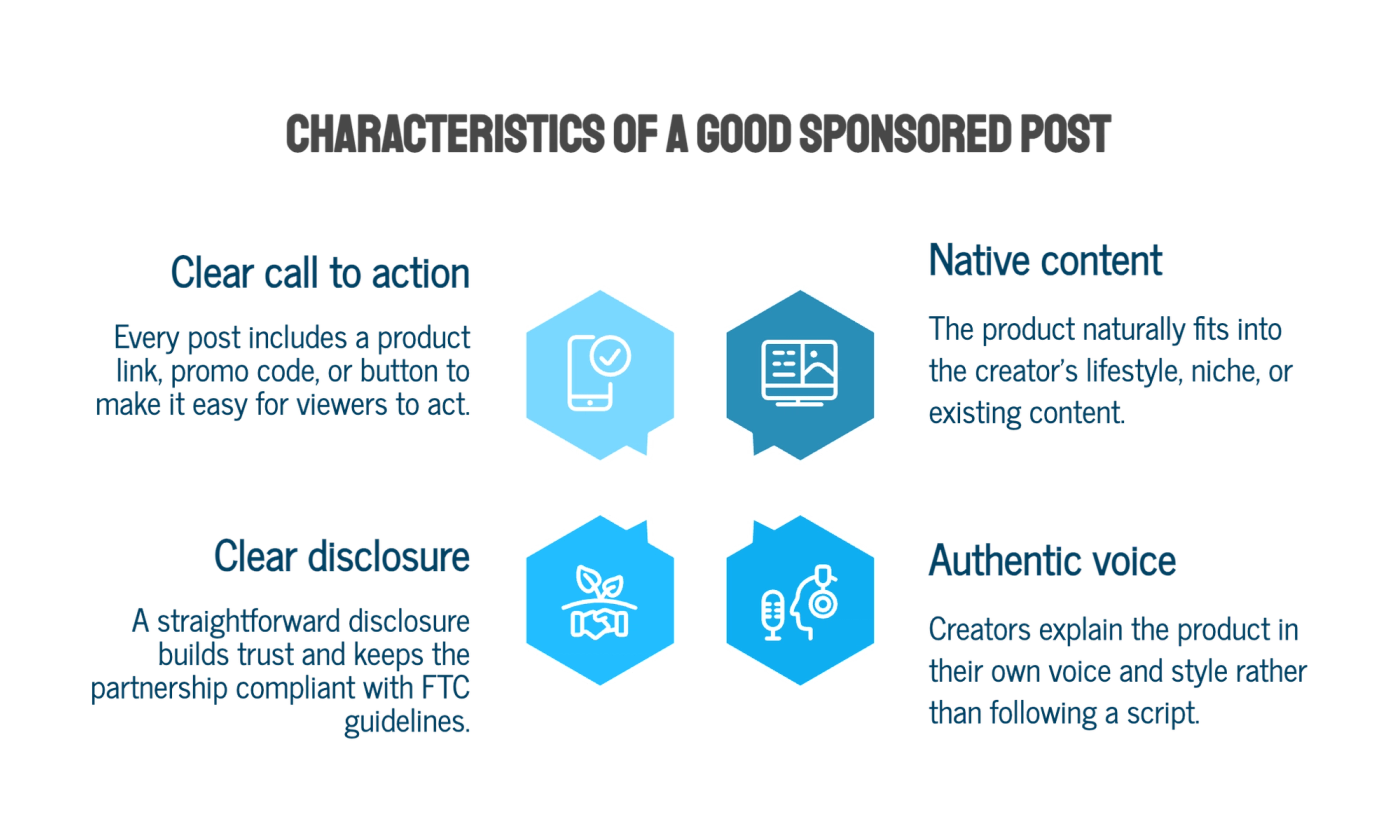
A sponsored post can take many forms, including a single photo, carousel, short-form video, Stories, or a long-form video. The best sponsored posts don't feel like an interruption or an ad. They usually have four things in common:
- It feels native to the creator's content. The product naturally fits into the creator's lifestyle, niche, or existing content instead of feeling like an obvious detour.
- The creator sounds like themselves. The best-performing sponsored posts rarely follow a script word for word. Brands provide the key messages, but creators explain the product in their own voice and style.
- The partnership is disclosed clearly. A straightforward disclosure builds trust and keeps both the creator and the brand compliant with FTC guidelines. Being transparent doesn't make a recommendation less authentic, it gives audiences the context they deserve.
- There's a clear call to action. Whether it's a product link, promo code, or “shop now” button, every sponsored post should make it easy for viewers to take action. It also gives brands a way to measure what the partnership actually generated.
Manage Your Sponsored Posts from Start to Finish with SideShift
Running a few sponsored posts is simple. Running dozens of creator partnerships at once is where things start to break down. Briefs live in email threads, contracts sit in shared drives, approvals get buried in Slack, and payouts become a manual process that consumes hours every month.
SideShift brings your entire creator program into one platform. Discover and onboard creators, send campaign briefs, manage deliverables, track campaign progress, collect approvals, and pay creators around the world, all from a single workspace. Instead of piecing together spreadsheets, payment apps, and project management tools, your team has one source of truth for every collaboration.
As your program grows, SideShift also gives you organized campaign and payout data by creator, making it easier to understand what you're spending, who your highest-performing partners are, and where your budget is generating the strongest return. Fast, reliable payouts also help build stronger creator relationships, making your best partners more likely to work with you again.
FAQs
1. What is a sponsored post in simple terms?
It's a social media post a creator is paid to publish for a brand, whether the payment is cash, free product, or commission. By law it has to be labeled as sponsored.
2. Do sponsored posts have to say #ad?
The disclosure has to be clear and conspicuous, and “#ad” or “#sponsored” at the start of a caption is the accepted standard. Vague tags like “#collab” or disclosures buried in a hashtag block don't meet FTC requirements.
3. How much does a sponsored post cost?
Sponsored posts can range from a gifted product or affiliate commission to tens of thousands of dollars or more, depending on the creator and campaign. Pricing varies based on factors like audience size, engagement, niche, platform, content requirements, usage rights, and exclusivity. Compensation may come as a flat fee, free products, commission, or a combination of these.
Want to put this into practice?
SideShift connects you with vetted UGC creators who actually deliver. Start your free trial and post your first job in under 10 minutes.
4. Are gifted products considered sponsored posts?
Yes. Free products are a material connection under FTC rules, so the post requires the same disclosure as a paid one, even if no money changed hands.