


How to Write a UGC Creative Brief That Gets Results
A UGC creative brief sets goals, defines target audiences, outlines messaging, and specifies content requirements to drive high-performing creator campaigns

Table of Contents
A strong UGC creative brief is how brands ensure those outliers align with their goals. Without a clear brief, creators often miss the mark, resulting in wasted time, inconsistent messaging, and weaker ROI.
This resource shows how to craft briefs that get results, complete with examples, best practices, and actionable guidance for brands and creators.
What is a UGC Brief?
A UGC (user-generated content) creative brief is a concise document that communicates a brand’s expectations to a creator while leaving space for authentic expression. It outlines goals, messaging, content requirements, compensation, usage rights, KPIs, and guidelines, essentially serving as both a project proposal and, once agreed upon, a contract between brand and creator.
With SideShift, brands can post a single, well-crafted brief to align dozens of creators at once, ensuring every video supports campaign objectives, whether that’s driving engagement, conversions, or social reach. You can also manage multiple briefs for different projects and goals simultaneously.
A strong UGC brief streamlines the workflow reduces revisions, speeds up approvals, and helps more content hit the feed.
Components of a Strong UGC Brief
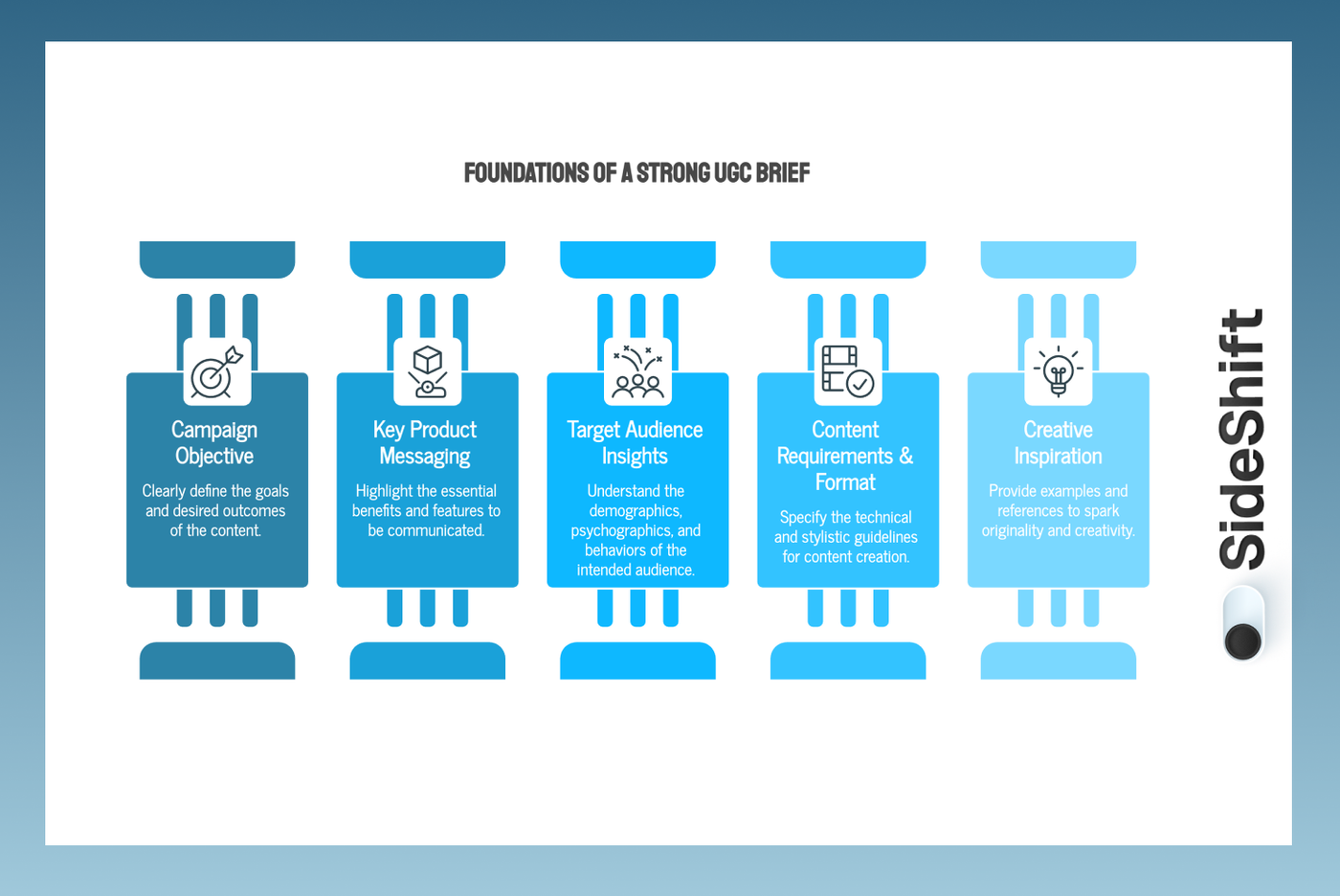
Effective UGC briefs include five core elements:
1. Campaign Objective
What is this content supposed to achieve? Examples include driving clicks, building social proof, or increasing sales for a new product launch.
2. Key Product Messaging
List the main benefits, features, or talking points that creators must highlight.
3. Target Audience Insights
Who should the content resonate with? Include demographic, psychographic, and behavioral information.
4. Content Requirements & Format
Specify video length, platform, style, and any required branding elements, but don’t script the entire video.
5. Creative Inspiration
Share examples of high-performing content, trending formats, or stylistic references to guide creators while leaving room for originality.
Example of a Poor UGC Brief
Campaign Objective: Sell lip tint.
Key Product Messaging: It’s good.
Target Audience: People who like makeup.
Content Requirements: Make a video.
Creative Inspiration: Be creative.
This brief gives creators almost no guidance, but brands should also be careful not to go too far in the opposite direction. Overloading a brief with detailed scripts or pages of instructions can stifle creativity and limit the authenticity that makes for effective UGC. The goal is to empower creators to share their message in their own voice while still hitting your campaign objectives.
The campaign objective, being “sell lip tint,” doesn’t define what success looks like or how the content should be structured. Product messaging is vague, labeled only as “It’s good,” leaving nothing specific for creators to emphasize.
The target audience is described broadly as “people who like makeup,” offering no insight into age, interests, or social habits. Content requirements are minimal, just “make a video,” with no guidance on format, length, or style.
Creative inspiration is limited to “be creative,” which, without examples, forces creators to guess and increases the risk of off-brand or inconsistent content. In short, this brief is confusing, leads to multiple revisions, and makes it unlikely that the final content will drive meaningful results.
Want to put this into practice?
SideShift connects you with vetted UGC creators who actually deliver. Start your free trial and post your first job in under 10 minutes.
The brief also leaves out UGC compensation details, making it unlikely that quality creators will commit. Additionally, it doesn’t address content usage or ownership rights, which are critical for repurposing UGC across channels.
The ability to redistribute creator content is what makes UGC so valuable and scalable. A strong brief should set clear expectations around pay and ownership rights, ensuring long-term success and maximizing the campaign’s conversion potential.
Example of Strong UGC Brief
Here’s an example of a strong UGC brief that you can use as inspiration or a template when finding UGC creators and aligning everyone to a single campaign goal. It demonstrates how clear objectives, detailed messaging, and specific content guidance, paired with room for creator creativity, can help brands produce on-brand, high-performing content at scale.
Campaign Objective: Showcase the new lip tint’s long-lasting wear (12+ hours) and natural look, driving conversions for the product launch. Success will be measured by engagement rates, click-throughs to product pages, and user-generated sales.
Key Product Messaging:
Highlight these specific points:
- Long-lasting formula that stays through meals
- Hydrating, non-drying finish
- Available in six versatile shades
- Inclusive for all skin tones
Target Audience: Gen Z and young millennials (18–25) who follow TikTok beauty trends, enjoy experimenting with makeup, and engage with short-form video tutorials.
Content Requirements:
- Video length: 30–60 seconds, vertical format for TikTok or Instagram Reels
- Include before-and-after shots of the lip tint
- Showcase personal reaction or “wow” moment
- Incorporate at least one trending TikTok audio or transition style
Creative Inspiration: Examples of high-performing content:
- Spend a day with me showcasing all-day wear (including before and after)
- Selfie-style tutorials with natural lighting
- Quick transformation or “get ready with me” clips
- Trend-based transitions that reveal the final look
- Optional humorous or relatable hook to increase shareability
Compensation & Rights:
- Clearly state creator payment (e.g., $500 per video + view-based bonus)
- Specify usage rights for cross-channel distribution, including social, ads, and e-commerce platforms
Why This Type of UGC Creative Brief Works:
This example balances guidance and creative freedom. It gives creators a clear understanding of campaign goals, key messaging, and audience context, while allowing them to inject their personality and style.
Compensation and content ownership are defined upfront, which attracts higher-quality creators and ensures UGC can be repurposed efficiently.
By providing structure without stifling creativity, this brief maximizes the likelihood of high-performing, authentic content that drives measurable results.
Find Creators with UGC Creative Briefs on SideShift
SideShift makes it easy for brands to take briefs from concept to execution at scale. Post your UGC brief and set content requirements, then recruit from over 800,000 growing Gen Z creators who are experienced with high converting platform native short-form video.
SideShift allows you to manage applications and approvals directly through the platform, and track performance with real-time analytics to see which videos resonate best and optimize quickly.
Start posting creator briefs on SideShift today for free.
FAQs
1. What is a UGC creative brief, and why is it important?
A UGC creative brief sets expectations for creators, clarifies messaging, and aligns content with campaign goals. It improves quality, consistency, and ROI while reducing edits.
Want to put this into practice?
SideShift connects you with vetted UGC creators who actually deliver. Start your free trial and post your first job in under 10 minutes.
2. How do I structure a UGC brief for influencer campaigns?
Include five elements: campaign objective, key product messaging, target audience, content requirements and format, and creative inspiration. Avoid over-scripted instructions.
3. What content requirements should I include for creators?
Specify video length, platform, required branding elements, format, and style references. Keep it precise but flexible to allow creativity.
4. How much creative freedom should I give influencers?
Balance guidance with flexibility. The most authentic, high-performing UGC comes from creators who can inject their own personality while following the brief’s framework.
5. Can a strong brief improve campaign performance and ROI?
Absolutely. Clear briefs reduce wasted content, increase engagement and conversion rates, and enable scalable production. Brands using SideShift often see faster turnaround and higher-performing campaigns.