


How Much Do Influencers Make? A Full Breakdown (2026)
Wondering how much influencers make? The influencer industry is worth billions of dollars. Here, we break down how much the average creator earns.
Table of Contents
With creators flaunting their wealth across social media platforms, you might be wondering, "How much do influencers make?"
For the average person, it's a matter of curiosity. For businesses interested in influencer marketing, there is concern that these partnerships may be too expensive. And for aspiring influencers, there is hope of making life-changing sums of money if they start creating content.
The reality is that influencer earnings can only be estimated, as they vary based on platform, niche, creator tier, number of brand deals, and additional revenue streams. Still, when you look at these factors together, they start to form a clearer picture.
This guide breaks down how these earnings are shaped in practice so you can set realistic expectations.
Understanding Influencer Tiers
Influencers are typically split into four follower-based tiers, and each one comes with a different earning ceiling and a different relationship with brands:
- Nano influencers (1,000-10,000 followers): These creators often have high engagement rates and a close relationship with their followers. Their online presence is based on authenticity and relatability, which is part of why brands pursuing UGC-style content often start here.
- Micro influencers (10,000-100,000 followers): Highly versatile, micro influencers offer meaningful reach without losing authenticity or connection with their audience. Their engagement rates often outperform those of macro and mega influencers.
- Macro influencers (100,000-1 million followers): These influencers have strong reach potential and can be really effective for brand awareness campaigns. At this tier, the personal connection with followers tends to be lower, and in some cases they may see lower engagement rates than smaller creators.
- Mega influencers (1 million+ followers): These are highly recognizable internet personalities, often celebrities or creators who built large audiences over time. Their content is usually more produced and less native to social platforms, and they're best suited for campaigns focused on reach and scale.
Brands typically use follower count as the starting point for budgeting and negotiation, even though it isn't always the best predictor of performance. Engagement, niche, and content quality often matter just as much, sometimes more. A micro influencer with 10,000 followers and 6% engagement can out-earn a macro account with 100,000 followers and 0.5% engagement by consistently working with brands that pay for attention, not headcount.
How Much Influencers Make by Platform
Influencer earning potential varies by platform based on content format, audience behavior, and whether the deal is a one-off sponsorship or an ongoing partnership. Some platforms also let creators earn directly through their own monetization programs, on top of brand deals.
Below is a platform-by-platform breakdown covering Instagram, TikTok, and YouTube, plus live-streams and podcasts. Treat these numbers as directional estimates, as actual rates vary widely depending on niche, content complexity, region, usage rights, and negotiation.
Instagram is a multi-format platform with photos, videos, Reels, and Stories. This is valuable for brands because they can pick the most cost-effective format for their goals, and for creators because they have multiple ways to monetize content and work with brands of different sizes and budgets.
Want to put this into practice?
SideShift connects you with vetted UGC creators who actually deliver. Start your free trial and post your first job in under 10 minutes.
On Instagram, influencers often earn money through paid partnerships and sponsorships. While a sponsorship is typically a one-off collaboration in which a brand pays a creator to promote its product or service, a paid partnership can be a longer-term collaboration in which the creator promotes the brand across multiple pieces of content over time.
Here's an estimate of how much Instagram influencers make by content format:
Sponsored Photos or Carousel Posts
- Nano Influencers: $10-$100
- Micro Influencers: $100-$1,000
- Macro Influencers: $5,000-$10,000
- Mega Influencers (1 million+ followers): $10,000-$100,000+
Sponsored Reels
- Nano Influencers: $20-$150
- Micro Influencers: $200-$1,500
- Macro Influencers: $7,500-$20,000
- Mega Influencers: $20,000-$250,000+
Sponsored Stories
- Nano Influencers: $5-$50
- Micro Influencers: $50-$500
- Macro Influencers: $2,500-$7,500
- Mega Influencers: $7,500-$50,000+
TikTok
For TikTok creators, sponsored content is often the biggest source of income, but they can also earn through the platform's own programs: the Creator Rewards Program, live-stream gifts, and TikTok Shop. We'll start with sponsored posts, then cover each program.
Average earnings per sponsored TikTok post:
- Nano Influencers: $10-$50
- Micro Influencers: $50-$500
- Macro Influencers: $5,000-$15,000
- Mega Influencers: $15,000-$250,000+
When it comes to the TikTok Creator Rewards Program, creators who qualify are paid based on factors like video length, watch time, and engagement, rather than a flat rate per 1,000 views.
On live streams, things work differently. Viewers can send digital gifts that turn into money for creators, so earnings can vary a lot based on the audience and how willing they are to spend. As of 2025, TikTok gifts range from $0.01 on the low end to $562.48 on the high end. These rates can also shift depending on platform promotions and where the creator is based.
Then there's TikTok Shop, one of the platform's newer monetization features. It allows creators, brands, and merchants to sell products directly inside the app. Earnings here can be significant, but they're far from predictable. One 2023 analysis found that independent sellers with 200,000 followers earned from $4.1 to $179,000.
YouTube
YouTube is almost the opposite of Instagram. The content format is more structured, but a 10-minute video holds someone's attention far longer than a 15-second Reel. That dedicated attention makes YouTube a good option for brands that want in-depth, detailed promotion rather than just quick exposure.
Average earnings per sponsored YouTube video:
- Nano Influencers: $20-$200
- Micro Influencers: $200-$2,000
- Macro Influencers: $10,000-$50,000
- Mega Influencers: $50,000-$500,000+
On top of brand deals, YouTube also pays creators directly through ad revenue, a share of the ads shown on their videos. A creator with hundreds of thousands of monthly views may earn anywhere from a few hundred to several thousand dollars a month from ads alone, depending on their niche and audience location. Since videos can keep earning money as long as they keep getting views, even years after they're uploaded, YouTube can become a source of passive income over time.
Live Streams and Podcasts
Streamers and podcasters have grown a lot in popularity over the past few years, and their highly engaged, loyal audiences are valuable both to brands and to the platforms that monetize through advertising.
Want to put this into practice?
SideShift connects you with vetted UGC creators who actually deliver. Start your free trial and post your first job in under 10 minutes.
Live streams
On Twitch, streamers earn money not just from sponsorships, but also from subscriptions, which cost viewers between $4.99 to $24.99. There are also ads on the platform, with creators typically earning around 30% to 55% of the revenue generated from their channel.
Podcasts
The earning potential of podcasts is relatively high, but it depends heavily on the popularity of the show and the creators' strategy for diversifying income streams. Typically, podcasters make money through creator funds offered by some platforms, paid subscriptions, merchandise, sponsorships, and audience donations (e.g. Patreon, Ko-Fi, Buy Me a Coffee).
- 1,000-5,000 listeners per episode: $100-$1,000/month
- 5,000-10,000 listeners per episode: $1,000-$5,000/month
- 10,000-50,000 listeners per episode: $5,000-$20,000/month
- 50,000+ listeners per episode: $100,000/month
Does Niche Affect Influencer Pay?
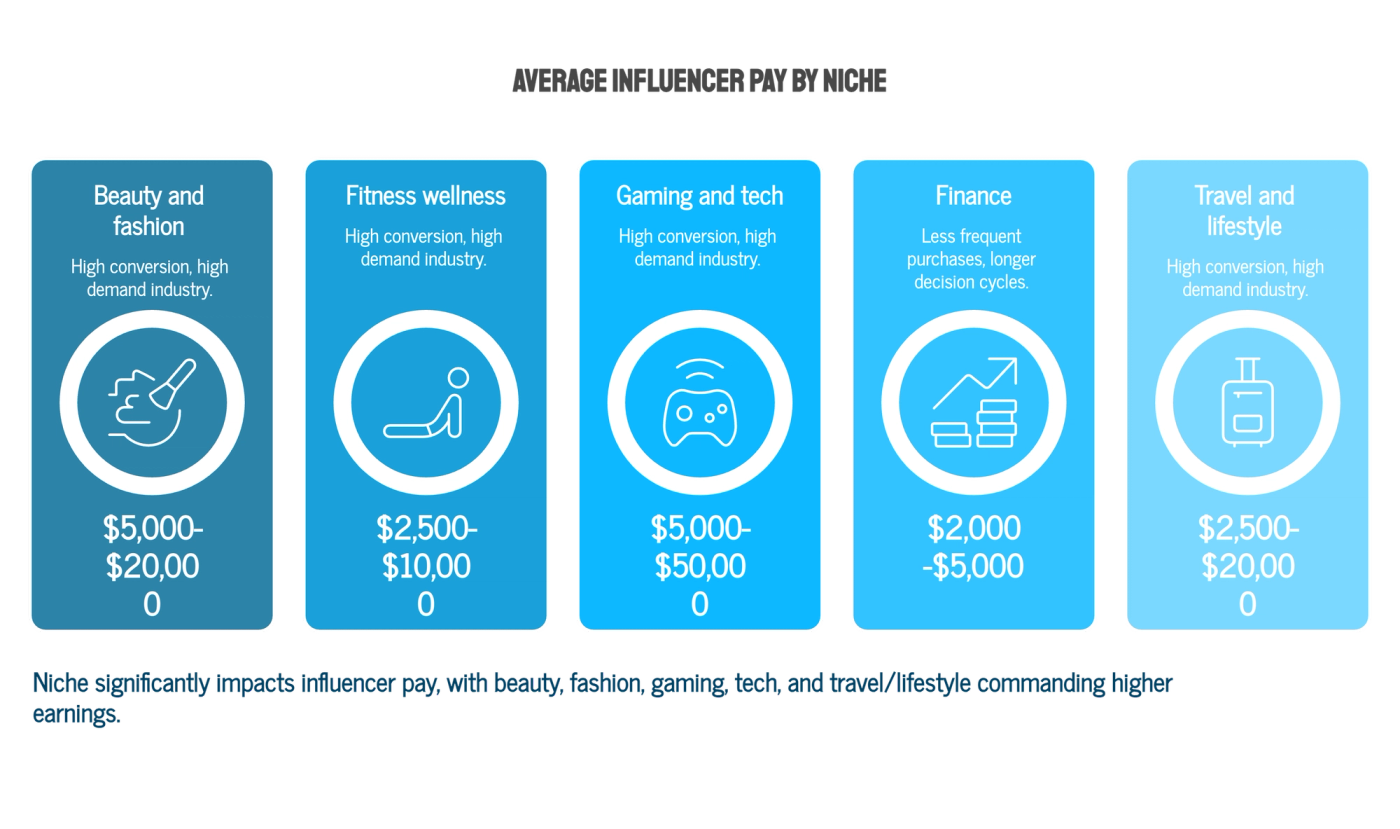
If an influencer operates in a high-conversion, high-demand industry, they can earn significantly more over time. For example, beauty (which includes makeup, skincare, and haircare) and wellness rank among the highest-paying influencer niches.
These categories combine massive consumer demand with highly visual products that are easy to market on social media and are purchased frequently. As a result, beauty brands tend to invest heavily in influencer marketing.
On the other end of the spectrum are industries like entrepreneurship or self-improvement, which often involve less frequent purchases or services with longer decision cycles. Influencers in these spaces may not get as many paid partnerships or sponsorships, and compensation amounts can also be lower.
Here's the average amount influencers can make with a paid content based on their niche:
- Beauty and fashion: $5,000-$20,000
- Fitness wellness: $2,500-$10,000
- Gaming and tech: $5,000-$50,000
- Finance: $2,000-$5,000
- Travel and lifestyle: $2,500-$20,000
That said, niche alone does not determine an influencer's income. Follower count, reach, and engagement are also very important measures for brands.
UGC Creators: A Different Pricing Model
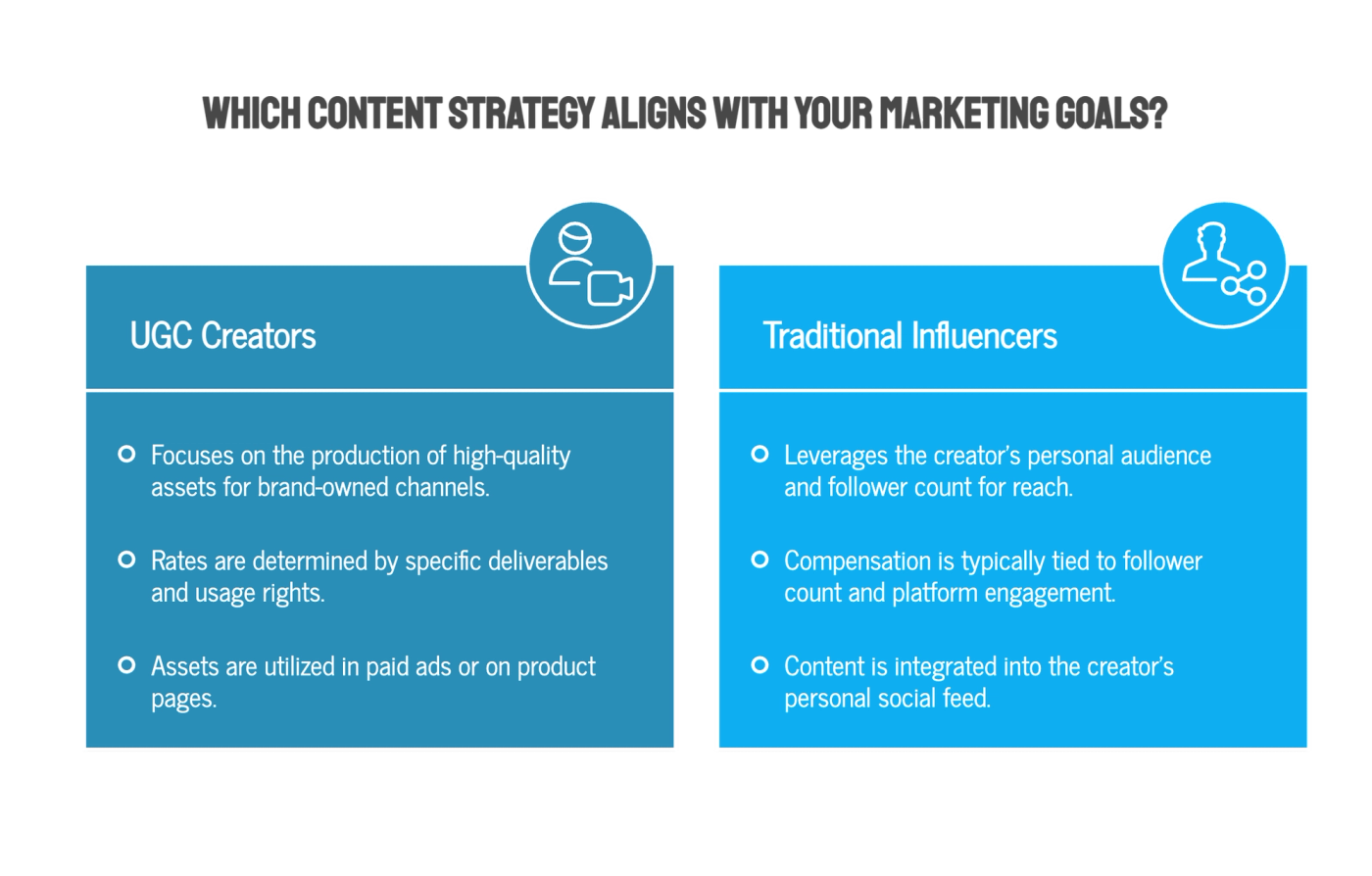
UGC creators are in a unique spot. Their pay isn't tied to follower count, since their content is often made to run on a brand's own channels, in paid ads, or on a product page rather than their personal feed. Instead, they're paid on deliverables (how many pieces of content and formats they produce) and usage rights (the legal permission for a brand to reuse that content).
Because of that, UGC creator rates can vary anywhere from $75 to $350 per video, depending on format and complexity.
For brands, it means they're not paying for an audience, they're paying for the content itself, so budget can go further per asset. If negotiated upfront, brands can build a library of reusable content for their own platforms, rather than fitting their message into someone else's feed.
Run Scalable Creator Campaigns with SideShift
Knowing what to budget is only half the challenge. Finding vetted, reliable creators and managing a campaign once it starts to grow, from outreach to approvals to tracking deliverables, gets complicated fast.
That's where SideShift comes in. With a network of over 800,000 vetted creators, SideShift handles the heavy lifting so you can run scalable UGC campaigns without the operational headache.
Want to put this into practice?
SideShift connects you with vetted UGC creators who actually deliver. Start your free trial and post your first job in under 10 minutes.
You can post campaign briefs and receive applications from creators who fit what you're looking for, while managing contracts, payouts, and performance tracking all in one place. This lets you scale your creator program without the added workload or expense.
FAQs
1. How much can an influencer charge per post?
Influencers can charge anywhere from $10 to $10,000 per sponsored post, depending on their follower tier, engagement rate, niche, platform, and overall marketing strategy. In some cases, they may also earn additional income through monetization programs and ads.
2. How much does it cost to advertise with influencers?
Costs vary widely by platform, creator tier, and niche, ranging from under $50 with a nano influencer to six figures for a mega influencer or celebrity. UGC creators work on a different pricing model, since they're typically paid for deliverables rather than audience size. Because there's no fixed industry price list, costs are best understood as a range shaped by these factors rather than a single average figure.
3. How much do Instagram influencers make?
It varies based on engagement, niche, follower count, and other factors. A nano influencer can earn $10 to $150 per sponsored post, a micro influencer can earn $100 to $500 per post, and macro and mega influencers can earn from $10,000 to $200,000+ per post on Instagram.
4. How much do TikTok influencers make?
It's estimated that nano TikTok influencers make $10 to $50 per sponsored post, micro influencers make $50 to $500, macro influencers make $5,000 to $15,000, and mega influencers make $15,000 to $250,000+ per sponsored post. TikTok creators can significantly increase their income through live streams, virtual gifts, and participating in the TikTok Rewards Program, if eligible.