


How to Find YouTube Influencers in 2026
Find YouTube influencers, plus how brands validate creators, improve outreach, and scale campaigns with performance-driven strategies.
Table of Contents
Finding the right YouTube creators can make or break a campaign in 2026. With audiences consuming content in increasingly niche communities, brands need a methodical approach to identify creators who deliver real engagement, storytelling, and ROI.
Tools like SideShift simplify discovery, but strategy and validation are just as important. This guide breaks down how brands can find, evaluate, and scale partnerships with YouTube influencers while balancing UGC and influencer-driven campaigns.
Top Strategies to Find YouTube Influencers
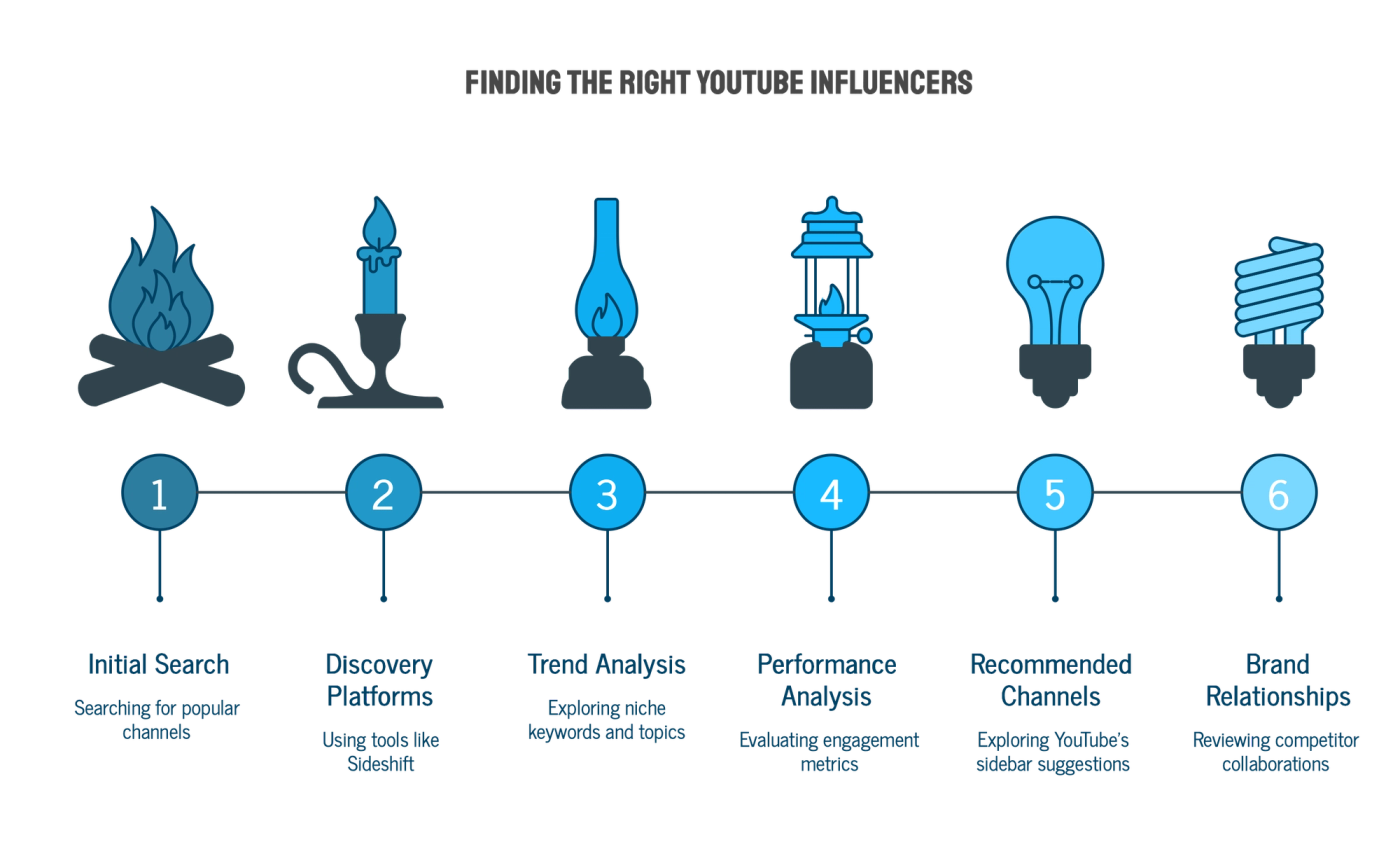
Before you start reaching out to creators, it’s important to have a structured approach for identifying the right YouTube influencers for your brand. Simply searching for popular channels isn’t enough, brands need to combine data, platform insights, and trend awareness to uncover creators who can truly connect with their audience. The following strategies help you find talent efficiently while ensuring alignment with your campaign goals.
Leverage Discovery Platforms
Discovery tools like Sideshift allow brands to filter creators by niche, audience demographics, engagement rates, and language. These platforms save time by surfacing creators who meet specific campaign criteria and provide performance analytics to guide selection. Key advantages include:
- Ability to search by engagement metrics rather than subscriber count
- Insights into audience interests and demographics
- Pre-vetted lists that reduce the risk of partnering with inactive channels
Manual Trend Analysis
While discovery tools are valuable, manually exploring YouTube can uncover rising creators that algorithms may overlook. Use niche keywords, trending topics, and hashtags to find content that resonates with your target audience. This approach helps identify:
- Emerging talent with authentic followings
- Creators producing content directly relevant to your brand
- Channels that may not be highlighted on discovery platforms yet
Analyze Recent Performance
Engagement is a stronger indicator of impact than subscriber count. Evaluate creators based on median performance from recent videos. Look for:
- High average watch time
- Consistent likes, shares, and comments
- Audience retention patterns
A smaller creator with a highly engaged audience often drives better results than a larger channel with low interaction.
Check Recommended Channels
YouTube’s recommended sidebar is a hidden gem for discovery. When you identify a relevant creator, explore the recommended channels suggested by YouTube. This method helps you:
- Find similar creators in the same niche
- Discover micro and nano influencers with high engagement
- Expand your list of potential partners without starting from scratch
Review Existing Brand Relationships
Investigating which creators competitors already collaborate with can streamline your search. Experienced creators familiar with sponsored content:
- Understand campaign requirements
- Can integrate products naturally without breaking authenticity
- Often have a proven track record with similar brands
By combining these strategies, you can build a robust roster of YouTube influencers tailored to your campaign objectives, saving time while increasing the likelihood of performance-driven partnerships.
Key 2026 Influencer Vetting Criteria
Finding YouTube influencers is only the first step. Not every creator you identify will be a perfect fit for your brand, and working with the wrong partner can result in wasted budget, low engagement, or misaligned messaging.
In 2026, effective vetting goes beyond surface-level metrics like subscriber count or video views. Brands need to assess creators for long-term potential, alignment with their content style, and the quality of audience engagement.
Want to put this into practice?
SideShift connects you with vetted UGC creators who actually deliver. Start your free trial and post your first job in under 10 minutes.
A strong vetting process ensures that every collaboration contributes to your broader campaign goals and builds genuine connections with viewers. When evaluating creators, consider the following criteria:
1. Long-Term Potential: Prioritize creators interested in ongoing partnerships rather than one-off posts. Long-term collaborations build trust, improve ROI, and create a consistent content pipeline.
2. Content Alignment: Select creators who can naturally integrate your product into their existing style. For example, a lifestyle creator might feature your product in a “Get Ready With Me” video without breaking authenticity.
3. Engagement Quality: Examine the audience’s comments to ensure they are genuine and align with your target persona. High engagement from the right audience matters more than sheer numbers.
Strategies for Working with YouTube Creators
Working with YouTube influencers requires more than sending a brief and hoping for the best. Here are strategies that help brands maximize results:
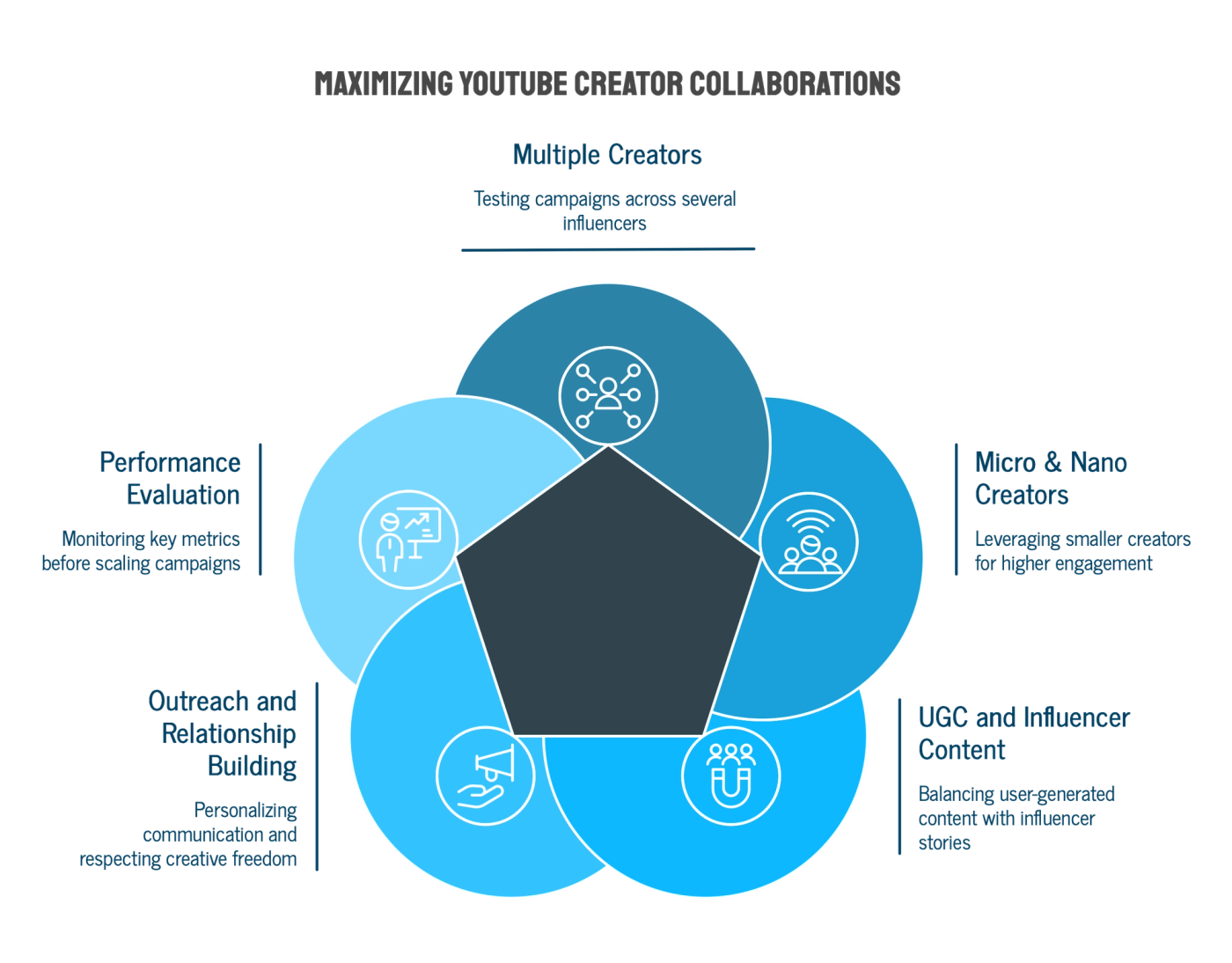
Collaborate with Multiple Creators
Instead of relying on a single influencer, test campaigns across several creators. This approach increases the chances of discovering what resonates and generates data to refine future efforts.
Prioritize Micro and Nano Creators
Smaller creators often deliver higher engagement relative to their size. Audiences trust these creators more because they feel approachable and authentic.
- Micro-influencers: 10,000 to 100,000 subscribers
- Nano-influencers: 1,000 to 10,000 subscribers
Working with multiple micro or nano creators can often outperform a single celebrity collaboration.
Balance UGC and Influencer Content
YouTube influencers provide depth and storytelling, while UGC delivers speed and volume. Combining both strategies allows brands to test, iterate, and scale efficiently.
Focus on Outreach and Relationship Building
Creators respond better to personalized outreach that respects their creative process. Offer clear objectives but allow them to retain their voice.
Evaluate Performance Before Scaling
Even after identifying promising creators, validation is essential. A few metrics to monitor early on:
- Average watch time and retention
- Engagement rates (likes, comments, shares)
- Audience overlap with your target demographic
- Conversion metrics if running product integrations or promotions
Run small pilot campaigns to test creators’ ability to hit performance targets before investing in larger campaigns.
Connect with YouTube Creators on SideShift
SideShift simplifies scaling YouTube influencer campaigns. The platform gives brands access to over 800,000 Gen Z creators ready to produce authentic content. With SideShift, you can:
- Recruit multiple creators quickly
- Manage high-volume campaigns from one dashboard
- Track performance and optimize ROI
- Iterate faster than traditional influencer programs
For brands, SideShift functions as a content engine that delivers both speed and scale, while for creators it’s a frictionless hub for paid gigs, contract management, and instant payouts.
Start building your YouTube influencer strategy today with SideShift and combine the benefits of UGC and influencer-led campaigns for maximum impact.
Join SideShift for free today.
FAQs
1. How do I find YouTube influencers in 2026?
Use tools like Modash to filter creators by niche, audience, and engagement, then validate by reviewing their content and testing performance.
Want to put this into practice?
SideShift connects you with vetted UGC creators who actually deliver. Start your free trial and post your first job in under 10 minutes.
2. What is Modash used for in influencer marketing?
Modash is a discovery tool that helps brands find, analyze, and shortlist influencers across platforms like YouTube based on data and filters.
3. Are smaller YouTube creators better for brands?
In many cases, yes. Smaller creators often have more engaged audiences and can deliver stronger performance at a lower cost.
4. How many YouTube influencers should a brand work with?
Instead of relying on one creator, brands should test multiple creators at once to identify which ones drive results.
5. Can YouTube influencers replace UGC strategies?
No. YouTube influencers are valuable for depth and storytelling, while UGC strategies provide volume and faster iteration. Both work best together.