


How to Vet UGC Creators: Quality & Brand Safety Guide
Ensure brand-safe, high-quality UGC by properly vetting creators. This guide covers quality control, creator checks, and best practices for campaigns.
Table of Contents
User-generated content has quickly become one of the most effective ways for brands to produce high-performing content at scale, but success depends heavily on who is creating that content. When you are working with multiple creators at once, even small differences in quality, messaging, or reliability can impact overall results. That is why vetting is a core part of building a UGC system that consistently delivers brand-aligned content. By putting clear standards and processes in place, brands can reduce risk, protect their reputation, and build a creator network that improves with every campaign.
This guide breaks down exactly how to vet UGC creators with a focus on quality control, brand safety, and scalable processes. You will learn how to evaluate creators, spot risks early, and build a reliable pipeline that supports high-performing campaigns over time. Whether you are hiring your first creators or managing dozens at once, this framework is designed to help you make faster, smarter decisions.
Why is Vetting UGC Creators Crucial
UGC has become one of the fastest ways to generate content that actually converts, but it introduces a new challenge for brands. When you move from working with a few influencers to managing dozens or even hundreds of creators, consistency becomes harder to maintain. Without a clear vetting process, quality varies, messaging drifts, and campaign performance becomes unpredictable.
At SideShift, this pattern shows up often. Brands come in thinking they need better creative direction, but the real issue is usually creator selection. When the right creators are in place, content quality improves, feedback loops tighten, and performance becomes easier to scale.
A strong vetting system protects both brand reputation and campaign outcomes. It reduces risk while increasing the likelihood that every piece of content contributes to growth.
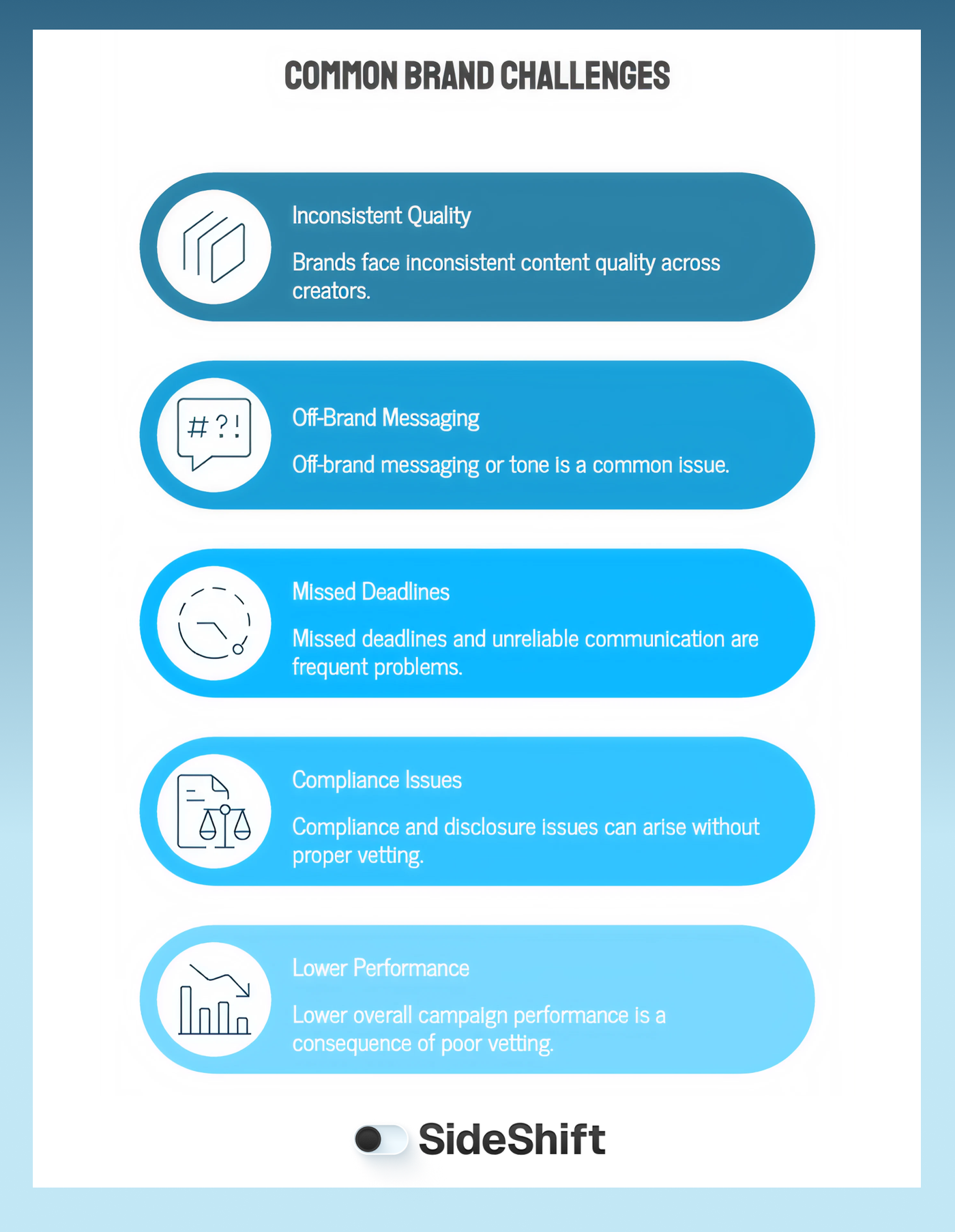
Without proper vetting, brands commonly face:
- Inconsistent content quality across creators
- Off-brand messaging or tone
- Missed deadlines and unreliable communication
- Compliance and disclosure issues
- Lower overall campaign performance
With structured vetting, brands build a reliable creator pipeline that improves over time.
Defining Quality Standards for UGC
Before evaluating creators, brands need a clear definition of what high-quality UGC looks like. Without this, feedback becomes subjective and difficult to scale. The most effective teams create simple frameworks that allow anyone reviewing content to make consistent decisions.
Quality in UGC is not just about aesthetics. It is about how well a piece of content captures attention, communicates brand values, and fits the platform it is designed for. A polished video that does not convert is less valuable than a raw, engaging clip that drives action. That’s the difference between traditional content marketing and influencer marketing with UGC.
Strong UGC typically includes:
- A compelling hook within the first few seconds
- Natural, platform-native delivery
- Clear visuals and audio
- Accurate product messaging
- A clear path toward conversion
To make this actionable, many brands use scoring systems that standardize how content is evaluated.
Example scoring categories:
- Hook strength
- Clarity and production quality
- Brand alignment
- Engagement style
- Conversion potential
This approach creates a repeatable quality control system that works across large creator pools.
Want to put this into practice?
SideShift connects you with vetted UGC creators who actually deliver. Start your free trial and post your first job in under 10 minutes.
Brand Safety Considerations
Brand safety plays a critical role in UGC campaigns because creators act as an extension of your brand voice. Every piece of content they produce reflects back on your company, which makes proactive screening essential.
A thorough brand safety review looks beyond a single video. It focuses on patterns in behavior, tone, and content history. Even creators with strong creative skills can introduce risk if their past content conflicts with your brand values.
When reviewing creators, teams should evaluate both content and context. This includes how creators communicate, what they post consistently, and how they engage with their audience.
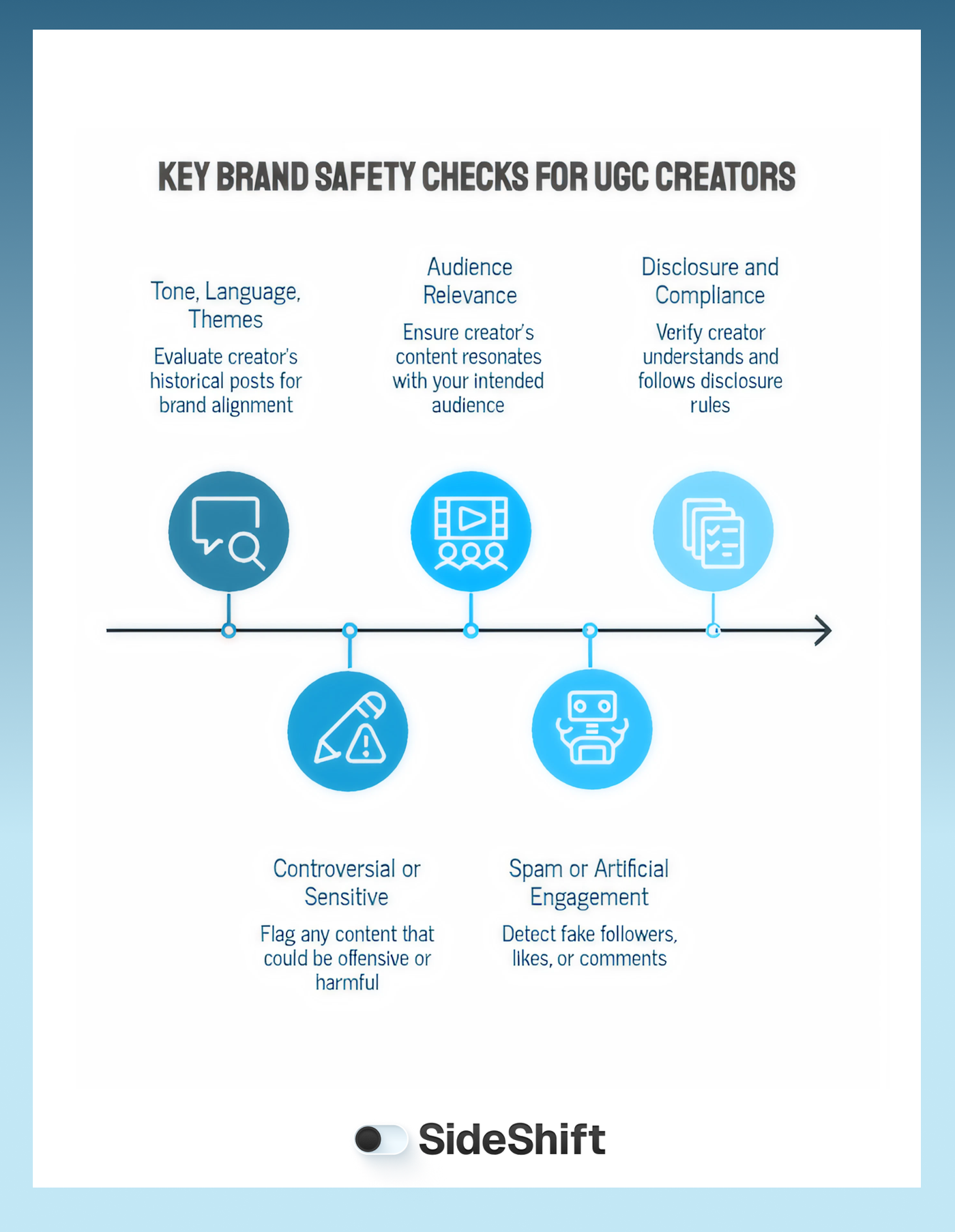
Key brand safety checks include:
- Reviewing past content for tone, language, and themes
- Identifying controversial or sensitive material
- Ensuring alignment with your target audience
- Checking for signs of spam or artificial engagement
- Confirming understanding of disclosure and compliance requirements
Steps to Vet UGC Creators
A clear vetting process helps teams move quickly without sacrificing quality. The goal is to create a system that works whether you are hiring five creators or fifty.
The process typically starts with a content review and moves through performance signals, communication checks, and alignment with the brand. Each step filters for a different type of risk or opportunity.
1. Review the creator’s portfolio for storytelling ability and platform fluency
Look beyond whether the content “looks good.” Focus on how the creator structures their videos. Strong UGC creators understand pacing, hooks, and how to hold attention through the full clip. Pay attention to whether their content feels native to the platform they are posting on. A creator who performs well on TikTok, for example, will naturally use trends, quick cuts, and conversational delivery rather than overly polished or ad-like formats.
2. Evaluate engagement patterns to identify consistency
Raw views can be misleading, so it is more useful to look at consistency across multiple posts. Are they regularly getting engagement, or did one video spike while others underperformed? Consistent performance signals that the creator understands what works, while erratic results may indicate luck rather than skill. Also review comments, since genuine audience interaction often reveals more than surface-level metrics.
3. Assess communication speed and clarity before onboarding
Early communication is often a preview of how a creator will operate during a campaign. Pay attention to how quickly they respond, how clearly they understand instructions, and whether they ask thoughtful questions. Creators who communicate well tend to require less back-and-forth later, which becomes critical when managing campaigns at scale.
4. Run a small paid test project when possible
A test project removes guesswork and replaces it with real performance data. Keep the scope tight, usually one to three videos, and evaluate how well the creator translates your brief into actual content. This step helps you identify creators who can execute, not just pitch themselves well.
5. Confirm the creator understands your product and messaging
Creators do their best work when they genuinely understand what they are promoting. Look for signs that they can explain the product clearly and naturally. If they struggle to communicate basic value props, the final content will likely feel forced or inaccurate.
Want to put this into practice?
SideShift connects you with vetted UGC creators who actually deliver. Start your free trial and post your first job in under 10 minutes.
Test projects are especially valuable because they reveal how creators perform under real conditions. This includes how they interpret briefs, meet deadlines, and respond to feedback.
As your program grows, this process becomes more efficient. Each vetted creator adds to a database of performance insights, making future hiring decisions faster and more informed. Over time, this compounds into a strong, reliable creator network that consistently delivers results.
Tools and Processes for Vetting at Scale
As UGC programs grow, manual vetting quickly becomes inefficient. What works for a small campaign does not hold up when managing high-volume creator pipelines. Scaling requires systems that standardize decisions and reduce manual work.
High-performing teams rely on structured workflows and centralized data. This allows them to evaluate creators quickly while maintaining consistent standards across campaigns.
Scalable vetting systems often include:
- A centralized creator database with performance history
- Standardized scorecards for consistent evaluation
- Automated workflows from application to approval
- Batch testing to compare multiple creators at once
These systems make it easier to identify top performers early and allocate resources efficiently. They also reduce bias by ensuring every creator is evaluated using the same criteria.
Best Practices for Ongoing Quality Control
Vetting does not stop after a creator is approved. Ongoing quality control through UGC moderation ensures that performance remains consistent and that campaigns continue improving over time.
The most effective UGC programs treat creator management as an evolving system. Each piece of content provides data that can be used to refine future decisions.
Consistent monitoring allows brands to identify trends, reward top performers, and phase out underperforming creators.
Best practices for maintaining quality:
- Track performance metrics for every deliverable
- Provide fast, clear feedback after each submission
- Share examples of high-performing content with creators
- Group creators into performance tiers
- Continuously update your vetted creator pool
A tiered system helps prioritize resources:
- Top performers receive more opportunities
- Reliable creators maintain steady output
- Underperformers are gradually replaced
Over time, this creates a strong, reliable network of creators who consistently deliver results.
Simplify Creator Vetting with SideShift
Managing creator vetting manually can slow down growth and introduce unnecessary complexity. As campaigns scale, the need for structure becomes more urgent.
SideShift is designed to streamline this entire process. Instead of handling recruitment, vetting, communication, and payments across separate tools, brands can manage everything in one system.
The platform connects brands with a large network of over 700,000 U.S.-based Gen Z creators and provides the infrastructure needed to run campaigns efficiently. This includes sourcing, performance tracking, contracts, and payouts.
This structure allows teams to focus on creative strategy and performance rather than administrative work. It also supports high-volume testing, which is key to finding what content actually resonates.
Scale your content army with SideShift, where brands and UGC creators win together.
Join SideShift for free today.
FAQs
1. How do I evaluate if a UGC creator is brand-safe?
Want to put this into practice?
SideShift connects you with vetted UGC creators who actually deliver. Start your free trial and post your first job in under 10 minutes.
Review their past content, tone, and engagement patterns. Look for consistency, professionalism, and alignment with your brand values.
2. What tools can help vet multiple creators efficiently?
Platforms like SideShift centralize creator data, automate workflows, and make it easier to evaluate large numbers of creators quickly.
3. How often should I review a creator’s work for quality?
Quality should be reviewed continuously. Each piece of content provides insight into performance and consistency.
4. Can I vet creators for specific platforms like TikTok or Instagram?
Yes. Each platform has different content styles and performance signals, so vetting criteria should be adapted accordingly.
5. What red flags indicate a creator may not be reliable?
Common signs include slow communication, inconsistent quality, missed deadlines, fake engagement, and difficulty following instructions.