
UGC Moderation Guide: How to Maintain Quality Across Creators
How to build a UGC moderation process that maintains quality, protects brand standards, and keeps creator content consistent.
Table of Contents
The bigger your brand gets, the more critical UGC moderation becomes. Nobody wants to have inappropriate misaligned content associated with their brand or get caught in the cross fire of cancel culture. Maintaining a clean, safe, and consistent digital presence is essential, especially across social media, e-commerce sites, and community conversation platforms. Brands can monitor their content and conversation manually, but with the sheer volume of posts, comments, and reviews today, moderation tools are increasingly necessary to stay on top of conversations and ensure quality.
High-quality user-generated content (UGC) is a powerful way to build trust, increase engagement, and scale authentic campaigns. However, without proper moderation, UGC can present risks to your brand reputation. UGC moderation is the process of reviewing, filtering, and managing content created by users, such as photos, videos, reviews, and comments, to ensure it aligns with your brand standards, community guidelines, and legal requirements.
In this guide, we’ll explore:
- What UGC moderation is and why it matters
- How UGC moderation works, including manual, automated, and hybrid approaches
- Best practices for maintaining consistent, high-quality content
- How platforms like SideShift streamline moderation while helping brands scale campaigns
By the end, you’ll understand how to protect your brand while leveraging user-generated content to its fullest potential.
What Is UGC Moderation?
UGC moderation is the process of reviewing, filtering, and managing content submitted by users or creators that includes text, photos, videos, and audio to ensure it aligns with brand standards and community guidelines. Effective moderation prevents inappropriate or low-quality content from appearing publicly, protects legal compliance, and maintains audience trust.
There are two main approaches:
- Manual moderation: Human moderators review and approve content, making nuanced judgment calls that AI might miss, such as sarcasm or subtle brand misalignment. This works well for smaller campaigns with limited content.
- Automated moderation: Uses AI, rules-based software, or natural language processing to flag or approve content at scale. This approach is ideal for high-volume campaigns or platforms with thousands of daily submissions.
Most brands benefit from a hybrid approach, where AI handles the bulk of content filtering, and humans review the complex or high-stakes pieces. SideShift integrates both approaches to help brands efficiently moderate large-scale campaigns without sacrificing quality.
How UGC Moderation Works
There are several key methods for moderating user-generated content:
- Pre-moderation: Content is reviewed before publishing, offering maximum control over what appears publicly.
- Post-moderation: Content is published immediately and reviewed afterward. This method speeds up posting while still maintaining oversight.
- Reactive moderation: The community flags inappropriate content, which is then reviewed by moderators.
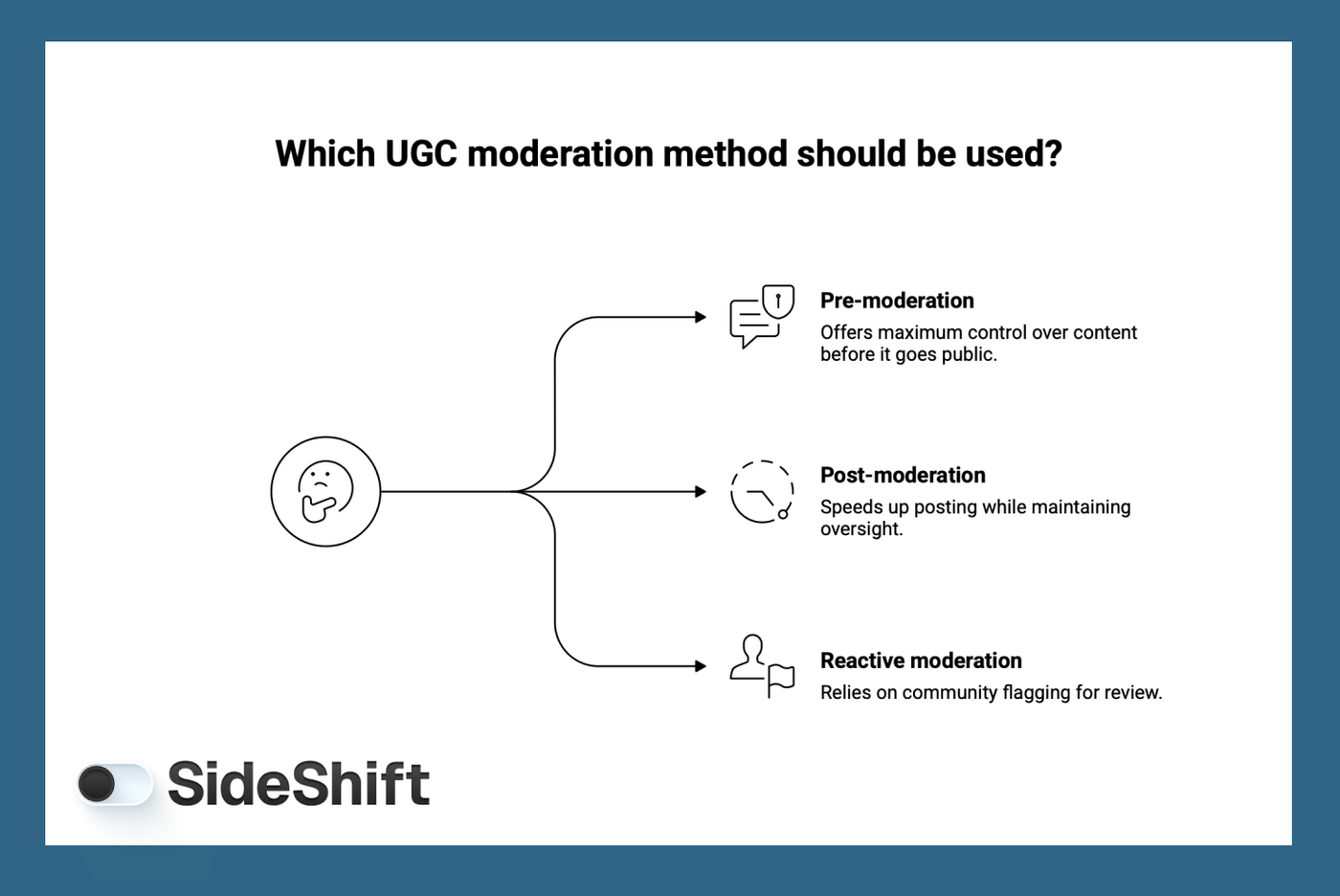
By combining these methods, brands can maintain high-quality UGC at scale while ensuring content is authentic and engaging.
Building a Strong Moderation Workflow
In pre-moderation, a structured workflow is essential for scaling UGC campaigns without sacrificing quality and setting expectations for creators who will represent your brand:
- Define Clear Guidelines: Establish your brand tone, visual style, messaging, and prohibited content. Provide examples to ensure creators fully understand your expectations.
- Standardize Review Processes: Use templates, approval stages, and checklists to consistently evaluate submissions. Standardization reduces errors and streamlines moderation across large campaigns.
Want to put this into practice?
SideShift connects you with vetted UGC creators who actually deliver. Start your free trial and post your first job in under 10 minutes.
- Schedule Regular Reviews: Moderate submissions on a weekly or monthly basis depending on content volume, and maintain timely communication with creators to keep campaigns moving smoothly.
- Feedback Loops: Offer constructive feedback to help creators improve future submissions. Regular feedback not only strengthens content quality but also reinforces brand alignment.
- Cultural and Regional Adaptations: Adjust guidelines for different markets to ensure content is relevant, sensitive, and culturally appropriate, avoiding potential missteps in global campaigns.
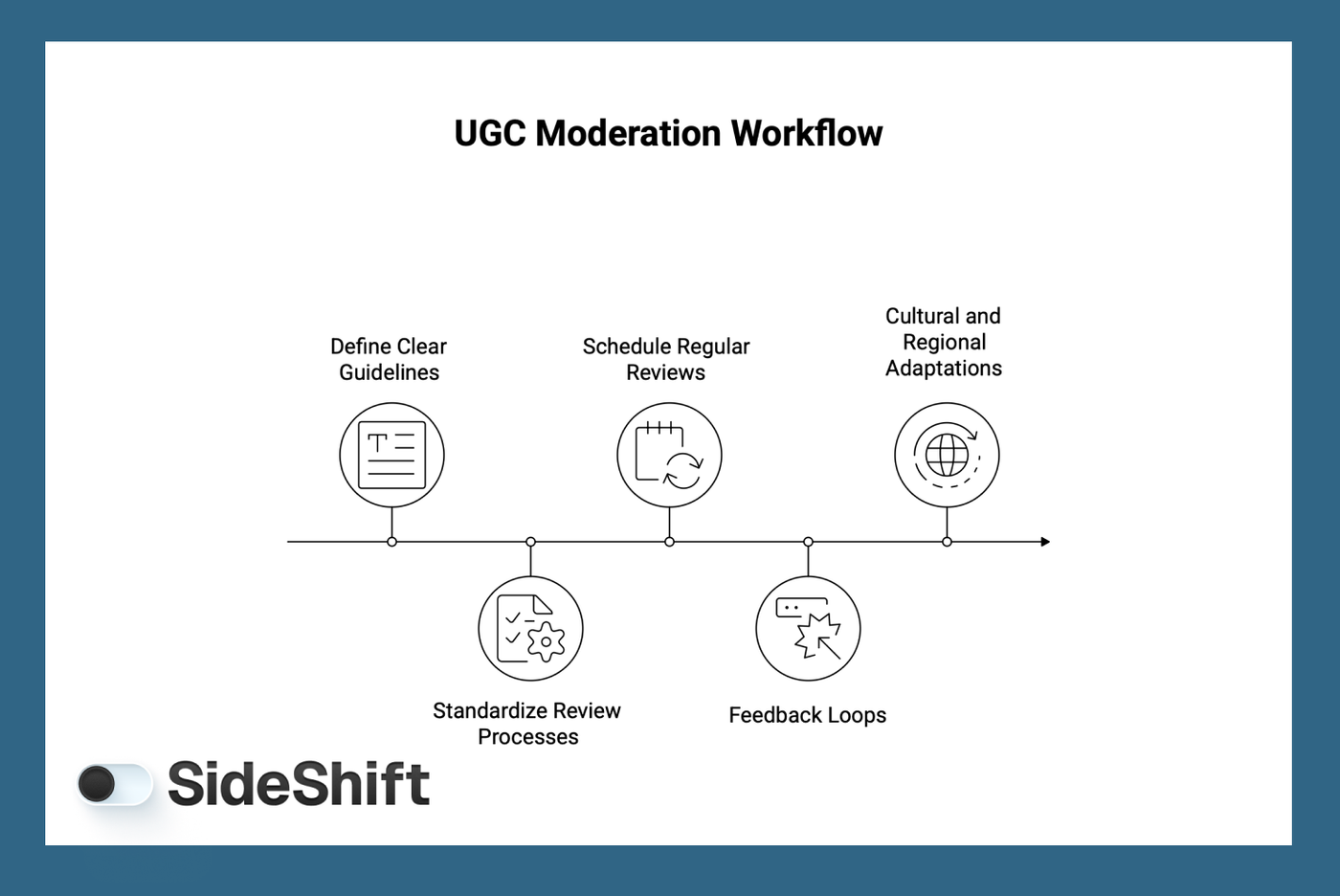
By implementing a clear, repeatable moderation workflow, brands can confidently scale UGC campaigns, maintain high-quality content, and protect their reputation all while empowering creators to produce content that resonates with audiences.
Best Practices for Effective UGC Moderation
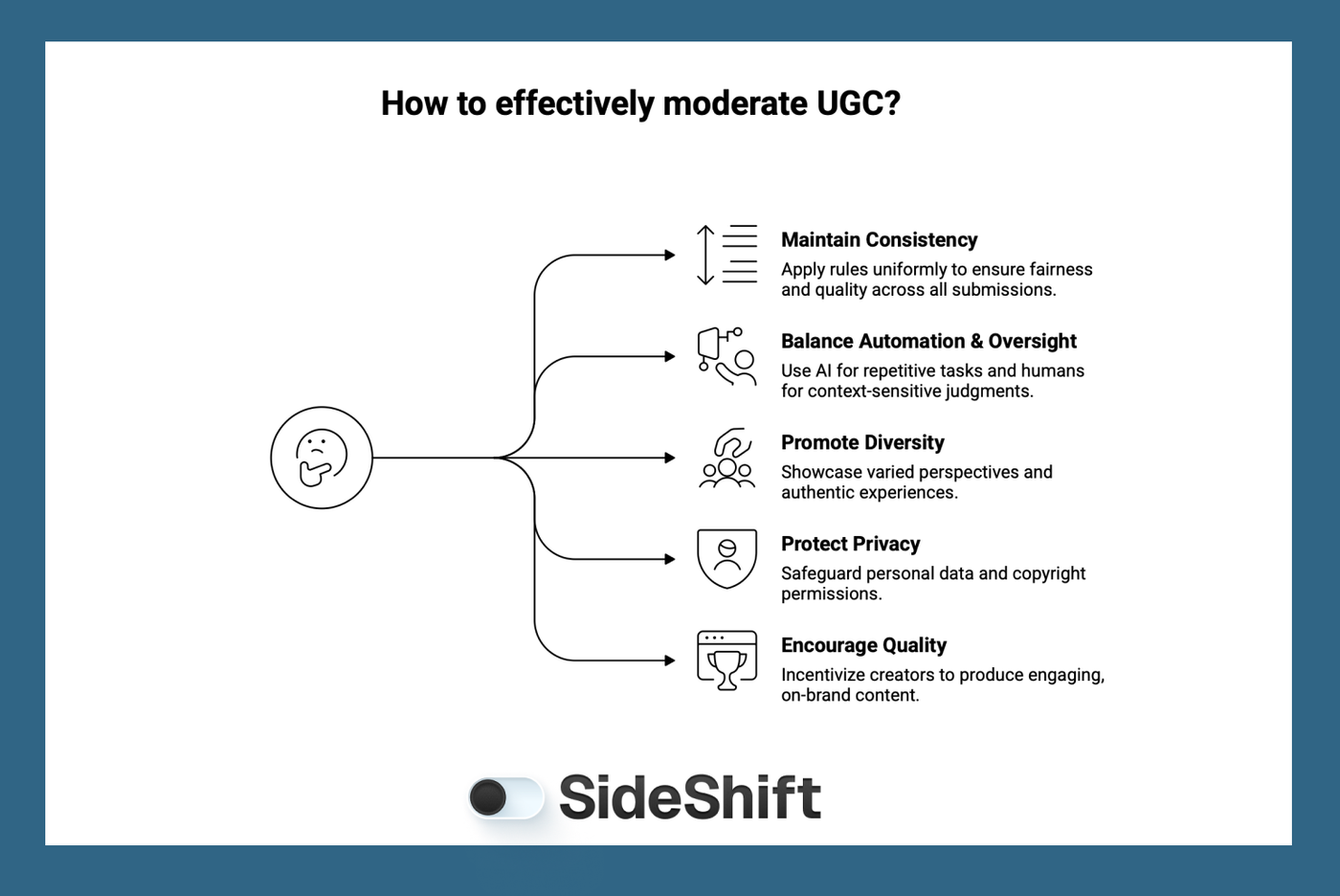
A strong UGC moderation framework protects your brand and it also helps you surface the most compelling, conversion-driving content from your community and creator partners. Whether you’re managing organic submissions, creator campaigns, or large-scale UGC initiatives, these best practices will help you maintain consistency, protect brand integrity, and streamline your workflow.
- Consistency is key: Apply rules uniformly to all submissions to maintain quality and fairness.
- Balance automation with human oversight: Use AI to handle repetitive checks like profanity, spam, or duplicates, while humans handle context-sensitive judgments.
- Promote diversity and representation: Ensure your UGC showcases varied perspectives and authentic experiences.
- Protect privacy and legal compliance: Always safeguard personal data and copyright permissions. Moderation is as much about safety as it is about content quality.
- Encourage high-quality contributions: Incentivize creators with rewards or recognition to motivate engaging, on-brand content.
Establishing Clear Guidelines for Creators
Clear, actionable guidelines are one of the most important components of a successful UGC moderation system. When creators know exactly what your brand expects, they can deliver content that aligns with your voice, values, and visual identity without sacrificing authenticity or creativity.
Here’s how to build guidelines that work at scale:
- Define tone, messaging, and visual style.
- Include examples of acceptable and off-brand content.
- Allow creative freedom within the framework to preserve authenticity.
- Communicate deadlines, deliverables, and rights management upfront.
Platforms like SideShift make it simple to provide these guidelines at scale, so creators consistently deliver content that aligns with your brand.
Moderation Tools and Technology
Modern UGC platforms simplify the moderation process by combining content collection, filtering, rights management, and analytics in one place. Platforms like SideShift allow brands to:
- Connect with thousands of vetted creators instantly.
- Streamline submissions, approvals, and payments in a single dashboard.
- Monitor engagement, views, and conversions in real time.
- Scale campaigns efficiently while maintaining quality and authenticity.
Leveraging technology enables brands to maintain a high volume of content without overloading internal teams, giving more bandwidth to strategy and creative iteration.
Here are some examples of moderation technology brands can use to stay on top of their UGC and be an active part of the conversation online.
1. Hive Moderation: Hive uses advanced AI models to scan images, videos, and text for unsafe or off-brand content.
Want to put this into practice?
SideShift connects you with vetted UGC creators who actually deliver. Start your free trial and post your first job in under 10 minutes.
How it’s used:
- Automatically flags profanity, nudity, hate symbols, or violent content before it goes live.
- Scores each submission for risk level so human moderators know what to review first.
- Ideal for brands running high-volume UGC campaigns where speed matters.
2. Brandwatch: Brandwatch is primarily a social listening tool, but it’s also a powerful moderation resource for real-time brand protection.
How it’s used:
- Monitors social media, forums, and review sites for brand mentions that may require attention.
- Alerts teams to negative sentiment, misinformation, or viral posts that need response or removal.
- Helps brands stay ahead of potential PR issues by flagging risky conversations early.
3. Taggbox: Taggbox is a UGC platform that allows brands to collect, curate, and moderate content from multiple social channels.
How it’s used:
- Filters content automatically using pre-set rules for profanity, spam, or inappropriate visuals.
- Provides a dashboard for human moderators to review flagged content before publishing.
- Enables rights management so brands can request permissions directly from creators for legal compliance.
Conclusion
Effective UGC moderation is a cornerstone of any successful user-generated content strategy. It helps maintain an aligned online presence and acts as a form of PR. But it’s not just crisis management. Moderation also serves as a strategic tool for sourcing additional UGC that can be leveraged to promote your brand. At its core, it’s about staying in tune with the community conversation surrounding your brand, products, or services.
As your brand grows, the conversation expands, more voices need monitoring, and maintaining quality becomes increasingly complex. Fortunately, platforms like SideShift support monitoring and offer preventative measures during the early stages of UGC creation with tools that help set clear expectations and engage creators who understand and align with your brand.
By combining clear guidelines, structured workflows, automation, and human oversight, brands can maintain high-quality content that is safe, accurate, on-brand, and engaging. Effective moderation not only protects your reputation but also enables scalable campaigns that drive meaningful results across social media, e-commerce, and other digital platforms.
Scale your UGC campaigns with SideShift today and connect with vetted creators, streamline moderation, and produce high-performing content that resonates with your audience while keeping quality and authenticity at the forefront.
FAQs
1.How do I set clear guidelines for creators?
Create a comprehensive brief that outlines your brand voice, messaging, visual style, dos and don’ts, and content examples. Be specific about what’s required for each campaign while allowing room for creators to express authenticity. Clear guidelines prevent off-brand content and make approval faster.
2. What tools can help automate UGC moderation?
Platforms like SideShift, Sprinklr, and Hootsuite can help streamline moderation by tracking submissions, flagging content, and providing analytics. AI-powered tools can also detect copyright issues, offensive material, or low-quality media, reducing manual review time.
3. How can I provide constructive feedback to creators?
Give feedback promptly, focusing on specific improvements rather than vague criticism. Highlight what worked well first, then explain adjustments needed. Providing examples or short tutorials can help creators understand expectations and improve future submissions.
Want to put this into practice?
SideShift connects you with vetted UGC creators who actually deliver. Start your free trial and post your first job in under 10 minutes.
4. How do I scale UGC moderation across multiple campaigns?
Standardize your workflow with templates, approval stages, and batch reviews. Use moderation tools to organize submissions, track revisions, and monitor quality across campaigns. Delegate responsibilities to trusted team members or leverage platform features like SideShift to handle creator management efficiently.
5. How can UGC moderation prevent legal or copyright issues?
By reviewing content before it’s published, you ensure that creators aren’t using copyrighted music, images, or other materials without permission. Moderation also helps enforce compliance with advertising regulations, platform policies, and brand-specific legal requirements, protecting your company from potential liabilities.