


How to Use Social Proof to Boost Sales with Testimonial Ads
Testimonial ads use customer reviews and real experiences to build trust and increase conversions. Learn how to collect, format, and run testimonial campaigns.
Table of Contents
Testimonial ads are one of the most powerful ways brands can turn social proof into sales. By highlighting real customer reviews, authentic product videos, and honest experiences, these ads build trust in a way traditional marketing cannot.
When third-party testimonial content is used in paid advertising, it can showcase genuine experiences in a format and tone that resonates with the right audience. This builds trust and drives conversions more effectively than generic messaging or brand-owned content.
However, creating consistent, high-performing testimonial content at scale can be challenging. That is where SideShift comes in. SideShift is a UGC platform that connects brands with creators who know how to capture authentic reviews that resonate and perform on social platforms.
In this article, we’ll break down why testimonial ads work, how to create them effectively, and how SideShift helps brands scale authentic testimonial content to boost sales.
What Are Testimonial Ads?
Testimonial ads are paid or organic ads that highlight real customer experiences, reviews, or results. They can take many forms, including video reviews from customers, before-and-after transformations, unboxing experiences, product demonstrations, and authentic quotes or ratings. The goal is to replace brand claims with real proof and capture an authentic brand experience to also use in paid advertising.
In 2026, up to 98% of consumers want to read reviews before making a purchase. So, when shoppers see other relatable customers who feel like a peer praising a product with a real point of view, it builds trust and makes them feel more confident about making a purchase.
Why Testimonial Ads Work
Gen Z places a high level of trust in online reviews when making purchasing decisions. In fact, 76% rate reviews as the second most important factor, just behind product quality, when deciding whether to buy. Why? People trust their peers more than brands. That means testimonial ads coming from customers built with UGC are often more effective than polished brand-owned media.
Benefits of UGC testimonial ads:
- Feel more relatable and human
- Create emotional trust
- Show real results
- Reduce skepticism
- Improve conversion rates
The challenge is scale. One or two testimonial videos are not enough to consistently test, optimize, and win with testimonial content on paid social. To make this strategy work long term, brands need a steady stream of fresh testimonial content from different social media content creators.
That is where UGC platforms like SideShift come in. SideShift helps brands continuously produce testimonial ads by connecting them with creators who know how to capture authentic reviews that perform across social platforms.
Testimonial Ad Hooks That Convert
Testimonial ads come in many forms, but some formats consistently perform better than others because they are optimized for short-form engagement with strong hooks. Here are some high-performing testimonial content formats brands can run:
1. Product Results
This format highlights a customer showing before-and-after results and explaining what changed. It’s especially effective for products that have visible transformations, like beauty, fitness, or home improvement items. Seeing a real person’s results helps shoppers imagine the same benefits for themselves and builds trust faster than a standard ad.
Want to put this into practice?
SideShift connects you with vetted UGC creators who actually deliver. Start your free trial and post your first job in under 10 minutes.
2. Unboxing + First Impressions
Creators record their initial reaction to a product while highlighting key benefits. This type of content is popular because it feels spontaneous and authentic. Shoppers get a real sense of how the product looks, feels, and works straight out of the box, which can influence purchase decisions immediately.
3. “I Tried It For 30 Days”
Long-term reviews show progress over time, giving a more detailed and credible perspective. This format works well for products where results aren’t instant, like wellness, skincare, or subscription services. It provides context, builds authority, and demonstrates consistent value over time.
4. “Here’s Why I Switched”
Comparison testimonials show why a customer moved from a competitor’s product to yours. This format works well because it highlights differentiators and positions your product as the better option, all through the voice of a real user rather than a brand claim.
These formats work best when more than one creator voice is involved. Gathering testimonials from ideal customers through UGC campaigns allows brands to consistently test and optimize which testimonial content resonates most with their audience. Pairing testimonial content with smart product recommendations, like suggestive selling techniques, can push average order value even higher.
Real Testimonial Ad Examples
Example: Brett’s Bites X Sir Kensington
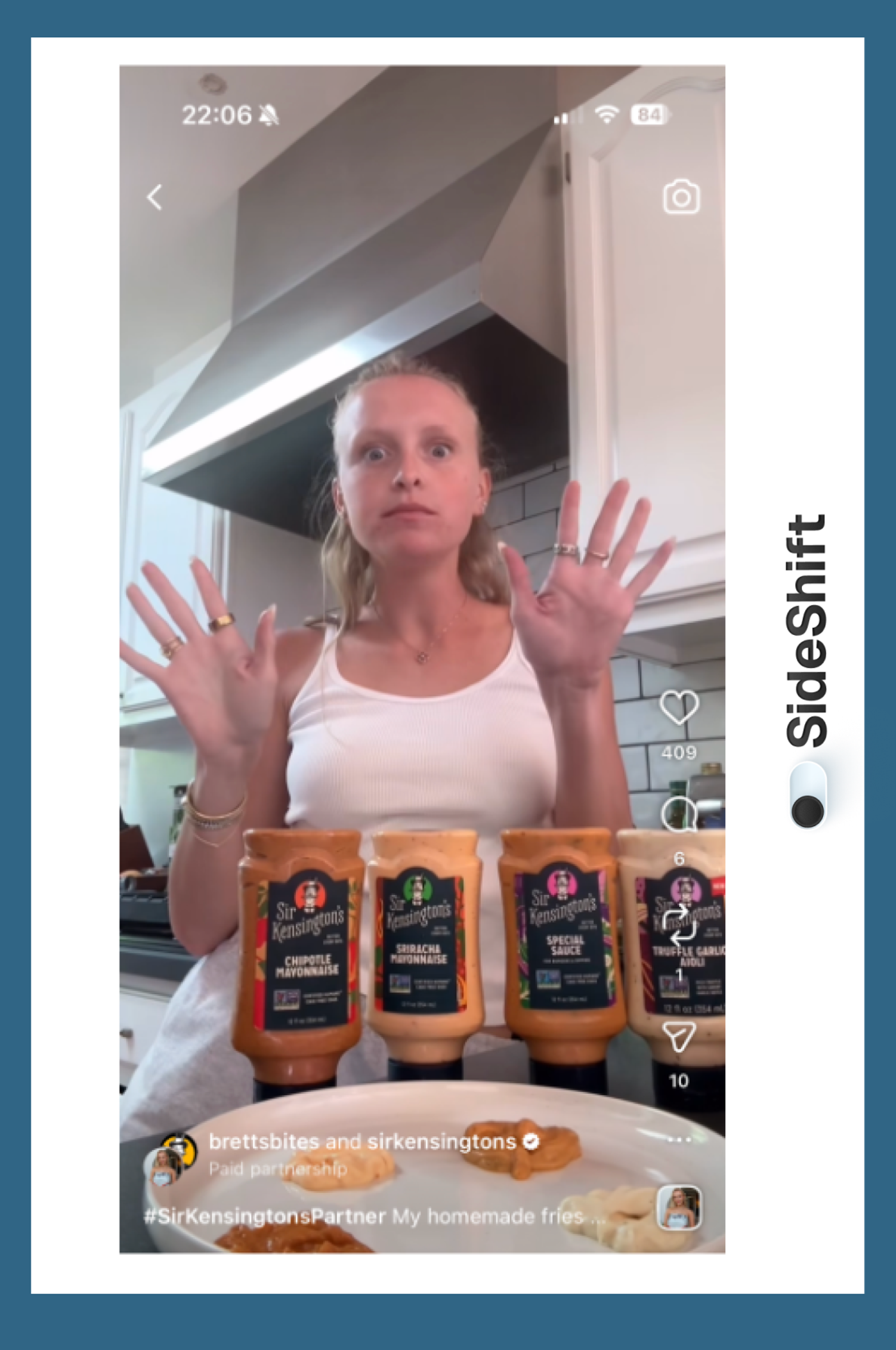
Brett Chody created an honest, reaction-style taste test of Sir Kensington’s sauces while prepping for a BBQ she’s hosting.
Her candid, real-time responses feel especially trustworthy because she’s someone people already turn to for food recommendations and restaurant recs. Viewers know when they see her content that they’re getting a genuinely honest review.
Her perspective is relatable and helps hesitant or first-time buyers better understand the flavors and imagine how they’d use the sauces themselves.
Repurposing organic testimonial content like this into paid ads allows brands to scale reach and double down on authenticity.
Example: Paizley Laura X Bur Bur
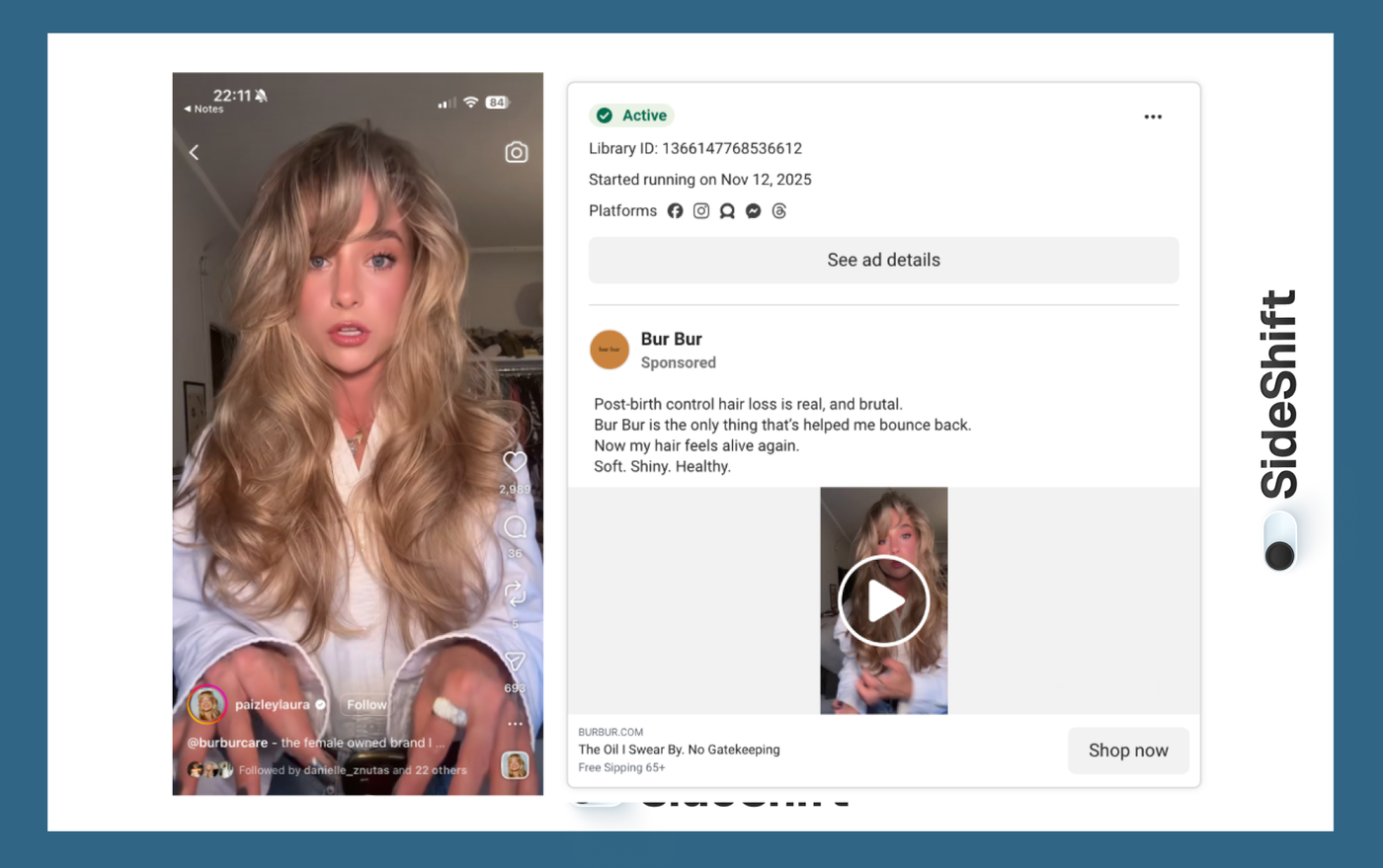
Paisley openly shares her hair regrowth journey after stopping birth control, from discovering the product to using it consistently over several years.
Her honesty resonates with people experiencing similar struggles, which makes the content powerful for both organic and paid campaigns.
After being tagged, Bur Bur transformed this organic testimonial from a genuinely excited customer into a paid social ad and a brand opportunity for Paisley. UGC testimonials make for high-converting ads, and Bur Bur picked a great one.
How to Collect Testimonial UGC at Scale
To run testimonial ads consistently, you need a reliable system for collecting content from real customers. The most effective brands combine a few proven methods to keep content flowing.
Here are a few effective ways to gather testimonials from consumers:
1. Ask your customers directly
Post-purchase emails or SMS messages work especially well when paired with a small incentive, like a discount on a future order. Keep the request easy and specific with simple prompts. Ask customers to show how they use the product, share their favorite feature, or explain their results in 30 seconds or less. Encourage them to post a story, tag your brand on social media, and submit their content in exchange for the incentive.
Want to put this into practice?
SideShift connects you with vetted UGC creators who actually deliver. Start your free trial and post your first job in under 10 minutes.
2. Monitor and repurpose existing reviews
Monitor and repurpose existing reviews by regularly checking customer reviews, social comments, and tagged posts to spot strong, authentic testimonials. When you find high-quality content, reach out and ask for permission to reuse it in your marketing. Customers who are already excited enough to share their experience publicly are often happy to say yes, especially when their content gets featured by the brand.
3. Use a UGC platform like SideShift
For brands that need consistent, high-volume testimonial content, a UGC platform like SideShift makes it easy to scale. Instead of waiting on customer submissions or managing creator outreach manually, brands can post clear content briefings and allow creators to apply to work with them. Opportunities can include paid campaigns or product exchanges, giving brands flexibility while maintaining a steady flow of content.
Scale Testimonial Ads With SideShift
If you want to turn customer trust into measurable sales, testimonial ads are one of the most effective strategies you can run. The challenge is producing enough authentic content to stay consistent.
SideShift helps brands scale testimonial ad production by connecting them with a network of over 500,000 Gen Z creators, from everyday customers and niche experts to food, beauty, fitness, and lifestyle creators who specialize in making relatable, high-converting UGC. Instead of relying on random customer submissions, brands can build a steady stream of testimonial videos, reviews, and product experiences optimized for paid ads.
With SideShift, speed is part of the advantage. Over 90 percent of businesses hire creators within their first week on the platform, and many do so even faster, sometimes on day one.
Try SideShift for free and start scaling your testimonial ads faster.
FAQs
1. What are testimonial ads?
Testimonial ads are ads that feature real customer reviews or experiences to build trust and increase conversions.
2. Do testimonial ads work better than branded ads?
Often, yes. Testimonial ads feel more authentic and are more likely to convert because they rely on real experiences instead of brand messaging.
3. How do I get testimonial videos from customers?
You can request reviews via email or SMS, monitor tagged posts, or hire creators to produce testimonial UGC.
4. What’s the best length for a testimonial ad?
Aim for 15-30 seconds for Reels and TikTok, and 30-60 seconds for longer formats.
5. What makes a testimonial ad stand out on social media?
The best testimonial ads feel like user-generated content. They use natural storytelling, show the product in real life, and include a clear result. Captions and a strong hook help boost performance.