
Understand How to Balance Organic UGC and Paid UGC
How to balance organic UGC and paid UGC: Use organic content to build trust and paid UGC to scale reach, drive conversions, and support campaign performance.
Table of Contents
Brands that leverage both organic and paid UGC (user-generated content) see stronger engagement, higher trust, and better conversion rates. Yet many teams struggle to understand how to balance organic UGC and paid UGC effectively.
At SideShift, we’ve helped thousands of brands connect with 800,000+ Gen Z creators, producing high-volume content campaigns that mix both organic and paid UGC. From startups testing social proof to growth-stage teams scaling conversions, SideShift provides a framework to strategically combine content types to maximize impact for your social media marketing strategy.
This guide breaks down the difference between organic and paid UGC, explains when to use each, and provides actionable tips for integrating them into a cohesive brand strategy.
What is User-Generated Content (UGC)?
UGC is content created by customers, fans, or creators outside your brand team. It can take the form of:
- Short-form videos on TikTok or Instagram Reels
- Photos showcasing your product
- Reviews and testimonials
- Memes or lifestyle content that resonates with your audience
UGC is effective because it builds authenticity and encourages social proof. It shows potential customers real people using your product or service, rather than polished ads.
Organic UGC V.s Paid UGC
Organic UGC comes directly from fans or customers and is completely unpaid. It’s authentic, often spontaneous, and highly trusted because it reflects a real, unpaid response to the brand experiences.
Paid UGC, on the other hand, is a commissioned video or post from a creator incentivized by the brand. It’s designed to look and feel like organic content but is more intentional and structured with a brief, goals, and compensation from the brand.
Organic UGC is usually the result of good marketing. A brand has done something to encourage a real customer to talk about a product or share an experience online, unprompted. That is a win for marketing. Meanwhile, paid UGC is a strategy designed to reach a wider audience with the feel and authenticity of organic UGC.
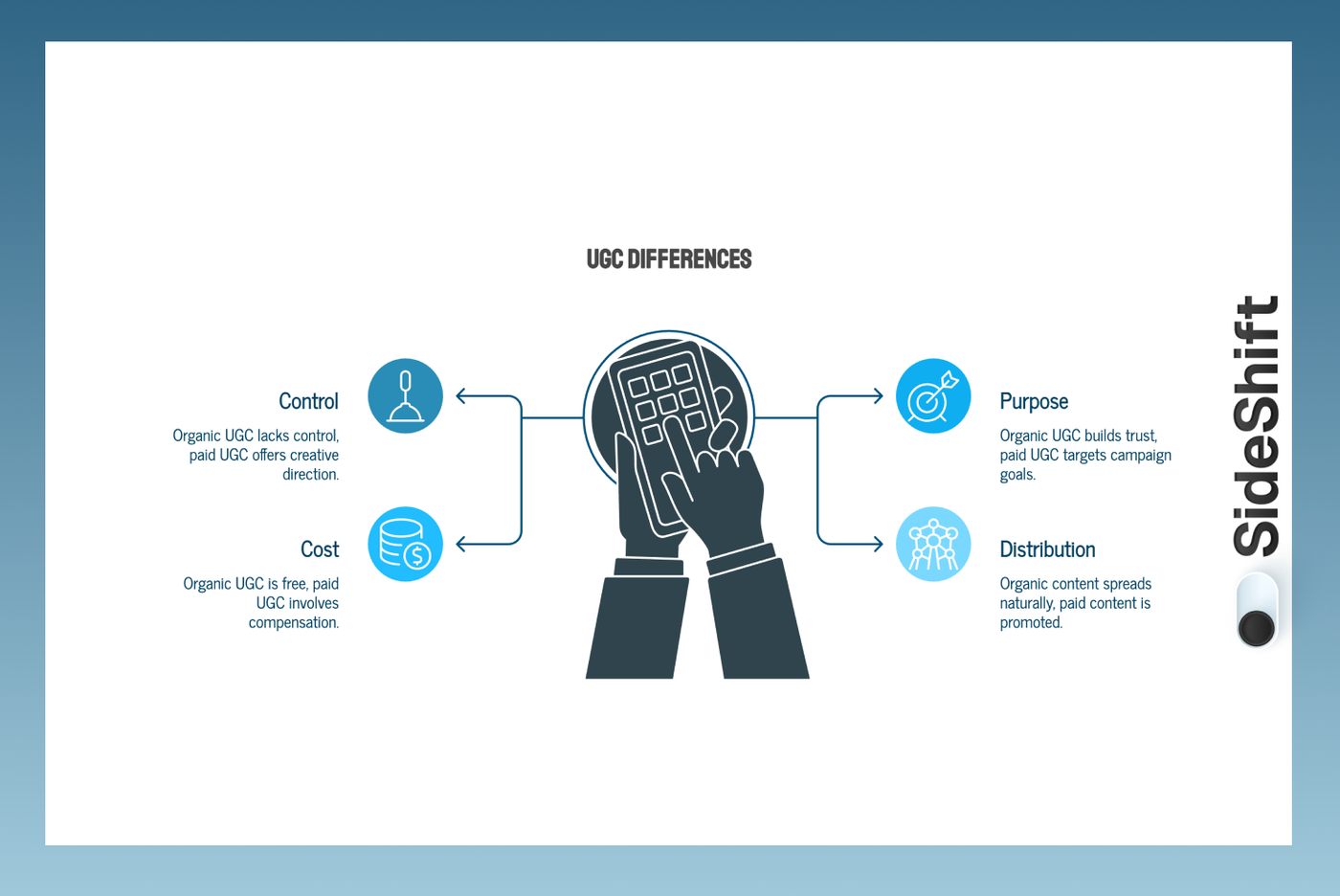
Organic UGC delivers authenticity and trust, while paid UGC offers control, scale, and predictability. Together, they can work hand in hand to strengthen your marketing strategy.
- Control and Creative Direction: With organic content, brands have no control over creation or presentation, whereas paid UGC allows brands to guide messaging, format, and creative direction.
- Purpose and Marketing Impact: Organic content tends to build trust, provide social proof, and even go viral. Paid content is usually tied to specific campaign goals, product launches, or advertising strategies. However, organic UGC can often be repurposed into paid UGC to maximize reach and value.
- Cost Considerations: Organic UGC is essentially free since it comes from motivated customers, while paid UGC involves compensation in the form of money or product exchange per post, campaign, or engagement.
- Distribution Differences: Organic content spreads naturally through shares and mentions, while paid content is promoted through paid channels or the brand’s own platforms.
How Organic UGC Works
Organic UGC happens naturally when your audience engages with your brand without direct compensation. This type of content is created by fans or customers who genuinely enjoy your product or service. The beauty of organic UGC lies in its authenticity. It’s a reflection of real experiences, often shared voluntarily on social media platforms. While organic content may be unpredictable, it carries high trust and can amplify brand credibility through word-of-mouth.
Want to put this into practice?
SideShift connects you with vetted UGC creators who actually deliver. Start your free trial and post your first job in under 10 minutes.
Brands can encourage organic UGC by fostering engagement, building a strong community, and creating shareable experiences. For example, a viral hashtag challenge or interactive content can spark fans to create posts, videos, or reviews, generating social proof at minimal cost.
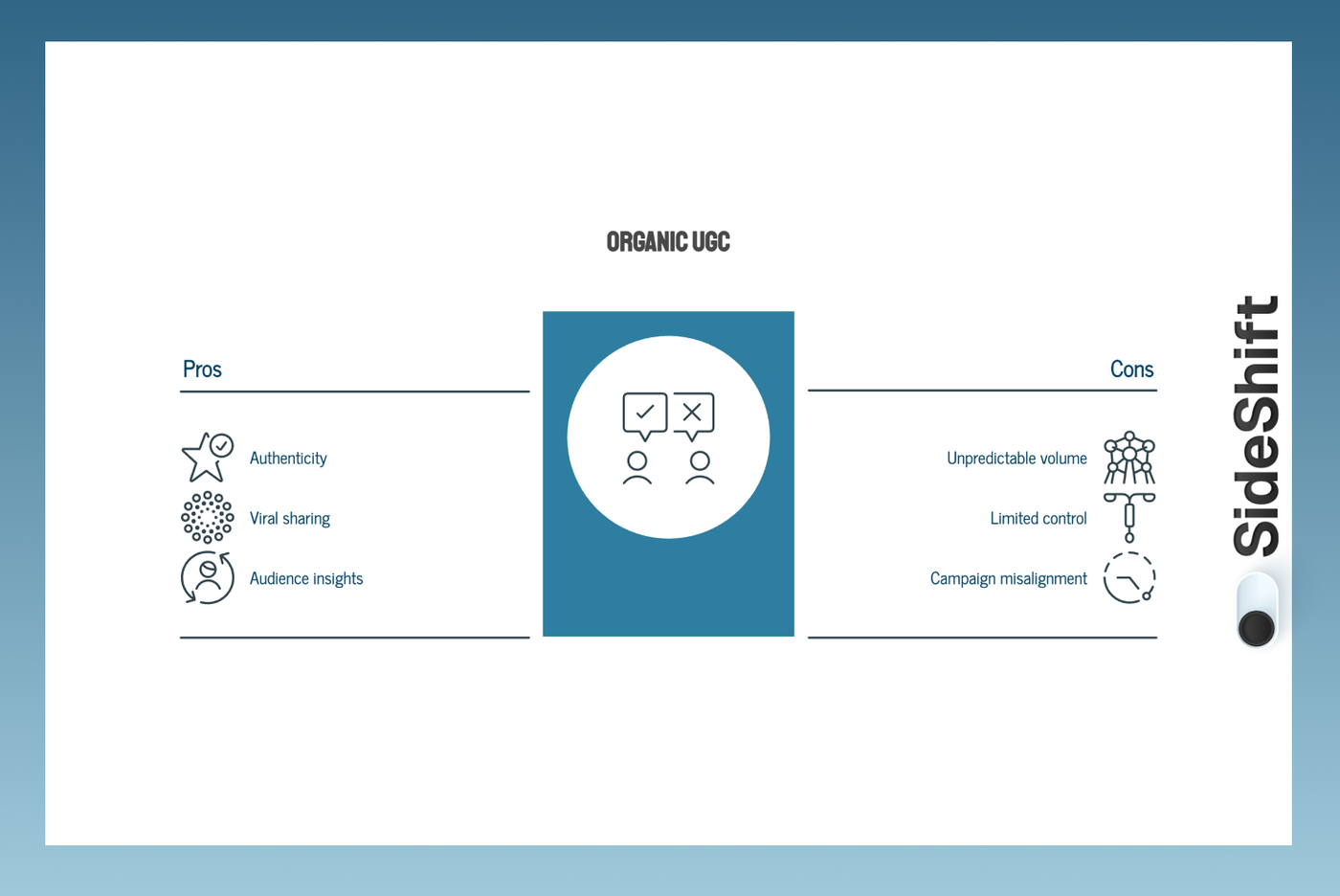
Benefits of Organic UGC
- Builds authenticity and trust with potential customers
- Encourages viral sharing and word-of-mouth marketing
- Provides insight into how your audience interacts with your brand
Limitations of Organic UGC
- Unpredictable volume and timing of content
- Limited brand control over messaging and presentation
- May not align with specific campaign schedules
How Paid UGC Works
Paid UGC is branded content that brands commission creators to produce, giving you more control while still keeping an authentic feel. Unlike organic UGC, paid content is guided by brief, clear objectives and compensation. Paid UGC allows brands to fill content gaps, ensure consistency across campaigns, and have materials ready for paid promotion or multi-channel marketing.
With paid UGC, brands can scale campaigns quickly, recruit creators who match their niche, and repurpose content across multiple platforms. This approach is especially valuable for product launches, ad campaigns, or growth-stage brands looking to generate measurable results.
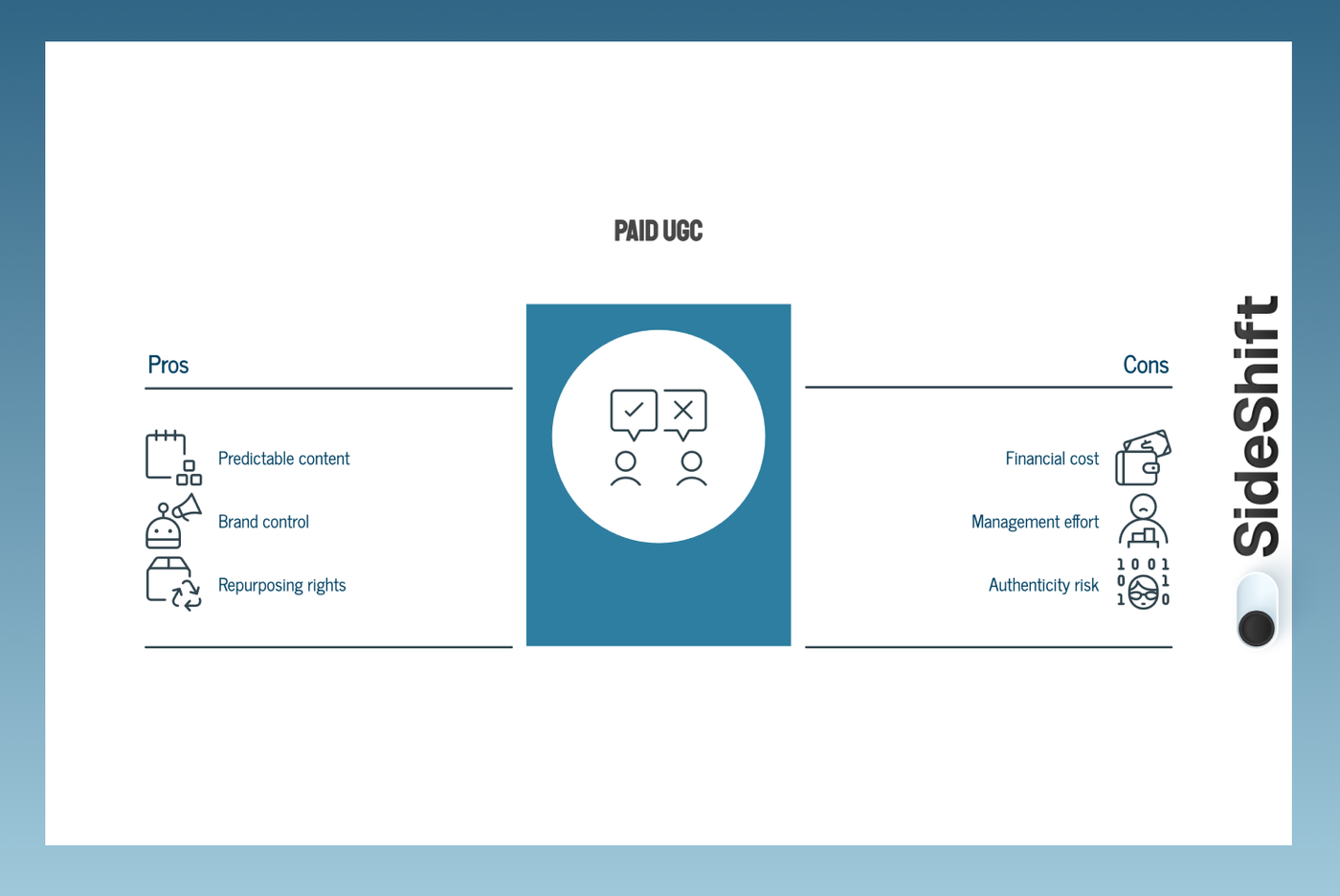
Benefits of Paid UGC
- Predictable content volume and timing
- Control over messaging, format, and brand alignment
- Rights to repurpose content across social channels and ads
Limitations of Paid UGC
- Requires investment or creator payment
- Involves brief development, content management, and oversight
- Potential risk of content feeling too “produced” if not guided properly
Which Type of UGC Should You Use?
If you have little to no budget, focus on organic UGC. Encourage your existing customers to create content and give your brand a shoutout on social media. Organic content is more community-driven and typically delivers qualitative, less tangible results, like engagement, awareness, trust, and authentic brand advocacy.
On the other hand, if your goal is conversions, ROI, and measurable KPIs, paid social strategy is the better choice - specifically paid UGC. Paid content allows you to reach wider audiences and is more geared toward conversions, all while maintaining the look and feel of authentic customer content.
Deciding between organic and paid UGC comes down to a few factors:
- Your goals (brand awareness may favor organic, while scaling conversions favors paid),
- Your budget (paid UGC requires investment, organic relies on community engagement)
- Your content needs, and campaign timing (paid supports launches and ads, while organic is more unpredictable).
Most high-performing brands use a mix of both. Organic UGC builds trust and credibility, while paid UGC scales reach and performance. You can even take organic UGC and repurpose it for paid UGC. Together, they create a balanced, effective marketing strategy.
How to Integrate Organic and Paid UGC in One Strategy
A blended approach ensures maximum impact:
Want to put this into practice?
SideShift connects you with vetted UGC creators who actually deliver. Start your free trial and post your first job in under 10 minutes.
- Monitor and amplify organic content: Encourage sharing and reposting fan content with proper credit.
- Recruit creators for paid campaigns: Focus on niche creators who naturally align with your brand.
- Repurpose content: Turn high-performing organic posts into paid ads.
- Test and iterate: Compare organic vs paid UGC engagement metrics.
- Maintain brand authenticity: Ensure paid content feels natural and consistent with user voices.
Use a marketplace like SideShift to run paid campaigns alongside organic UGC tracking for seamless integration and scalable results.
Effective Hybrid UGC Example:
In this real-world example, Rhode aggregated organic UGC from real customers into a single paid UGC strategy, leveraging the videos in paid ads and on the brand’s owned grid content for a new lip tint product line extension launch.
The campaign featured several creators trying on the new lip line.
Build your UGC Strategy with SideShift
Balancing organic and paid UGC is essential for brands that want both authenticity and scale. Organic content builds trust and sparks engagement, while paid UGC ensures consistent output and measurable results.
With SideShift, you can leverage the strengths of both organic and paid UGC in a single, streamlined platform. Tap into a pool of 800,000 vetted Gen Z creators, launch campaigns quickly, and track performance in real time.
By centralizing creator management, content approvals, payments, and analytics, SideShift makes it easy to turn UGC into a reliable growth engine, empowering your brand to produce high-quality, performance-driven content at scale.
Start leveraging SideShift today and transform how your brand creates, tests, and amplifies creator-led content.
Join SideShift for free today.
FAQs
1. What is the biggest difference between organic UGC and paid UGC?
Organic UGC is unsolicited and unpaid, while paid UGC is commissioned and controlled by the brand.
2. Is organic UGC really free?
Yes, it requires no direct payment, but brands may invest in incentives, contests, or social amplification.
3. What kind of creators do brands use for paid UGC?
Brands typically hire micro-influencers or Gen Z creators who fit their niche, with expertise in short-form content that feels authentic.
4. Can you repurpose organic UGC into ads?
Absolutely. High-performing organic content can be licensed and amplified through paid channels for reach and conversions.
5. How do you find and hire UGC creators?
Platforms like SideShift streamline the process: post a brief, recruit vetted creators, manage contracts, and pay creators in a single workflow.