
How Much Does UGC Cost? Pricing & Video Rates Explained
Learn how much UGC costs in 2026, including UGC video pricing, creator rates, and platform fees - plus tips for finding affordable UGC conten
Table of Contents
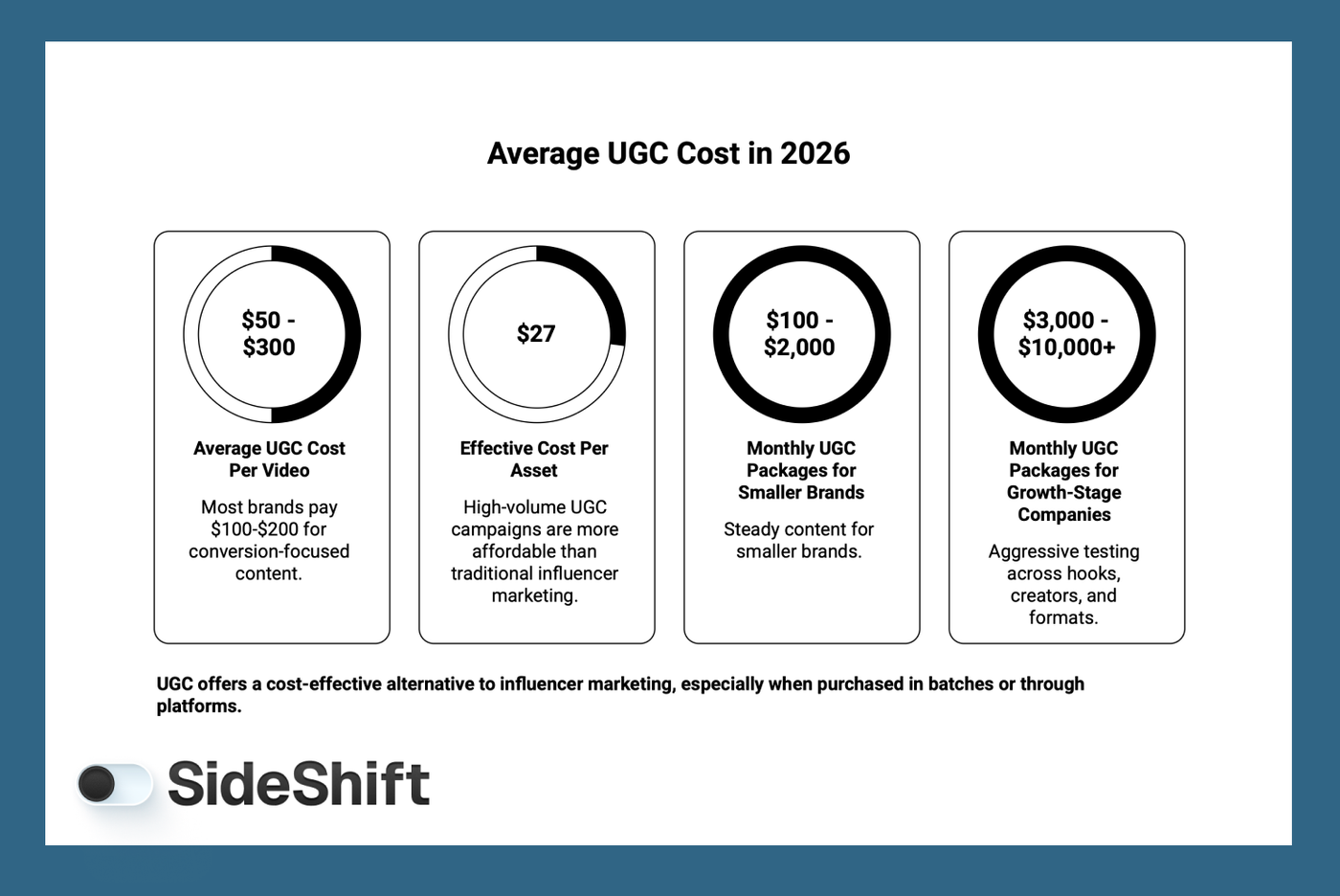
UGC typically costs between $50 - $300 per video, but that number can change depending on how you source creators, how often you publish, and what rights you need. UGC is the lower-cost-per-asset approach to sourcing authentic social media content compared to traditional influencer marketing.
This guide breaks down UGC costs, UGC video pricing, creator vs. platform fees, and how brands can obtain affordable UGC content without sacrificing performance.
What is the Average UGC Cost in 2026?
The average UGC cost in 2026 falls squarely within the $50 - $300 per video range, with most brands paying between $100 and $200 for strong, conversion-focused content. These prices generally reflect content creation only, not distribution to a creator’s audience, which is what keeps UGC far more affordable than influencer marketing. As brands demand more authentic and native-feeling videos, creator pricing has stabilized around this range.
As brands leverage UGC platforms and purchase content in batches, working with emerging creators at scale can bring costs down significantly. In many cases, the effective cost per asset drops to $27 or lower, making high-volume UGC campaigns far more affordable than traditional influencer marketing.
Single UGC video cost
A single UGC video usually costs less when working with newer or mid-level creators and increases as creators gain experience, niche expertise, or a proven track record with paid ads. Short-form videos designed for TikTok, Reels, and Shorts tend to sit at the lower end of the range, while longer videos, faster turnaround times, or more complex briefs increase the price. For most brands, single-video pricing is best suited for testing UGC before committing to higher volume.
Monthly UGC packages
Monthly UGC packages have become the standard for brands that want consistent output and faster iteration. Instead of paying per video, brands bundle content into weekly or monthly deliveries, which lowers the effective cost per asset. Smaller brands often spend anywhere from $100 to $2,000 per month for steady content, while growth-stage companies invest $3,000 to $10,000 or more to support aggressive testing across hooks, creators, and formats.
Platform vs direct hire
How creators are sourced has a major impact on total UGC cost. Directly hiring creators can appear cheaper upfront, but the hidden costs of outreach, contracting, payments, and quality control add up quickly. UGC platforms reduce friction by centralizing recruitment, contracts, payouts, and analytics, making them more cost-efficient for brands producing content consistently. Over time, platform-based hiring almost always results in lower costs per usable video.
UGC Pricing Models Explained
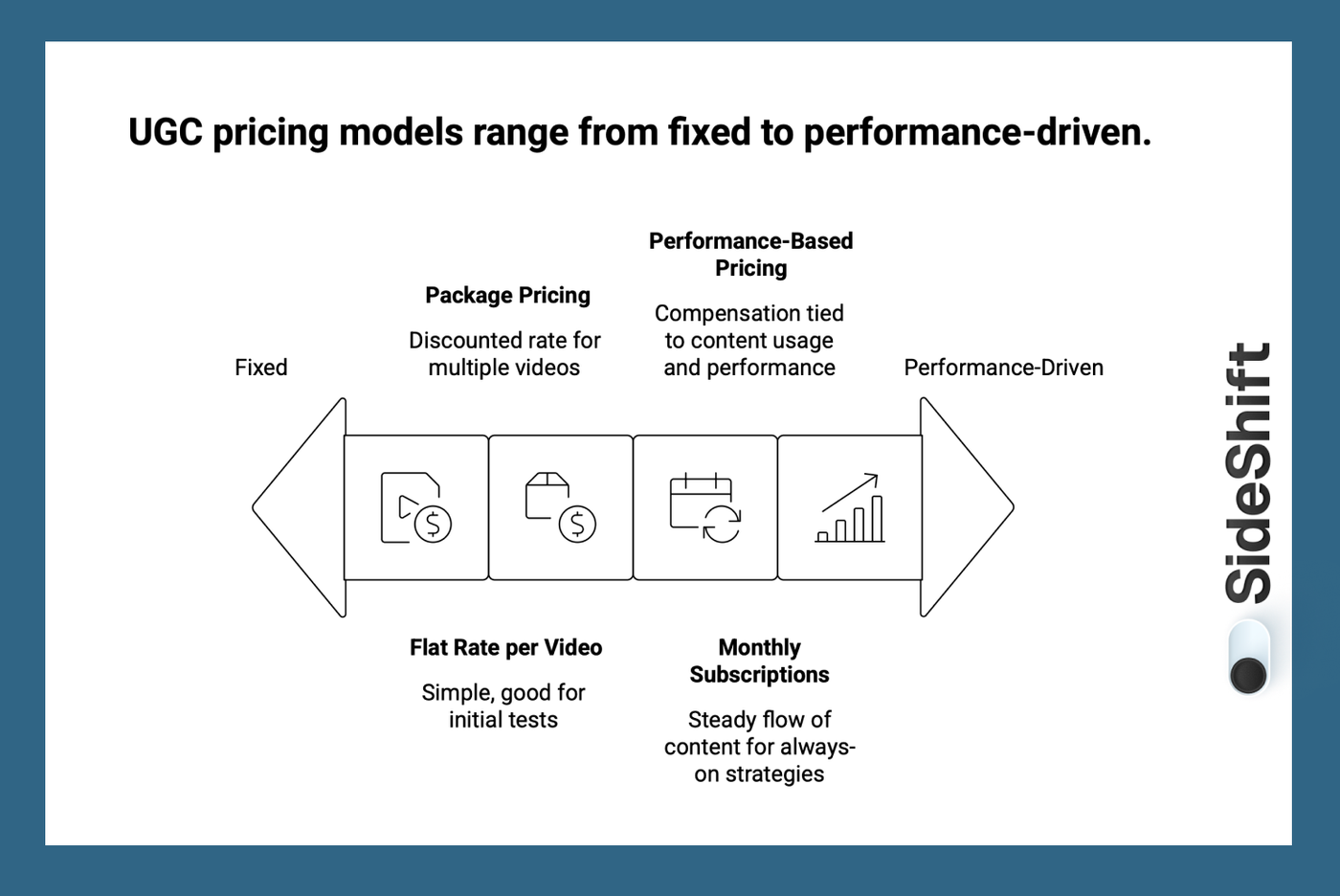
UGC pricing is structured around several common models, each designed to support different campaign goals, budgets, and stages of growth. Understanding these models helps brands choose the most cost-effective approach while ensuring creators are compensated fairly for their work.
Flat rate per video
Flat rate per video is the most straightforward and widely used UGC pricing model. Brands pay a set price for each piece of content, making it easy to budget and manage one-off campaigns or initial tests. This model works well for brands experimenting with UGC for the first time or launching short-term promotions, but it can become less efficient as content needs scale.
Want to put this into practice?
SideShift connects you with vetted UGC creators who actually deliver. Start your free trial and post your first job in under 10 minutes.
Package pricing
Package pricing groups multiple videos together at a discounted rate, lowering the average cost per asset. This model encourages higher output and faster creative testing while giving creators predictable workloads. Brands benefit from improved efficiency and consistency, while creators can plan production more effectively, making package pricing a popular choice for growing teams.
Monthly subscriptions
Monthly subscriptions are designed for brands running always-on content strategies. Instead of purchasing individual videos, brands pay a recurring monthly fee for a steady flow of UGC. This approach creates stronger creator relationships, faster turnaround times, and better creative alignment over time. Subscription models are especially effective for brands that rely on continuous testing and iteration across TikTok, Reels, and Shorts.
Performance-based / usage-based pricing
Performance-based or usage-based pricing ties creator compensation to how the content is used or how it performs. Creators may charge additional fees when videos are used in paid advertising, licensed for extended periods, or scaled across multiple channels. In some cases, bonuses are tied to views, conversions, or engagement. This model aligns incentives between brands and creators, rewarding high-performing content while keeping base costs manageable.
At SideShift, we recommend two approaches to performance-based pricing for UGC.
- Base Retainer + Performance Bonuses
This works best for experienced creators, e.g., $600-$900/mo for daily posts with bonuses for milestone views (50k-1M+).
2. CPM + Retainer
This suits less experienced creators, e.g., $300-$500/mo plus $1-$2 per 1,000 views with 10-15 videos per week.
Both structures help brands scale efficiently while incentivizing quality content.
What Factors Impact the Cost of UGC Content?
Several variables influence how much brands pay for UGC, and understanding these factors helps set realistic budgets while avoiding unnecessary spend. While base pricing often starts with the creator’s rate, the final cost is shaped by production scope, rights, and how the content will be used across channels.
Video length
Video length plays a direct role in UGC pricing. Short-form videos designed for TikTok, Reels, and Shorts typically cost less because they require less filming, editing, and scripting. Longer videos or multi-scene concepts increase production effort, which naturally raises the price. In most cases, brands see the best cost-to-performance ratio with concise, hook-driven content under 30 seconds.
Content complexity
Content complexity can be a major cost driver for different levels of UGC. Videos that require detailed scripting, multiple hooks or variations, props, scene changes, or raw footage delivery demand more time and creative effort. While these elements can dramatically improve performance, they also increase production workload, which is reflected in pricing.
Creator-specific factors
Experienced creators, niche specialists, or creators offering category exclusivity typically charge higher rates due to their proven results and limited availability. In many cases, paying more upfront for the right creator reduces overall campaign costs by delivering higher-performing content.
Creator experience
Creator experience also affects UGC cost. Newer creators typically offer lower rates, while experienced UGC creators charge more due to their understanding of platform trends, ad performance, and conversion-focused storytelling. While higher rates may increase upfront costs, experienced creators often deliver stronger results that reduce overall cost per acquisition.
Want to put this into practice?
SideShift connects you with vetted UGC creators who actually deliver. Start your free trial and post your first job in under 10 minutes.
Revisions
Revisions can significantly impact pricing depending on how they’re handled. Clear briefs and expectations help keep costs predictable, while frequent reshoots or creative changes increase time and labor. Many creators include a limited number of revisions in their base rate, with additional edits priced separately to account for extra effort.
Volume & frequency
Volume and frequency are where brands can unlock major cost efficiencies. One-off UGC requests tend to cost more per video, while ongoing or high-volume campaigns reduce the average price per asset. Brands producing content weekly or monthly often negotiate better rates and benefit from creators who become more efficient as they learn the brand.
Niche/industry
Niche or industry requirements also influence pricing. UGC for highly technical, regulated, or specialized industries often costs more due to the additional research, compliance, or expertise required. In contrast, consumer-focused niches like lifestyle, beauty, or e-commerce typically offer more affordable creator options due to higher creator availability.
Platform Requirements
Pricing can also vary by platform requirements. TikTok, Instagram Reels, and other short-form platforms have different pacing, formats, and creative expectations, which can affect production time and revisions. Finally, campaign logistics such as rush delivery, multiple revision rounds, or physical product shipping add additional layers of cost.
Licensing Fees
Licensing and promotion fees are often overlooked but can significantly increase the total cost of UGC. Whitelisting, Spark Ads, and extended ad usage are typically not included in a creator’s base rate and can quickly inflate budgets if not planned for upfront. Some UGC platforms bundle full licensing and distribution rights into their pricing, eliminating negotiation and making costs more predictable. Others handle licensing on a case-by-case basis, which means brands must clearly specify usage rights in briefs and contracts to avoid surprises as campaigns scale.
Influencer vs UGC Cost: What’s the Difference?
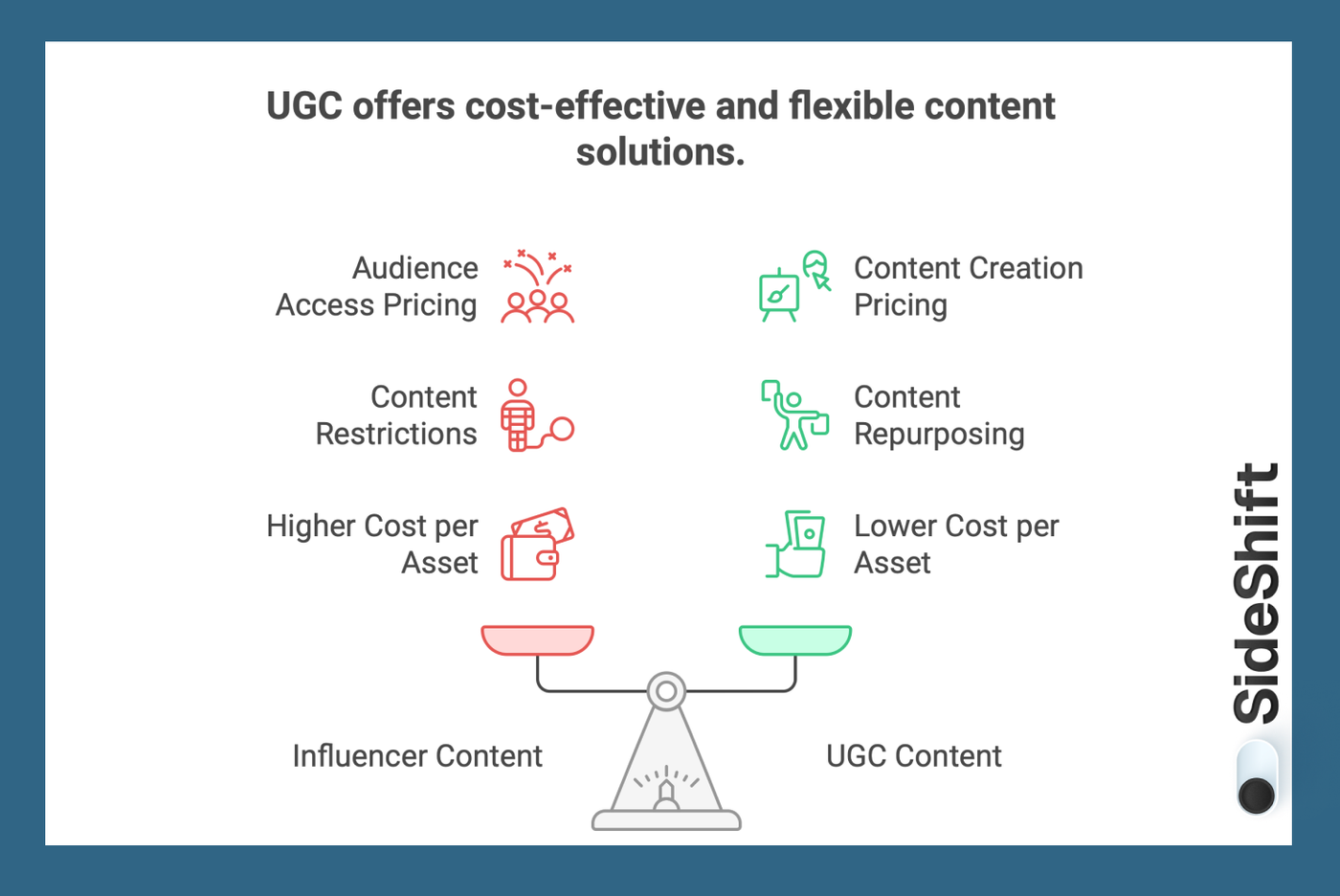
The cost difference between influencers and UGC creators is one of the biggest reasons brands are reallocating budgets. Influencers charge for access to their audience, which drives up costs regardless of content performance. UGC creators are paid purely for content creation, making pricing more predictable and scalable. This allows brands to produce significantly more content for the same budget while maintaining full control over distribution.
UGC also offers greater flexibility for paid advertising. Influencer content often comes with restrictions or added fees, while UGC is typically designed from the start to be repurposed across organic and paid channels. As a result, UGC consistently delivers lower cost per asset and stronger long-term ROI.
Does Follower Count Matter for UGC?
Unlike influencer marketing, UGC is about content quality and relatability, not reach. Size doesn’t necessarily matter here. Brands hire creators who can make native, platform-ready videos that feel authentic in-feed, making UGC a lucrative option even for creators without large followings.
You don’t need a huge audience to earn as a UGC creator. Getting started is simple: create a free SideShift account, complete your profile with social handles and top-performing videos, and consider taking our free UGC training course to earn a verified badge that signals your skills to brands.
Want to put this into practice?
SideShift connects you with vetted UGC creators who actually deliver. Start your free trial and post your first job in under 10 minutes.
Get Affordable UGC Content at Scale with SideShift
Keeping UGC affordable is all about volume, speed, and structure. High-volume testing helps brands identify winning hooks faster, while platforms streamline creator sourcing, contracts, and payments to reduce overhead. Bundling content and linking creator pay to performance also maximizes output without increasing budgets.
SideShift makes this simple with flexible, predictable pricing:
- Starter ($299/mo): Up to 5 creators, ~250+ videos/month
- Growth ($499/mo): Up to 15 creators, ~500+ videos/month
- Scale ($999/mo): Unlimited creators, 1,000+ videos/month
- Done For You (custom pricing): Full-service enterprise support with a dedicated campaign manager
With SideShift, brands get high-quality content at scale without manual management, while creators are incentivized to deliver their best work.
Start your free SideShift account today and scale your UGC campaigns faster, smarter, and more affordably.
FAQs
1.How much does UGC cost per video?
Most UGC videos cost between $50 - $300, depending on creator experience and usage rights.
2. Is UGC cheaper than influencer marketing?
Yes. UGC is significantly more affordable and scalable than influencer campaigns.
3. Do UGC creators charge for usage rights?
Often yes. Paid ad usage and extended licensing usually cost extra.
4. Are UGC platforms worth the price?
For brands producing content consistently, platforms offer better efficiency and lower long-term costs.
5. Can small brands afford UGC?
Absolutely. Many platforms and creators offer entry-level pricing and bundles for growing brands.