
Influencer Relationship Management (IRM): The 2026 Guide
Influencer relationship management (IRM) treats creators like long-term partners, not gig contractors. Learn the framework, tools, and KPIs for IRM in 2026.
Table of Contents
Influencer relationship management (IRM) is the process of building, tracking, and growing long-term creator partnerships instead of treating each collaboration as a one-off transaction. It covers everything that happens between campaigns: communication, compensation, feedback, performance history, and renewal decisions.
At SideShift, we sit in the middle of more than 800,000 creators and 1,000+ brands, so we see both sides of every partnership. The pattern is consistent: brands that rehire the same high-performing creators month after month get cheaper content, faster turnarounds, and better results than brands that start from zero every campaign.
This guide breaks down how influencer relationship management works in 2026, the framework we recommend, and the KPIs that tell you whether your relationships are actually paying off.
Why Does Influencer Relationship Management Matter More in 2026?
The channel has matured, and budgets reflect it. Eighty-seven percent of brands expect their influencer budgets to increase this year, and most programs now run in-house, according to the Influencer Marketing Hub Benchmark Report 2026. When spend grows and ownership moves internal, ad-hoc creator spreadsheets stop working.
There's also a supply-side reason. Goldman Sachs projects the creator economy will approach $480 billion by 2027, which means good creators have more options than ever. Survey data consistently shows creators prioritize brands that treat them like professionals, respond quickly, and pay on time. If your competitor answers a creator's email in two hours and you take two weeks, guess who gets their best work.
A creator making their fifth video for your brand also knows your product, your audience, and your review process better. They skip the learning curve you paid for the first time. We've watched this compound on our own platform: when Photogeniq ran a high-volume creator program through SideShift, a consistent roster produced 1,200+ posts and 214 million views in 30 days at a $0.10 CPM.
How is IRM Different From Influencer Campaign Management?
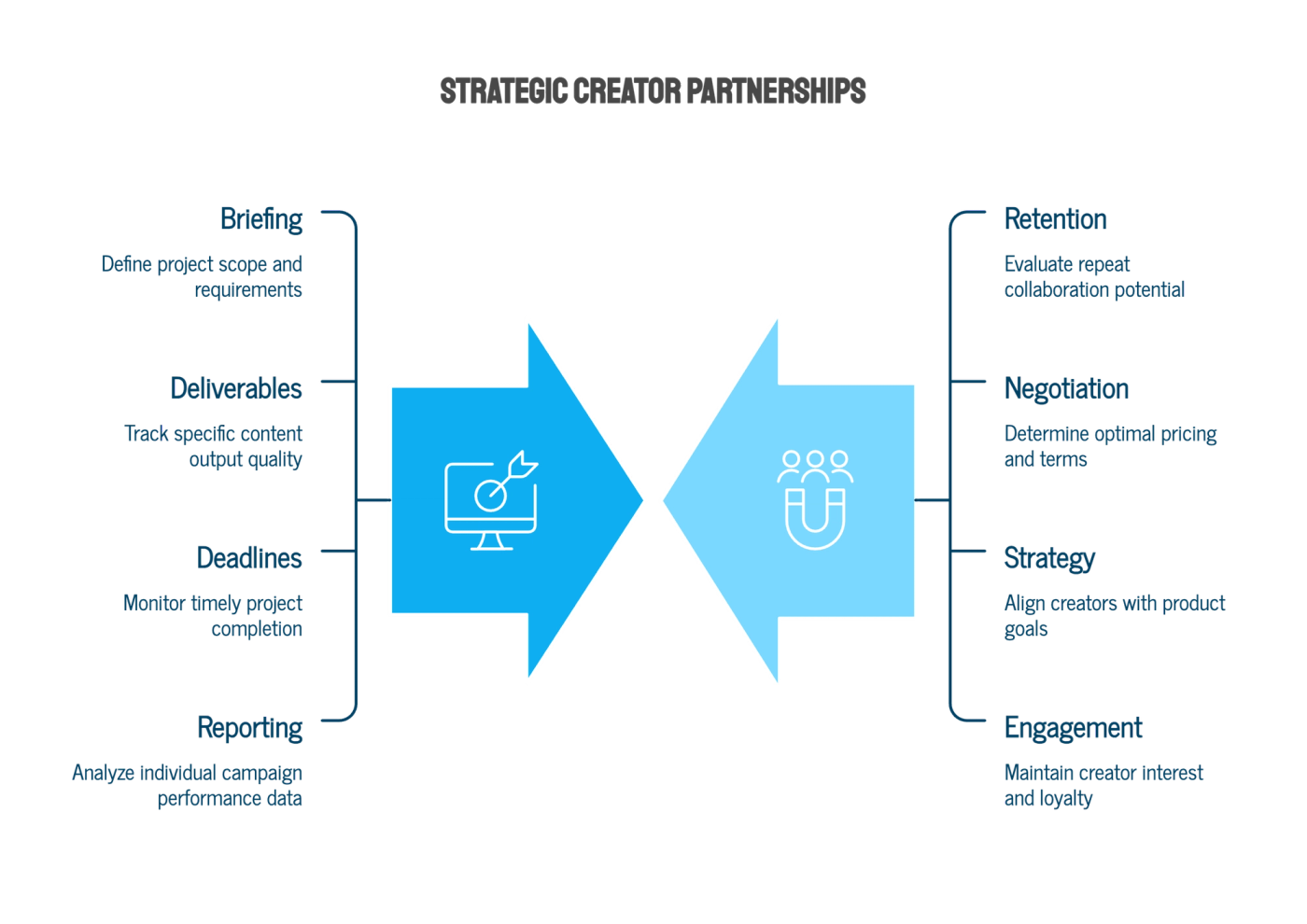
Campaign management is about a single project: brief, deliverables, deadline, payment, report. Influencer relationship management is the layer above it. It asks what happens after the report is filed.
A simple way to see the difference:
- Campaign management asks: "Did this video ship on time and hit its view target?"
- Creator relationship management asks: "Should we book this creator again, at what rate, for which products, and how do we keep them excited to work with us?"
A survey of more than 1,000 Americans revealed that 77% find content created by social media influencers more compelling than traditional ads, so the creators driving purchases for you repeatedly are assets worth managing deliberately.
What Does a Strong Influencer Relationship Management Framework Look Like?
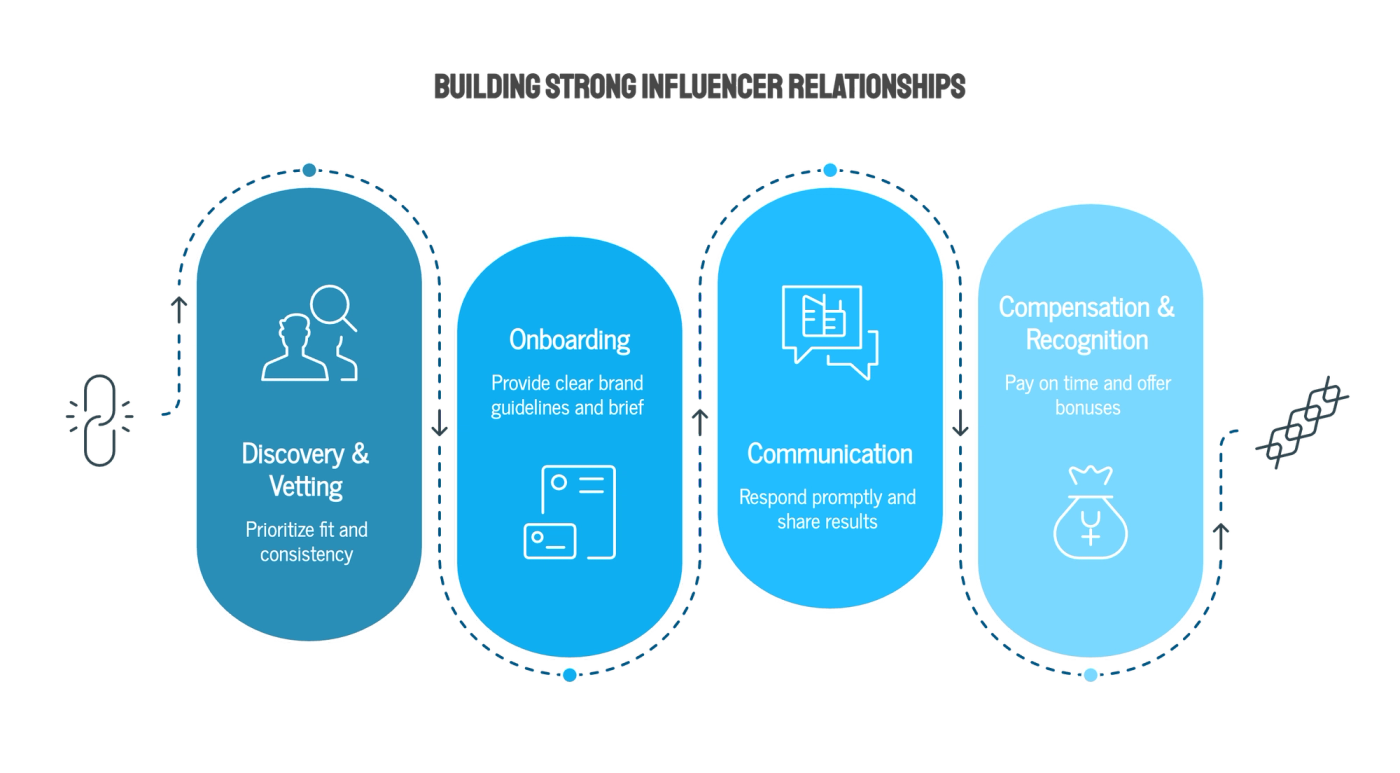
We recommend five stages. Each one feeds the next, and the loop repeats with every campaign cycle.
1. Discovery and Vetting
Relationships start with fit. Before outreach, check audience overlap, engagement quality, content style, and past brand work. For a deeper look at the process, our guide on how to find influencers for your company or product walks through each step. The short version: prioritize fit and consistency over follower count. A creator who posts reliably in your niche beats a bigger account that goes quiet for weeks.
Want to put this into practice?
SideShift connects you with vetted UGC creators who actually deliver. Start your free trial and post your first job in under 10 minutes.
2. Onboarding
The first 48 hours set the tone. A strong onboarding packet includes your brand guidelines, product access, a clear brief, payment terms, and a single point of contact. Ambiguity here is where relationships die early. Creators remember which brands made their first project easy.
3. Communication
This is the stage brands underestimate most. Respond to questions within one business day, give feedback that's specific rather than vague, and share performance results with the creator afterward. Creators rarely see how their content performed for the brand, and sharing that data makes them feel like a partner rather than a vendor.
4. Compensation and Recognition
Pay on time, every time. Late payments are the fastest way to lose a great creator to a competitor. Beyond base pay, consider performance bonuses, early access to product launches, and public shoutouts. If you gift product, do it strategically.
Our guide to product seeding in influencer marketing covers how to make gifting feel like a relationship builder instead of a cold transaction.
5. Retention and Growth
Review your creator roster quarterly. Identify your top 10–20% of performers, then deepen those influencer partnerships: longer contracts, higher rates, ambassador roles, or first pick of new campaigns. Creator retention is cheaper than creator acquisition, for exactly the same reason customer retention is cheaper than customer acquisition.
"You never want 100% repeat because you'd stop finding diamonds in the rough, and you never want 100% new because operational risk is real," says Canyon Pergande, co-founder and COO of SideShift.
Which KPIs Should You Track for Creator Relationships?
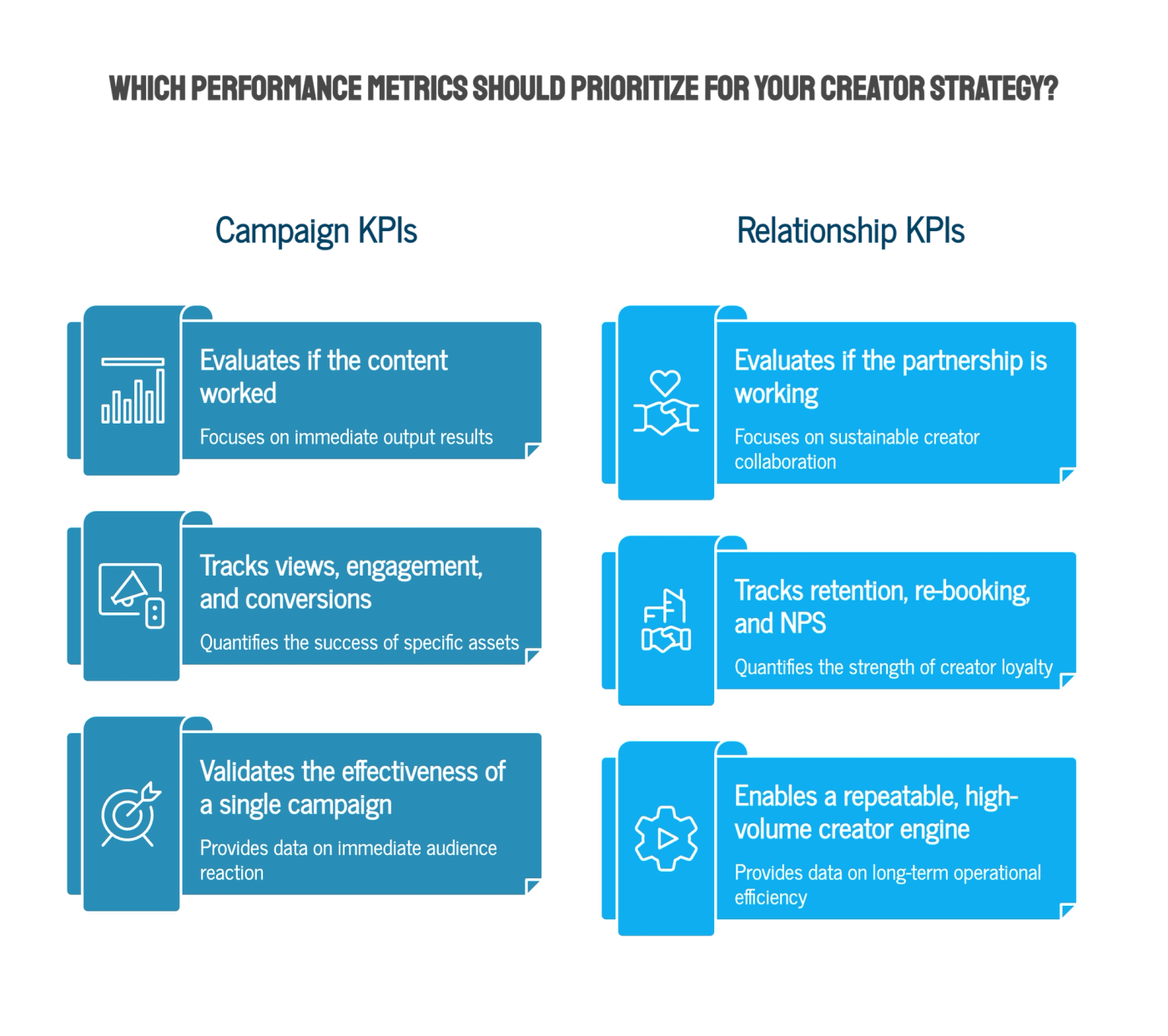
Campaign KPIs (views, engagement, conversions) tell you if the content worked. Relationship KPIs tell you if the partnership is working. Track both.
- Creator retention rate: measures the percentage of creators rehired within 90 days
- Repeat collaboration rate: tracks the average number of campaigns completed by each creator each year; this metric should show steady growth over time
- Time to re-book: measures the number of days between the end of one campaign and the next booking; shorter re-booking times indicate stronger creator relationships
- Cost per deliverable (repeat vs. new): compares the cost of content from returning creators with that of first-time creators
- Creator response time: measures how quickly creators respond to campaign briefs; a response time of less than 24 hours is considered a healthy benchmark
- Creator Net Promoter Score (NPS): measures how likely creators are to recommend working with the brand
When GPTZero built a repeatable creator engine on SideShift, a managed roster distributed 600+ TikToks in under five weeks and generated 45 million+ organic views. The volume came from re-booking proven creators quickly.
What Tools Do You Need for Influencer Relationship Management?
You can run early-stage IRM in a spreadsheet, but most teams outgrow it around 15 to 20 active creators. At that point you have three options:
- A general CRM adapted for creators: It works, but you'll fight the software constantly since it was built for sales pipelines, not content creators.
Want to put this into practice?
SideShift connects you with vetted UGC creators who actually deliver. Start your free trial and post your first job in under 10 minutes.
- A dedicated influencer CRM: Purpose-built for tracking creator contacts, rates, and history, though you'll still handle sourcing, contracts, and payments elsewhere.
- An end-to-end influencer management platform like SideShift: Discovery, briefs, communication, content approval, payments, and performance history in one place.
On SideShift, brands post a job, screen applicants automatically within 24 hours, and manage briefs, approvals, and payments in a single dashboard, with full performance history attached to every creator. You can see at a glance who delivered, who improved, and who deserves a bigger role in your next Instagram creator campaign.
For a broader comparison of the category, we ranked the 15 best influencer marketing tools for 2026 across discovery, management, and analytics.
What Mistakes Hurt Influencer Relationships the Most?
We've watched thousands of brand-creator pairings succeed and fail. The failures usually trace back to one of five habits:
- Ghosting between campaigns: Six months of silence, then a rush request. Creators deprioritize brands that only appear when they need something.
- Delaying or complicating payments: Nothing erodes trust faster.
- Treating every creator identically: The more personable you are in your communication with a creator, the more likely they are to see the relationship as a partnership rather than a transaction.
- Creating endless revision cycles: Two rounds of feedback is reasonable. Five rounds signals a broken brief, and creators talk to each other about which brands do this.
- Skipping disclosure guidance: Make FTC compliance easy by building disclosure requirements into every brief. The FTC's Endorsement Guides are clear that unclear sponsorships put both parties at risk, and protecting your creators legally is part of protecting the relationship.
Fixing these five habits will do more for your influencer marketing strategy than any discovery tool or trend report.
Turn Your Creator Roster Into a Compounding Asset with SideShift
Every time you restart your creator search, you lose time, money, and momentum. Your team spends hours sourcing new creators, reviewing applications, onboarding talent, and rebuilding relationships that never had the chance to grow. Meanwhile, proven creators accept repeat work from brands that stay in touch.
SideShift helps you build a creator program that gets stronger with every campaign. Access a network of 800,000+ vetted creators, automate screening within 24 hours, and manage briefs, approvals, payments, and performance history from one dashboard. When your best creators are ready for another campaign, everything you need is already in one place.
FAQs
1. What is influencer relationship management (IRM)?
Influencer relationship management is the ongoing process of maintaining and growing partnerships with creators across multiple campaigns. It covers communication, payment reliability, performance tracking, and retention, rather than the logistics of any single campaign.
1. How is an influencer CRM different from a regular CRM?
An influencer CRM tracks creator-specific data a sales CRM can't: content rates, platform handles, audience demographics, deliverable history, and campaign performance. A regular CRM can be adapted, but purpose-built tools save significant setup and maintenance time.
Want to put this into practice?
SideShift connects you with vetted UGC creators who actually deliver. Start your free trial and post your first job in under 10 minutes.
1. How many creators do you need before IRM is worth formalizing?
Around 15 to 20 active creators is the usual tipping point. Below that, a well-kept spreadsheet works. Above it, missed follow-ups and payment delays start costing you your best performers.
1. What's a good creator retention rate?
For high-volume UGC programs, rehiring 40% or more of creators within 90 days is a healthy benchmark. If your retention sits below 20%, audit your payment speed, brief quality, and feedback process first.
1. Does influencer relationship management work for B2B brands?
Yes, and it arguably matters more in B2B, where trust and niche credibility drive longer sales cycles. B2B influencer spend is growing faster than the industry overall, and long-term creator partnerships with respected niche voices outperform one-off sponsorships on lead quality.