


How to Create an Engaging UGC Contest
Running a UGC contest? Here's how to structure rules, incentives, and creator recruitment to get high-volume, authentic content that actually converts.
Table of Contents
UGC contests are one of the fastest ways to flood your brand's feed with authentic, high-converting content, but most brands run them wrong. They pick a generic hashtag, throw a gift card on the line, and wonder why participation tanks after 48 hours.
A well-designed UGC contest activates a scalable content engine while simultaneously building brand trust, social proof, and real creator relationships. This guide breaks down exactly how to structure a UGC contest that delivers, from incentive design to creator recruitment to what to do with all that content after the campaign wraps.
What is a UGC Contest?
A UGC (user-generated content) contest is a campaign format where brands invite their audience or a wider creator community to submit content featuring a product or theme in exchange for rewards, recognition, or the chance to be featured. Instead of working with a small group of creators one by one, UGC contests are designed to generate a large pool of authentic content in a short period of time.
This makes them especially effective for building high-volume UGC that brands can repurpose across ads, social media, and product pages. By lowering the barrier to entry and encouraging broad participation, UGC contests not only increase content output but also amplify reach, engagement, and social proof at scale.
How UGC Contests Work
Before diving into mechanics, it helps to understand what separates a forgettable UGC contest from one that drives real results.
Most brands treat UGC contests like a lottery. One winner, a flashy prize, and a crowd of people who post once and never engage again. That model prioritizes volume of entries over quality of content, and it rarely produces material that's actually usable in your marketing stack.
What you want instead is a contest designed to surface your best-fit creators, produce content that reflects your brand authentically, and give participants a reason to stay engaged with you beyond the contest window.
This is the philosophy behind a high-volume UGC strategy. Don't just collect content, build a repeatable system that identifies which creators and which content formats actually resonate with your audience.
Define Your Contest Goal Before You Set the Rules
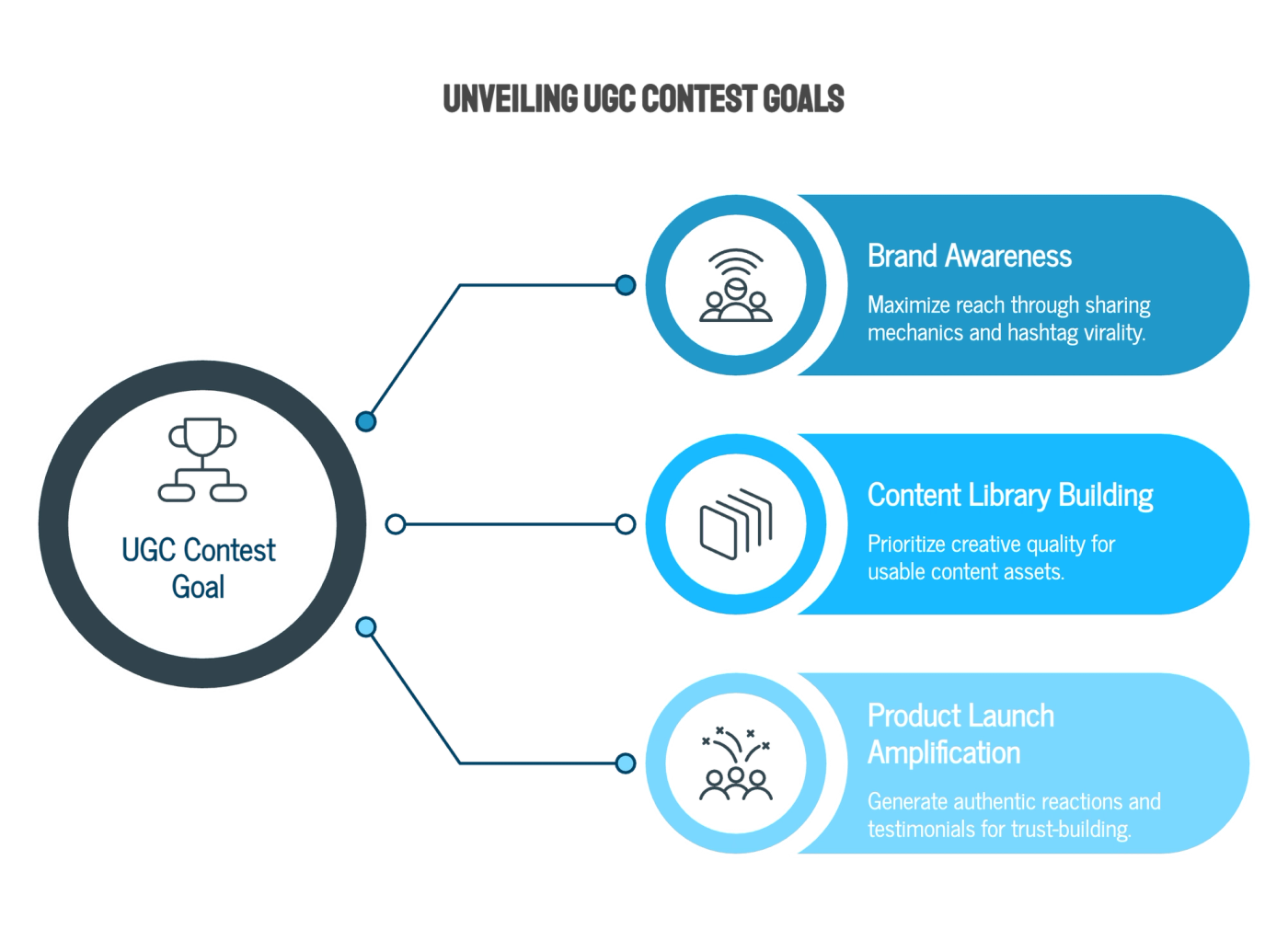
Every UGC contest decision, from prize structure to submission format to platform choice, should flow from one clearly defined goal. The most common objectives brands pursue with UGC contests are brand awareness, content library building, and product launch amplification. Each requires a slightly different setup.
- If your goal is awareness, you want maximum reach, which means prioritizing sharing mechanics and hashtag virality.
- If you're building a content library to use in paid ads or organic posts, you want creative quality over volume, with submission guidelines specific enough to ensure usable assets.
- If you're launching a product, you want authentic reactions and testimonials from real users that can do the trust-building work your ads can't.
Before you write a single rule, answer these three questions:
- What does success look like 30 days after the contest ends?
- Will this content live in paid media, organic channels, or both?
Want to put this into practice?
SideShift connects you with vetted UGC creators who actually deliver. Start your free trial and post your first job in under 10 minutes.
- Who is the ideal creator type for this campaign, and where do they live?
That last question matters more than most brands realize. A Gen Z audience on TikTok behaves completely differently from a micro-community on Instagram. Your contest mechanics need to match the platform behavior of the creators you're trying to activate.
Structuring Your UGC Contest Rules for Maximum Participation
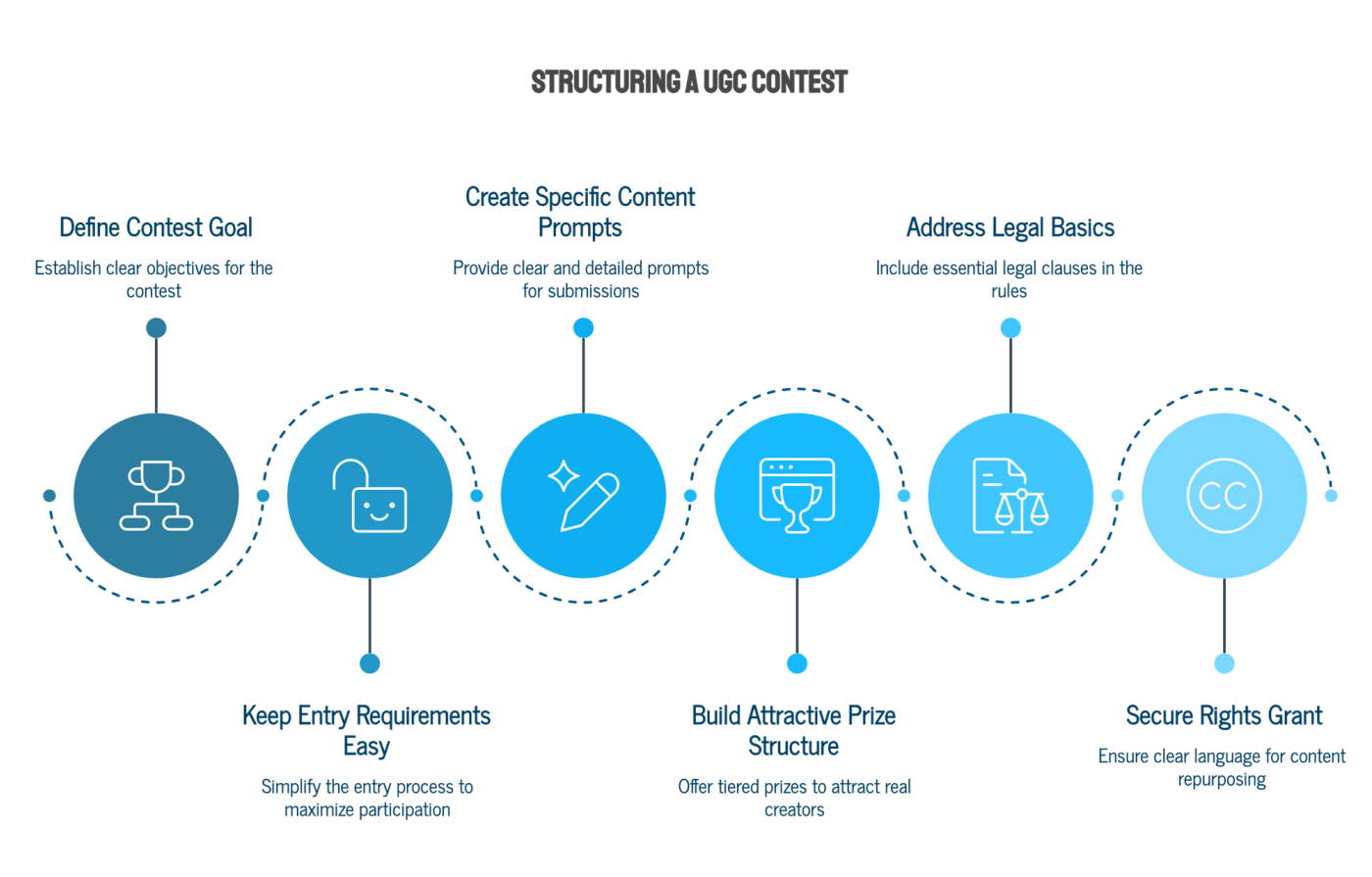
The rules of your UGC contest are where most brands accidentally kill their own campaigns. Overly complex entry requirements reduce participation. Vague rules attract low-quality entries. And unclear intellectual property language can create legal headaches down the road.
Keep Entry Requirements Easy
The fewer steps between "I want to enter" and "I submitted," the higher your participation rate will be. A three-step entry process will outperform a five-step one every time.
At minimum, you need a clear content prompt, a designated hashtag or submission method, and a deadline. Everything else is optional, and you should be ruthless about cutting requirements that don't serve your goal.
For content prompts, specificity wins. Instead of "show us how you use our product," try "show us your morning routine with [product name] in 30 seconds or less." That specificity narrows the creative brief without restricting creative expression, and it dramatically improves the consistency and quality of submissions.
Build a Prize Structure That Attracts Real Creators
Gift cards and one-time prizes attract entry-seekers over creators. If you want quality content and genuine brand alignment, your incentive structure needs to reflect the way real creators think about their time.
A tiered prize structure works far better than a single winner model:
- Grand prize: Cash, brand partnership, or major product bundle for the top submission
- Runner-up prizes: Smaller cash amounts or product packages for 5 to 10 additional winners
- Participation rewards: Discount codes, early access, or public features for all valid submissions
The participation reward layer meaningfully changes the psychological calculus for a creator deciding whether to enter. Even a small acknowledgment signals that you value their effort, not just the output of their best entry.
Understand Legal Basics
At minimum, your contest rules need to address: who can enter (age, geography), how winners are selected, how submissions will be used, and the official contest period.
The rights grant is especially important. You want to make sure your rules include clear language allowing you to repurpose winning and featured content in your marketing channels. If you're running contests at volume, working with a creator management platform that handles contracts and rights management automatically removes this friction entirely.
How to Recruit Creators for Your UGC Contest
Organic discovery via hashtag alone rarely produces the volume or quality of submissions that brands need. The brands running the most effective UGC contests aren't waiting for creators to find them. They're actively recruiting.
This is where having access to a pre-vetted creator marketplace changes the math. SideShift connects brands with over 800,000 U.S.-based Gen Z creators who are already primed to produce short-form UGC content.
Want to put this into practice?
SideShift connects you with vetted UGC creators who actually deliver. Start your free trial and post your first job in under 10 minutes.
Rather than casting a wide net and hoping the right creators show up, you can target by niche, content style, engagement history, and platform focus. The difference in content quality between inbound-only and actively recruited creator pools is significant, and it shows up directly in your campaign analytics.
Enlisting a small group of seeded creators, whether that is a few or a dozen, can help kickstart awareness and participation in the UGC Contest. These initial contributors act as catalysts, spreading visibility and signaling momentum around the contest. From there, the real power of a UGC contest comes from organic crowd-sourcing of content at scale, encouraging participation from a much wider, often undiscovered audience who may not have engaged with the brand otherwise.
Just as importantly, the nature of the contest itself should do a lot of the attracting. The theme and creative brief need to signal exactly the type of creator or customer you want to bring in. For example, if you are looking for adventure content, the contest should be explicitly designed around adventure-driven storytelling and visuals. This naturally pulls in creators who already produce that style of content, making participation feel relevant and aligned rather than generic.
Running the Contest: Timeline, Promotion, and Moderation
Two to three weeks is the sweet spot for most UGC contests. It’s long enough to give creators time to produce quality content, but short enough to maintain urgency. Structure your timeline around three phases:
- Pre-launch (3-5 days): Tease the contest to your existing audience, begin creator outreach, and finalize entry mechanics
- Active contest period (10-14 days): Daily engagement with submissions, amplify strong entries, post reminders
- Announcement and wrap (3-5 days): Announce winners publicly, feature top submissions across channels, follow up with participants
The announcement phase is where most brands drop the ball. Publicly celebrating your winners and featuring standout submissions rewards participation and signals to your audience that real people, not stock photo models, love your brand.
Moderation and Engagement During the Contest
Someone needs to be actively monitoring submissions throughout the active period and listening to your audience. This means checking that entries comply with your rules, flagging genuinely strong content for potential repurposing, and engaging publicly with participants. That engagement layer, a comment, a share, a reply, is often what converts a one-time contest participant into a long-term brand participant.
What to Do With Your UGC After the Contest Ends
Selecting the contest winner is step one. The real ROI comes from what you do with the content next. High-performing UGC is one of the most cost-effective creative assets a brand can own because it's already proven to resonate with a real audience.
Strong contest submissions can be repurposed across:
- Paid social ads (UGC consistently outperforms polished brand creative in Meta and TikTok ad performance)
- Organic feed content and Stories
- Email marketing campaigns
- Product pages and landing pages as social proof
- Pitch decks and sales materials
Before you reuse any submission, make sure your contest rules grant you the rights to do so, and when in doubt, reach out directly to the creator to confirm. Most creators are happy to have their content featured, especially when you credit them.
Want to put this into practice?
SideShift connects you with vetted UGC creators who actually deliver. Start your free trial and post your first job in under 10 minutes.
Scale Your UGC Contests with SideShift
A well-executed UGC contest builds a repeatable system for consistently producing high-performing creative that fuels your entire marketing engine. When structured correctly, it becomes a scalable form of user-generated content marketing, turning everyday creators into long-term contributors and transforming one-off submissions into reusable UGC ad creative across paid and organic channels.
The difference between a one-time activation and a true UGC campaign is infrastructure. With the right UGC content strategy in place, from creator recruitment to moderation to rights management, you can continuously source high-quality UGC creators for brands without slowing down your internal team or sacrificing creative control.
SideShift makes that scale possible. With over 800,000 Gen Z creators and an end-to-end UGC creator marketplace that handles sourcing, campaign management, analytics, attribution, payments, legal, and tax, brands can focus on building better contests while the operational complexity is handled behind the scenes.
Whether you're learning how to run a UGC contest for the first time or optimizing a mature TikTok UGC contest strategy, SideShift gives you the network and infrastructure to scale with confidence.
Join SideShift for free today.
FAQs
1. What is a UGC contest, and how does it work?
A UGC contest is a brand-run campaign that invites real users or creators to submit original content (photos, videos, reviews) for a chance to win prizes. Brands use these contests to generate authentic marketing assets, build social proof, and identify high-fit creators for ongoing partnerships.
2. How do I choose the right prize for a UGC contest?
Match your prize to the effort you're asking for. For short-form video submissions, cash prizes or meaningful product bundles perform well. A tiered structure, with a grand prize plus several runner-up and participation rewards, drives higher quality entries and broader participation than a single-winner format.
3. How many creators should I recruit for a UGC contest?
It depends on your content volume goal, but a general rule is to recruit 3 to 5 times the number of submissions you actually need. Not every invited creator will participate, and not every submission will be usable. Starting with a larger recruited pool ensures you hit your target content volume.
4. Can I use UGC contest submissions in paid ads?
Yes, provided your contest rules include a rights grant that covers paid media use. This is one of the most valuable aspects of UGC contests: authentic creator content consistently outperforms polished brand creative in paid social performance, particularly on TikTok and Meta.
5. What platform is best for running a UGC contest?
TikTok and Instagram are the most effective platforms for short-form UGC contests targeting Gen Z and Millennial audiences. TikTok's native sharing mechanics and algorithm make it especially powerful for reach-oriented campaigns. Pairing your platform choice with a creator marketplace like SideShift ensures you're recruiting the right creators for whichever platform you choose.