
What Is a Paid Partnership & How to Land the Right Deals
Paid partnerships explained: how they work, what brands actually pay for, and how creators land deals that match their niche and grow their income.
Table of Contents
Paid partnerships are one of the most misunderstood opportunities in the creator economy. Creators assume they need hundreds of thousands of followers to qualify. Brands assume they need a massive budget to make them worth running. Neither is true.
A paid partnership is a straightforward exchange. A brand pays a social media content creator to produce content that promotes their product or service, and when it's structured right, both sides win. This article breaks down exactly how paid partnerships work, what brands are actually looking for, how creators at any level can start landing deals, and what separates a good partnership from one that wastes everyone's time.
What Is a Paid Partnership?
A paid partnership is a formal, compensated agreement between a brand and a creator where the creator produces content in exchange for payment. That content might live on the creator's own social channels, be handed off to the brand for use in their marketing, or both.
The term covers a wide range of arrangements, from a one-off sponsored TikTok to a long-term retainer in which a creator produces content for a brand every week.
What distinguishes a paid partnership from gifting or barter arrangements is the money. A gifted product is not a paid partnership. A discount code with no upfront compensation is not a paid partnership. A paid partnership means the creator is compensated in cash for their creative work, which also means it comes with legal obligations: in the U.S., the FTC requires that paid partnerships be disclosed clearly and conspicuously, typically with language like "paid partnership" or "ad" at the start of a post or in a video.
The label "paid partnership" you see on Instagram and TikTok posts is also a platform-specific feature that brands and creators can use to officially tag sponsored content, adding a layer of transparency and allowing brands to access performance data for those posts directly.
How Paid Partnerships Actually Work
The mechanics of a paid partnership vary depending on the brand, the platform, and the type of content being created, but the general structure follows a predictable path.
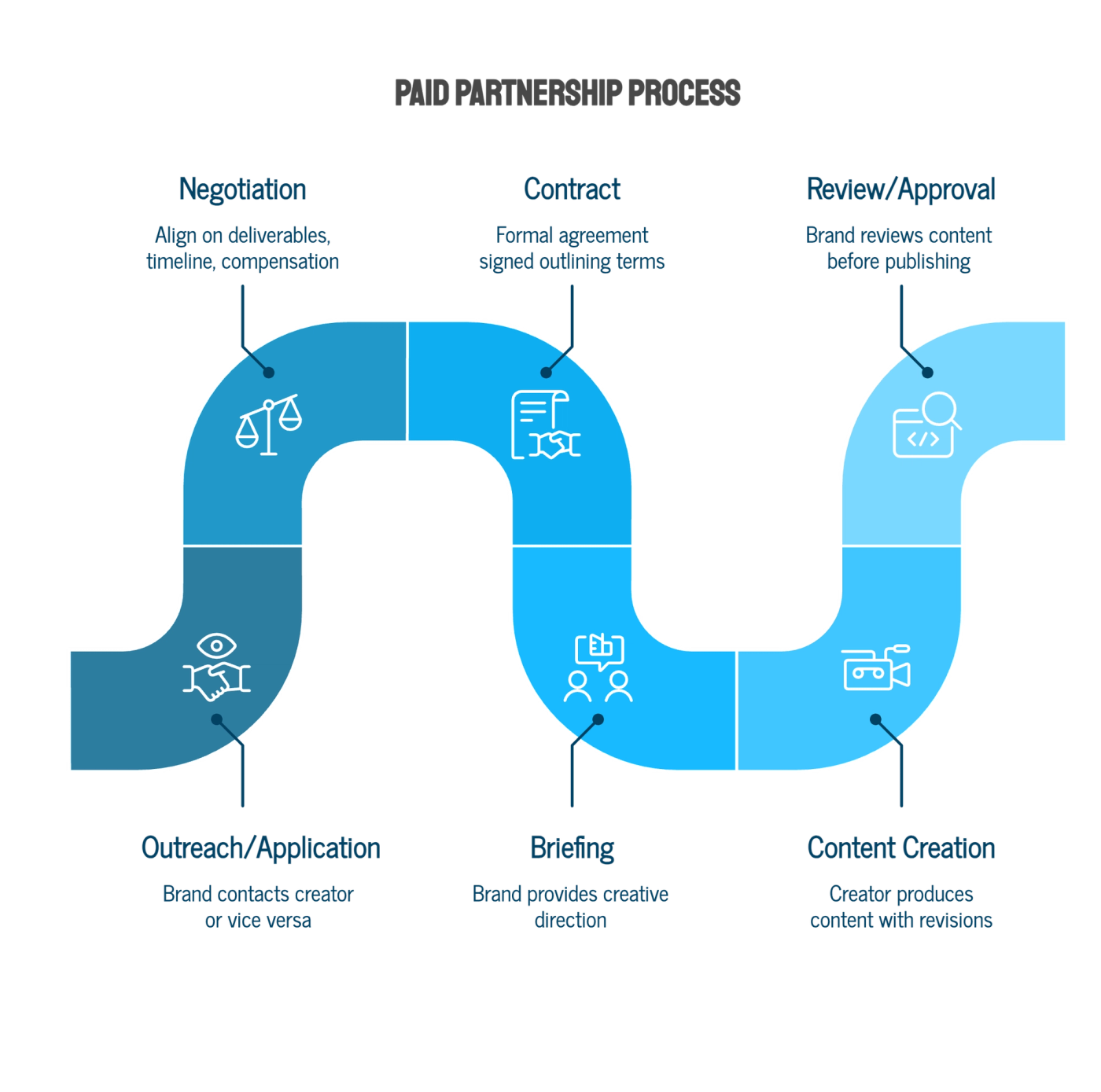
The Typical Paid Partnership Process
- Outreach or application: Either the brand contacts the creator, or the creator pitches the brand or applies through a UGC/influencer marketplace
- Negotiation: Both parties align on deliverables, timeline, usage rights, exclusivity, and compensation
- Contract: A formal agreement is signed outlining the scope of work and payment terms
- Briefing: The brand provides creative direction, talking points, and any required disclosures
- Content creation: The creator produces the content, often with one or two rounds of revision
- Review and approval: The brand reviews the content before it goes live
- Publishing and payment: Content goes live, payment is issued per the agreed terms
The contract and rights conversation is where a lot of first-time creators get tripped up. Usage rights determine whether the brand can repurpose your content in paid ads, on their website, or in other channels beyond your own post. Content licensed for paid media use commands significantly higher rates than content posted organically. Knowing the difference before you sign matters.
Want to put this into practice?
SideShift connects you with vetted UGC creators who actually deliver. Start your free trial and post your first job in under 10 minutes.
What Brands Are Actually Paying For
Understanding what brands value in a paid partnership changes how creators position themselves. Most creators assume brands are paying for followers. They're not. At least, not primarily.
Brands running smart paid partnership campaigns are paying for three things: content quality, audience relevance, and creative authenticity. A creator with 8,000 highly engaged followers in the fitness niche is worth more to a sports nutrition brand than a lifestyle creator with 200,000 followers whose audience has no particular interest in health products.
This is why the UGC model has grown so aggressively alongside traditional influencer partnerships. Brands increasingly want content they can use in their own marketing channels, particularly paid ads, regardless of whether the creator has a following at all. UGC paid partnerships decouple follower count from earning potential entirely, which opens the door for new creators who produce strong content to get paid at the same rates as established ones.
What consistently makes a creator attractive to brands:
- A clearly defined content niche with demonstrated audience engagement
- A consistent posting history that shows reliability
- Content that already looks like native, authentic social content (not over-produced)
- A professional approach to communication and turnaround time
- An understanding of what the brand is trying to achieve, not just what the creator wants to post
How Creators Land Paid Partnerships
Landing your first paid partnership is mostly a distribution problem. The content quality has to be there, but equally important is making sure the right brands can actually find you and evaluate you quickly.
Build a Simple Creator Portfolio
Before reaching out to any brand, have somewhere to send them. Your portfolio doesn't need to be elaborate. A simple document or link that shows your content style, your audience demographics if you have them, your rates, and examples of past work is enough. Brands receive a lot of creator inquiries, and anything that reduces the friction of evaluating you improves your odds.
Choose the Right Outreach Strategy
Cold outreach to brands works, but it's a volume game with a low hit rate unless you're very targeted. The higher-leverage approach is joining platforms where brands are already looking for creators. Creator marketplaces built specifically for brand deals put you in front of decision-makers who have a budget allocated and are actively hiring, which is a fundamentally different conversation than cold email.
SideShift is a creator platform that connects creators with startups and Fortune 500 companies, posting paid brand opportunities that creators can apply to directly. With over 800,000 creators on the platform and more than 1,000 active brands, the matching happens through infrastructure built for it, not through blind outreach and crossed fingers. Creators get access to contracts, clear deliverables, and instant payouts, removing the administrative friction that makes freelance brand deals painful.
Know Your Rate and Hold It
Underpricing is one of the most common mistakes new creators make when entering paid partnerships. Rates vary significantly based on deliverable type, usage rights, platform, and creator tier, but there are reasonable benchmarks to anchor on.
Want to put this into practice?
SideShift connects you with vetted UGC creators who actually deliver. Start your free trial and post your first job in under 10 minutes.
For UGC-style content without posting requirements, rates typically start around $150 to $300 per video for newer creators and scale from there based on experience and content quality. For content that includes posting to your own channels, follower count, and engagement rate, factor them in. For content licensed for paid media use, expect to charge a meaningful premium on top of your base rate.
The clearest signal you're underpriced is if every brand you pitch says yes immediately. Some friction in negotiation usually means you're in the right range.
Red Flags to Watch for in Paid Partnership Deals
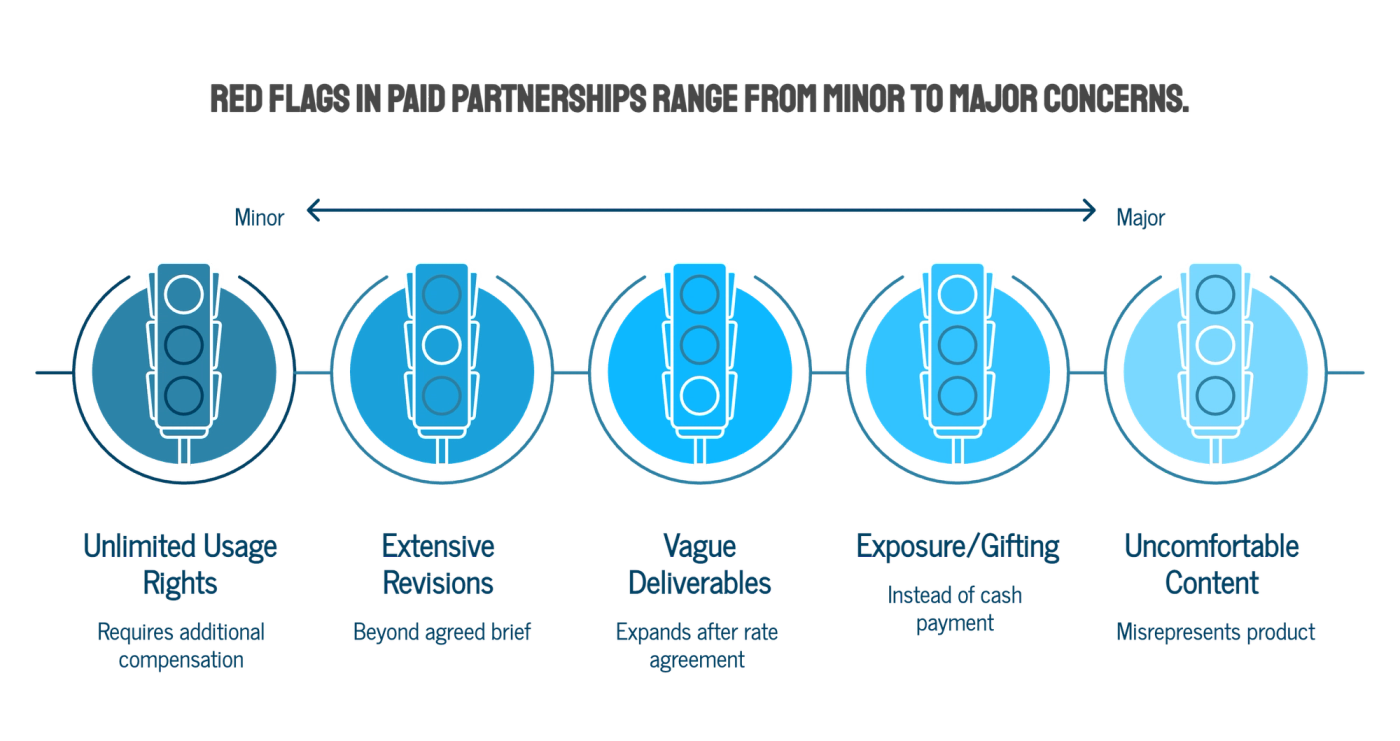
Not every brand deal is worth taking. Beyond the financial terms, there are structural red flags that signal a partnership is likely to be frustrating or professionally risky.
Watch out for brands that:
- Ask for unlimited usage rights in perpetuity without offering additional compensation
- Request extensive revisions beyond what was agreed in the brief
- Offer "exposure" or gifting instead of cash payment
- Have vague deliverable requirements that expand after you've agreed to a rate
- Pressure you to post content you're not comfortable with, or that misrepresents the product
A legitimate paid partnership has clearly defined deliverables, a signed contract before work begins, and payment terms that are honored. If a brand can't offer any of those three things, that's a signal worth taking seriously.
Land Paid Partnerships Faster with SideShift
Finding paid partnerships that are worth your time shouldn't require cold pitching into the void or navigating shady DMs. SideShift was built to make the paid partnership pipeline straightforward for both sides of the deal.
For creators, SideShift is a direct path to brands that are actively hiring, with built-in contracts, clear creative briefs, and instant payouts. You don't need a massive following to qualify. You need good content and a professional approach.
For brands, SideShift functions as a full-scale content operation to recruit from a pool of 800,000+ Gen Z creators, manage high-volume campaigns, and track performance analytics that tell you what's actually working.
Whether you're a creator ready to turn content into consistent income or a brand looking to build a scalable creator program, SideShift is where paid partnerships actually get done.
Join SideShift today for free and start landing paid partnerships that match your niche and grow your income.
Frequently Asked Questions
1. What counts as a paid partnership?
A paid partnership is any formal arrangement where a brand compensates a creator in cash to produce or post content promoting their product or service. Gifted products, discount codes, or affiliate-only arrangements do not qualify as paid partnerships.
2. Do you need a large following to get paid partnerships?
No. Brands increasingly hire creators specifically for content quality rather than audience size, particularly for UGC-style paid partnerships where the content is used in the brand's own marketing channels. Many platforms, including SideShift, connect brands with creators at all follower levels.
Want to put this into practice?
SideShift connects you with vetted UGC creators who actually deliver. Start your free trial and post your first job in under 10 minutes.
3. How much should I charge for a paid partnership?
Rates vary based on deliverable type, usage rights, and platform. UGC video content typically starts at $150 to $300 per video for newer creators. Content that includes posting to your own channels or content licensed for paid media use commands higher rates. Know your floor and hold it.
4. Do paid partnerships need to be disclosed?
Yes. In the U.S., the FTC requires clear and conspicuous disclosure of paid partnerships. This means labeling sponsored content with "ad," "paid partnership," or equivalent language at the beginning of a post or video, not buried in hashtags or fine print.
5. What is the best way to find paid partnership opportunities?
The highest-leverage approach is joining creator marketplaces where brands actively post paid opportunities, rather than relying solely on cold outreach. Platforms like SideShift connect creators directly with brands that have a budget allocated and are ready to hire, significantly improving the quality and consistency of deals available.