
6 UGC Portfolio Examples That Actually Convert for Brands
See what a top-performing UGC portfolio include, and how you can create your portfolio to land your favorite brands as your clients
Table of Contents
A UGC portfolio is often the first thing a brand looks at before replying to a pitch or shortlisting a creator. In a few seconds, it needs to show your style, your range, and whether your content can be used in real campaigns.
Below are 6 UGC portfolio examples that convert exceptionally well. Each one highlights small choices like structure, clip selection, context, contact info, etc. that help brands make faster decisions. Use these examples as inspiration to structure your own portfolio in a way that helps brands say yes faster.
1. Liz Logan
Liz’s portfolio highlights her as a creator who understands how brands scan and decide. Within the first few lines, it’s clear who she is, what she does, and the kind of content she creates. Calling herself an all-niche mom UGC creator immediately sets expectations and helps the right brands self-select. Adding her location makes the profile more suitable for local brands that'd want a UGC creator.
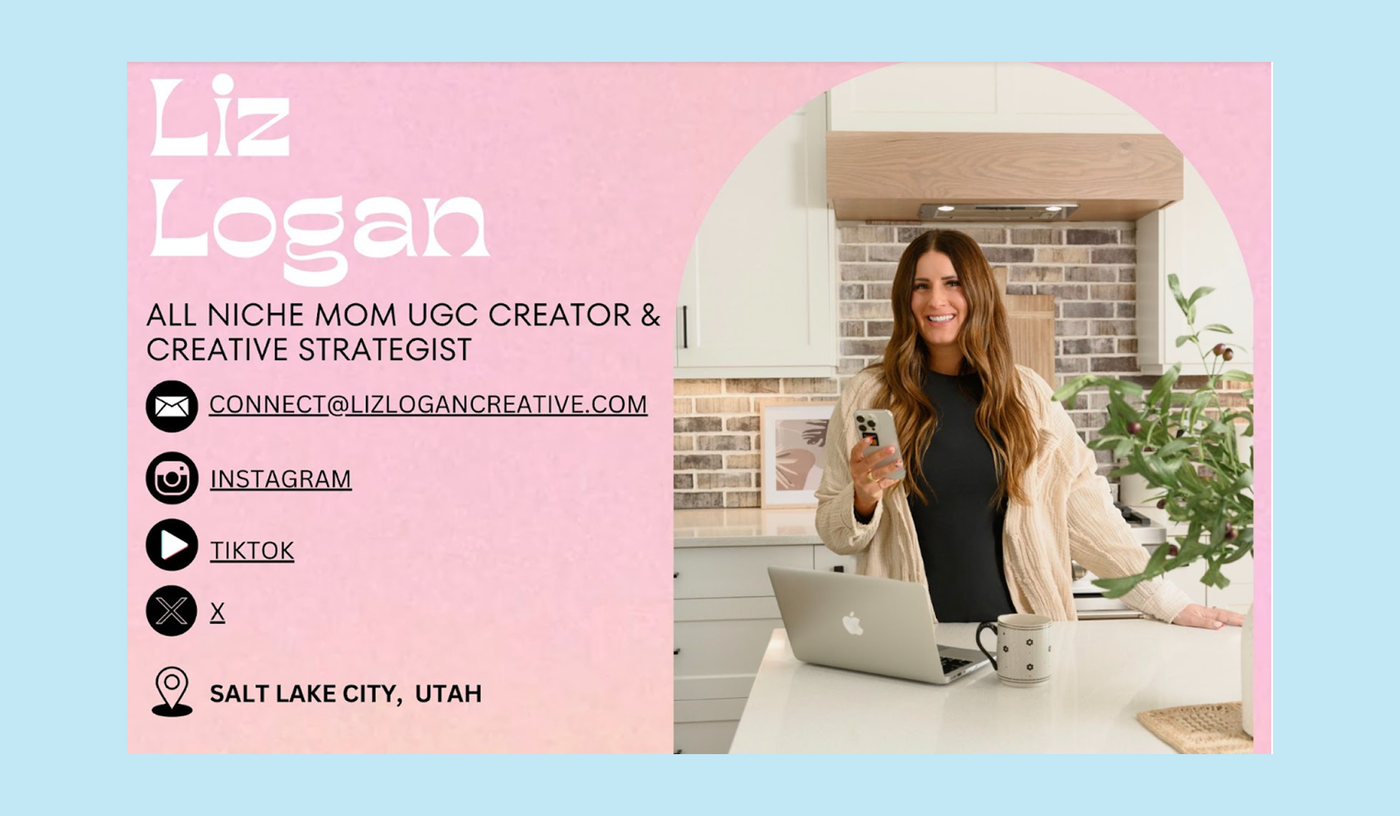
The layout keeps things simple. Social links are placed upfront, which makes it easy for brands to quickly check her Instagram or TikTok and get a feel for her on-camera style. The “Trusted by 50+ brands” line adds social proof without turning the page into a sales pitch.
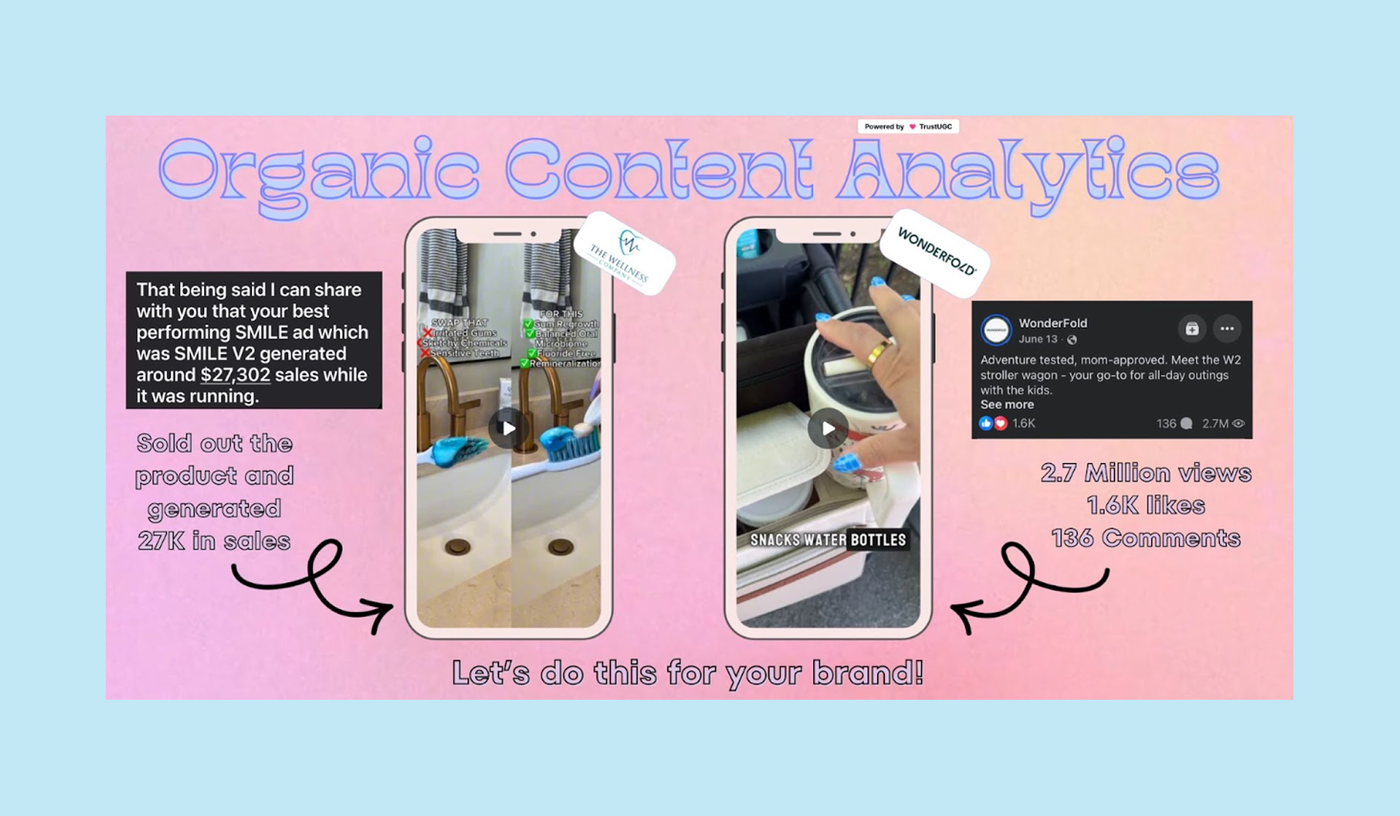
Performance is shown in a practical way. She points to real outcomes, such as selling out a product, generating $27K in sales, and pulling millions of views. Even without deep context, these numbers help brands understand the scale she can reach.
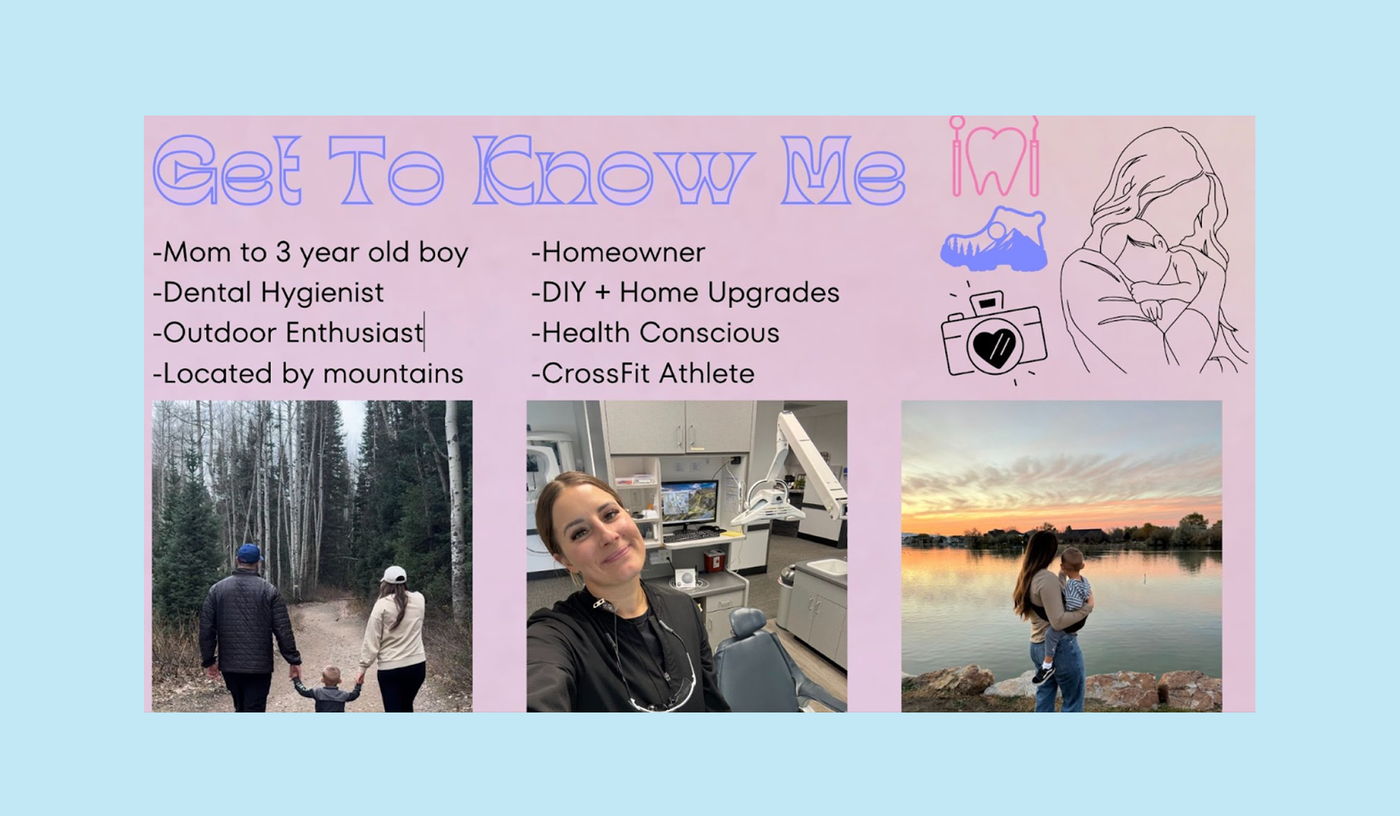
Her niche areas are clearly listed, which saves time for marketers looking for relevance. The long list of previous brand collaborations reinforces experience and consistency. Altogether, the portfolio feels easy to skim, credible, and focused on proof, which is exactly what brands want when deciding who to work with.
2. Indira
Indira’s portfolio introduces her as a creator who thinks beyond just making UGC videos. The opening line clearly ties her work to trust and sales, which helps brands understand the outcome she’s focused on, not just the format. Her short personal intro adds context about her interests and how she approaches content, which makes the portfolio feel thoughtful without going overboard.
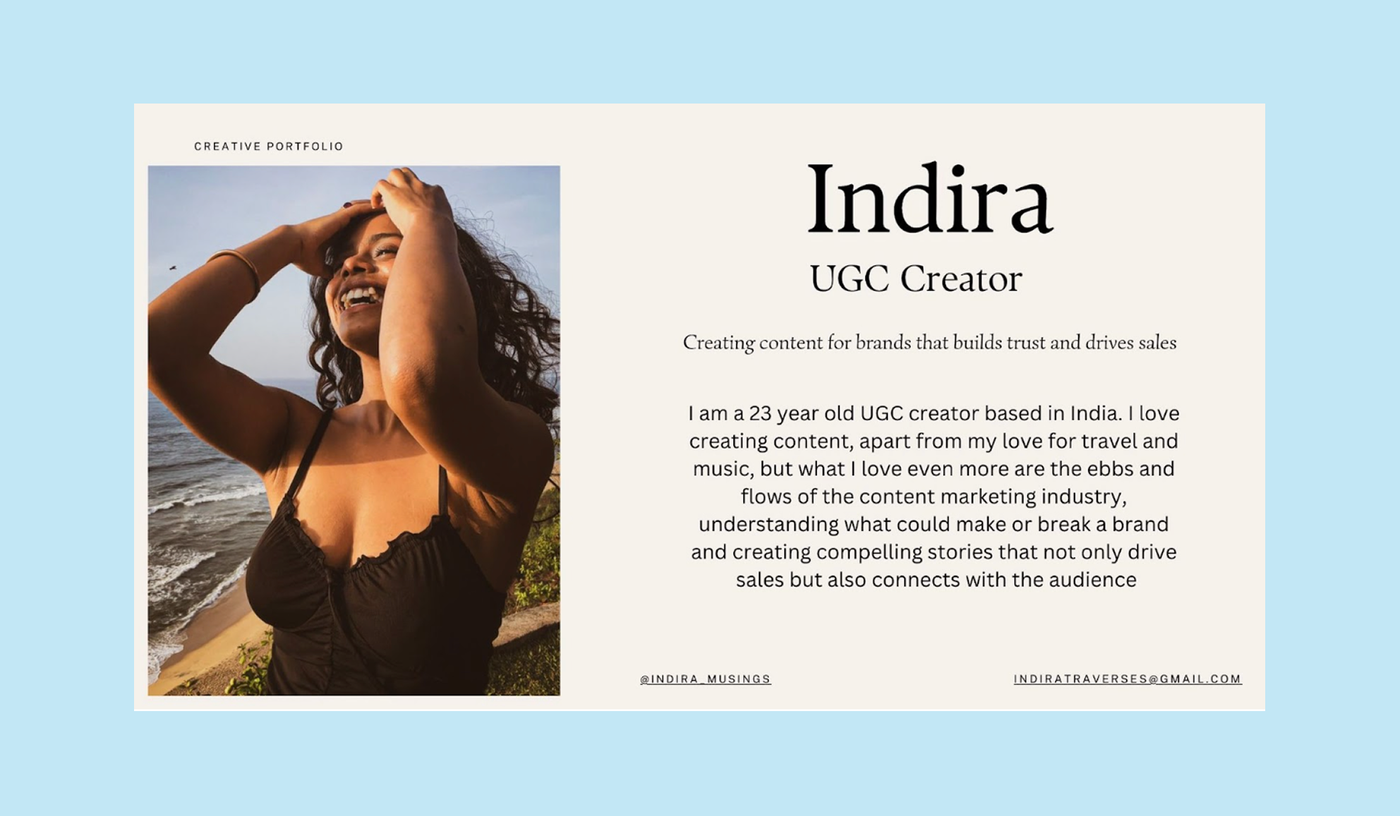
The category tags like beauty, wellness, food, and product intros add another layer of clarity. Brands can quickly see where she fits and whether she has experience in their space. Including UGC photography alongside video also shows range, which is useful for teams looking to repurpose content across ads, websites, and social feeds.
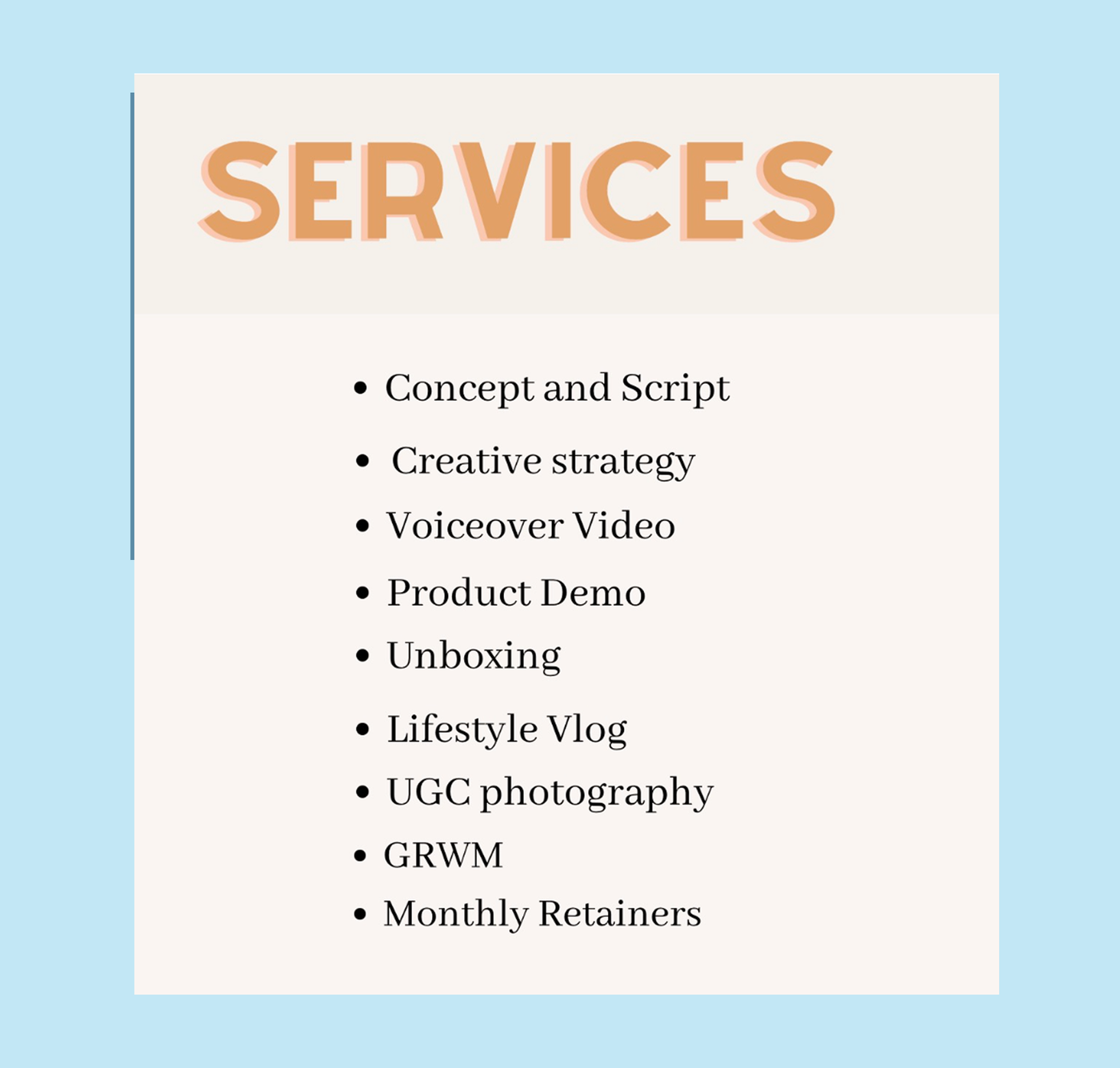
Her services section is practical and specific. Listing things like scripting, demos, unboxing, and monthly retainers answers common brand questions upfront. The “Why UGC” section may be more educational than necessary for experienced marketers, but it does show that she understands the value of UGC beyond aesthetics.
3. Elliott Pages
This portfolio is a good reference point for creators who want to show how UGC can be tied directly to outcomes, not just content quality. Elliott presents herself as a creator and growth expert, which sets the expectation that her work goes beyond filming and editing.
Want to put this into practice?
SideShift connects you with vetted UGC creators who actually deliver. Start your free trial and post your first job in under 10 minutes.
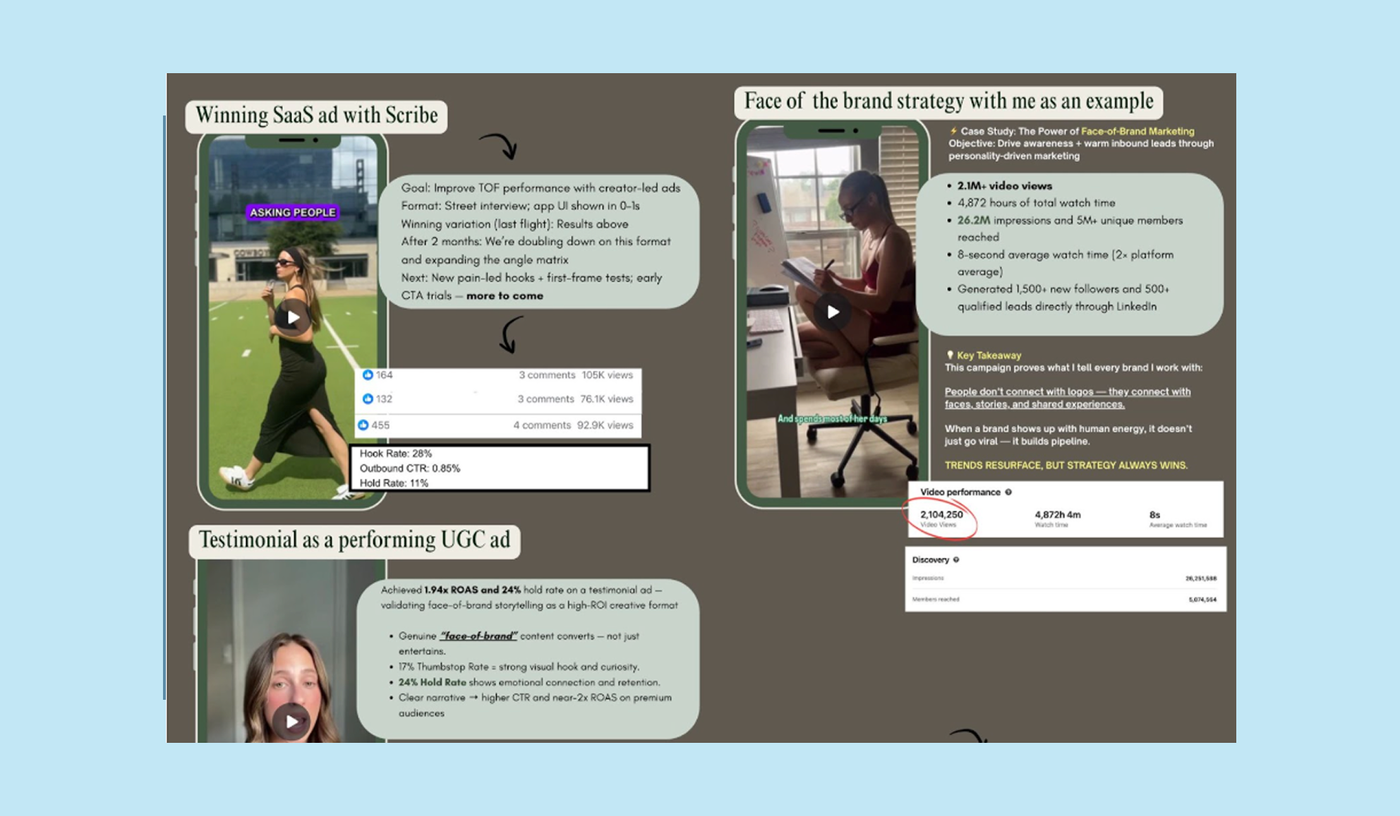
Here’s what creators can take away from this portfolio:
- Results are front and center. Sales, ROAS, and views are shown early, which tells brands this creator thinks in outcomes, not just content delivery.
- Each case study has context. The target audience, creative angle, and distribution details are explained, making the work easier to evaluate.
- Creative decisions are documented. Notes about trending sounds, actors, and ad variations help brands see the thinking behind the content.
- Proof of repeat work matters. Mentioning that the brand asked to work together again signals trust and reliability without saying it outright.
- Visuals support the story. Screenshots of views and viral clips reinforce the written results instead of replacing them.
The main takeaway from this is that you don’t just show what you made. Show why it was made, who it was for, and what happened after it ran. That extra layer is what helps a portfolio stand out to brands skimming dozens of creator pages.
4. Ruby Yeo
This portfolio is a good example of how to balance personality, volume, and clarity in one place. Instead of relying on a few hero pieces, the portfolio shows depth across categories like beauty, lifestyle, fitness, places, and events. That breadth makes it easier for brands to imagine different ways they could use her content, whether for ads, product pages, or social posts.
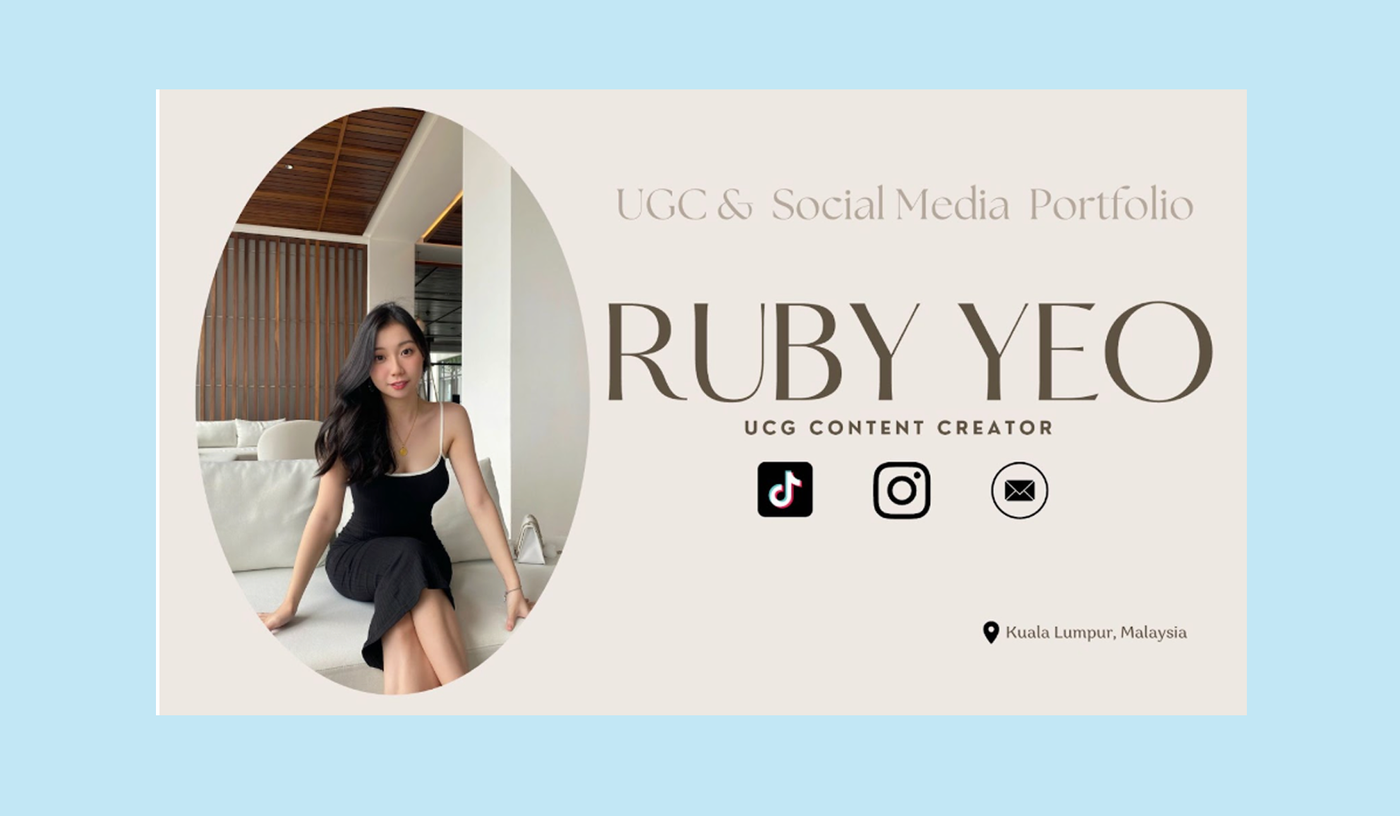
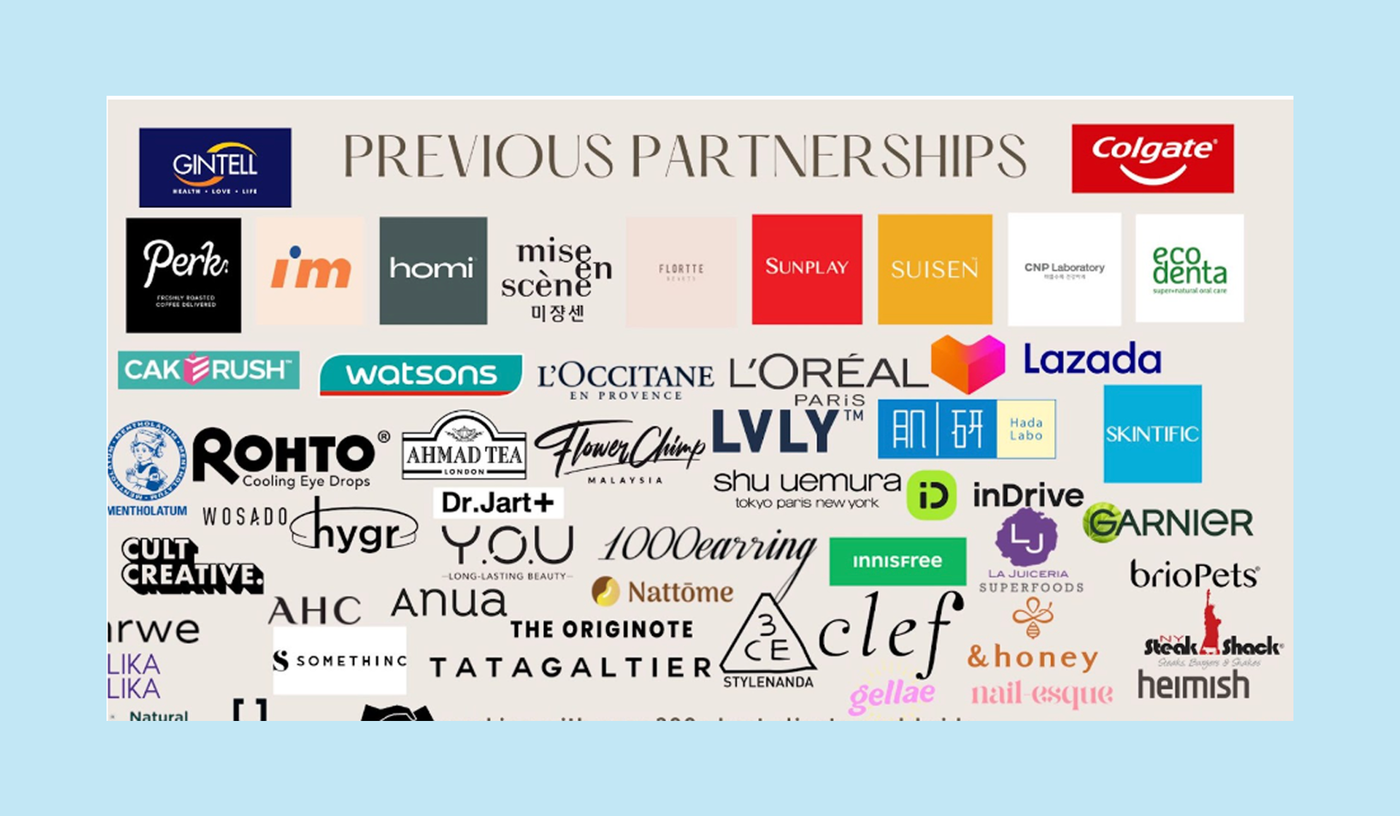
The brand logos and client feedback add credibility quietly. There’s no long case study or performance breakdown, but the sheer number of recognizable brands does the job.
A few things it does particularly well:
- Work is grouped by use case, not by platform. It can be beauty, lifestyle, fitness, places, events. This makes it easier for brands to jump straight to what’s relevant to them.
- Thumbnail-first browsing. Showing multiple short-form previews helps brands quickly judge on-camera presence, lighting, and product handling without clicking every asset.
- Testimonials are short and skimmable. Client quotes exist to reinforce credibility, not to sell too hard.
- Services are clearly listed at the end. This answers “what can we hire you for?” without interrupting the flow of the portfolio.
For creators using this as inspiration, the takeaway isn’t to copy the layout but to take inspiration from its structure. Lead with credibility, show depth through categories, and let your work speak visually.
5. Valerie Youngblood
This portfolio is a good example of how clarity can reduce friction for brands. From the top, Valerie positions herself clearly as a motherhood and lifestyle creator, and the page flows in a logical order: who she is, what her content looks like, and how brands can work with her. Nothing feels hidden or assumed.
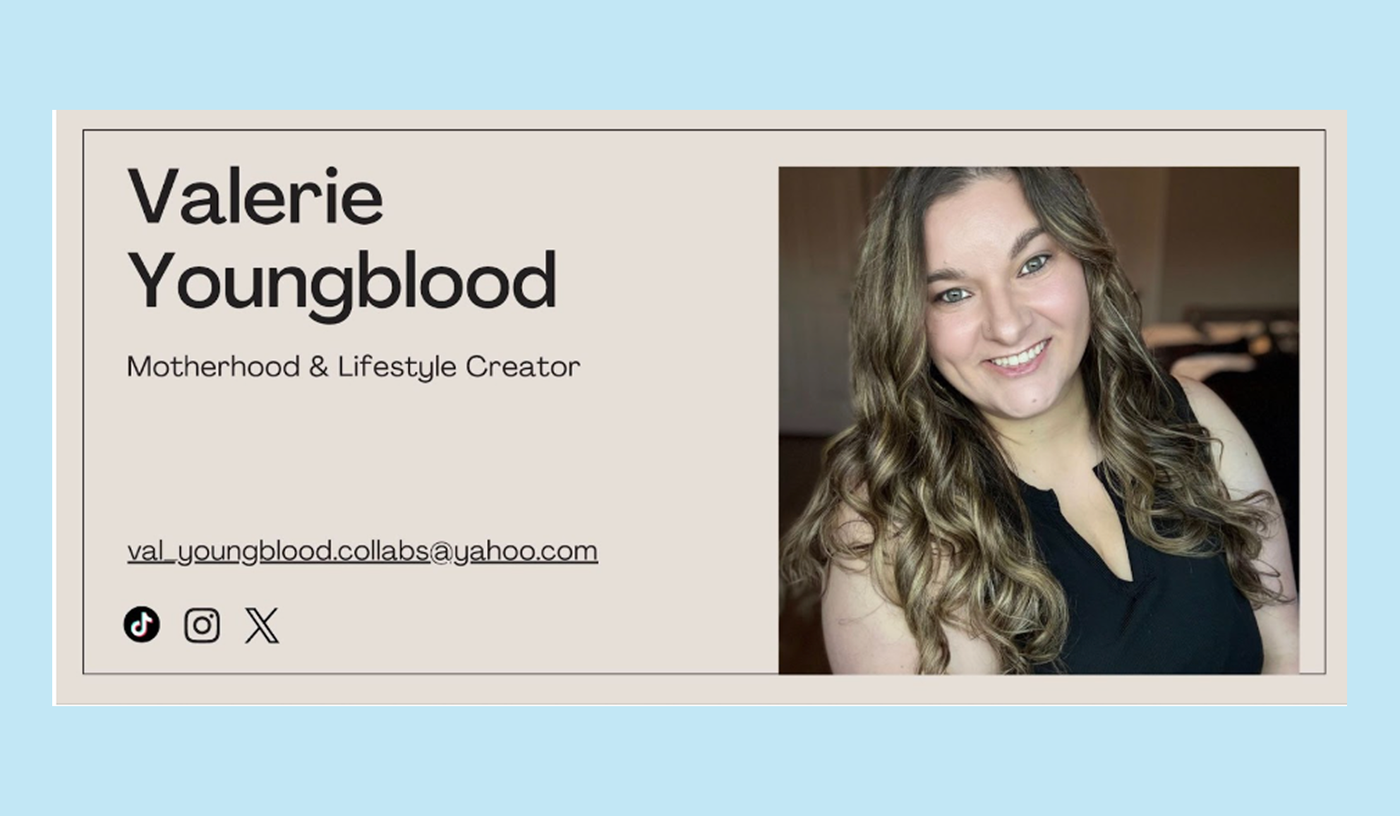
The “About Me” section does useful work without turning into a biography. It explains her style, the kind of content she creates, and the categories she works in, which helps brands quickly decide if there’s alignment. The mix of video and photo samples that follows makes her capabilities obvious without needing extra explanation.
Want to put this into practice?
SideShift connects you with vetted UGC creators who actually deliver. Start your free trial and post your first job in under 10 minutes.
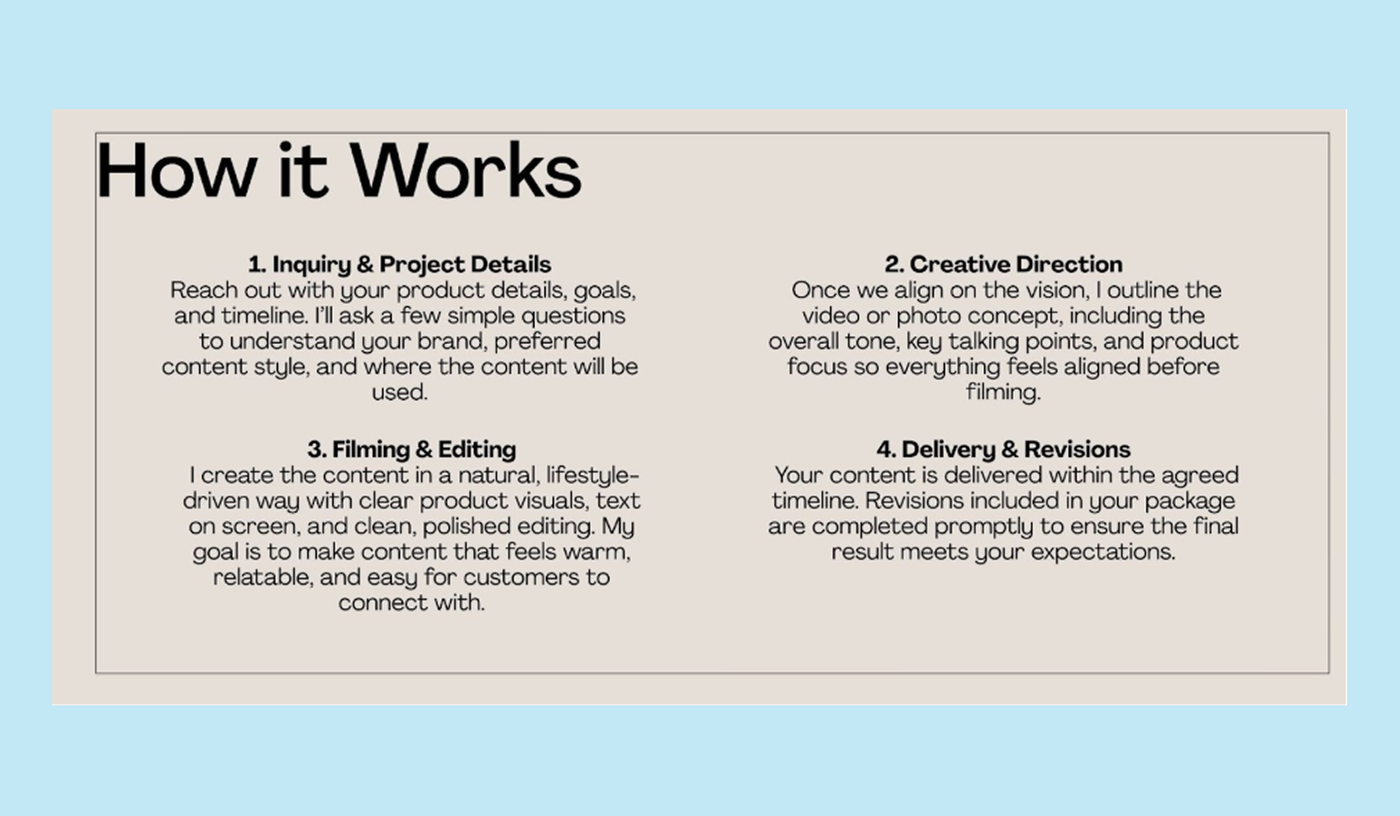
What really stands out is the structure toward the bottom of the page. Instead of leaving brands to guess what happens next, she spells it out. The services are broken down clearly, pricing cues are hinted at, and the tone stays practical. This makes the portfolio feel approachable, especially for smaller or first-time brand partners.
Here are some more things that this portfolio does well:
- The tone feels collaborative, not salesy. Phrases like “custom package” and “message me” make it clear she’s flexible, which matters to brands with different scopes and budgets.
- Process clarity sets boundaries. By outlining revisions, timelines, and delivery upfront, she subtly filters out misaligned expectations before a conversation even starts.
- The portfolio supports both ads and organic use cases. The way videos and photos are framed makes it easy for brands to imagine using them across product pages, emails, or paid campaigns.
- Response-time mention builds confidence. Saying she typically replies within 24–48 hours signals professionalism without needing testimonials or performance stats.
6. Yuri Ju
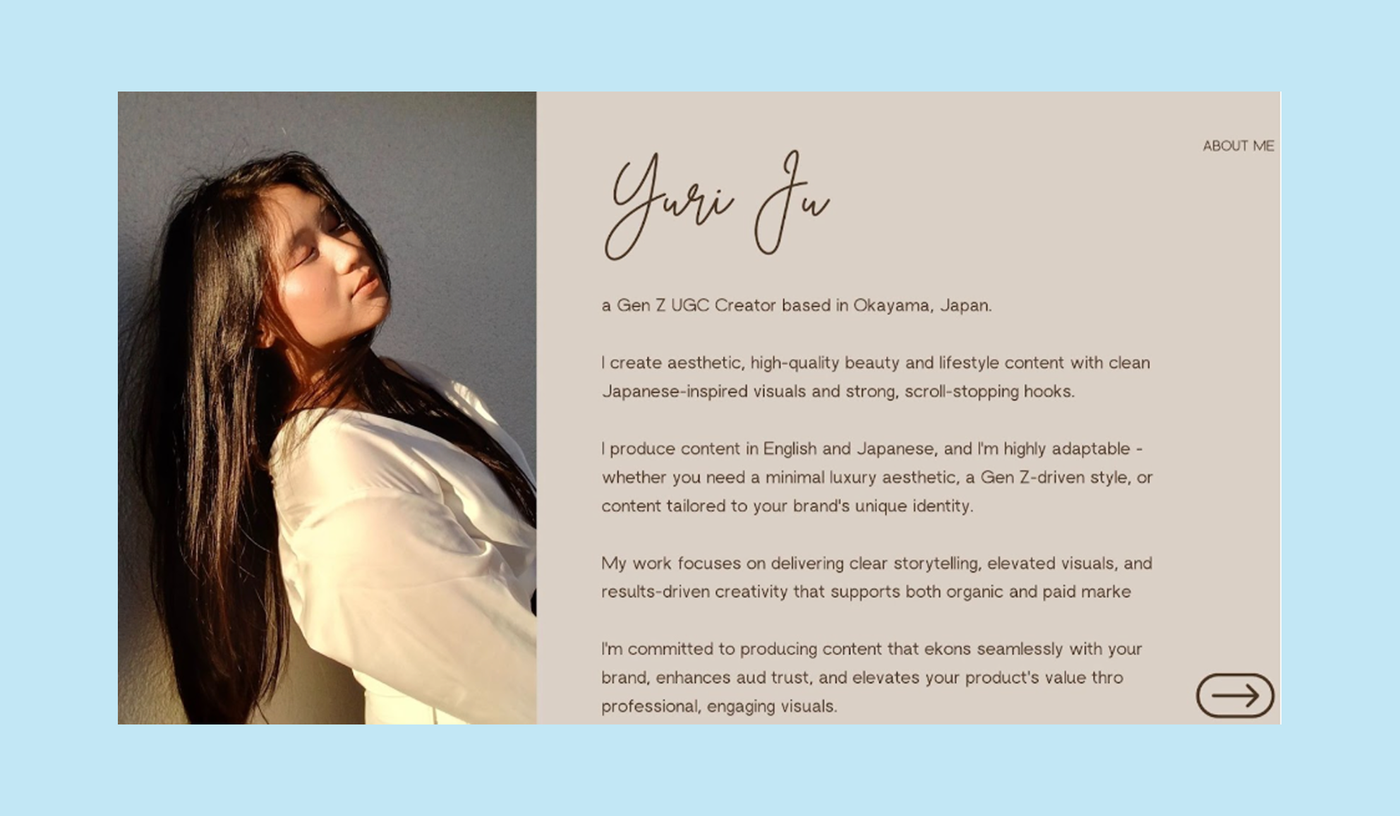
Yuri’s portfolio is built like a guided walkthrough, not a single scrolling page. Using slides works in her favor because it lets her control the order in which brands absorb information. She doesn’t jump straight into content samples. She first sets context such as, who she is, where she’s based, what style she specializes in, and only then moves into proof.
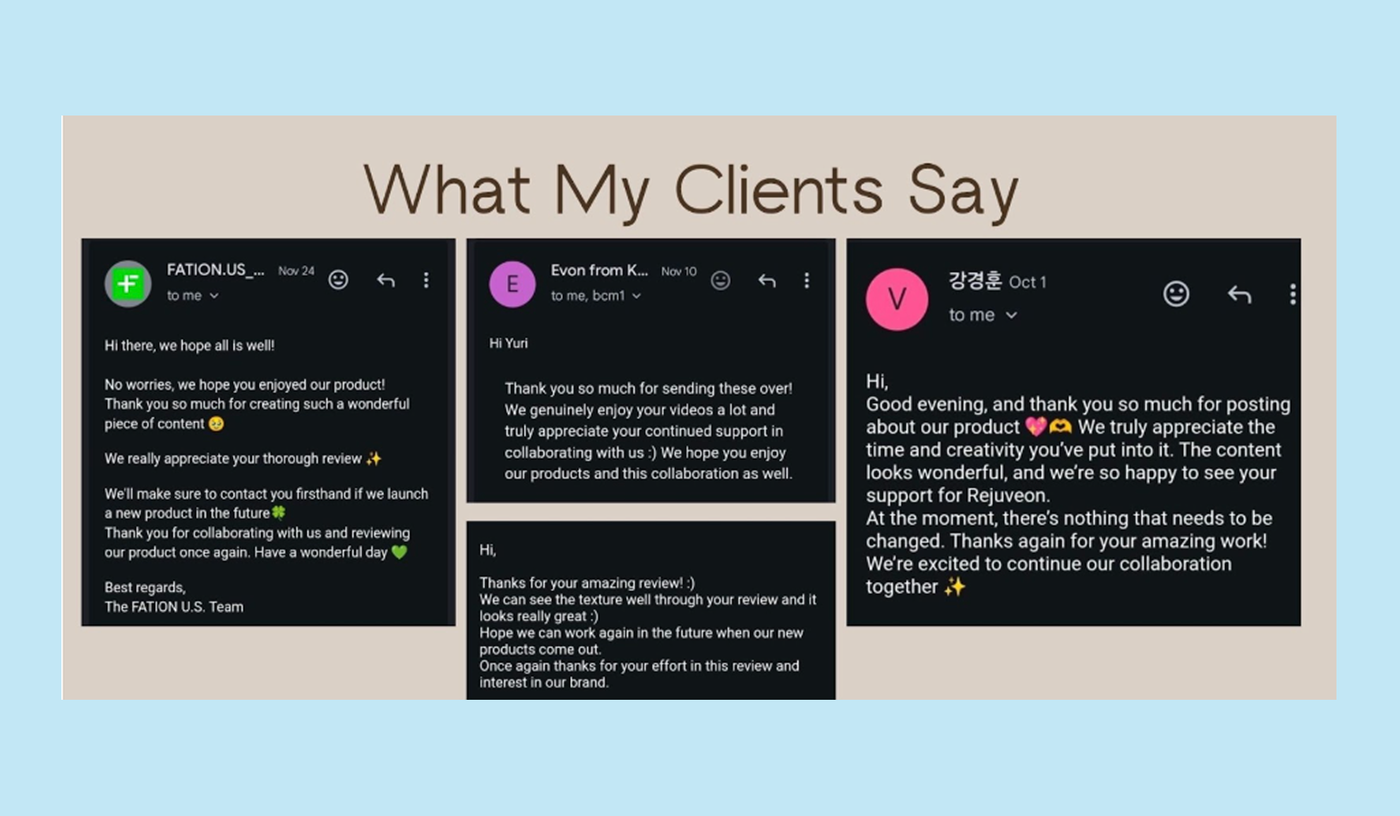
One of the strongest parts is how she mixes presentation with validation. The services slide clearly spells out what she offers across video and photo formats, which removes ambiguity early. The testimonials slide adds credibility without sounding promotional, because the feedback is shown as direct messages from brands, not polished quotes rewritten by the creator. That feels more believable to marketers.
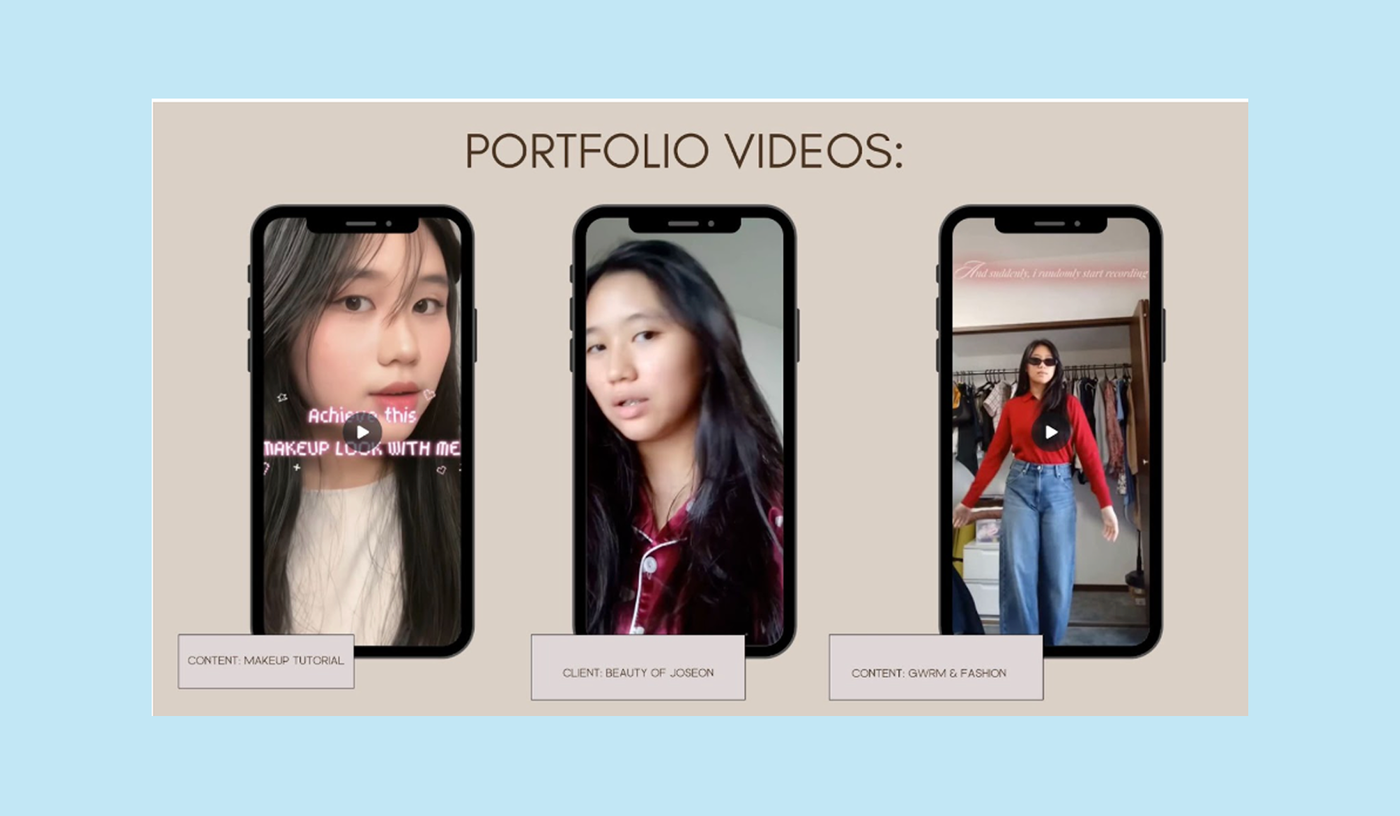
Her portfolio videos are labeled by client, which subtly signals real brand work rather than spec content. Pairing that with bilingual capability and Japan-based aesthetics gives her a clear positioning edge for brands looking for Gen Z or global creatives.
Overall, the portfolio feels intentional and paced. It’s not trying to impress all at once. It’s trying to make a hiring decision feel easy.
Key takeaways are:
- Slide-based portfolios help control narrative and flow
- Testimonials shown as raw messages feel more authentic
- Labeling work by the client builds instant trust
- Clear service breakdowns reduce back-and-forth
- Strong positioning (location, style, language) can be a differentiator
Turn your UGC portfolio into paid work with SideShift
Looking across all these examples, one pattern keeps coming up: high-converting UGC portfolios reduce friction. They make it easy for a brand to understand who you are, what kind of content you create, and what working with you will look like.
The challenge is that even a great portfolio isn’t always enough on its own. Brands still need a way to discover creators and compare them side by side. That’s usually where things slow down.
This is where SideShift fits in naturally.
Instead of waiting for the right brand to land on your portfolio link, SideShift puts your work in front of brands that are actively looking for UGC creators. Your portfolio becomes part of a bigger system. It's the one where brands can browse, evaluate, hire, and pay creators without friction.
Want to put this into practice?
SideShift connects you with vetted UGC creators who actually deliver. Start your free trial and post your first job in under 10 minutes.
Sign up now on SideShift and get your next big brand deal