


Instagram Sponsorship: Get Sponsored & Land Brand Deals
Want Instagram sponsorships? Here's how creators at any follower count get discovered, pitch brands, set rates, and turn one deal into ongoing income.
Table of Contents
Instagram sponsorships are one of the most accessible income streams in the creator economy right now. Brands are not exclusively looking for accounts with massive followings. They are looking for creators who produce content that converts, speaks to a relevant audience, and feels authentic enough to actually influence purchasing decisions.
This guide covers exactly how Instagram sponsorships work, what brands are evaluating when they consider a creator, how to position yourself to get discovered and pitch confidently, and how to structure deals that maximize your earning potential over time.
How Instagram Sponsorships Work
An Instagram sponsorship is a paid agreement between a brand and a creator where the creator produces and posts content promoting the brand's product or service on their Instagram account. That content might be a Reel, a static feed post, a Story, or a combination of formats depending on what the brand is trying to achieve and what the creator's audience responds to best.
The scope of sponsorships varies significantly. Some are single-post arrangements where a creator is paid a flat fee to produce one piece of content. Others are multi-deliverable packages that include a Reel, two Stories, and a feed post within a defined campaign window. Long-term ambassador arrangements, where a creator posts about a brand repeatedly over months, represent the most valuable tier of Instagram sponsorship for both sides. The brand gets sustained exposure and trust-building with a specific audience, and the creator gets predictable income.
On the platform side, Instagram's paid partnership label is the official way to tag sponsored content. When a creator uses it, the post displays "Paid partnership with [brand name]" beneath the creator's handle. This is not optional from a legal standpoint.
The FTC requires clear disclosure of any material relationship between a creator and a brand, and Instagram's built-in label satisfies that requirement while also giving brands access to reach and engagement data from the post directly.
What Brands Are Actually Looking for in Instagram Creators
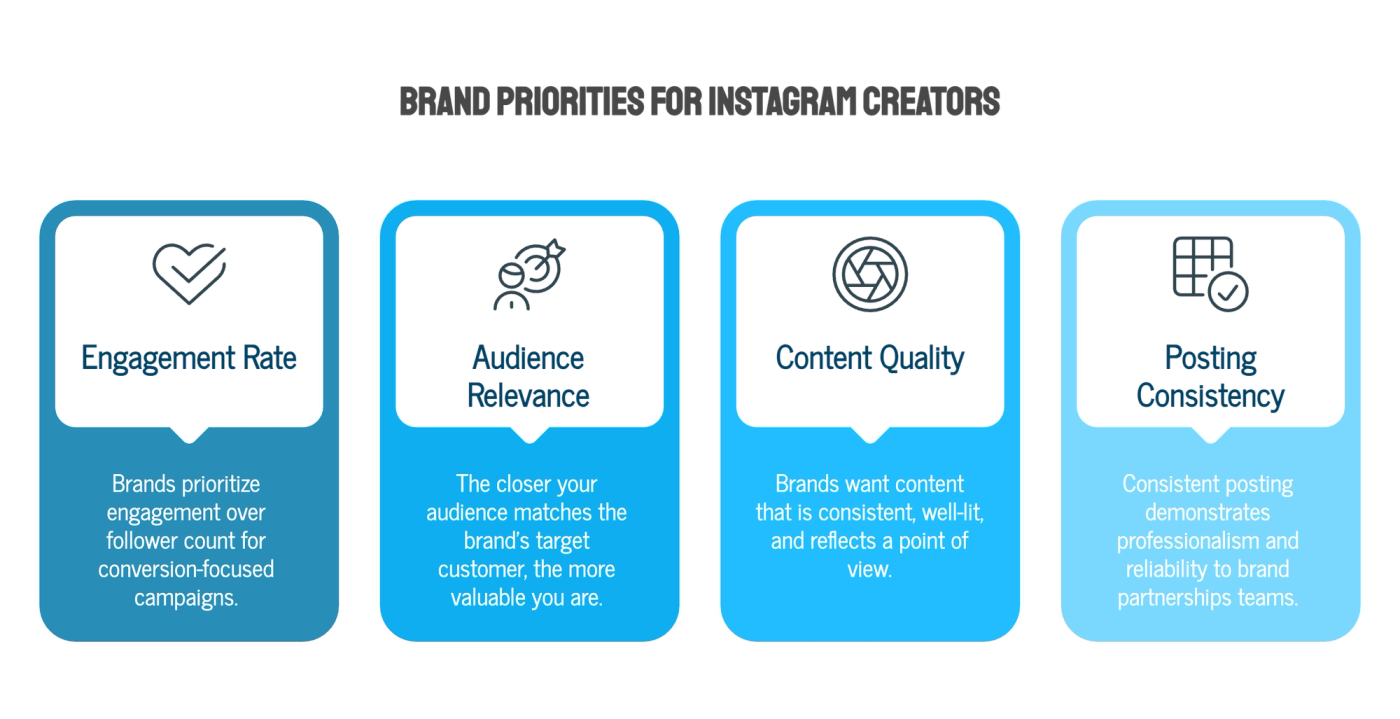
Understanding brand decision-making is the fastest way to position yourself more effectively for sponsorships. Most creators assume brands want reach. Reach matters, but it is rarely the primary variable for brands running performance-focused campaigns.
Brands are evaluating:
Engagement Rate Over Follower Count
A creator with 15,000 highly engaged followers in a specific niche will consistently outperform a creator with 150,000 passive followers for conversion-oriented campaigns. Brands running data-driven campaigns know this, which is why engagement rate has become the first filter most marketing teams apply when evaluating potential creator partners. An engagement rate above 3% for mid-tier accounts and above 5% for smaller accounts signals an audience that is genuinely paying attention.
Audience Relevance
The closer your audience's demographics and interests are to a brand's target customer, the more valuable your sponsorship inventory is to them. A fitness creator whose audience skews 25 to 34-year-old women in the U.S. is extremely valuable to a women's health supplement brand, regardless of whether they have 8,000 followers or 80,000. Knowing your own audience data and being able to present it clearly is one of the highest-leverage things a creator can do when pitching brands.
Want to put this into practice?
SideShift connects you with vetted UGC creators who actually deliver. Start your free trial and post your first job in under 10 minutes.
Content Quality and Brand Fit
Brands want to see that your existing content looks like something they would want associated with their product. This does not mean your feed needs to look like a professional photography studio. It means your content should be consistent in style, well-lit, clearly edited, and reflective of a point of view. Brands are also evaluating fit: whether your aesthetic, tone, and values align with their brand identity. A luxury skincare brand and a budget meal prep service are both legitimate sponsorship opportunities, but they are looking for fundamentally different content environments.
Posting Consistency
An account that posts sporadically signals unreliability to brand partnerships teams. Consistent posting, even at a modest frequency of three to four times per week, demonstrates that you treat your account like a professional operation. That professionalism is what brands are buying alongside your audience access.
How to Get Discovered for Instagram Sponsorships
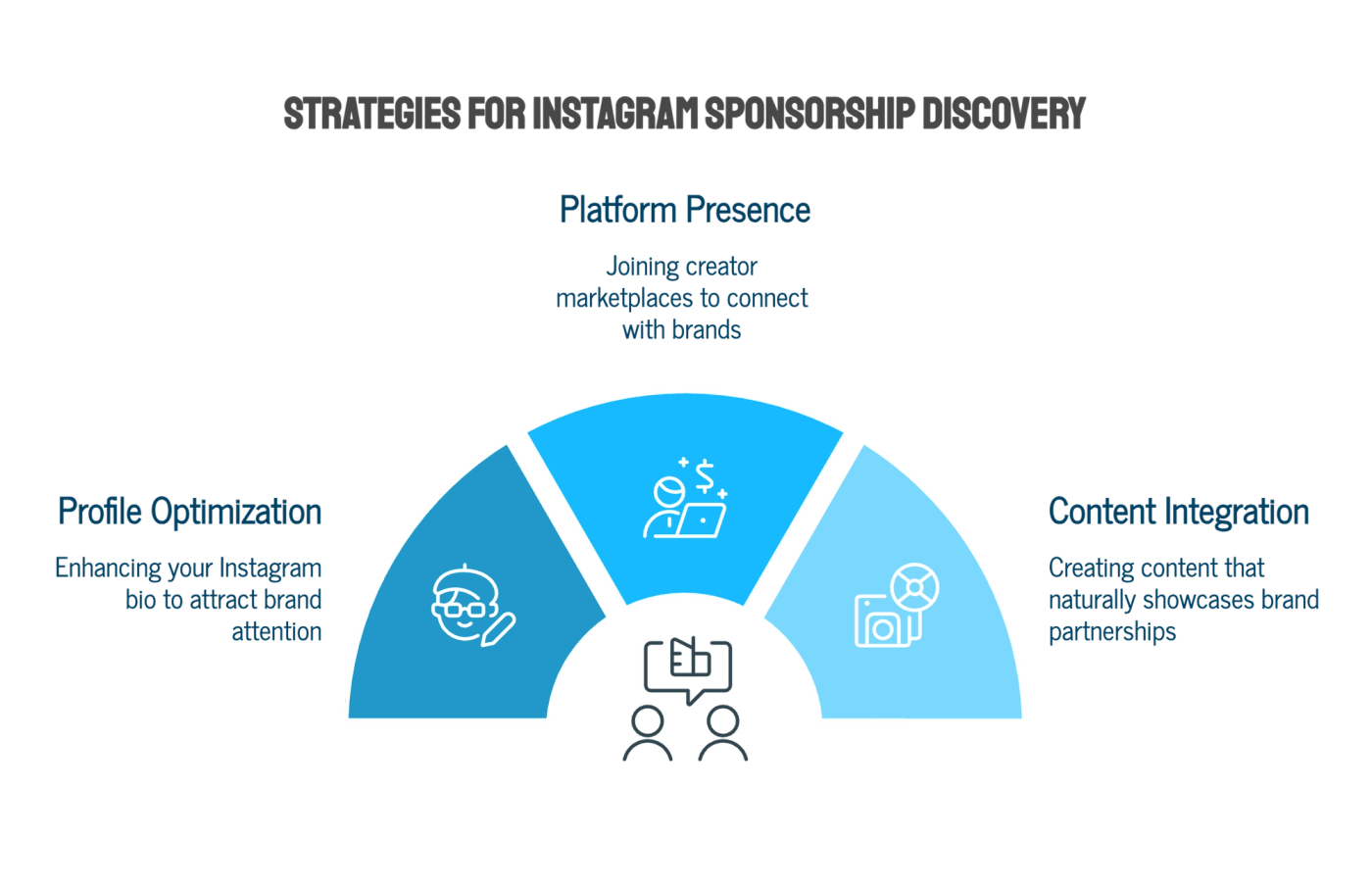
Getting discovered is a distribution problem, not a talent problem. Many creators produce genuinely strong content and never land a sponsorship because they have no system for putting themselves in front of brand decision-makers.
Optimize Your Profile for Brand Discovery
Your Instagram bio is your pitch deck in 150 characters. It should communicate your niche, your audience, and ideally signal that you are open to brand partnerships. Including a contact email directly in your bio removes friction for any brand that finds you organically and wants to reach out. A link to a creator media kit or portfolio adds another layer of professionalism that separates you from the majority of accounts at your follower tier.
Join Platforms Where Brands Are Actively Hiring
The highest-leverage move most creators can make is shifting from passive discovery to active placement in environments where brands are already looking. SideShift’s creator marketplace connects over 800,000 U.S.-based Gen Z creators with 1,000-plus brands actively posting paid opportunities.
Rather than hoping a brand stumbles across your account, you are applying to campaigns from brands that have a budget allocated and are ready to move. The platform handles contracts, briefs, and payouts, which means the operational friction that makes freelance brand deals painful is removed entirely.
For creators who want Instagram sponsorships specifically, being present on a creator marketplace dramatically increases the volume and quality of opportunities available, particularly while your organic following is still growing.
Post Content That Looks Like Native Brand Integration
Fake it ‘till you make it. One of the most underrated ways to attract Instagram sponsorships is to create content that already looks and feels like a brand partnership, without waiting for one.
When you organically mention products you use, film in aesthetically cohesive environments, and produce content with clear production value, you are showing brands exactly what a sponsored post with you would look like. That demonstration is far more persuasive than any pitch email.
How to Pitch Instagram Sponsorships Confidently
Want to put this into practice?
SideShift connects you with vetted UGC creators who actually deliver. Start your free trial and post your first job in under 10 minutes.
Cold outreach to brands works when it is targeted, specific, and demonstrates genuine familiarity with the brand. Generic pitch emails get deleted. A pitch that shows you understand the brand's current marketing positioning, references a specific product you authentically use, and makes a clear case for why your audience is a strong fit gets read.
Build a Creator Media Kit
A media kit or UGC portfolio is the most important professional asset a creator can have when pursuing Instagram sponsorships. It should include your follower count and engagement rate across platforms, audience demographic breakdown, content examples that represent your best work, your rate card for different deliverable types, and any past brand partnerships or press mentions. One to two pages is enough. The goal is to make it as easy as possible for a brand to say yes quickly.
Know Your Rates Before You Pitch
Walking into a brand conversation without knowing your rates signals inexperience and often results in being lowballed. General benchmarks for Instagram sponsorship rates vary based on deliverables and follower tier, but a reasonable starting framework for different types of creators building their first rate card:
- Nano influencer (1K-10K followers): $50-$200 per post
- Micro influencer (10K-50K followers): $200-$800 per post
- Mid-tier (50K-200K followers): $800-$3,000 per post
- Content with paid media usage rights: Add 30-50% to base rate
Engagement rate, niche value, content format, and exclusivity terms all move rates significantly in either direction.
Follow Up Professionally
Most brand deals do not close on the first contact. A follow-up email one week after your initial pitch is standard practice and shouldn’t come across as pushy. Brands receive hundreds of creator inquiries and may lose track. One professional follow-up dramatically improves response rates without burning the relationship.
How to Maximize Your Instagram Sponsorship Income Over Time
Landing a first Instagram sponsorship is a milestone. Building a consistent sponsorship income stream requires a different mindset: treating each deal as an opportunity to prove your value and position yourself for the next one.
Turn One-Off Deals Into Retainers
After delivering a strong performance on a single sponsored post, proactively present the brand with a proposal for an ongoing partnership. Include the performance data from the completed post, a suggested posting cadence, and a bundled rate that is slightly discounted from your per-post rate to incentivize commitment.
Brands that have already worked with you carry less risk in their minds. They know your content quality and your professionalism. Converting them into retainer clients is the most efficient path to predictable sponsorship income.
Diversify Across Deliverable Types
Creators who offer only feed posts leave money on the table. Reels, Stories, close friends content, and Instagram Live integrations are all distinct deliverable types that brands will pay for separately. Building out your rate card to include multiple formats also makes you a more complete partner for brands running integrated campaigns across Instagram's surfaces.
Use Each Deal to Build Your Portfolio
Every completed Instagram sponsorship adds to your credibility with the next brand you pitch. Document your results, screenshot engagement metrics, save the content, note any performance data the brand shares with you. That track record compounds over time and justifies rate increases as your partnership history grows.
Want to put this into practice?
SideShift connects you with vetted UGC creators who actually deliver. Start your free trial and post your first job in under 10 minutes.
Land Instagram Sponsorships through SideShift
Waiting for brands to find you on Instagram is a slow game. SideShift is built to accelerate that timeline significantly, connecting creators directly with brands that are actively hiring for paid content campaigns, including Instagram sponsorships.
For creators at any follower level, SideShift removes the two biggest barriers to landing brand deals: discovery and logistics. You get access to real paid opportunities from brands ranging from funded startups to Fortune 500 companies, with contracts, clear briefs, and instant payouts built into every campaign.
No polished portfolio required to start. No massive following needed to qualify. SideShift is where new and seasoned creators alike plug in, get paid, and level up fast. For creators, joining is free.
Join SideShift today for free and start landing Instagram sponsorships that actually pay.
FAQs
1. How many Instagram followers do you need to get sponsored?
There is no hard minimum. Brands regularly work with creators who have fewer than 5,000 followers if the audience is highly engaged and relevant to their product category. Engagement rate and niche fit matter more than raw follower count, particularly for brands focused on conversion rather than reach.
2. How do Instagram sponsorships pay?
Most Instagram sponsorships pay a flat fee per deliverable, agreed upon before work begins, and paid either upfront, on delivery, or net 30 days after posting, depending on the brand. Platforms like SideShift offer instant payouts, removing the payment delay that makes freelance brand deals frustrating for creators.
3. Do you have to disclose Instagram sponsorships?
Yes. The FTC requires that all paid brand relationships be disclosed clearly and conspicuously. On Instagram, using the native paid partnership label satisfies this requirement. Writing "paid ad" or "sponsored" at the beginning of your caption also works. Burying disclosure in hashtags or at the end of a long caption does not meet the legal standard.
4. What is a good engagement rate for Instagram sponsorships?
For micro influencers, a 3% to 6% engagement rate is considered strong. For nano influencers, 5% to 10% or above is achievable and highly attractive to brands. Engagement rate is calculated by dividing total interactions (likes plus comments) by follower count and multiplying by 100.
5. How do I find brands to sponsor me on Instagram?
Beyond organic outreach, the most effective approach is joining creator marketplaces where brands actively post paid opportunities. SideShift connects creators with 1,000-plus brands across every major product category, with campaigns specifically designed for Instagram and other short-form platforms.