
Content Marketing for Small Businesses: A Beginner’s Guide
You don't need an agency or a big budget to win at content marketing. Here's what actually moves the needle for small businesses starting from scratch.
Table of Contents
Most small business owners didn't start their company because they wanted to become content creators. You started it because you're good at something and you wanted to build something of your own.
Then someone told you that you need to be posting on Instagram three times a week, writing blog posts for SEO, sending email newsletters, managing TikTok, and somehow doing all of it while actually running your business.
It can feel like marketing has turned into a full-time job on top of the one you already have, and if you're not careful, it's easy to spend more time trying to look like a successful business online than actually running one.
This guide will cover what content marketing is, what strategic content options small businesses have, and how to build a strategy that fits the size and budget of your operation.
What Is Content Marketing for Small Businesses?
Content marketing is the process of creating useful, relevant content that helps attract and retain customers over time.
Instead of relying entirely on paid ads, businesses use content to build trust and visibility organically. That content might include:
- Instagram Reels
- TikTok videos
- Blog articles
- Email newsletters
- Customer testimonials
- Educational videos
- User-generated content (UGC)
- Case studies
- Product tutorials
Good content marketing helps people understand:
- What you sell
- Why it matters
- Why they should trust your business
- How your product or service fits into their life
For small businesses especially, content creates repeated visibility without requiring constant ad spend.
Why Does Content Marketing Work So Well for Small Businesses?
Content marketing generates 3x more leads than outbound marketing and costs 62% less. Large brands usually win with budget and reach. But small businesses win with personality, trust, and authenticity.
That matters on the internet because buyers are increasingly fatigued by ads and respond more favorably to content that feels real instead of overly produced. A founder talking directly to the camera about their process often performs better than a polished commercial because it feels more credible and personal.
Content marketing also compounds over time. A single blog post can continue generating organic traffic months later. One helpful TikTok can introduce your brand to thousands of potential customers overnight. A customer testimonial can help close future sales long after it's posted. For small businesses with limited marketing budgets, that long-term value makes an impact.
How to Build a Small Business Content Strategy
Most small businesses approach content the same way: posting only when they have time, boosting what performs, and hoping something sticks. Building a content strategy that actually moves the needle means deciding in advance what you're creating, who it's for, and what you want it to do.
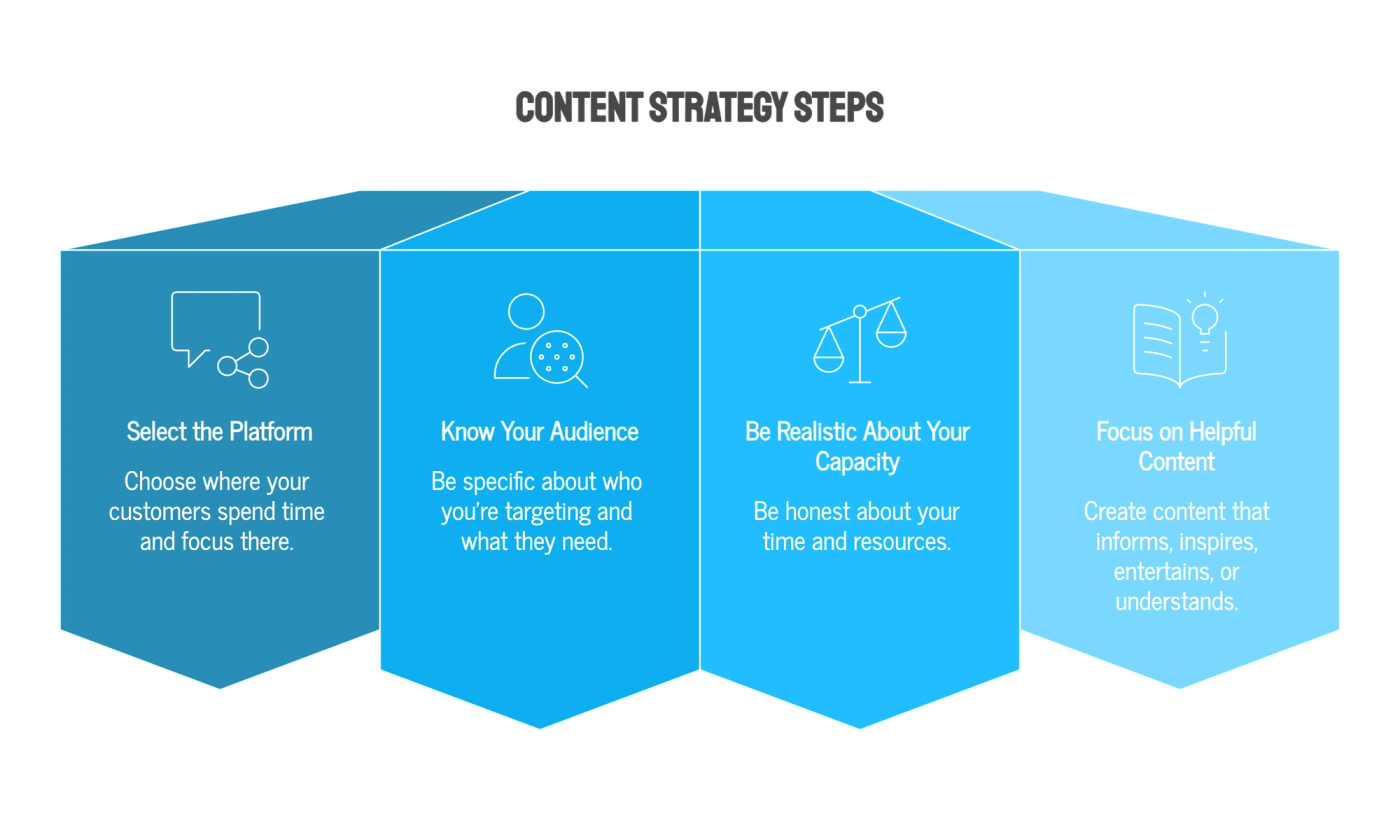
Select the Platform
You don't need to be everywhere all at once. Choose the platform where your customers already spend time and focus there first.
The right answer depends on your business type. LinkedIn works well for B2B services and professional audiences. Instagram and TikTok are strong for visual products, lifestyle brands, and anything targeting a younger consumer demographic. Pinterest drives long-tail discovery for home, food, fashion, and DIY categories. YouTube and podcasts suit businesses where depth and education build trust over time. A weekly newsletter works well when your audience already knows you and you want to deepen that relationship.
Want to put this into practice?
SideShift connects you with vetted UGC creators who actually deliver. Start your free trial and post your first job in under 10 minutes.
Pick one or two and commit. Once those channels are working with a consistent posting schedule, growing engagement, and generating real leads, then you can expand.
Know Your Audience
Be specific. Not “women aged 25-45,” but “women in their early 30s who own small homes and care about sustainable products.” The more clearly you can picture one person, the more useful your content will be to the many people who look like them.
From there, focus on what they actually need help with and what they're already searching for, asking about, and struggling with. Content that answers real questions and solves real problems will outperform content that simply promotes your product.
Be Realistic About Your Capacity
An ambitious content plan that burns out and collapses after three weeks helps no one. Be honest about your time and resources. Two solid pieces of content a week, published consistently for six months, will be more valuable than a packed content calendar that leaves you burned out by week four.
Capacity is also where a lot of small businesses give up on content altogether. The good news is that you don't have to handle every part of your strategy in-house anymore. Small businesses can outsource the content creation arm without blowing their budget by working with UGC creators sourced through UGC Platforms like SideShift or through UGC agencies.
Focus on Helpful Content Instead of Promotional Content
People rarely follow small businesses because they want to be sold to all day.
They follow brands that make them feel informed, inspired, entertained, or understood. The businesses that tend to grow on social media are usually the ones creating content that helps people in some way whether that’s answering a common question, showing a behind-the-scenes moment, demonstrating how a product works in real life, or simply telling a relatable story.
For small businesses, that can look like:
- Frequently asked questions
- Day-in-the-life or behind-the-scenes videos
- Product demonstrations
- Customer transformations or testimonials
- Founder stories
- Industry myths or misconceptions
- Before-and-after examples
- Educational tips related to your niche
If every post feels like a sales pitch, engagement usually drops. The strongest content strategies balance promotion with value, creating content people would still want to watch even if they weren’t ready to buy yet.
The Content Formats That Work Best for Small Businesses
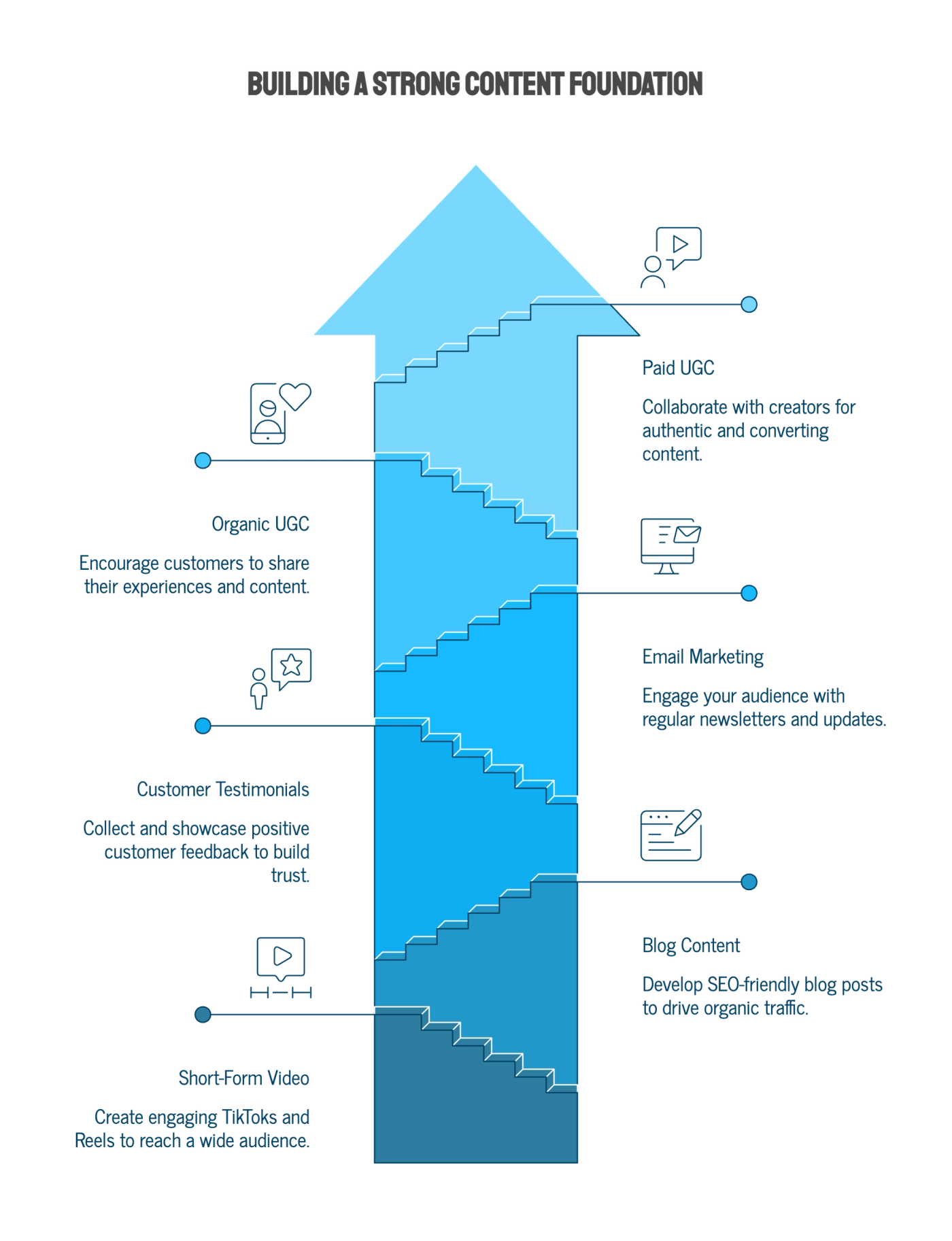
If you're starting from scratch, prioritize short-form video, Google-friendly blog content, customer testimonials, email capture, and consistent social posting.
This creates a strong foundation for long-term small business growth marketing without spreading your resources too thin.
Short-Form Video
TikTok and Instagram Reels are where small businesses are punching well above their weight right now. The algorithm rewards content quality and relevance over follower count which means a small business with 800 followers can reach 50,000 people with the right video.
Want to put this into practice?
SideShift connects you with vetted UGC creators who actually deliver. Start your free trial and post your first job in under 10 minutes.
Show your process. Answer a common question. Share a behind-the-scenes moment. The content that performs best here isn't overly produced.
Blog and SEO Content
If you want long-term organic traffic, a blog is your most durable asset. Write posts that answer the specific questions your customers type into Google. A plumber in Austin writing “how to fix a slow drain without calling a plumber” isn't giving away business, they're building trust with every person who reads it and remembers who helped them when they do need to call someone.
Customer Testimonials
Testimonials are one of the highest-trust content formats a small business can use, yet most businesses collect them passively at best. After a purchase or project, ask customers directly for their feedback or a product review. A short follow-up email, a text message, or even an automated prompt at checkout can dramatically increase the volume of feedback you receive.
Where you place that feedback matters as much as collecting it. Testimonials distributed across touchpoints like your homepage, product pages, Google Business Profile, and social channels do far more work than a buried reviews tab that most visitors never find.
Email Marketing
Email is consistently underestimated by small businesses and consistently overdelivers. Your email list is an audience you own, not subject to algorithmic changes, and no platform risk. A simple monthly newsletter with useful content, honest updates, and an occasional offer can be a great way to engage your audience with content.
Organic UGC and Creator Content
User-generated content such as social media photos, videos, and reviews are one of the most underused assets a small business could be utilizing. When a customer posts about your product or tags your business, that's content that carries more credibility than anything you could produce yourself because it's not paid. It's just real.
Encourage it actively. Create a branded hashtag. Feature customer content on your own channels with credit.
Paid UGC and Creator Content
For small businesses that want the quality and relatability of creator content without the cost of a major influencer campaign, UGC creators are worth paying attention to. These creators specialize in making content that feels authentic and converts through product demos, lifestyle clips, reviews, tutorials, and social-first videos designed to blend naturally into platforms like TikTok and Instagram.
Unlike traditional influencers, you’re not paying for audience reach or celebrity status. You’re paying for the content itself. The brand receives the assets, can pay to own the usage rights, and can run the content across its own channels, website, email marketing, or paid ads.
The business case for this is well-documented. Studies show that 84% of consumers are more likely to trust a brand that incorporates user-generated content into its marketing, and 77% are more likely to purchase a product they discovered through creator or customer content. For a small business investing in content that has to work across multiple channels, those numbers are hard to ignore.
How to Do Content Marketing Without Burning Out
Want to put this into practice?
SideShift connects you with vetted UGC creators who actually deliver. Start your free trial and post your first job in under 10 minutes.
Consistency matters more than volume. A small business that publishes one genuinely useful blog post a month and posts three times a week on one platform will outperform a business that tries to do everything for three weeks and disappears for two months.
Here are a few practical ways to stay consistent without it taking over your life:
- Batch your content. Set aside a few hours once a week to create everything at once rather than doing it in five-minute windows throughout the day. Switching costs are real and batching reduces them significantly.
- Repurpose relentlessly. One blog post becomes a social caption, an email section, and three short-form video scripts. One customer story becomes a testimonial, a case study, and a behind-the-scenes post. You don't need more ideas, you just need to extract more content from the ones you already have.
- Use your customers as a content source. Pay attention to the questions they ask in person, the reviews they leave, and the problems they mention—that’s your content calendar. Your content should be directly responding to what people are already asking and searching for.
- Start with one platform. Do it well before you add another. The biggest mistake small businesses make in content marketing is spreading too thin too fast. Own one channel before you try to own three.
Affordable Influencer Marketing for Small Businesses
You don't need to partner with someone who has a million followers. For most small businesses, nano- and micro-influencers (creators with under 50,000 followers in a specific niche) will outperform celebrity and macro-influencers on engagement, trust, and cost.
A local fitness studio partnering with three local wellness creators with under 5,000 followers will get further than one post from a celebrity with a national audience who has no connection to the community. Specificity and relevance beat reach at the small business level.
What to look for in a creator partnership as a small business:
- Audience location matches your customer base
- Engagement rate above 3-4% (measured through comments and saves, not just likes)
- Content that feels consistent with your brand without being identical to it
- A creator who actually uses or would use what you offer
Platforms like SideShift let small businesses browse creators by niche, audience demographics, engagement rate, and compensation type. It's built for brands that don't have a talent agency on retainer but still want to run creator campaigns that can also be repurposed to other content streams on brand owned channels.
Small Business Social Media Marketing Mistakes to Avoid
One of the biggest mistakes small businesses make in social media marketing is trying to copy large brands. Enterprise companies operate with entirely different budgets, teams, timelines, and goals. What works for a national retailer or venture-backed startup will not always work for a local business or growing brand.
Small businesses usually perform better when they lean into the things large corporations struggle to replicate: personality, founder visibility, customer interaction, transparency, and genuine community engagement. That human connection is often the competitive advantage.
Want to put this into practice?
SideShift connects you with vetted UGC creators who actually deliver. Start your free trial and post your first job in under 10 minutes.
Another common mistake is overproducing content. You don’t need cinematic production quality for content to perform well anymore. In fact, some of the highest-performing videos online are filmed on phones with natural lighting and minimal editing because they feel more authentic and native to the platform. Strong content usually comes down to clear messaging, a strong hook, relatability, and relevance rather than expensive production.
It’s also a mistake to ignore SEO entirely. Social media helps with visibility and engagement, but search traffic creates long-term discoverability. Blog content allows small businesses to rank on Google, build authority in their niche, answer customer questions, and generate organic traffic over time. Even publishing one high-quality blog post a month can compound into meaningful visibility and search traffic over the long term.
Scale Your Content Program With SideShift
At some point, creating everything yourself hits a ceiling. You've got a business to run and producing a steady stream of high-quality content on top of that isn't sustainable indefinitely.
SideShift gives small businesses access to a network of over 800,000 vetted Gen Z creators who can produce content at the volume and quality you need, without the cost of a full agency. Whether you need UGC for your product pages, social content for a campaign, or creator partnerships for a launch, the platform connects you with the right people filtered by niche, audience, engagement benchmarks, and budget.
You focus on the business. Let the creators handle the content.
FAQs
1. How do you start content marketing for a small business with no budget?
Start with what you have. A phone, your own expertise, and your existing customers. Short-form video on TikTok or Instagram Reels costs nothing to produce and can reach a significant audience. A free blog on your website and a free email list through Mailchimp are enough to build on. Consistency matters more than production quality at the start.
2. How long does it take for content marketing to work?
Realistically, three to six months before you see meaningful traction from SEO content. Social and email can move faster. A single video can drive traffic overnight. The compounding returns from content marketing build over 12 to 18 months, which is why consistency in the early stages matters so much.
3. How often should a small business post content?
Often enough to stay consistent, not so often that quality drops. For most small businesses, two to three social posts per week, one email per month, and one to two blog posts per month is a sustainable starting point. Add volume once the baseline is working.
4. What's the difference between content marketing and social media marketing?
Social media marketing is one channel within a broader content marketing strategy. Content marketing includes everything from blog posts, email, video, SEO and UGC, to creator partnerships. Social media is where a lot of that content gets distributed, but it's not the whole picture.
5. Is UGC content worth it for small businesses?
Want to put this into practice?
SideShift connects you with vetted UGC creators who actually deliver. Start your free trial and post your first job in under 10 minutes.
Yes. It's one of the highest-trust, lowest-cost content formats available. Real customers talking about real experiences with your product or service converts better than almost anything you can produce yourself. Build UGC collection into your post-purchase process and repurpose it across every channel you run.