


How to Create Effective UGC Ads
Create UGC ads with proven strategies, platform tips, viral-ready formats, and low-cost production ideas. Learn how to boost ROI and scale your ads.
Table of Contents
Shiny, studio-quality ads aren’t stopping the scroll anymore. Consumers today want real voices, real experiences, and real reactions. That’s why UGC ads have become the go-to solution for brands trying to reengage their digital audiences.
User-Generated Content (UGC) is any type of content (e.g. photos, short form social media videos, reviews, etc.) created and shared by customers, fans, or community members rather than the brand itself. Because it comes from real people, not polished brand teams, it feels more like word-of-mouth recommendations than an infomercial trying to sell you something. That relatability is what drives trust, boosts engagement, and supports stronger conversions.
Unlike traditional ads, UGC feels genuine, mirrors real customer behavior, and consistently outperforms overly produced campaigns. That doesn’t mean you should abandon traditional media entirely. In fact, recent studies show that brand engagement rises by 28% when consumers are exposed to a combination of professional marketing and user-generated content. An integrated mix of both keeps your message strong and consistent. But if budgets are tight, UGC is the lower-cost, higher-return solution.
So how do you turn user-generated content into a UGC ad that actually converts? Let’s break down the steps to create UGC ads that grab attention, drive engagement, and deliver measurable results.
What Are UGC Ads?
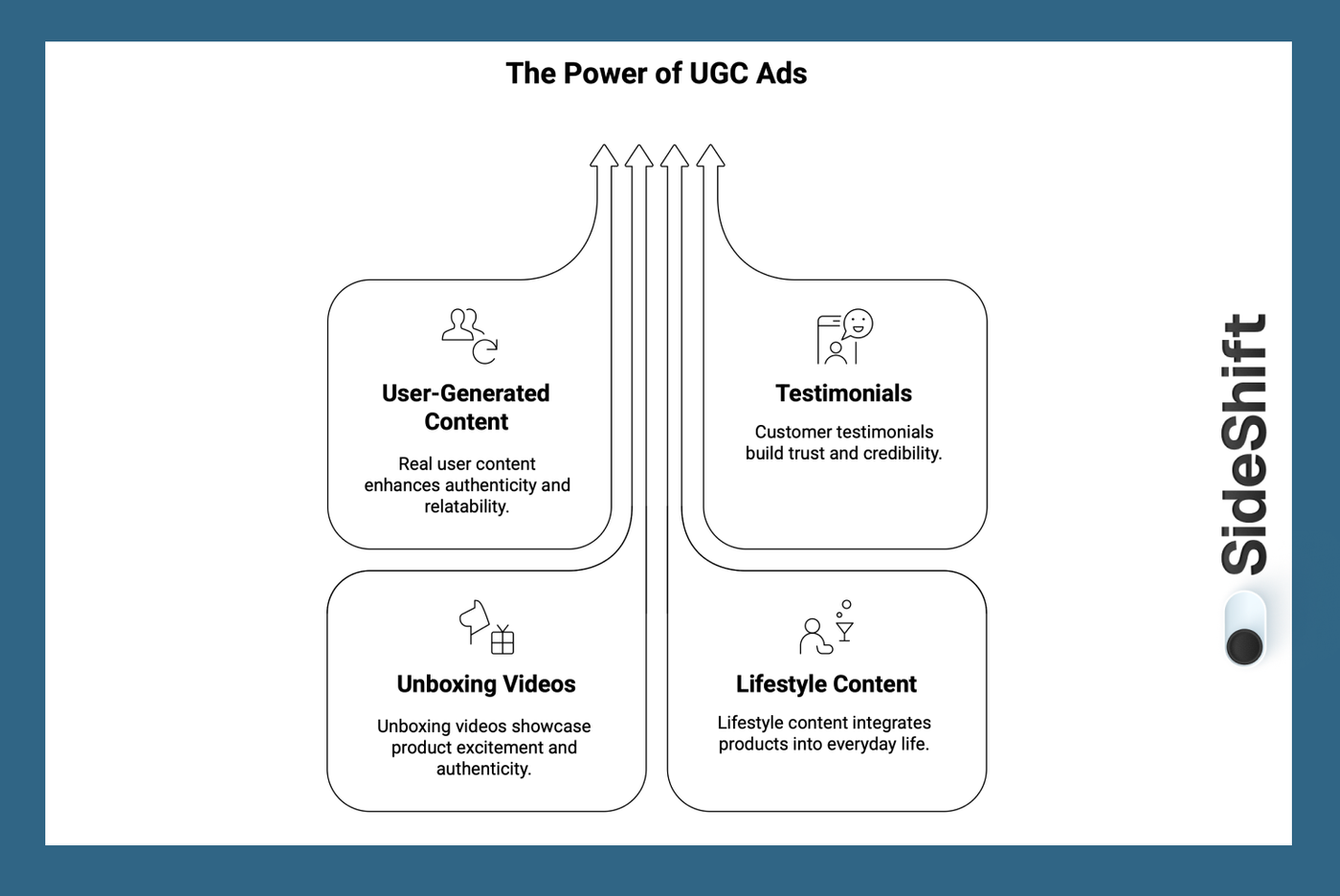
UGC ads are paid media marketing campaigns that use content created by real users, customers, or creators instead of polished brand-produced assets. This could include short-form videos, testimonials, unboxing clips, or lifestyle content that highlights products or services authentically. These ads work because they feel relatable, build trust, and capture attention in a crowded social feed.
Why UGC Ads Consistently Outperform Traditional Advertising Creative
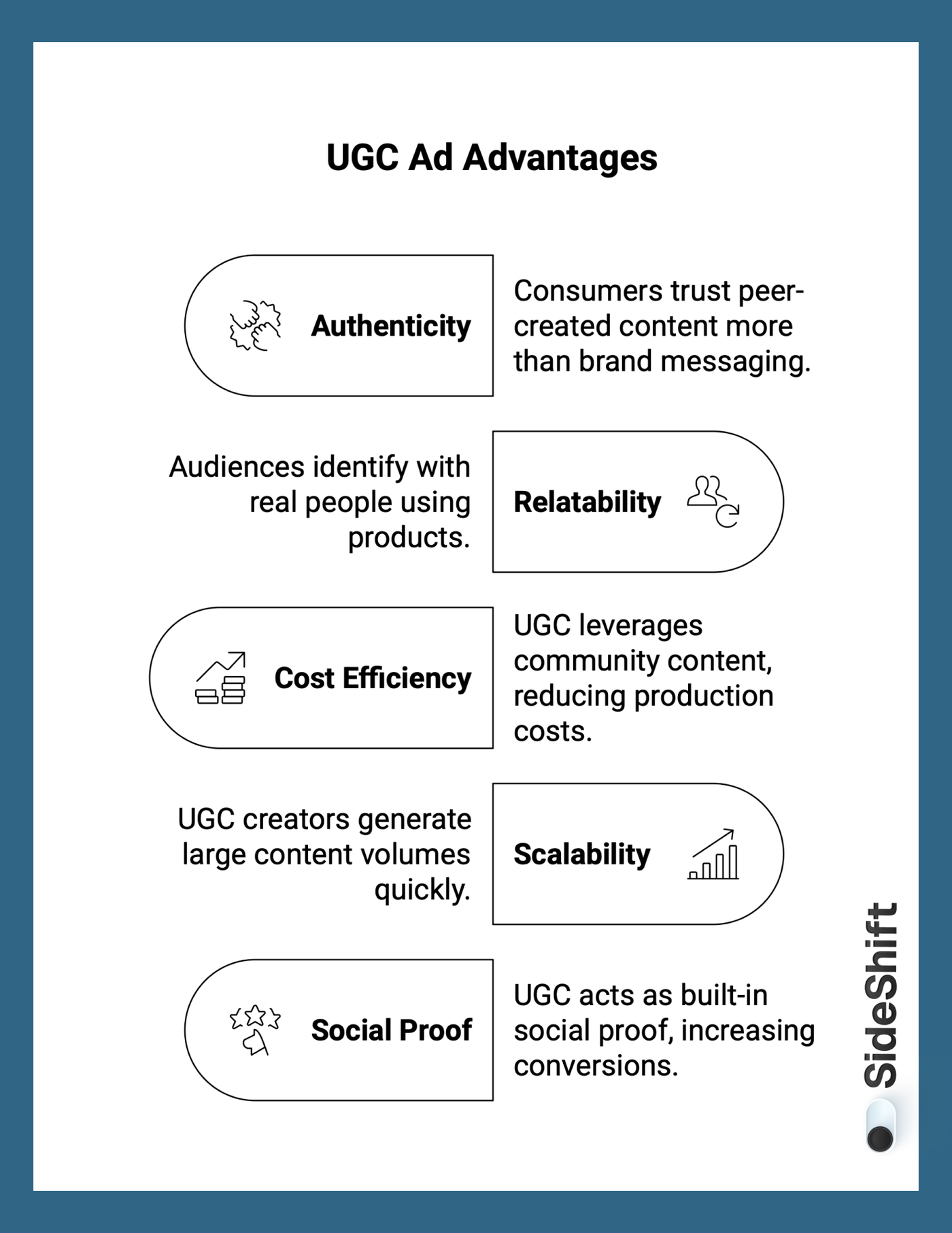
UGC ads outperform traditional ads for several reasons:
- Authenticity wins: Consumers inherently trust content created by peers more than polished brand messaging. When someone sees a real customer sharing their experience, it feels credible and persuasive, almost like a personal recommendation.
- Relatability drives engagement: Real people using products create content audiences can identify with. Whether it’s a short video, a candid review, or a social post, UGC resonates because viewers see themselves in the story.
- Cost efficiency: Producing high-quality, traditional ads can be expensive and time-consuming. UGC, on the other hand, leverages content created by your community, reducing production costs while maintaining quality and authenticity.
- Scalability: Engaging multiple UGC creators on one marketing push can generate large volumes of content quickly, giving brands a constant stream of assets for paid campaigns, organic social posts, and other marketing channels. This flexibility allows brands to test, optimize, and scale campaigns faster than ever.
- Social proof that converts: 92 percent of global consumers trust recommendations from friends and family, over all other forms of advertising. UGC acts as built-in social proof, reassuring potential customers that real people are already enjoying and recommending your products. This trust factor often leads to higher engagement, click-throughs, and conversions compared to traditional ads.
At SideShift, brands leveraging high-volume UGC campaigns have seen measurable increases in click-through rates, social engagement, and overall ROI, all while reducing production costs.
Want to put this into practice?
SideShift connects you with vetted UGC creators who actually deliver. Start your free trial and post your first job in under 10 minutes.
Your Step-by-Step Framework for Producing High-Converting UGC Ads
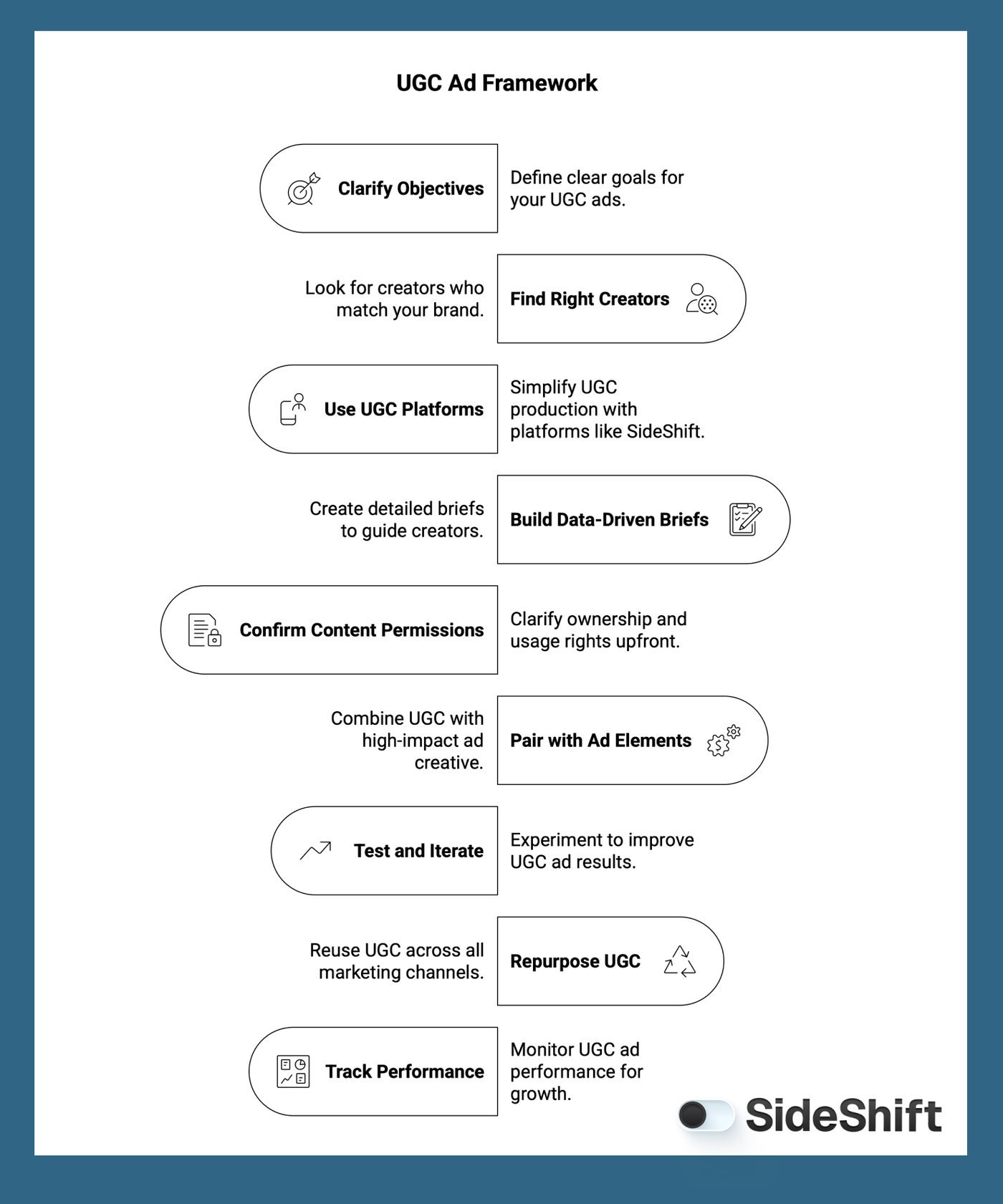
A. Clarify Your Objectives
Before creating UGC ads, start by defining clear goals. Are you aiming to increase sales, grow brand awareness, or boost engagement? Establishing measurable objectives ensures that your campaign strategy, creative, and performance metrics are all aligned, making it easier to evaluate success. Your objectives will later guide the types of creators you work with, the messages you craft, and the platforms you prioritize.
B. Find and Evaluate the Right Creators for Your Brand
The creators you choose are just as important as the content itself. Look for individuals who match your brand voice, understand your audience, and can produce high-quality videos or visuals that feel authentic.
C. Consider Using UGC Platforms like SideShift to Find The Right Creator
UGC Platforms like SideShift simplify the UGC production process by connecting brands to thousands of vetted creators. They allow you to post campaigns, collect applications, manage contracts and usage rights, issue payments and track performance analytics. This ensures you find creators who can deliver results while minimizing manual outreach.
D. Build Data-Driven UGC Briefs That Consistently Perform
A detailed brief helps creators deliver content that drives results. Include information about your campaign objectives, target audience, product details, key messaging, and examples of content styles that resonate. Be specific about deliverables such as video length, format, and platform. Providing this context empowers creators to produce high-performing content with minimal back-and-forth.
E. Confirm Content Permissions and Usage Rights
Always clarify ownership, licensing, and usage rights upfront. Securing these permissions ensures your brand can repurpose content across multiple channels, run paid campaigns without restrictions, and avoid potential legal issues.
F. Pair UGC With High-Impact Ad Creative Elements
UGC content performs best when combined with elements that capture attention quickly. Engaging hooks in the first few seconds, clear calls to action, captions for silent viewing, and music or sounds that align with platform trends all help make your ad more effective and shareable.
G. Test, Iterate, and Improve UGC Ad Results
High-performing UGC campaigns rely on ongoing experimentation. Try different creators, content styles, video lengths, ad formats, captions, hooks, and calls to action. Track performance metrics such as click-through rates, conversions, and engagement to identify top-performing content and scale it for maximum impact.
H. Repurpose UGC Across All Your Marketing Channels
The true value of UGC lies in its versatility. What started as a single collaboration can be reused across campaigns, year after year, for quarterly marketing pushes or other initiatives, maximizing the impact of authentically created content. Once you have the proper usage rights, a single piece of content can be shared across social platforms and integrated into other marketing programs. With minimal investment, you can reach new audiences and maximize your ROI through repeated mixed media exposure.
I. Track Performance Metrics and Capture Actionable Insights
Monitoring UGC ad performance is essential for growth. Track engagement rates, click-throughs, conversions, and audience feedback to continuously refine your campaigns. High-volume UGC campaigns allow brands to iterate rapidly, discover what resonates, and consistently improve results.
Want to put this into practice?
SideShift connects you with vetted UGC creators who actually deliver. Start your free trial and post your first job in under 10 minutes.
Key Takeaways
UGC ads succeed because they are authentic, relatable, and scalable. A strong creator selection, clear objectives, and a structured production process improve performance. Testing, iteration, and repurposing content across multiple channels maximize ROI. Platforms like SideShift make it easier for brands to find creators, manage campaigns, and scale high-volume UGC ad campaigns efficiently.
Connect with creators on SideShift today and start leveraging User Generated Content for your advertising strategy.
FAQs
1. What makes a UGC ad high-performing?
A high-performing UGC ad is authentic, relatable, and engaging. It captures attention in the first few seconds, resonates with the target audience, and clearly communicates the product’s value. Pairing UGC with strong creative elements like hooks, captions, and calls-to-action also boosts performance. The metrics to pay attention to are engagement rate, total watch time, and conversion rates.
2. How much do UGC ads cost to produce?
UGC ads are generally more cost-effective than traditional, fully produced campaigns. Costs vary depending on the creator, content type, and volume, but platforms like SideShift streamline the process and provide access to vetted creators, making high-quality UGC campaigns affordable and scalable.
3. Do UGC ads work for all industries?
Yes. UGC works across industries because authenticity resonates universally. Whether you’re in e-commerce, tech, beauty, food and beverage, or B2B, consumers respond positively to real people sharing genuine experiences with products or services.
4. How long should a UGC ad be?
UGC ads are typically short and attention-grabbing. For social media platforms, 30–60 seconds is often ideal, though some formats like TikTok or Instagram Reels may benefit from even shorter, 5–15 second clips. The key is to engage viewers quickly (in the first 3 seconds) and communicate your message efficiently.
5. Do you need a creator with followers for a successful UGC ad?
Not necessarily. While creators with large followings can amplify reach, micro-creators or regular users often produce highly relatable content that converts well. Success depends more on authenticity, alignment with your brand, and the quality of the content than the creator’s follower count.