
How to Collaborate With Influencers: A Complete Guide
How to collaborate with influencers by identifying the right creators, setting clear goals, creating briefs, and managing partnerships for effective campaigns.
Table of Contents
Influencer marketing isn’t new, but doing it well still trips up many brands.
If you want to add influencers to your marketing mix this year but aren’t sure where to start, who to hire, or how to scale without blowing your budget, you’re in the right place.
Collaborating with influencers doesn’t require celebrity connections or viral luck. It starts with a clear strategy, the right creators, and systems that make collaboration seamless for both sides.
In this guide, we’ll cover everything you need to know about working with influencers, from understanding the benefits of influencer marketing to step-by-step strategies for building partnerships that actually drive results.
The Real Benefits of Working With Influencers
Influencer marketing works because people trust people more than ads. According to the Influencer Marketing Hub Benchmark Report, brands continue increasing spend on influencer marketing year over year, with ROI rivaling (and often beating) paid social when campaigns are executed well.
Here’s what strong influencer partnerships unlock:
- Trust at scale: Audiences already believe the creator; your brand borrows that credibility
- Native content: Influencers know how to make content feel organic on TikTok, Instagram, and YouTube
- Faster testing: Multiple creators = multiple angles, hooks, and formats
- Stronger conversion paths: Especially when paired with UGC-style content and paid amplification
On SideShift, brands can work with hundreds of creators at once, producing high-volume content that fuels ads, landing pages, and organic social, all without traditional influencer overhead.
Different Ways to Leverage Influencer Marketing
Influencer marketing takes many forms, and the term itself covers a wide range of creators. At the core, an influencer is simply someone with a key opinion, clear perspective, expertise, or an authentic voice that resonates with a specific audience.
Influencers come in all shapes and sizes: micro, macro, nano, celebrity, new, established, niche, broad, local, global, and everything in between. With this diversity, there are multiple ways brands can collaborate with influencers for their marketing strategy, each serving different goals from awareness to conversion.
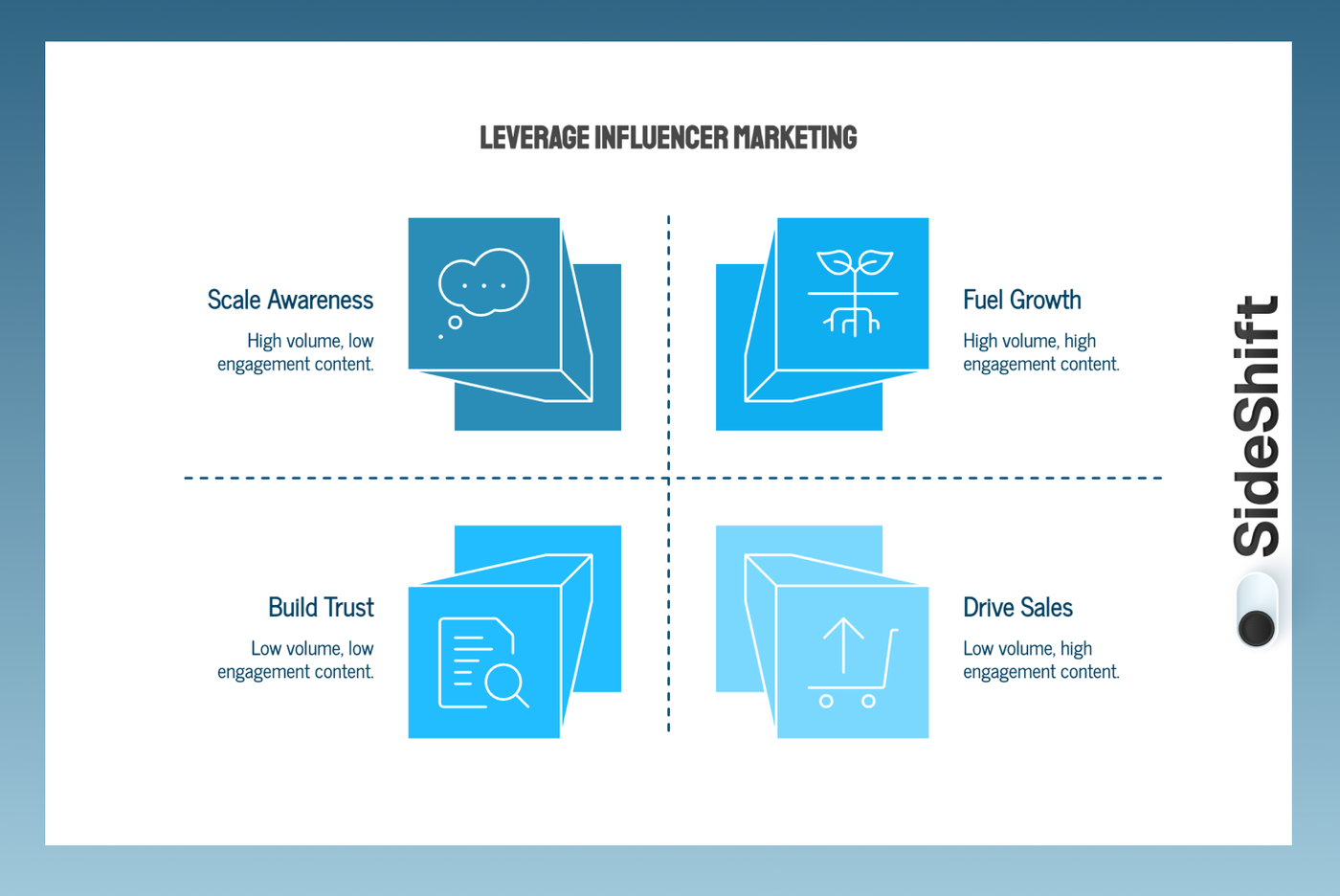
1. Fuel Growth With High-Volume UGC
User-generated content (UGC) creators are influencers focused on producing high-quality content consistently, rather than amassing large followings. Brands leverage this content across multiple channels like social media, paid ads, email campaigns, and product pages to create authentic, scalable marketing assets.
Platforms like SideShift excel here, connecting brands with creators who can produce dozens of videos per week, providing a steady pipeline of fresh, platform-native content that keeps campaigns agile and results-driven.
2. Build Loyalty With Brand Ambassadors
Long-term influencer partnerships go beyond one-off posts. Brand ambassadors become extensions of your marketing team, creating recurring content, participating in product launches, and reinforcing brand values over time.
These ongoing relationships drive deeper engagement, improve audience trust, and turn casual followers into loyal customers. Over time, ambassador programs also generate a library of evergreen content that continues to perform long after the initial campaign.
3. Boost Trust With Testimonial Ads
Influencers who share authentic, customer-style testimonials can significantly enhance credibility. This style of testimonial ads resonates particularly well with Gen Z and millennial audiences, who value peer recommendations over traditional advertising.
Want to put this into practice?
SideShift connects you with vetted UGC creators who actually deliver. Start your free trial and post your first job in under 10 minutes.
By incorporating real experiences, emotions, and relatable storytelling, influencers can drive higher engagement, conversions, and social proof for brands without feeling “salesy.”
4. Drive Sales With Affiliate Marketing
Affiliate influencer partnerships align incentives for both creators and brands. Creators earn a commission based on performance, while brands only pay for measurable results. This performance-based model encourages creators to craft content that drives clicks, conversions, and revenue. It’s especially effective for e-commerce brands looking to scale sales while keeping marketing spend directly tied to ROI.
5. Create Impactful Sponsored Content
One-off sponsored posts still hold value when executed thoughtfully. The key is aligning the content with the creator’s niche, audience, and style. Sponsored content performs best when brands secure repurposing rights, allowing high-performing posts to be leveraged across ads, social, and other marketing channels. Strategic amplification ensures every piece of content has a longer shelf life and higher ROI.
6. Scale Awareness With Product Seeding
Product seeding campaigns involve sending free products to carefully selected influencers and creators without a contractual obligation to post in hopes of generating organic buzz through UGC style content. This approach is ideal for launches, awareness campaigns, and trend-driven content. When executed at scale, influencer product seeding can flood social feeds with authentic mentions, increasing brand visibility and credibility while sparking conversations within niche communities.
Steps to Finding and Collaborating With Influencers
Define Your Campaign Goals
Before you reach out to any creators, ask one simple question: What does success look like?
Different influencer marketing goals call for different strategies:
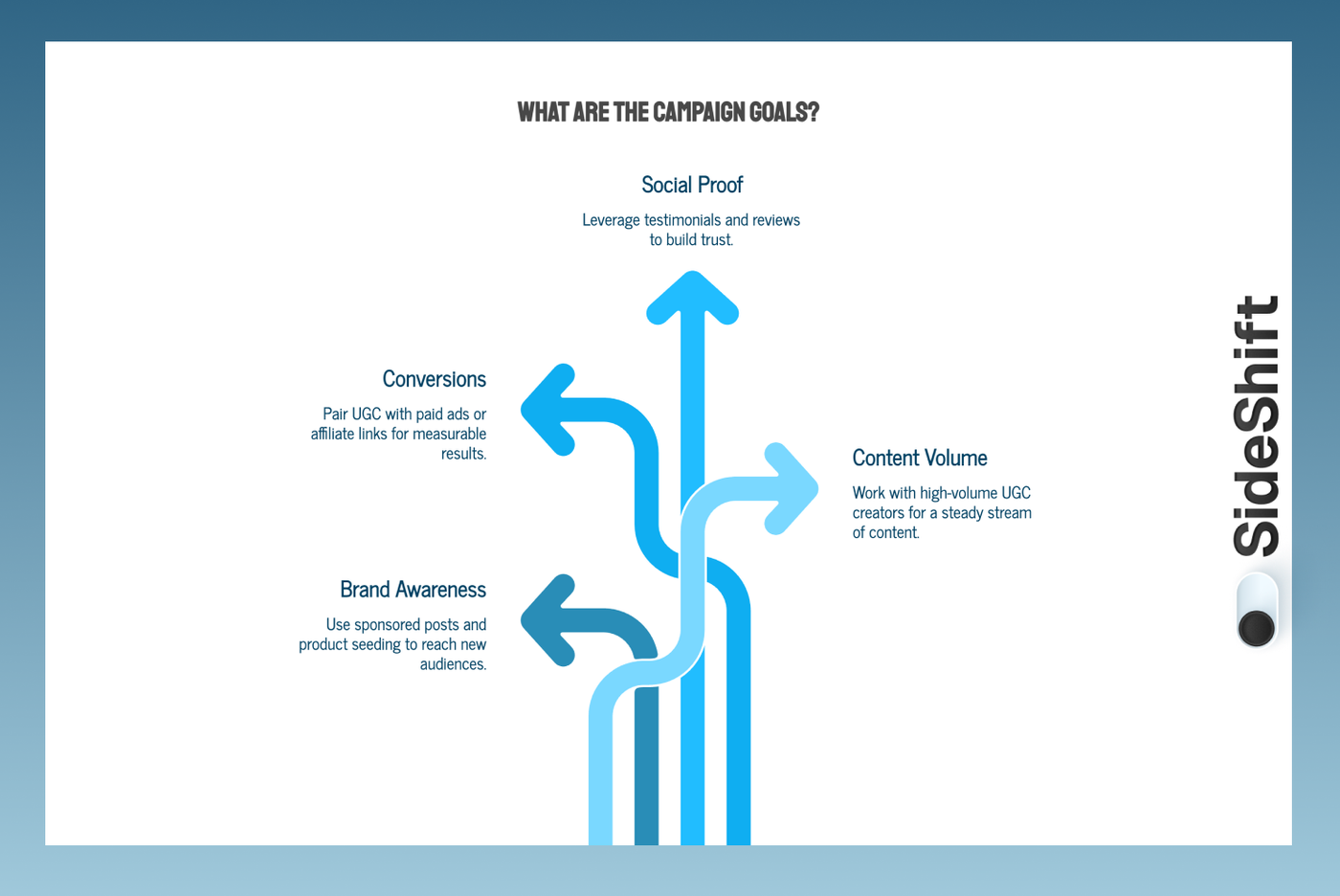
- Brand awareness: Sponsored posts and product seeding help get your brand in front of new audiences at scale.
- Conversions: Pairing UGC with paid ads or affiliate links is more effective for driving measurable results.
- Social proof: Testimonials and reviews from real creators build trust and credibility with potential customers.
- Content volume: Working with high-volume UGC creators ensures a steady stream of platform-native content.
Your influencer marketing strategy should align with your growth stage, not the latest TikTok trend.
2. Craft Clear and Actionable Briefs
A strong influencer brief makes collaboration smoother and results better.
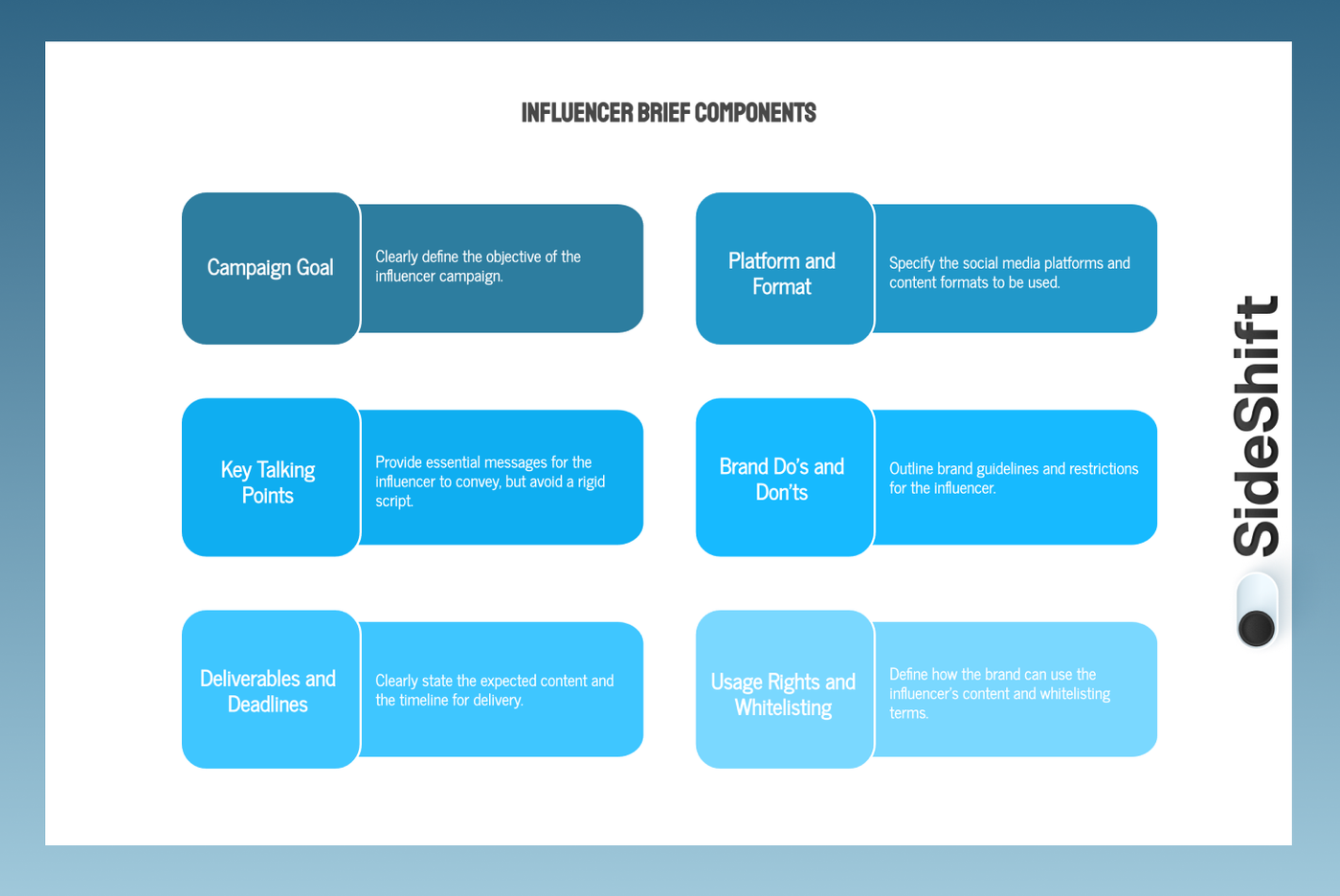
Every brief should include:
- Campaign goal
- Platform(s) and format
- Key talking points (not a script)
- Brand do’s and don’ts
- Deliverables and deadlines
- Usage rights and whitelisting terms
3. Select Influencers Who Align With Your Brand & Budget
Your ideal influencer may already be one of your customers, closely match your ideal customer persona, or naturally embody the lifestyle, values, and pain points your brand is trying to reach. When creators genuinely relate to your product, their content feels more authentic, and audiences can tell.
Alignment matters just as much as reach. Instead of overpaying for large followings, brands should evaluate creators based on audience fit, content style, engagement quality, and past performance, all while staying within budget.
The right creator doesn’t need to be the biggest name in your niche. They need to resonate with the right people in a way that feels authentic and sustainable for your campaign goals. This is why nano and micro-influencers, as well as UGC creators, can be especially effective: they often have highly engaged audiences and produce content that feels real, relatable, and on-brand.
Want to put this into practice?
SideShift connects you with vetted UGC creators who actually deliver. Start your free trial and post your first job in under 10 minutes.
Look for creators who:
- Have an established presence in your niche (wellness, beauty, tech, etc.)
- Match your brand’s tone and energy
- Have proven consistency (posting cadence matters)
- Are comfortable iterating based on feedback
- Are within your marketing budget
If you’re still hunting manually, this guide on how to find influencers is a solid starting point. Or skip the spreadsheets and manual outreach altogether and recruit pre-vetted creators in as little as one week through SideShift’s marketplace of 500,000+ high-quality Gen Z UGC creators.
4. Let Them Cook
This is where many brands mess up. Creators know what works on their platforms and how to speak to their followers and audience. When brands over-direct, performance drops because content can quickly start feeling contrived. When brands collaborate and allow the creators to put their own spin on the campaign message, content improves.
Set guardrails and articulate any non-negotiables (cancel culture is real), but be willing to let creators do their thing.
Here are a few examples of influencer marketing campaigns where the creators’ personalities got to shine, and the brand came out winning.
5. Track and Measure Campaign Performance
Influencer marketing without measurement is just vibes with no clear return. So, how do you decipher a successful influencer campaign from a flop?
Set clear KPIs before your campaign launches so creators know exactly what success looks like and what metrics to prioritize. Are you optimizing for likes, saves, follows, clicks, site visits, watch time, or sales?
Common influencer marketing KPIs include:
- Engagement rate
- Hook retention
- Click-through rate
- Conversions (when applicable)
- Content performance when reused for ads
According to a Tomoson influencer marketing study, businesses earn an average of $6.50 for every $1 spent on influencer marketing, but only when campaigns are properly measured and optimized.
Keeping track of all this data can be tedious and overwhelming. Luckily, SideShift’s real-time analytics dashboard makes it easy to track performance at the video, creator, and campaign level, with metrics like views, engagement, and CPM, so you can quickly double down on what’s working.
Pro Tips for Successful Influencer Collaboration
Testing Small
Successful influencer collaboration starts by testing small and scaling only what proves effective. Rather than committing large budgets upfront with big-name influencers, brands that pilot campaigns with a limited group of smaller influencers and UGC creators can quickly identify which formats, hooks, and creator styles drive real results, then expand those efforts with confidence.
Influencer Compensation
Paying influencers fairly is equally important, as compensation models like hybrid retainers often lead to better performance, stronger relationships, and more consistent content output over time.
Optimize Workflows
As campaigns grow, building systems early becomes critical. Manual workflows may work at low volume, but they don’t scale. Brands need clear processes for creator recruitment, approvals, payments, and performance tracking. High-performing teams also extend the value of influencer collaborations by repurposing top-performing content across organic social, paid ads, email, and landing pages, maximizing ROI from every asset created.
Want to put this into practice?
SideShift connects you with vetted UGC creators who actually deliver. Start your free trial and post your first job in under 10 minutes.
The Spirit of Collaboration
Most importantly, the strongest influencer partnerships are rooted in collaboration, not transactions. Treating creators as long-term partners rather than one-off placements leads to more authentic content, better brand alignment, and sustained performance.
Scaling Influencer Collaboration With SideShift
With SideShift, brands can post creator jobs, recruit dozens or even hundreds of influencers at once, manage contracts and payouts, and track campaign performance from a single dashboard. Everything is designed to remove friction and make influencer collaboration fast, scalable, and measurable.
Pricing starts at $299 per month, with custom Done For You plans also available for brands running serious content volume. This isn’t influencer marketing as usual. SideShift helps you assemble a content army built for speed and scale.
Start your free trial on SideShift today.
FAQs
1. Should I incorporate influencer marketing with my marketing strategy?
Yes. Especially if you want authentic content, social proof, and faster testing than traditional ads alone. Over 80% of marketers affirm influencer marketing as a highly effective strategy.
2. How do I find the right influencers for my brand?
Look beyond follower count. Understand the different types of influencers and focus on audience alignment, content quality, and consistency. You can also use a marketplace like SideShift to recruit at scale.
3. What should be included in an influencer brief?
KPIS, goals, deliverables, key messages, timelines, and usage rights. Clear briefs = better content.
4. How do I measure success in influencer campaigns?
Track engagement, conversions, and content reuse performance. Influencer content often performs best when repurposed into paid ads.
5. How can I manage multiple influencer partnerships efficiently?
Use a centralized UGC platform. Managing individual creators manually doesn’t scale. Use tools like SideShift to handle recruitment, contracts, payment, and analytics in one place.