
How to Use Gaming Influencers to Promote Your Product
Gaming influencers drive real purchase decisions. Here's how to find the right creators, structure partnerships, and turn gameplay into brand growth.
Table of Contents
How to Work with Gaming Influencers to Promote Your Product
Gaming influencers have one of the highest purchase conversion rates of any creator category. Data shows that 40% of gaming enthusiasts had bought a product based on a creator recommendation, compared to 32% of consumers globally and gaming ranks as the top category for influencer-driven purchases.
That commercial leverage exists because gaming audiences spend hundreds of hours with their favorite creators. The trust that builds over that time is what makes a product mention from a streamer or YouTube creator convert in a way that a banner ad or pre-roll never will.
This guide walks through how to actually use that engagement advantage, from defining what you want your campaign to do, to choosing the right creators and platforms, structuring the deal, briefing for content that performs, and measuring results that go beyond impressions.
Define Your Campaign Objective Before You Touch a Creator List
Understanding how to work with gaming influencers starts with clarity on what you’re trying to accomplish. Every decision that follows, including which platform, creator tier, content format, and compensation model to use, flows directly from your goal. Brands that skip this step end up with campaigns that are hard to evaluate and even harder to repeat.
The most common objectives in gaming influencer marketing map to different creator and content choices:
- Brand awareness means you need reach, frequency, and platform visibility. Macro and mid-tier creators on YouTube and Twitch give you volume. The metric you’re tracking is impressions, view count, and brand search lift over the campaign window.
- Product conversion means you need a tight audience match, a trackable call to action, and content format that supports demonstration. Micro creators on Twitch and TikTok with promo codes or affiliate links give you this. The metric you’re tracking is code redemptions, affiliate link clicks, and direct revenue attribution.
- UGC production means you need a high volume of authentic creative assets you can garner media value from and repurpose for paid social ads, landing pages, and email. UGC-only gaming creators who produce content without posting to their own audience offer this at the lowest cost per asset. The metric is content output volume, usage rights scope, and downstream ad performance of those assets.
Most campaigns contain elements of all three, but one objective should be primary. That primary objective determines your budget allocation, your creator selection criteria, and your success metrics before outreach starts.
Choose the Right Platform for Your Product and Audience
Gaming creators are not platform-agnostic. A creator who is dominant on Twitch may have a negligible YouTube presence. A TikTok gaming creator may have zero Twitch hours. The platform you choose determines the content format, the audience mindset, the conversion path, and the cost structure of your campaign. These are not interchangeable.
YouTube Gaming
YouTube is the highest-intent platform in the gaming creator ecosystem. Viewers arrive on YouTube with a question or a goal: “How do I beat this level? Is this headset worth buying? What is the best gaming chair under $300?” A viewer watching a 15-minute hardware review is in active consideration mode, and a creator recommendation inside that content lands at exactly the right moment.
Want to put this into practice?
SideShift connects you with vetted UGC creators who actually deliver. Start your free trial and post your first job in under 10 minutes.
In 2024, YouTube gaming video viewers were 53% more loyal than the platform's average, with gaming ranking as the most loyal audience out of 12 content genres surveyed. That loyalty means the recommendation carries weight, and the content lives on the platform indefinitely, continuing to generate views and conversions long after the campaign is technically over.
YouTube is typically best for brands promoting gaming hardware, peripherals, software tools, apps with a value proposition that benefits from demonstration, and products with higher price points that require more consideration before purchase.
Twitch
Twitch is a different commercial environment than YouTube. A viewer watches a Twitch stream for 2 to 4 hours at a time, in a live chat environment where they’re actively talking with the creator and other viewers. When a creator integrates a product mention into that context, it does not land as an ad. It lands as a conversation.
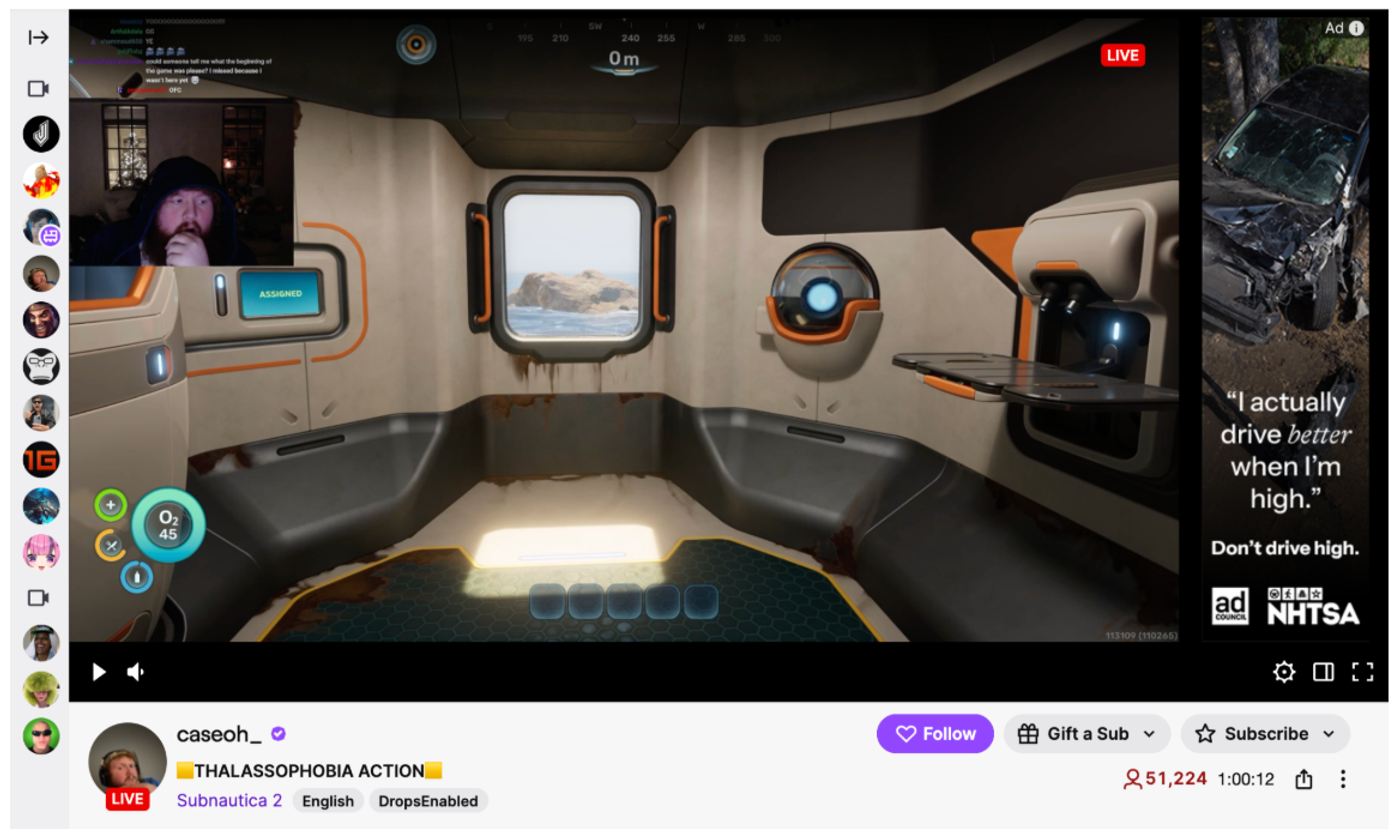
Recent 2025 data shows that this difference in format matters, with 44% of Twitch viewers reporting a purchase driven by a streamer recommendation, and 43% of gamers saying a gaming partnership improves their perception of a brand.
For conversion-focused campaigns with trackable promo codes, a well-matched Twitch streamer with a loyal, niche audience can generate direct purchases within hours of a stream.
Gen Z and Millennials are also 64% more likely than older generations to discover new brands through mobile game ads.
Promoting on Twitch is best for products with broad lifestyle relevance to gamers, such as energy drinks, food delivery, apparel, peripherals, apps, and financial tools. It’s also strong for game launches and limited-time product drops where urgency matters.
TikTok
TikTok is where gaming products get discovered, not deeply considered. The content format is short, personality-driven, and algorithm-distributed, meaning a clip from a micro creator can reach an audience that has never heard of them before.
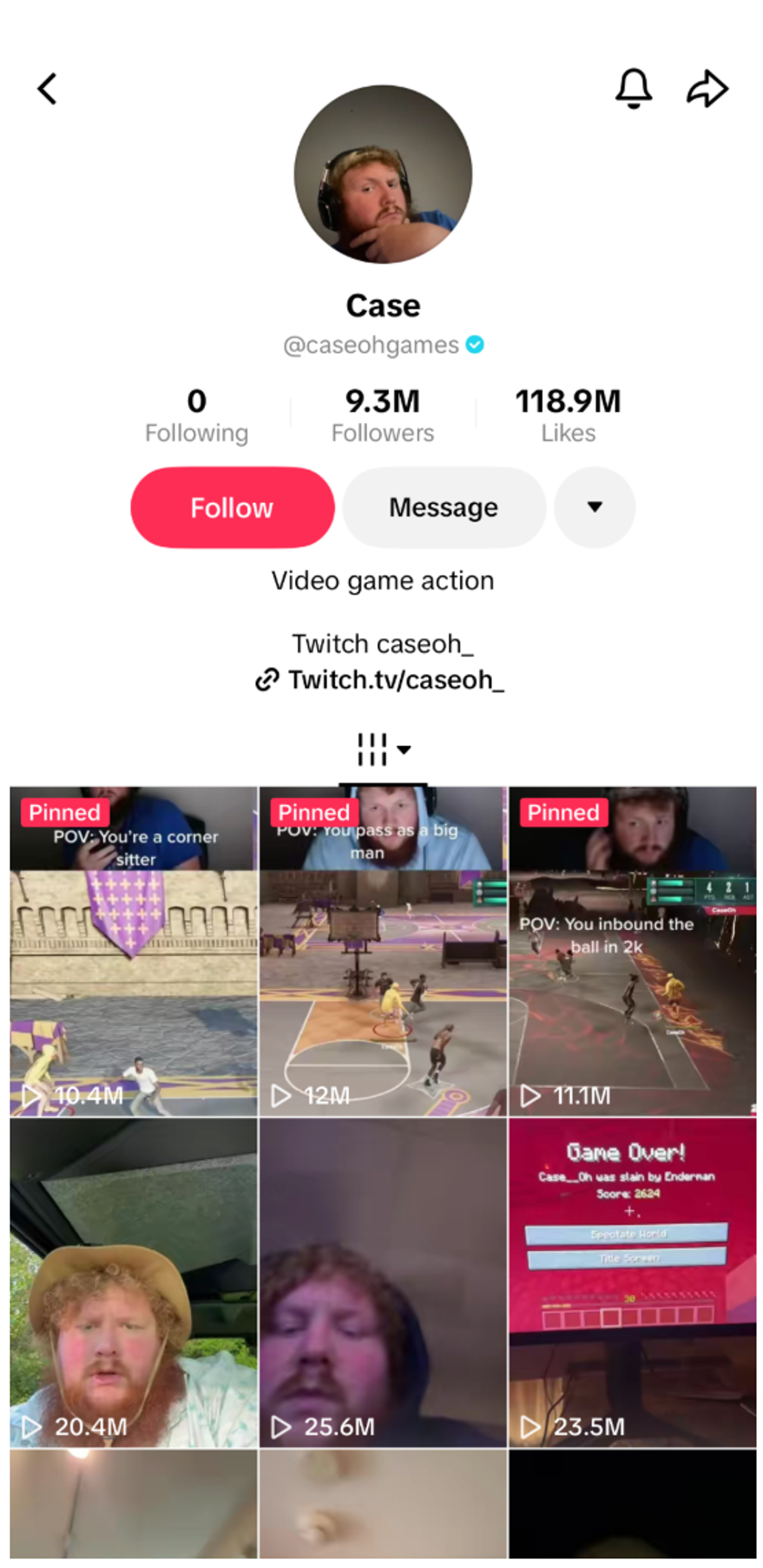
For brands, TikTok gaming creators serve two functions: awareness campaigns that reach Gen Z gamers at scale, and UGC production for paid social ads. A 30-second gaming creator clip repurposed as a paid TikTok ad consistently outperforms brand-produced creative because the authenticity of the format signals differently to the algorithm and to viewers.
TikTok is often best for brands promoting mobile games, consumer tech, gaming accessories, and lifestyle products targeting the 16 to 34 demographic, as well as brands building a UGC creative library for paid ads.
Match the Creator Tier to Your Budget and Campaign Goal
Follower count is the wrong primary filter for gaming creator selection. A 5 million follower YouTube gaming channel whose audience is spread across dozens of unrelated game genres can have far less commercial value for a specific product than a 5,000 follower creator deeply embedded in the exact community your product serves.
The right creator tier depends on your campaign objective, audience fit, and content needs, not simply on who has the biggest audience.
Want to put this into practice?
SideShift connects you with vetted UGC creators who actually deliver. Start your free trial and post your first job in under 10 minutes.
For many gaming brands, smaller creators are where the strongest performance actually happens. Nano and micro gaming creators often generate higher engagement rates, more trusted recommendations, and more affordable UGC production than larger creators. Their audiences tend to be tighter communities built around specific games, genres, or gaming identities, which makes the content feel more credible and native to the platform.
This is also why many gaming companies now work with creators across multiple audience sizes simultaneously. Larger creators may help drive awareness and legitimacy, while smaller creators supply scalable UGC, gameplay clips, reaction content, tutorials, and community-focused recommendations that can later be repurposed across paid ads and brand-owned social channels.
The most effective gaming creator strategies are usually layered, combining reach at the top with high-volume creator content and niche engagement further down the funnel.
Vet Creators Before You Commit Budget
Gaming audiences are sophisticated at detecting inauthentic partnerships. A creator promoting a product that has no logical connection to their content will generate comment section skepticism, not conversions.
Audience reaction to poor brand-creator fit in gaming is active, not passive, and it damages both the creator's credibility and the brand's perception within the community.
Before signing any deal, check the most relevant metrics for each platform.
For YouTube gaming influencers:
- Average views as a percentage of subscriber count (5 to 15% is healthy; below 2% signals algorithmic decline)
- Watch time and retention on videos with past brand integrations, not just organic content
- Comment sentiment on sponsored segments specifically
- Upload recency (a channel inactive for 90+ days has likely lost algorithmic reach)
For Twitch streamers:
- Average Concurrent Viewers (ACV) across the last 20 streams, not peak viewership from outlier broadcasts
- Subscriber-to-follower ratio (subscriptions are paid commitments that indicate real audience investment)
- Chat activity rate during typical sponsored segments
- 60 to 90 days of stream content review for brand safety, not optional
For TikTok gaming creators:
- Engagement rate per post relative to follower count (below 1% on 100K+ accounts is a red flag)
- View-to-follower ratio on recent posts
- Follower growth curve (sudden spikes without corresponding viral content indicate purchased followers)
- Comment quality (generic one-word comments at scale indicate bot activity)
Beyond the numbers, content-product fit is the most important variable. If a creator is a dedicated Valorant player and your product is only relevant to console gaming, their audience will not engage regardless of how large it is. The creator has to have a genuine reason to use or recommend your product within their existing content universe.
Structure the Partnership and Compensation Model
How you pay a gaming creator and what you require in return shapes the quality of the content and the ROI of the campaign. Flat fees for one-off posts are the least efficient structure. Performance-based and long-term models consistently outperform.
UGC Content Licensing
For gaming brands, UGC partnerships often involve paying creators to produce platform-native content that the brand can later reuse across TikTok ads, YouTube Shorts, paid social campaigns, landing pages, Discord promotions, or organic social media.
Want to put this into practice?
SideShift connects you with vetted UGC creators who actually deliver. Start your free trial and post your first job in under 10 minutes.
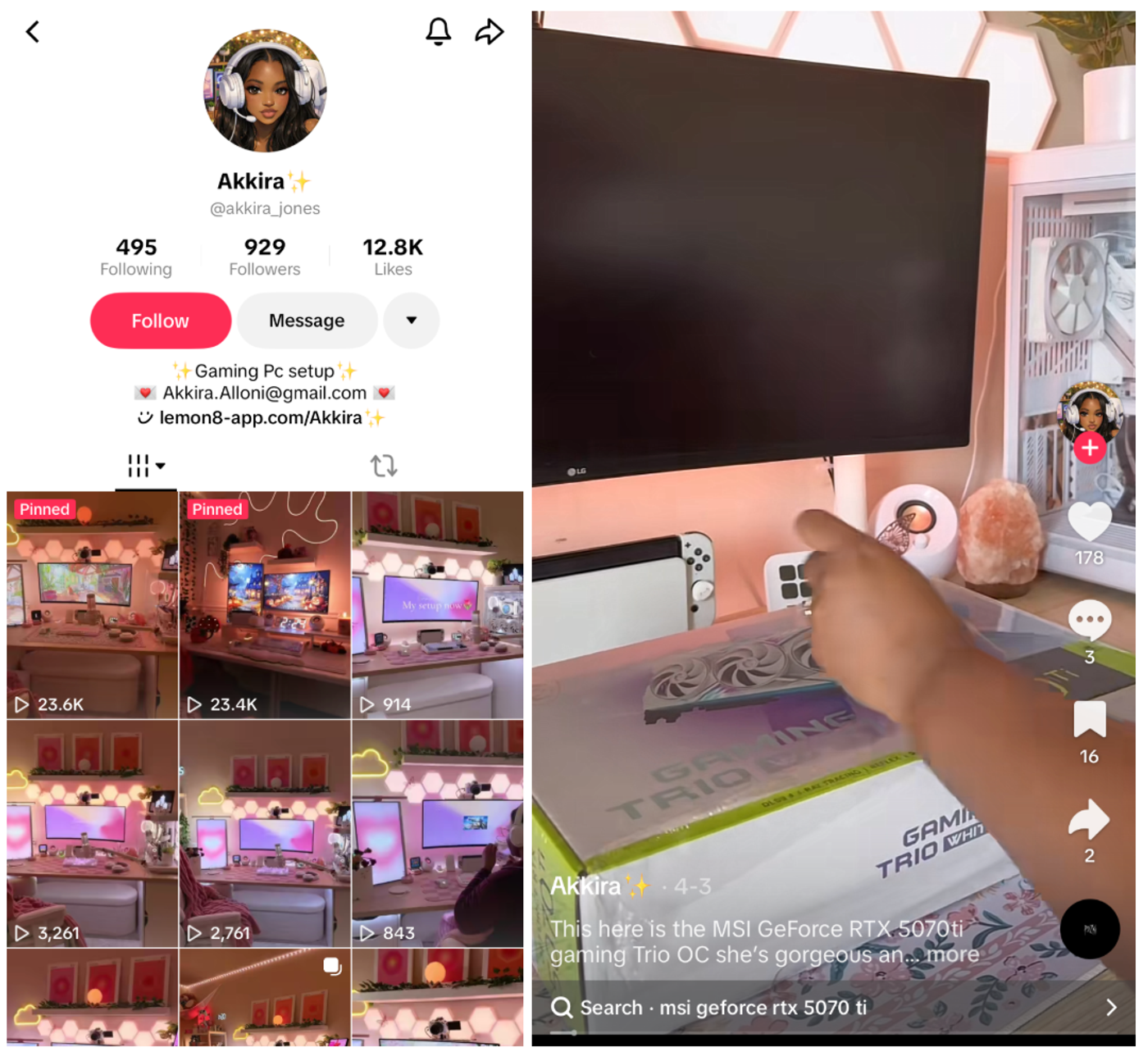
This structure is especially effective with nano and micro gaming creators because the content tends to feel more authentic and community-native. Instead of focusing purely on follower count, brands gain a growing library of creator-made assets featuring real gameplay, reactions, tutorials, product integrations, or livestream clips that can be repurposed across the marketing funnel.
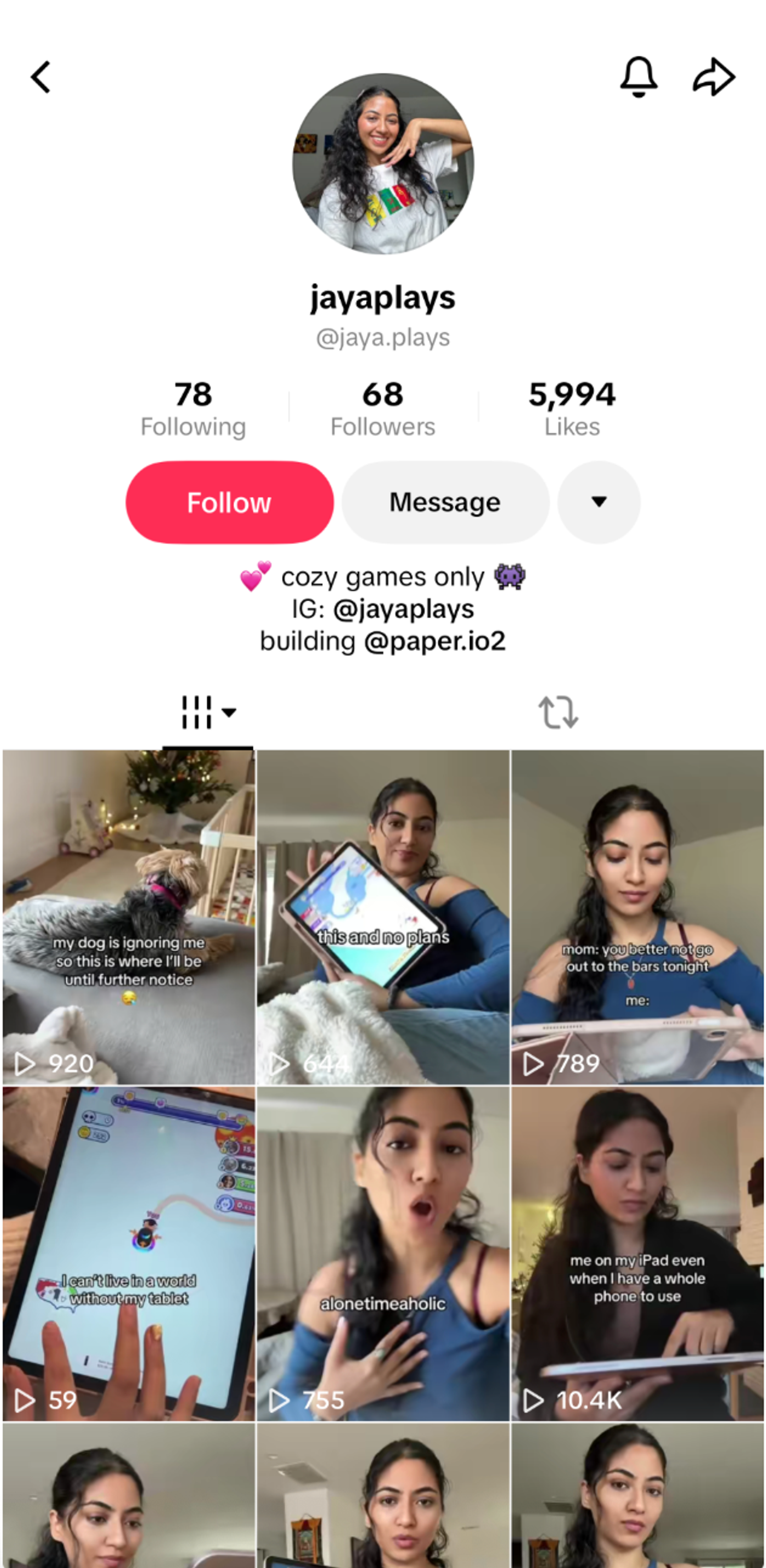
In the above example, Jayaplays created UGC content for @paper.io2, producing gameplay-focused content designed to feel native to gaming audiences rather than overly branded or scripted. This type of creator partnership allows gaming brands to generate short-form content that can live both on the creator’s own channels and as reusable brand-owned media across TikTok, paid ads, and other social placements.
Gaming companies increasingly work with talents like Jayaplays because smaller, community-driven creators often produce content that feels more relatable and trustworthy to players. Instead of relying entirely on large celebrity streamers, brands can scale awareness through high volumes of gameplay clips, reactions, challenges, and tutorials that resonate within specific gaming communities.
Flat Fee Sponsored Posts
Flat-fee sponsorships are the simplest partnership structure. A creator receives a defined payment in exchange for agreed campaign deliverables such as TikTok videos, YouTube integrations, livestream mentions, or sponsored posts.
This structure is easy to budget and works well for testing new creator relationships or running short-term campaigns. However, flat-fee models create weaker performance alignment because the creator is compensated regardless of how the content performs after publishing.
Affiliate Links and Promo Codes
Affiliate partnerships give creators unique tracked links or discount codes that allow brands to directly measure conversions and attributed revenue from each creator relationship.
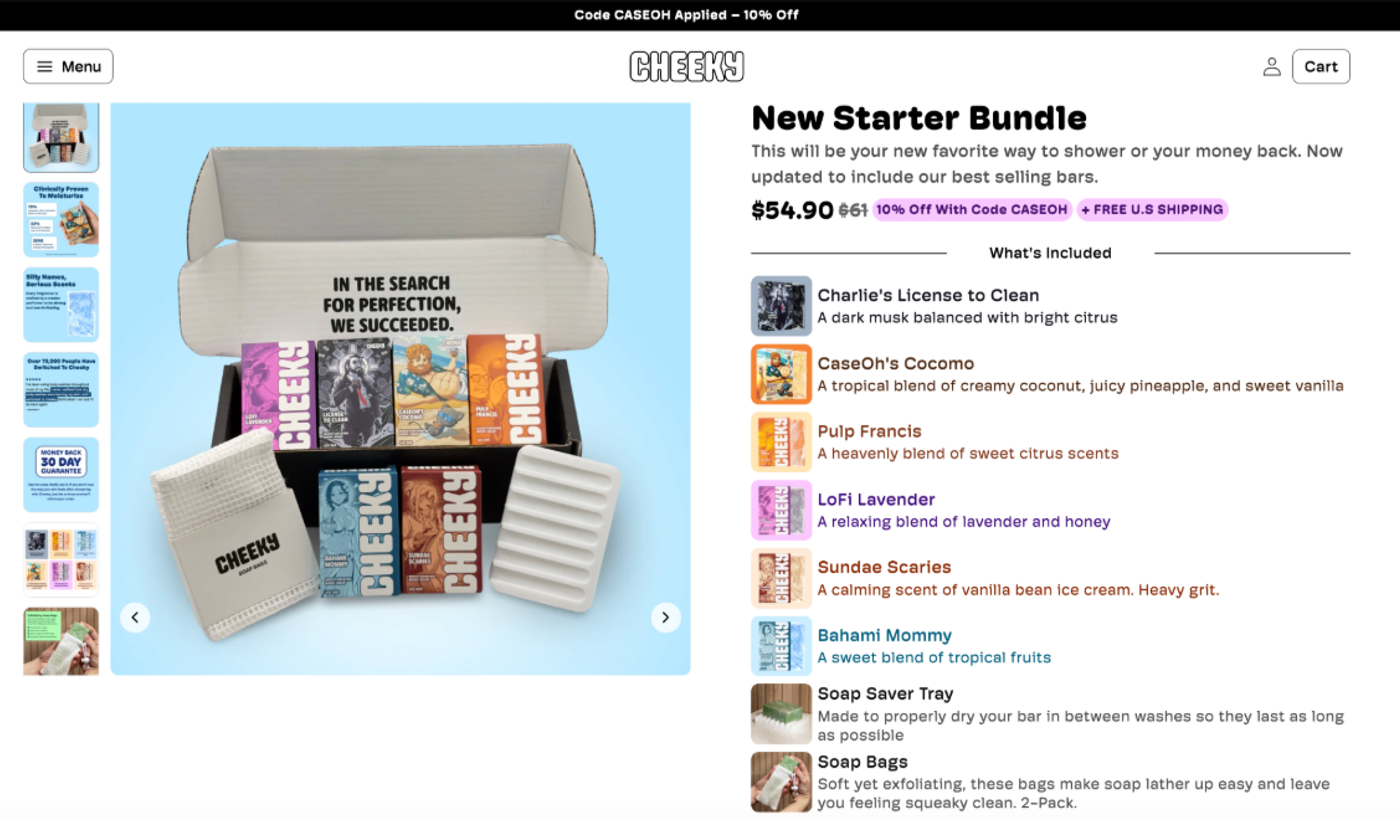
This structure is highly effective in gaming because audiences are already accustomed to creator recommendations tied to games, hardware, software, subscriptions, and creator-focused offers. Promo codes also reduce purchase friction while giving brands cleaner attribution data across campaigns.
For creators, affiliate structures provide upside tied directly to performance. For brands, they create stronger incentive alignment than one-time sponsorship payments alone.
Hybrid Compensation: Base Fee Plus Performance Bonus
Many gaming brands now use hybrid deals that combine an upfront sponsorship fee with additional performance incentives tied to affiliate revenue, installs, code redemptions, or engagement metrics.
This model tends to outperform purely flat-fee campaigns because creators are financially motivated to continue promoting the product naturally throughout streams, social posts, Discord communities, or recurring gameplay content rather than treating the sponsorship as a one-time obligation.
Hybrid compensation structures are especially effective for gaming products that benefit from repeated audience exposure over time.
Long-Term Ambassadorships
Long-term partnerships are often the highest-performing structure in gaming influencer marketing because audiences in this space value familiarity and consistency. A creator who organically mentions a gaming headset, subscription platform, keyboard, or energy drink over several months builds significantly more credibility than a single sponsored upload ever could.
These ambassador relationships also allow creators to integrate products naturally into their gaming routines, setups, streams, and community conversations over time. For gaming brands selling products with longer consideration cycles, repeated creator exposure is often what moves audiences from awareness to purchase.
Want to put this into practice?
SideShift connects you with vetted UGC creators who actually deliver. Start your free trial and post your first job in under 10 minutes.
Long-term partnerships additionally create a more sustainable pipeline of reusable UGC assets since creators continuously generate new content throughout the relationship instead of producing isolated campaign deliverables.
Brief for Content That Fits the Platform, Not the Brand Deck
The most common mistake brands make when working with gaming content creators is writing a brief that describes what the brand wants to communicate rather than what the audience wants to watch.
Gaming audiences do not have low tolerance for promotional content. They have low tolerance for content that feels like it was written by someone who has never played a video game. The brief is where you prevent that.
A brief that produces good gaming creator content includes:
- The audience problem your product solves, not just the product features: “Help your viewers understand how much better their audio setup could be” lands differently than “mention that we have 7.1 surround sound.”
- Platform and format specifics: A Twitch integration, a YouTube dedicated review, and a TikTok product clip are three different pieces of content with different pacing, tone, and audience expectations. Your brief should acknowledge that difference.
- Non-negotiables versus creator discretion: List the two or three things that must be in the content (a promo code read, a product on-screen, an FTC disclosure) and leave everything else to the creator. Creators who are scripted too tightly produce content their audience does not believe.
- Content usage rights: If you’re planning to repurpose their content as paid social ads, that needs to be in the brief and the contract upfront. Rights for paid amplification typically carry a premium, but it’s the most valuable output of a gaming creator partnership beyond the organic post itself.
Measure Performance Against KPIs
Impressions are not a business outcome. Views are not conversions. If your campaign objective was brand awareness, measuring success by promo code redemptions is a mismatch. If your objective was direct purchase conversion, measuring success by total video views is how campaigns that did not perform get labeled as successes.
Match your measurement to your original objective.
For brand awareness campaigns:
- Total reach and impressions across creator posts
- Brand search volume lift during and after campaign window
- Share of voice in gaming community conversations (comment sections, Reddit threads, Discord)
- Earned media extensions (content the community created in response to the campaign)
For product conversion campaigns:
- Promo code redemptions per creator (allows direct creator-to-revenue attribution)
- Affiliate link click-through rate (benchmark is 3 to 8%, with 2 to 10% of clicks converting depending on the product and funnel)
- Revenue attributed per dollar spent per creator (this is your creator-level ROI)
- Return on ad spend on paid amplification of creator content
For UGC campaigns:
- Number of content assets delivered and approved
- Cost per content asset versus brand-produced equivalent
- Ad performance metrics when creator content runs as paid creative (CTR, CPA, and ROAS relative to brand-produced ads)
Connect with Gaming Influencers on SideShift
Want to put this into practice?
SideShift connects you with vetted UGC creators who actually deliver. Start your free trial and post your first job in under 10 minutes.
Finding gaming influencers manually is one of the biggest bottlenecks in creator marketing. Between sourcing creators across multiple platforms, vetting audience quality, negotiating rates, managing deliverables, tracking content usage rights, and handling payments, scaling a gaming influencer campaign quickly becomes operationally expensive.
SideShift collapses that operational overhead into a single platform. With access to over 800,000 Gen Z creators that includes gaming content creators across Twitch, YouTube, and TikTok, brands can recruit talent at scale, filter by niche and platform, manage briefs and contracts inside one workflow, and track performance analytics that show which creators are generating real ROI rather than impressions that do not convert.
For brands that need a high volume of gaming UGC for paid social, or that want to run multi-creator campaigns without hiring an agency, SideShift provides the infrastructure to do it efficiently.
FAQs
1. What types of products can gaming influencers promote effectively?
Gaming creators are commonly used for endemic products like peripherals, headsets, gaming chairs, energy drinks, and games themselves. But the gaming audience's demographics make the category far wider than that. Two in three Americans play video games, and in 2023, 80% of gamers around the world stated they eat food or drink beverages while they play video games, making food and lifestyle brands strong fits for streaming sponsorships. Automotive brands, financial apps, apparel companies, and mobile tools have all run successful gaming creator campaigns by focusing on audience demographics rather than product category. The product needs to fit naturally into the creator's lifestyle, not necessarily their gameplay.
2. How much does it cost to work with gaming influencers?
Nano creators typically work for $100 to $1,000 or product exchanges. Micro gaming creators charge $500 to $5,000 per sponsored post. Mid-tier creators range from $5,000 to $25,000. Top-tier creators command $25,000 to $250,000 or more per campaign. Twitch streamers typically charge $1,000 to $10,000 per hour for live sponsorships depending on average concurrent viewership. UGC-only gaming creators, who produce content for brand use without posting to their own audiences, represent the lowest cost per asset and are the strongest value for brands building a paid social creative library.
3. How do you measure ROI on a gaming influencer campaign?
The most reliable attribution method is a unique promo code per creator, tracking direct redemptions against campaign spend to calculate revenue per creator. Affiliate links provide secondary attribution by tracking traffic and conversion through the brand's funnel. For awareness-focused campaigns, brand search lift, view-to-engagement ratio, and community discussion volume are the most meaningful indicators. Raw impressions and follower counts have no direct relationship to business outcomes. Brands that measure by creator, by platform, and by content format generate the optimization data needed to improve campaign performance over time.
4. What is the difference between a Twitch sponsorship and a YouTube gaming integration?
A Twitch sponsorship is live, meaning the creator integrates your brand into a real-time stream, reads a live ad, shows the product on screen, and responds to viewer questions about it in the moment. YouTube integrations are pre-recorded, allowing more controlled messaging, longer product demonstration, and permanent SEO value since the content lives on the platform indefinitely. Twitch generates faster, more direct conversion through promo codes during live sessions. YouTube works better for products with more complex value propositions that benefit from demonstration and for campaigns where long-term content value matters.
Want to put this into practice?
SideShift connects you with vetted UGC creators who actually deliver. Start your free trial and post your first job in under 10 minutes.
5. How many gaming influencers should you work with at once?
More than most brands start with. A single gaming creator reaches one audience segment within one game community on one platform. Gaming audiences are fragmented by genre, platform, and creator ecosystem (for instance, a Fortnite audience and a Minecraft audience overlap very little). Running one creator is a test, not a campaign. Brands generating consistent ROI from gaming influencer marketing run multi-creator programs simultaneously: Twitch micro-streamers for live conversion, YouTube mid-tier creators for long-form review content, and TikTok creators for short-form discovery and UGC production. Each tier serves a different function in the purchase funnel, and each generates optimization data the others cannot.