
What Is Branded Content? Examples, Strategy & Costs in 2026
Branded content is paid marketing that blends into content feeds, often made by UGC creators to build trust. This guide covers examples, strategy, and costs.
Table of Contents
Branded content is content created by a social media content creator or media publisher that features or promotes a brand in an authentic way without feeling like a traditional ad. Unlike standard ads, branded content focuses on storytelling, entertainment, or value, while still highlighting a product, service, or brand message.
In 2026, branded content is the main marketing tactic through which brands build trust with audiences who are tired of interruptive advertising. Consumers now expect brand collaborations to feel real, relatable, and aligned with the creator’s style.
What Counts as Branded Content?
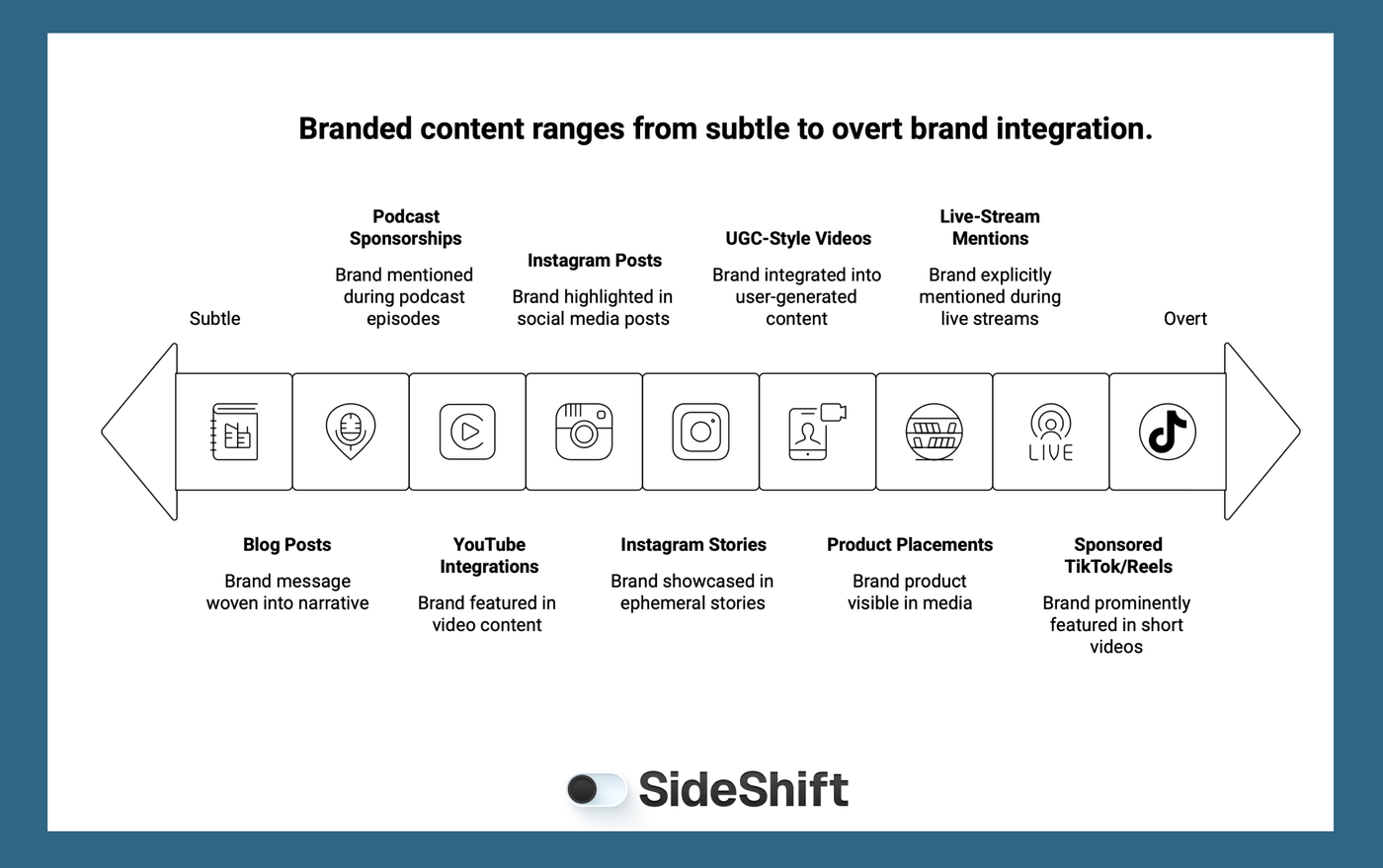
Branded content can include:
- Sponsored TikTok/Reels
- YouTube integrations
- Instagram posts & stories
- Podcast sponsorships
- Blog posts or newsletters
- Product placements
- UGC-style videos
- Live-stream brand mentions
Branded Content vs. Influencer Marketing (What’s the Difference?)
Branded content and influencer marketing often overlap, but they’re not the same.
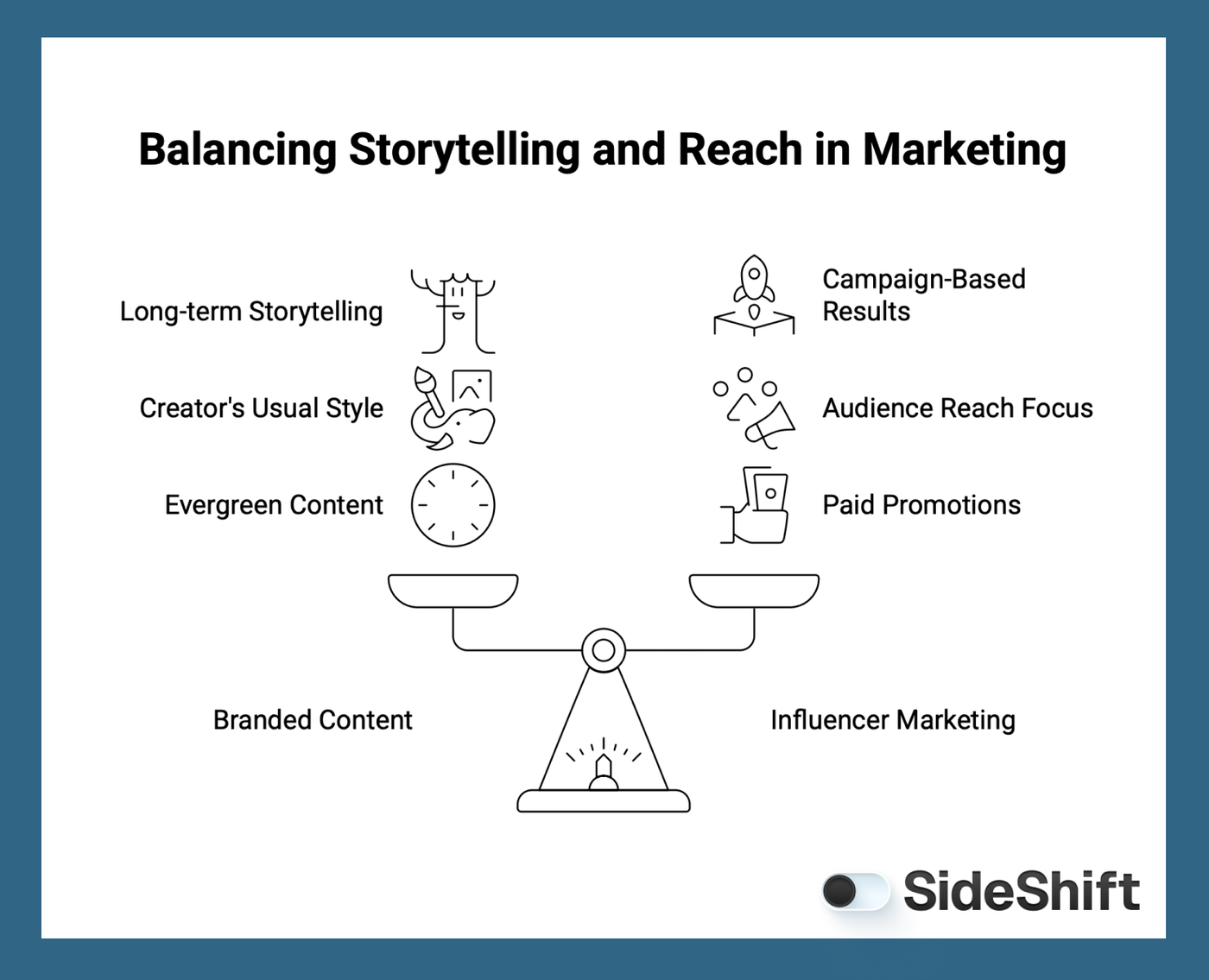
Branded content is all about storytelling and creating content that feels natural, authentic, and aligned with the creator’s usual style. It can be produced by creators, publishers, or brands, and is often designed to be repurposed across platforms because it’s built like evergreen content.
Influencer marketing, on the other hand, is more focused on leveraging a creator’s audience reach. It’s usually campaign-based, performance-driven, and often involves paid promotions or gifting.
Branded content prioritizes long-term storytelling and brand fit, while influencer marketing emphasizes reach, awareness, and direct campaign results. In 2026, the line between these two continues to blur, especially as brands prioritize authenticity over reach on all marketing endeavors.
Branded Content Examples for 2026
Here are real-world branded content formats that are trending in 2026:
1. UGC-Style Reviews
Creators film realistic product demos or reviews with minimal editing, like they’re showing a friend.
Example: A creator unboxes a new skincare product in their bedroom, filming in natural light. They show the texture on their fingertips, apply it to one side of their face, and then share a quick “first impressions” reaction. The final shot is a simple before/after selfie with no filters.
2. “Day in the Life” Brand Integrations
Creators weave a brand naturally into their daily routine instead of forcing a sponsored plug.
Example: A fitness creator films a morning vlog: they wake up, make coffee, stretch, and head to the gym. During the workout, they pause to mix a brand’s protein powder, and the clip shows them drinking it mid-set. The brand becomes part of the moment like a natural extension of their day, not an ad.
3. Mini-Tutorials or How-Tos
Value-first content that includes a brand product or service without making it feel like a sales pitch.
Example: A makeup creator does a “5-minute morning routine” video. They use a brand’s foundation, showing close-ups of the product’s texture and coverage. They add quick tips (“use this sponge to avoid streaks”) and end with a side-by-side comparison, proving the product actually works.
4. Trend-Based Brand Content
Creators jump on trending formats and sounds - but the brand is the twist in the story.
Example: A home improvement creator uses a trending audio clip that’s popular in the “transformation” niche. Mid-video, they switch from a messy room to a clean space using a brand’s organizing products.
Want to put this into practice?
SideShift connects you with vetted UGC creators who actually deliver. Start your free trial and post your first job in under 10 minutes.
5. Story-Driven Content
Creators build a narrative around the brand, making it the “solution” to a real problem they are actively experiencing.
Example: A creator tells a short story about how they used to struggle with dry skin and tried everything. They share the emotional moment of feeling confident again after using the brand’s product. The video ends with a heartfelt “here’s what finally worked” moment, making the brand feel like a real-life turning point.
Why Branded Content Works in 2026
Audiences are ignoring ads, but they trust people. Branded content works because it feels authentic, native to the platform, entertaining, and valuable. It’s the kind of content people actually want to watch and share, not scroll past. Because it’s created by real people, it builds real trust, and that trust translates into stronger brand loyalty and higher conversion rates. That’s why brands are shifting budgets away from traditional ads and toward creator-led branded content.
How to Build a Branded Content Strategy
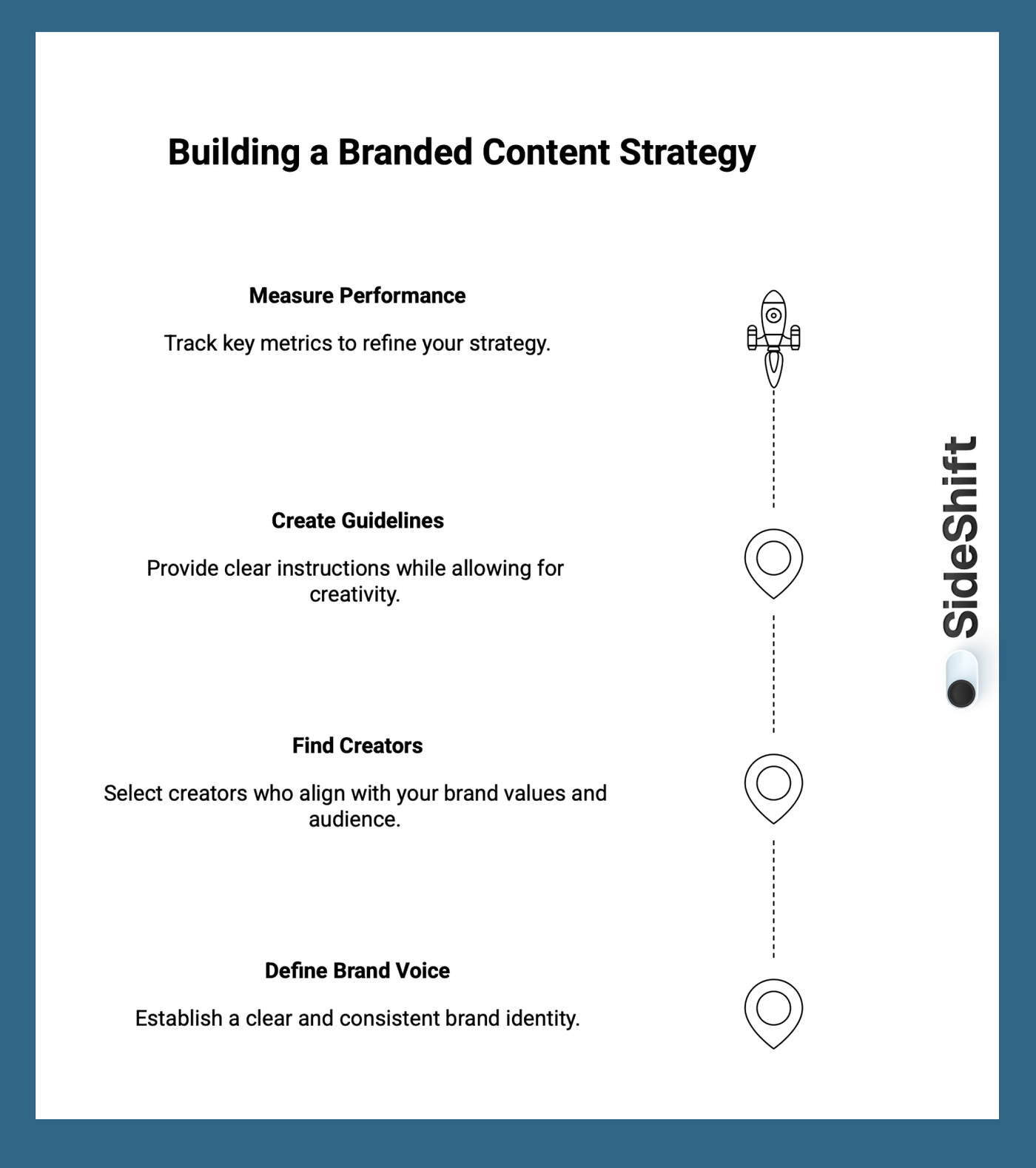
Step 1: Define Your Brand Voice
Before you start creating content, you need to be clear on who your brand is and what it stands for. Your brand voice should guide everything from the tone of your messaging to the style of visuals you use. This clarity helps creators produce content that feels authentic and aligned with your values. When your voice is consistent, audiences begin to recognize and trust your brand across platforms.
Step 2: Find Creators Who Fit
Don’t choose creators based solely on follower count or vanity metrics. Instead, look for creators whose audience, style, and values match your brand and niche. The best creator partnerships feel natural and seamless, which makes the content more believable. When creators truly align with your brand, their audience is more likely to engage and convert.
Step 3: Create Clear Campaign Guidelines
Provide a clear brief that outlines the campaign goals, key messaging, and any mandatory requirements. But be cautious to avoid over-scripted instructions. Branded content performs best when creators can add their own voice and creativity. Give them room to adapt the concept to their style while still meeting your objectives. This balance keeps the content authentic while staying on-brand.
Step 4: Measure Performance
Track metrics that show real engagement and impact, not just surface-level likes. Watch time, saves, comments, link clicks, and conversions are the strongest indicators of whether your content is resonating. These metrics help you understand what types of content work and why. Over time, this data allows you to refine your strategy and create higher-performing branded content.
How Much Does Branded Content Cost in 2026?
Branded content pricing varies widely depending on:
- creator audience size
- engagement rate
- platform
- content type
- usage rights
- exclusivity
Here’s an estimated breakdown:
TikTok Videos / Instagram Reels
- Micro creators (10k - 50k): $200 - $800 per post
- Mid-tier creators (50k - 250k): $800 - $2,500 per post
Want to put this into practice?
SideShift connects you with vetted UGC creators who actually deliver. Start your free trial and post your first job in under 10 minutes.
- Macro creators (250k - 1M): $2,500 - $10,000+ per post
- Mega creators (1M+): $10,000 - $100,000+ per post
Instagram Stories
- Micro: $50 - $300 per story
- Mid-tier: $300 - $1,000
- Macro: $1,000 - $5,000
YouTube Videos
- Micro: $500 - $2,000 per integration
- Mid-tier: $2,000 - $10,000
- Macro: $10,000 - $50,000+
TikTok UGC Campaigns
- $100 - $300 per video for micro creators
- $300 - $1,000 per video for mid-tier creators
- $1,000+ per video for macro creators
Note: These rates can vary depending on usage rights, exclusivity, and deliverables. Brands also use different compensation structures for branded content, such as gifting, ambassador commissions, milestone incentives, and more.
How SideShift Helps Brands Create Branded Content (Fast)
SideShift is a UGC creator marketplace built to connect brands with creators who can produce authentic, platform-native content at scale. Instead of spending weeks searching for the right creators or managing messy workflows, SideShift matches brands with creators based on niche, style, and audience fit, so the content feels natural and aligned from the start.
SideShift’s platform also streamlines approvals and payments, making collaboration faster and more efficient on both ends.
Ultimately, SideShift helps brands scale content production without overloading internal teams, while ensuring growing creators get paid for work that performs.
Start your free trial and scale content with SideShift today.
FAQs
1. What is branded content?
Branded content is creator-led content that features a brand in an authentic, storytelling way. It’s designed to feel natural and platform-native rather than a traditional ad placement.
2. How is branded content different from influencer marketing?
Branded content prioritizes storytelling, brand fit, and long-term value, while influencer marketing is often more campaign-driven and focused on reach, performance, and direct promotion.
3. Do brands need to pay creators for branded content?
Not always. Compensation can include gifting, commissions, or milestone incentives. However, paid content is the most common structure for scalable branded content programs.
4. What makes branded content effective in 2026?
The most effective branded content is authentic, platform-native, and provides value or entertainment. It should feel like something a creator would share naturally, not a scripted ad.
5. How can businesses scale branded content without hiring more staff?
Platforms like SideShift connect brands with creators who can produce branded content at scale, handling approvals, licensing, and payments so internal teams don’t get overloaded.