


UGC for B2B & SaaS: How Software Companies Use Creator Content to Drive Leads
B2B and SaaS companies use UGC to generate leads through authentic case studies, customer testimonials, and creator campaigns that drive conversions at scale.
Table of Contents
In B2B, trust is everything. Prospective buyers aren’t influenced by flashy ads. They want authentic stories, real experiences, and proof that a solution works.
That’s why B2B and SaaS companies are increasingly leveraging user-generated content (UGC) creators and creator-driven strategies to capture attention, build credibility, and generate leads.
UGC isn’t only for consumer brands. It delivers measurable results for software companies too.
This guide breaks down why UGC works in B2B, how to structure campaigns, measure performance, and scale results efficiently.
Why UGC Works for B2B & SaaS
UGC is often associated with consumer brands, but it’s increasingly powerful in B2B and SaaS contexts because:
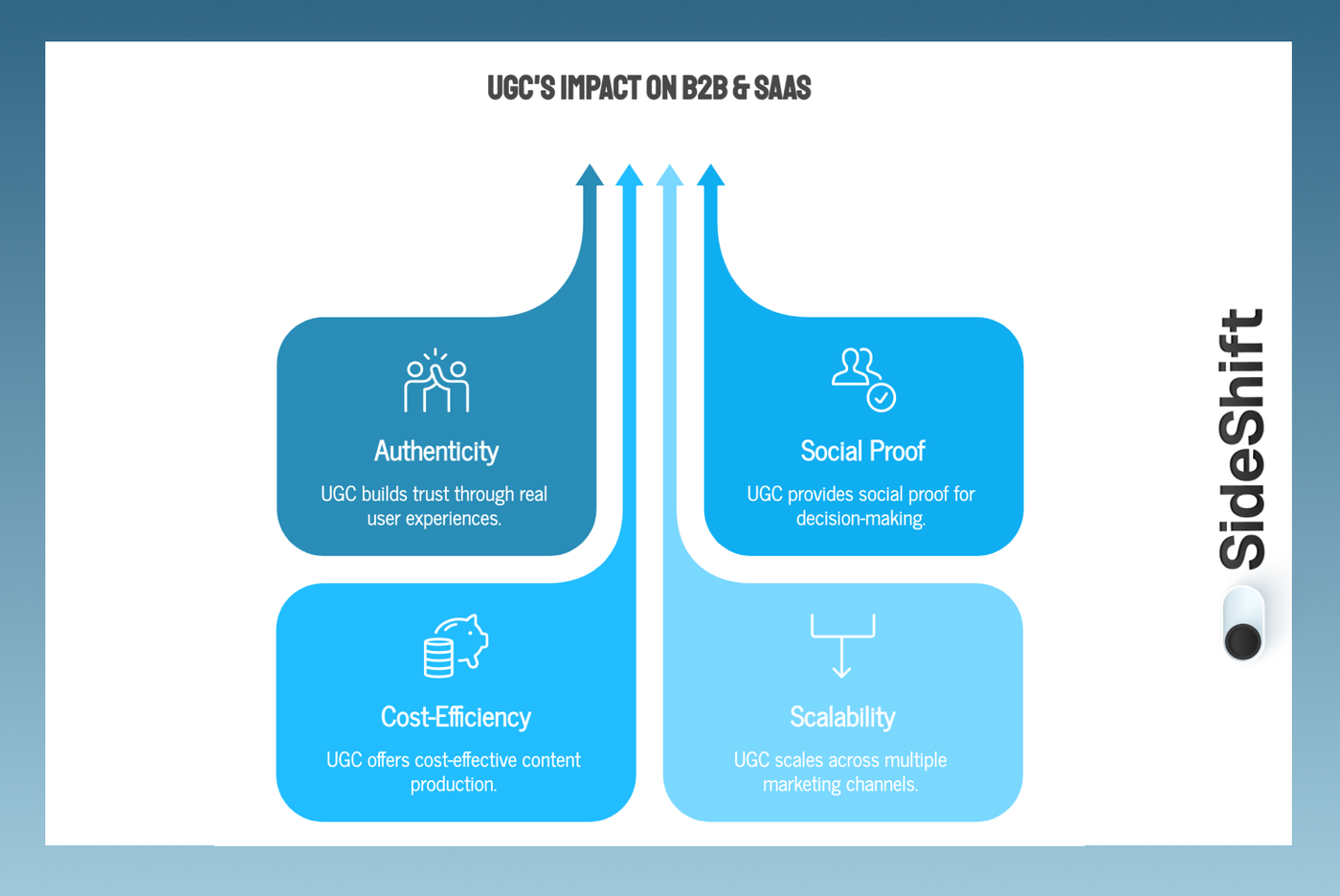
- Authenticity builds trust: Prospects are skeptical of traditional marketing. Seeing real users share their experiences creates credibility. Nearly 70% of consumers avoid traditional advertising entirely, preferring instead to listen to people they can relate to or experts they trust.
- Social proof influences decision-making: Testimonials, case studies, and demo videos produced by creators act as mini-case studies and build social proof that can sway decision-makers.
- Cost-efficient content production: High-volume UGC allows brands to generate many assets without large creative teams or expensive studio shoots.
- Scalable across channels: Videos, blog quotes, and social clips can be repurposed across LinkedIn, email campaigns, webinars, and ads.
By turning creators into brand advocates, SaaS companies can humanize their product while increasing lead generation opportunities.
How UGC Drives Leads and Builds Trust in B2B & SaaS
Unlike flashy ads or overly polished marketing materials, UGC shows real users sharing real experiences. This helps prospective buyers trust your brand, understand the product’s value, and feel confident in their decision-making process. When leveraged correctly, UGC not only boosts engagement but also drives lead generation by converting attention into tangible actions such as trial sign-ups, demo requests, and webinar registrations.
Authenticity Builds Credibility
B2B buyers are skeptical of traditional advertising and overly polished marketing campaigns. UGC provides social proof that your product works in real-world scenarios.
Customer testimonials, short demos, and problem/solution videos act as mini case studies, showing prospects that people like them are achieving measurable results.
By humanizing your brand, UGC establishes trust quickly, which is essential when targeting decision-makers who need confidence before committing to a SaaS solution.
Driving Leads Through Real Stories
When prospects see relatable users solving challenges with your software, they’re more likely to take action. For example, a creator sharing a workflow improvement or ROI achieved using your platform can inspire viewers to sign up for a free trial or request a demo.
By strategically distributing these videos across social media, companies can turn authentic stories into a predictable lead-generation engine.
Scalable and Cost-Effective Content
Creating high-quality B2B content can be expensive and time-consuming. UGC allows companies to generate large volumes of content without heavy production costs or internal creative teams.
By engaging multiple creators simultaneously, brands can test messaging, format, and length, and then double down on high-performing content. This scalability ensures that you always have fresh, relevant content for campaigns while optimizing cost-per-lead and overall ROI.
Want to put this into practice?
SideShift connects you with vetted UGC creators who actually deliver. Start your free trial and post your first job in under 10 minutes.
Structuring UGC Campaigns for Lead Generation
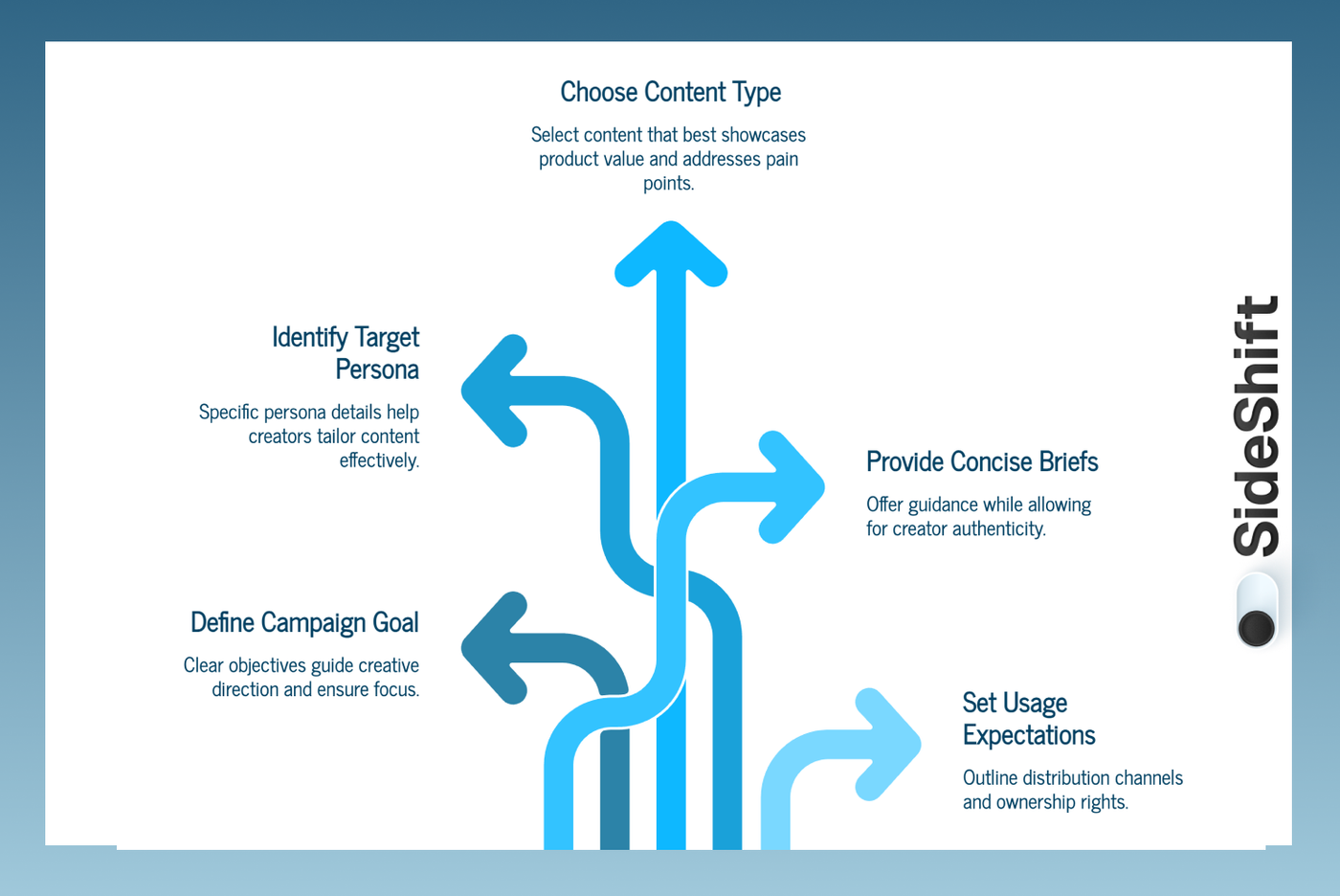
Creating UGC for B2B requires a strategic approach:
1. Define the campaign goal: Is the focus on demo views, webinar sign-ups, trial downloads, or lead generation? Clear objectives inform creative direction.
2. Identify your target persona: Include industry, role, company size, and pain points. The more specific, the easier it is for creators to tailor content.
3. Choose the right content type: Options include:
- Quick product demos showing specific features
- Case-study style testimonials from real users
- Problem/solution scenarios that illustrate ROI
- Comparison videos highlighting advantages over competitors
4. Provide concise briefs: Offer guidance on messaging, tone, and format while leaving room for creator interpretation. Authenticity is critical in B2B content.
5. Set usage and distribution expectations: Outline where content will be shared (LinkedIn, email, website, ads) and establish ownership/repurposing rights.
High-volume UGC works exceptionally well in SaaS when brands deploy multiple creators simultaneously, testing formats, messaging, and length to see what resonates with decision-makers.
Measuring Performance and Optimizing UGC
Tracking results is essential to scaling UGC campaigns in B2B:
- Engagement Metrics: Views, likes, shares, and comments indicate resonance.
- Lead Metrics: Webinar sign-ups, trial downloads, demo requests, and MQLs track actual conversions.
- Content ROI: Compare cost-per-video versus generated leads or pipeline impact.
- Optimization Tips:
- Test hooks and CTA placements across creators
- Monitor trends in format (vertical vs horizontal, short vs long clips)
- Prioritize creators whose content drives measurable conversions
At SideShift, our analytics dashboard helps brands compare performance in real time, enabling quick iteration and maximizing ROI.
Scaling UGC in B2B & SaaS with SideShift
User-generated content (UGC) is a proven driver of credibility, engagement, and leads. But scaling UGC in the B2B and SaaS space can feel overwhelming. You need to recruit creators who understand complex products, manage contracts, ensure compliance, and track results, all while maintaining high-quality content that resonates with decision-makers.
With SideShift, you can post campaigns in minutes, specify the type of content you need, and reach thousands of creators who understand B2B marketing and SaaS products. Whether it’s explainer videos, customer testimonials, or product demos, SideShift helps you generate content that speaks to the buyer’s journey.
SideShift makes it easy to manage high-volume campaigns without the administrative headaches of contracts, payments, or tracking performance manually.
Start turning authentic creator content into a predictable pipeline of leads.
Join SideShift for free today.
FAQs
1. What types of UGC are most effective for B2B & SaaS lead generation?
Short-form demos, testimonial videos, problem/solution scenarios, and “how we use it” clips resonate most with prospects.
2. How do software companies find and incentivize creators for UGC?
Brands can recruit professional users, industry experts, or micro-influencers familiar with the product. Compensation can include flat fees, bonuses for leads generated, or access to premium features.
3. Can UGC really convert enterprise leads or just small businesses?
UGC can influence buyers at all levels. Enterprise buyers rely on social proof and peer recommendations, making authentic creator content effective even for large deals.
Want to put this into practice?
SideShift connects you with vetted UGC creators who actually deliver. Start your free trial and post your first job in under 10 minutes.
4. How should UGC be integrated into the SaaS marketing funnel?
Use UGC at multiple stages: awareness (LinkedIn posts, social ads), consideration (demo clips, webinars), and decision (testimonials, case studies).
5. What metrics indicate a successful B2B UGC campaign?
Track engagement (views, shares, comments), lead generation (MQLs, trial sign-ups), and pipeline contribution. ROI per content dollar helps determine campaign scalability.