


UGC Content Marketing Strategy: How to Build a System That Converts
A UGC content marketing system that converts, uses creator content at scale, integrates paid and organic campaigns, and tracks performance for ROI.

Table of Contents
For modern marketers, UGC content marketing has become a scalable, performance-driven engine that drives engagement, conversions, and trust without inflating creative costs.
This guide walks through how to build a UGC content marketing system that converts, from setting goals to scaling campaigns efficiently.
1. Define Your UGC Marketing Goals
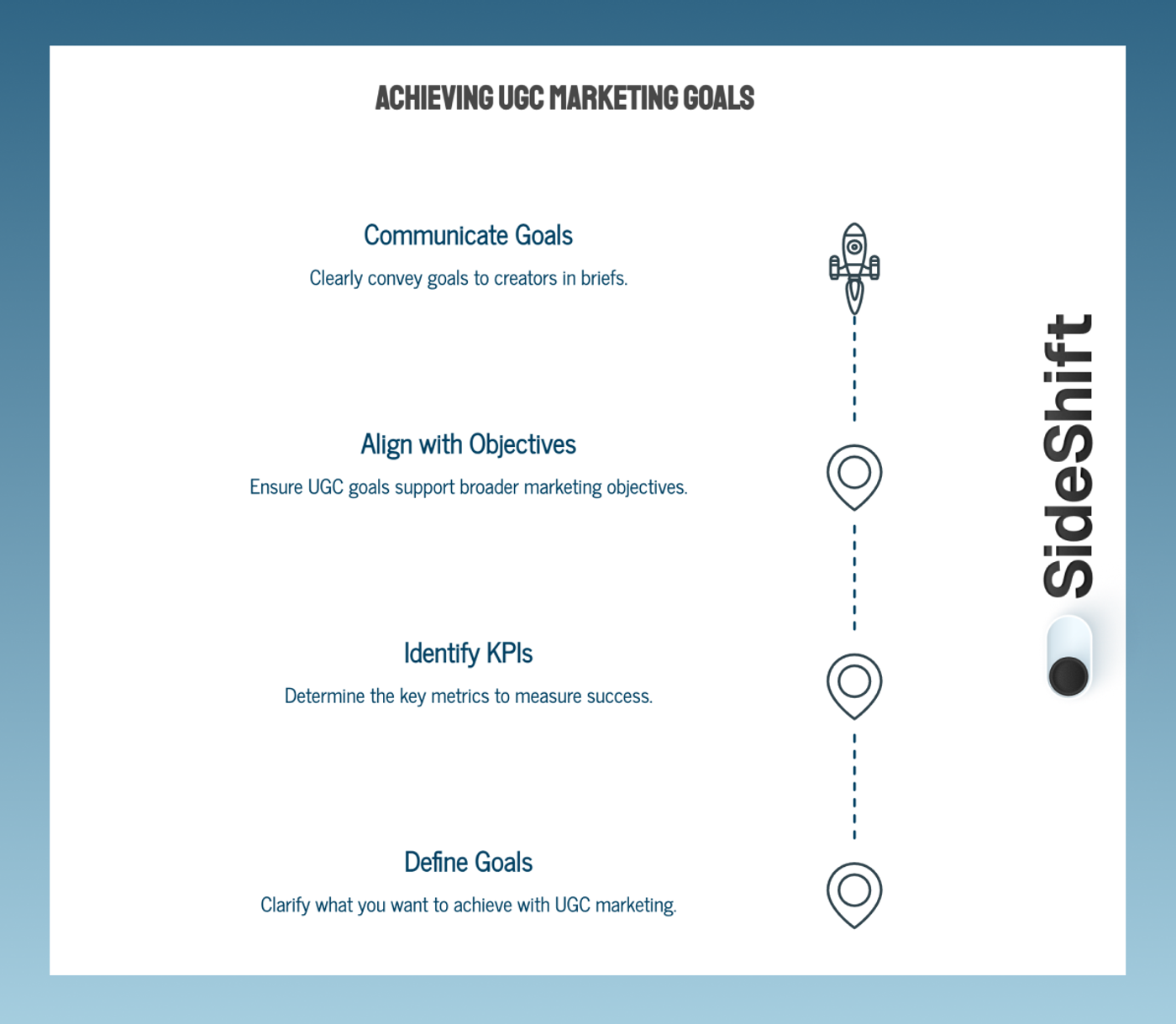
The first step in building a UGC system is clarifying what you want to achieve. Are you aiming to increase social engagement, generate leads, boost trial sign-ups, or create a library of content assets for cross-channel campaigns? Without clear goals, creators may produce content that looks good but doesn’t move the needle. Establishing objectives upfront ensures everyone knows what success looks like and allows your team to measure ROI effectively.
Key points to consider:
- Identify your primary KPI (e.g., engagement, leads, conversions).
- Align UGC goals with broader marketing objectives.
- Communicate goals clearly to creators in your briefs.
2. Identify Your Target Audience and Creators
UGC only works when it speaks directly to the right audience. Start by mapping your buyer personas, including demographic details, professional roles, pain points, and content consumption habits. Then, select creators who naturally align with these personas. These may not be traditional influencers, but micro or mid-tier creators often deliver higher authenticity and engagement.
Key points to consider:
- Outline audience segments with specific details (age, role, interests).
- Choose creators who reflect your audience’s values and language.
- Guide tone and messaging while leaving room for creative expression.
SideShift makes it easy to post campaign briefs and connect with over 800,000 creators across different platforms and niches.
3. Build a UGC Content Pipeline
A sustainable UGC system relies on consistent content production. Instead of sporadic campaigns, create a pipeline of content that flows continuously. This allows you to test multiple creative approaches, formats, and messaging angles simultaneously. By keeping the pipeline active, you build a library of assets that can be repurposed for social media, ads, email, and website content.
Key points to consider:
- Maintain a rolling recruitment of creators.
- Schedule ongoing submissions and approvals to prevent gaps.
- Include a mix of paid and organic UGC for authenticity and reach.
4. Create a Framework for UGC Distribution
Distribution ensures that UGC doesn’t just sit in a folder but drives measurable outcomes. Your framework should define which channels receive content, how often, and in what format. Cross-channel repurposing maximizes ROI and ensures your message reaches your audience in multiple touchpoints.
Key points to consider:
- Map content to social, paid ads, email, and website placement.
- Establish clear usage rights and ownership for creators.
- Develop a cadence for content rollout and repurposing.
5. Develop a Testing and Optimization System
High-volume UGC allows brands to experiment quickly. By testing hooks, messaging, formats, and CTAs across creators, you can identify which combinations resonate most with your audience. Continuous optimization ensures campaigns improve over time and helps reduce wasted spend on low-performing content.
Key points to consider:
- Track engagement, conversion, and lead metrics for each content piece.
- Iterate briefs based on performance insights.
- Encourage creators to test new approaches while maintaining brand alignment.
Want to put this into practice?
SideShift connects you with vetted UGC creators who actually deliver. Start your free trial and post your first job in under 10 minutes.
6. Automate and Streamline the Process
Scaling UGC requires smart automation. Manual coordination of contracts, payments, and approvals can create bottlenecks, slowing down your system. UGC Platforms like SideShift streamline these processes, enabling your team to focus on strategy and creative guidance rather than administrative tasks.
Key points to consider:
- Automate contracts, payment, and reporting workflows.
- Use dashboards to manage multiple creators simultaneously.
- Set up automated reminders and approval systems to maintain consistency.
7. Measuring Success and Scaling Campaigns
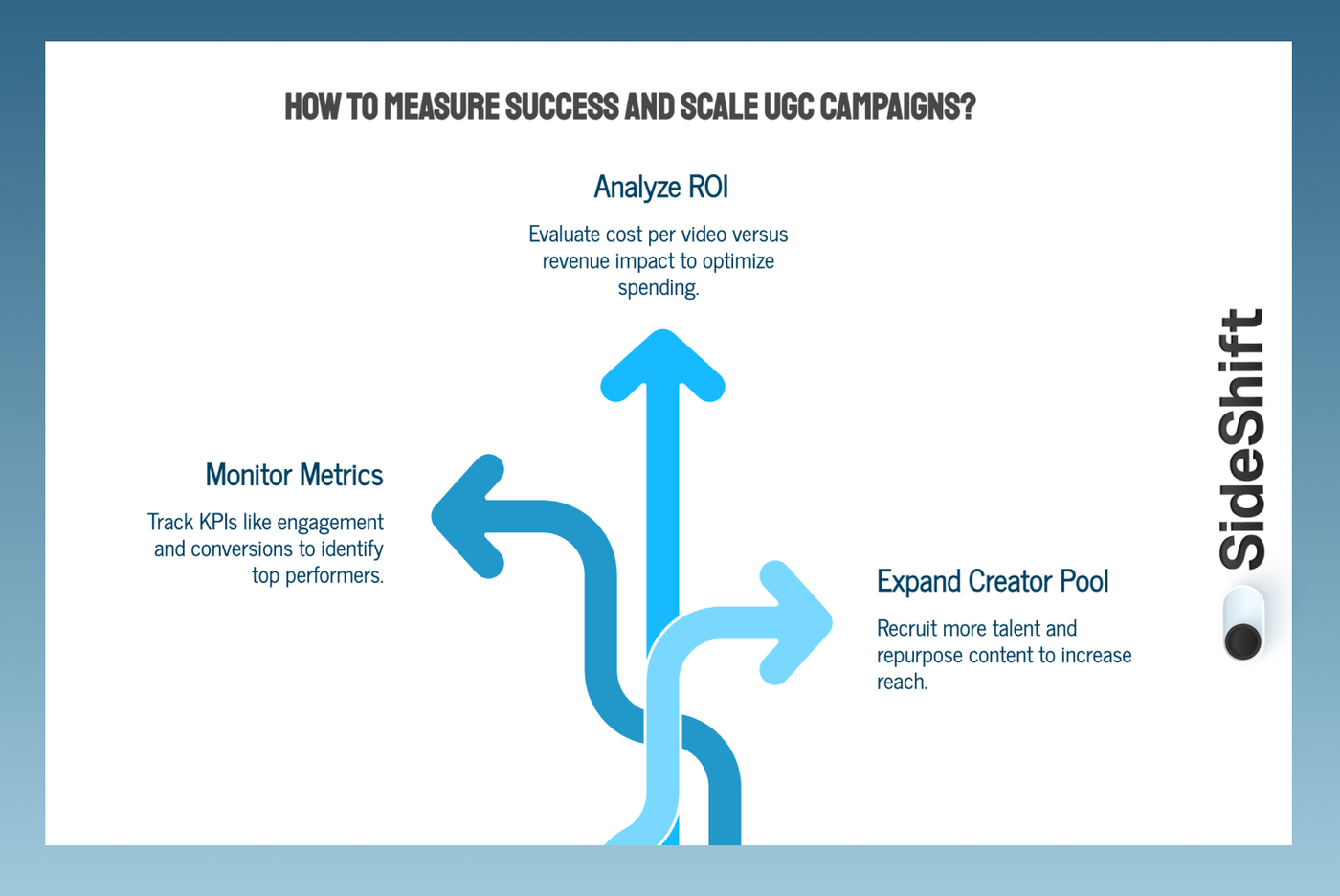
Measurement is critical to proving UGC’s value. Track KPIs aligned with your goals, including engagement, conversions, and ROI. Once you identify top-performing creators and formats, scale campaigns by recruiting more talent and increasing production volume. The ability to scale efficiently transforms UGC from a one-off experiment into a repeatable, high-performing system.
Key points to consider:
- Monitor metrics for individual creators and content types.
- Analyze cost per video versus revenue impact.
- Expand the creator pool and repurpose high-performing content across channels.
Build a UGC System with SideShift
Building a successful UGC content marketing strategy requires more than a few one-off creator collaborations. To consistently generate results, brands need a repeatable system that produces high-quality content, tests new ideas, and identifies what actually converts. That means recruiting the right creators, producing content at scale, and continuously analyzing performance to refine your strategy.
SideShift helps brands turn UGC into a structured content engine. With access to a large network of creators, companies can produce a steady stream of authentic videos, testimonials, and product-focused content that aligns with their marketing goals. Instead of relying on occasional campaigns, brands can build an ongoing pipeline of creator content that fuels social media, paid ads, landing pages, and email marketing.
The platform also simplifies the operational side of scaling UGC. Brands can recruit creators, manage collaborations, handle payments, and monitor content performance all in one place. With real-time analytics, teams can quickly identify which content resonates most with audiences and double down on the formats and creators that drive conversions.
Start building a scalable UGC content system with SideShift today and turn authentic creator content into a consistent, high-performing marketing channel.
Join SideShift for free and start creating content that converts.
FAQs
1. What types of UGC perform best in content marketing campaigns?
Short-form tutorials, testimonial videos, demos, and trend-aligned social clips consistently drive engagement and conversions.
2. How can I measure the ROI of UGC content marketing?
Track engagement, conversions, lead generation, and pipeline contribution. Compare these against production and creator costs for ROI insights.
3. Should UGC be organic, paid, or a mix of both?
A hybrid approach works best: organic UGC builds authenticity, while paid campaigns amplify reach and conversions.
4. How do I keep UGC campaigns consistent at scale?
Leverage high-volume platforms like SideShift, automate workflows, provide clear creative briefs, and maintain a rotating pool of active creators.
5. Can small teams successfully implement a UGC system?
Absolutely. With SideShift, even small marketing teams can manage hundreds of creators, automate payments, and track performance efficiently.