
TikTok vs Instagram: Which Platform Drives Better Marketing Results?
Compare Instagram and TikTok to see which platform delivers better marketing results based on audience, engagement, ad formats, and content performance.
Table of Contents
Coke or Pepsi? Apple or Android? TikTok or Instagram?
Choosing between TikTok and Instagram for your next marketing campaign can feel like picking between two heavyweight champs. Both platforms boast massive audiences and high engagement potential, but the way users interact with content, creators, and ads is very different.
Understanding these differences and what they mean for your goals can help you craft smarter, more effective social strategies.
In this comparison, we break down how TikTok and Instagram stack up across audience behavior, engagement, content formats, advertising options, and overall marketing performance.
Similarities Between TikTok and Instagram
TikTok and Instagram are two of the most influential social media platforms today, shaping trends, content consumption, and digital marketing strategies. Both platforms attract massive global audiences and have become central to how brands connect with consumers through visual storytelling and influencer marketing partnerships.
Both TikTok and Instagram:
- are major social platforms used by billions worldwide.
- support short‑form video, influencer collaborations, and paid promotion.
- offer marketing and advertising tools for brands to reach new audiences.
- prioritize visual content over text, making video creativity essential for success.
However, how each platform delivers content and how audiences interact with it differ in ways that can impact marketing results.
Key Differences Between TikTok and Instagram
User Demographics: TikTok vs Instagram
Age and Gender Breakdown
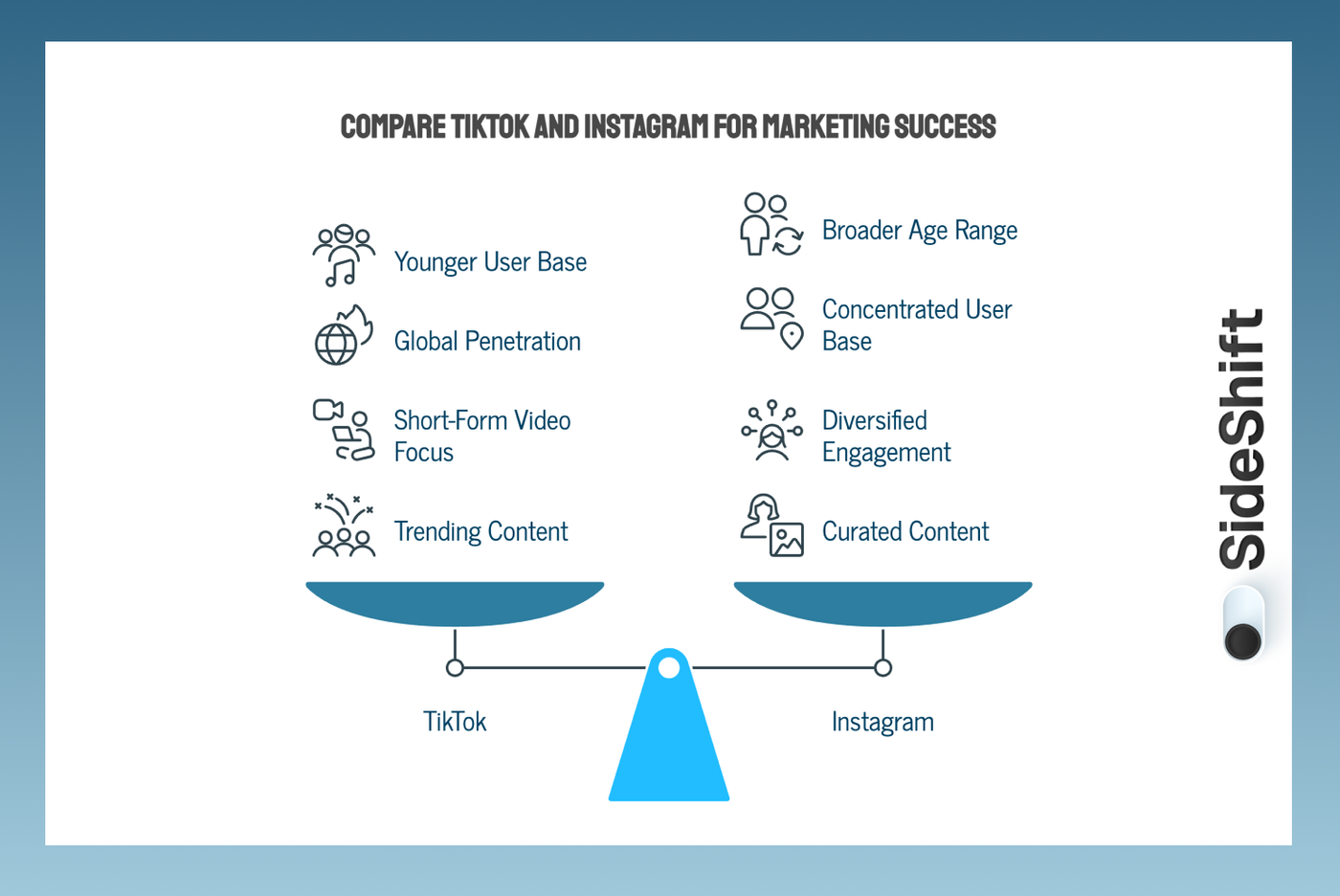
TikTok tends to skew younger, with a large portion of users aged 16-24, while Instagram attracts a broader age range, including strong engagement from users aged 18-34. Gender distribution is relatively balanced on both platforms, though TikTok slightly leans toward female users, whereas Instagram maintains near parity.
Geographic Distribution
TikTok has strong global penetration, with particularly high usage in the U.S., India (before the ban), and Southeast Asia. Instagram is widely adopted worldwide as well, but its user base is especially concentrated in North America, Europe, and parts of Latin America.
Active Usage Patterns
TikTok users spend more time on the app per session and engage heavily with short-form video content. Instagram sees high activity too, but engagement is more diversified across feed posts, Stories, Reels, and direct messaging.
Audience Interests and Niches
TikTok thrives on trending content, viral challenges, and niche communities built around hashtags. Instagram audiences are highly visual, favoring curated content, lifestyle posts, and brand storytelling. Both platforms support influencer marketing, but TikTok’s algorithm-driven discovery often accelerates virality, whereas Instagram relies more on follower networks and paid promotion.
Comparing Features on TikTok vs Instagram
Beyond audience and demographics, the features and creative tools of each platform play a major role in shaping marketing strategies. TikTok and Instagram offer distinct approaches to content creation, advertising, and discoverability, which directly affect how brands engage with users. Understanding these differences helps marketers tailor campaigns to each platform’s strengths, whether it’s TikTok’s viral short-form videos or Instagram’s polished visual storytelling.
Content Formats and Creative Tools
- TikTok: Focused on short‑form video optimized for engagement and virality, with features like sound integration, trends, and native editing tools.
- Instagram: Offers a range of formats like feed posts, Stories, Reels, carousels, and in‑app shopping with higher emphasis on polished visual aesthetics.
Want to put this into practice?
SideShift connects you with vetted UGC creators who actually deliver. Start your free trial and post your first job in under 10 minutes.
These format differences shape creative strategy. TikTok tends to reward raw, authentic content, whereas Instagram often favors more refined visuals.
Advertising and Paid Promotion Options
Both platforms support paid advertising, but the style and context differ:
- TikTok Ads: Prioritize full‑screen video experiences that blend with organic content and encourage trend participation.
- Instagram Ads: Include photo ads, Stories ads, Reels ads, and shopping integrations, often working well for product discovery and conversion‑driven campaigns.
According to Forbes, the biggest difference between TikTok and Instagram is advertising copy. Instagram ads perform well with polished visuals and longer, catchy copy, allowing brands to use images and videos to drive conversions. In contrast, TikTok favors short, mobile-optimized videos that feel native or user-generated, since audiences are less responsive to traditional marketing formats or text-heavy content.
Discoverability and Algorithm Differences
TikTok’s algorithm pushes content based on interest signals rather than follower relationships, helping smaller accounts achieve viral reach faster. Instagram’s algorithm blends follow networks, engagement, and paid placements, which can sometimes limit organic exposure.
Creator and UGC Opportunities
- TikTok: Creator-Driven Discovery
TikTok’s ecosystem heavily favors creators, making it easy for individuals and brands to reach new audiences through authentic, trend-driven content. User-generated content (UGC) thrives because the platform’s algorithm prioritizes engagement and relevance over follower count. Brands can collaborate with TikTok creators for sponsored posts, challenges, or duets, often seeing rapid organic reach and high engagement. As your TikTok presence grows, earning the verified badge can add credibility to brand or creator accounts — see our guide on how to get verified on TikTok.
- Instagram: Influencer and Branded Content
Instagram offers robust opportunities for influencer partnerships and branded content, particularly through Reels, Stories, and feed posts. While UGC is valuable, reach is often tied to the influencer’s existing following and engagement. Instagram also supports in-app tools for content creation, product tagging, and shoppable posts, which can amplify brand-driven campaigns.
Choosing Between TikTok and Instagram for Your Business
When TikTok is the Best Platform for Your Goals
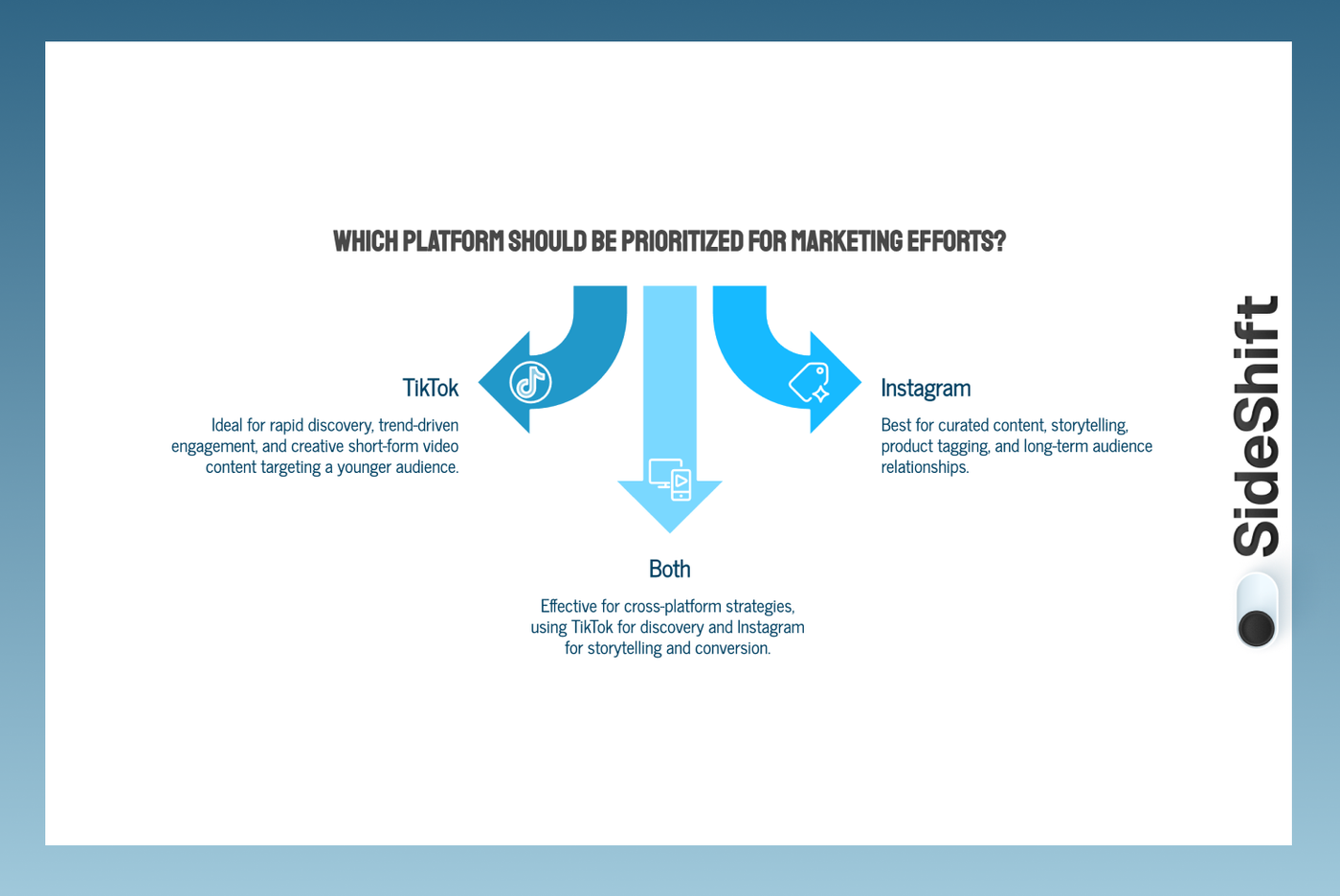
- You want rapid discovery and trend‑driven engagement.
- Your target audience skews younger and is highly active.
- You’re investing in creative, entertaining short‑form video content.
TikTok’s algorithm and high engagement rates make it ideal for brands that want strong organic reach and virality.
When Instagram is the Right Choice for Your Strategy
- Your focus is on leveraging curated content and storytelling.
- You want to integrate product tagging and e‑commerce features.
- You aim for long‑term audience relationship building.
Instagram’s mix of formats and mature ad ecosystem supports broader marketing funnels.
When Running Campaigns on Both TikTok and Instagram Makes Sense
Many brands find value in cross‑platform strategies, using TikTok for early‑stage discovery and Instagram for deeper storytelling and conversion. Testing content and creative styles across both platforms can maximize reach and ROI while letting data guide optimization.
Marketing Potential on TikTok vs Instagram
Engagement Metrics
Industry data shows that TikTok generally outperforms Instagram in engagement rates across post types and creator sizes, particularly for short‑form video content. In 2024, TikTok’s average engagement rate was 2.5%, compared to Instagram’s 0.5%. This higher level of engagement gives brands greater organic visibility, helping them drive awareness, build communities, and achieve stronger discoverability.
Want to put this into practice?
SideShift connects you with vetted UGC creators who actually deliver. Start your free trial and post your first job in under 10 minutes.
This higher visibility helps brands achieve more organic traction and discoverability, especially for awareness and community building.
Conversion and ROI
While TikTok excels at generating attention and virality, Instagram often plays a stronger role in intent‑driven engagement, long‑term brand building, and converting users into customers through shoppable posts and deeper shopping integrations.
Ultimately, the “better” platform depends on your goals: TikTok is powerful for rapid awareness, viral potential, and trend participation; Instagram excels at sustained engagement, lifestyle storytelling, and conversion funnel optimization.
Grow Across TikTok and Instagram Using SideShift
Managing influencer campaigns across TikTok and Instagram can be complex, but SideShift makes it simple. With SideShift, brands can post creator jobs, recruit dozens or even hundreds of influencers at once, manage contracts and payouts, and track campaign performance on TikTok and Instagram from a single dashboard. Everything is designed to remove friction and make influencer collaboration fast, scalable, and measurable.
With real-time dashboards and detailed creator performance metrics, brands can easily compare creators across platforms, analyze engagement, reach, and performance trends, and track campaigns while optimizing in real time.
Whether your priority is boosting engagement, driving conversions, or measuring overall creator impact, SideShift provides the insights and tools needed to make data-driven decisions and scale your social media strategy with confidence.
Start your free trial on SideShift today and elevate your TikTok and Instagram strategy.
FAQs
1. What are the main differences between TikTok and Instagram for marketing?
TikTok focuses on viral, trend‑driven short‑form video and discovery, while Instagram offers broader content formats and deeper engagement through lifestyle storytelling and shopping features.
2. Which platform drives better engagement for influencer campaigns?
Studies show TikTok often delivers higher engagement rates than Instagram, especially for short‑form video content and smaller creator accounts.
3. Can brands achieve ROI by running campaigns on both TikTok and Instagram?
Yes. Using TikTok for awareness and Instagram for conversion lets brands build multi‑stage marketing funnels that capture attention and drive action across audiences.
4. How do TikTok and Instagram ad formats compare?
TikTok prioritizes full‑screen, native video ads, while Instagram supports a wider variety of ad formats, including photos, carousels, Stories, and Reels.
5. How does SideShift help manage creators and campaigns across both platforms?
SideShift centralizes performance data, engagement metrics, and campaign insights so brands can compare and optimize creator partnerships on both TikTok and Instagram with confidence.