
Travel Influencer Marketing: Strategies That Work
Travel influencer marketing turns aspirational content into real bookings. Here’s what brands need to know to build creator campaigns that convert.
Table of Contents
In 1995, if you wanted to go somewhere new, you called a travel agent, flipped through a brochure, and hoped for the best. Now you can feel what it's like to be on a scuba boat off the coast of Indonesia before you've even opened a browser tab. You can watch someone summit a peak in Switzerland over breakfast. You can see exactly what a boutique hotel room looks like, hear what the nightlife sounds like in Medellín, and decide based entirely on a 90-second video from a stranger that you’ll never meet, that you're going to Bali in March.
The world is at our fingertips in a way it genuinely never was before, and with it comes an overwhelming number of choices. This hotel or that one. This experience or that one. This beach, that mountain, this café, that boat tour. Travel influencer marketing exists at the intersection of all that inspiration and all those decisions. Done right, it moves people from “I'd love to go there someday” to “I just booked it.”
For travel and destination hospitality brands, a well-placed creator partnership puts your hotel, experience, service, or destination in front of a wanderlustful audience that's already building itineraries and just one good piece of content away from typing in 16 digits at check out and getting on a plane.
This guide walks you through everything you need to build a travel influencer marketing program that converts, from understanding what travel influencer marketing is, to finding the right creators, to executing campaigns with the kind of briefs that get good content made. If you're a creator rather than a brand, our guide on how to become a travel influencer covers the creator side of this playbook.
What Is Travel Influencer Marketing?
Travel influencer marketing is the practice of partnering with content creators with engaged audiences on Instagram, TikTok, YouTube, or blogs to promote destinations, hotels, airlines, travel experiences, or travel-adjacent services like insurance or gear.
What makes travel different from most other categories is that the content is the pitch. A 60-second reel of someone kayaking through sea caves in the Azores doesn't need a voiceover explaining why you should go. The visual does most of the work. The creator's enthusiasm does the rest. That's why the best travel partnerships feel like a recommendation from someone you trust, not an ad.
Tourism influencer marketing operates on the same principle at a destination level, where the goal is building awareness of a place rather than a specific product. Whether it's a national tourism board, a regional designated marketing organization (DMO), or a boutique hotel trying to fill rooms in shoulder season, the underlying mechanism is the same: the right creator, telling an honest story, to an audience that's already predisposed to listen.
What to Look for in a Travel Content Creator
The instinct most brands have is to filter by follower count, but that’s not the metric that matters for a successful creator collaboration. Engagement is the more important data point.
Want to put this into practice?
SideShift connects you with vetted UGC creators who actually deliver. Start your free trial and post your first job in under 10 minutes.
Also, be aware that the travel creator space has a lot of overlap with lifestyle. Someone with “travel” in their bio might post one trip every three months, but don’t overlook creators in adjacent niches. A food creator who travels constantly to eat, a photographer who documents remote landscapes, or a wellness creator who runs international retreats. These audiences often have stronger travel intent than a general travel creator's following.
Consider these other factors when looking for a creator partnership:
- Audience fit, not creator fame: A U.S.-based adventure travel creator with 75,000 followers whose audience is 80% Americans aged 28-42 is more valuable to a Colorado ski resort than a travel mega-influencer with 2 million followers that only vacations at the beach. Pull the audience data. Look at geography, age range, travel frequency, and destination preferences.
- Content consistency: Has this creator been posting travel content for at least a year? Do they have a clear niche and voice? Creators pivot. Someone who was a full-time travel creator 18 months ago might be posting lifestyle content from their apartment now. Check their recent posts, not just their highlights.
- Engagement quality: Read the comments. Are people asking for hotel names, packing lists, visa logistics? That's buying-intent behavior. Generic emoji comments tell you nothing useful.
- Creator tier: Micro-influencers with roughly 10,000 to 100,000 followers are often more accessible for brands that aren't working with massive budgets. A creator with 40,000 highly engaged followers in slow travel is a better partner for a wellness retreat than someone with 800,000 followers across mixed content. It's also worth considering UGC creators who aren't building a public audience at all. UGC creators don't charge a premium for reach, but they know how to make content that converts and can be repurposed across your own marketing channels.
SideShift helps connect brands with travel-specific creators from a network of over 800,000 vetted Gen Z content creators spanning all sizes and price points. You can filter by audience demographics, content niche, engagement benchmarks, and compensation type on the platform so you're not rebuilding your search from scratch every time you need the right fit.
How to Build an Influencer Marketing Strategy for Your Brand
Most campaigns that underperform aren't killed by bad creative. They're killed by unclear strategy before the creative ever gets made. Here's the process that works.
Step 1: Define Your Budget and Goals
Your goal determines your creator mix, content format, and success metrics. A campaign built for reach and awareness needs different partners and different metrics than one built to drive direct bookings. Trying to optimize for both at once usually means you do neither well.
Be specific and attach a measurement threshold to your goal. “More brand awareness” is not a goal. “Reach 500,000 impressions among U.S.-based travelers planning international trips in Q3” is a goal.
Regarding budget, be realistic about what good creator partnerships actually cost. Some creators are willing to accept product or experience gifting in exchange for content, but experienced creators are usually beyond the barter stage and will stand firm in their compensation rate.
Want to put this into practice?
SideShift connects you with vetted UGC creators who actually deliver. Start your free trial and post your first job in under 10 minutes.
Micro-influencers in travel can charge anywhere from $500 to $2,500 per dedicated post, depending on the deliverables and level of engagement. Macro-influencers start at $5,000 and scale from there. UGC creators can charge less than $500, depending on usage rights and content complexity. Gifted stays and experiences are appropriate to include, but they don't substitute for a fee if you want creators to treat your campaign as a priority.
Step 2: Define Your Content Type
This is where strategy gets specific to your brand and where most campaigns either get interesting or get generic.
Different travel brands need different types of creator content, and the format should match both your product and your goals:
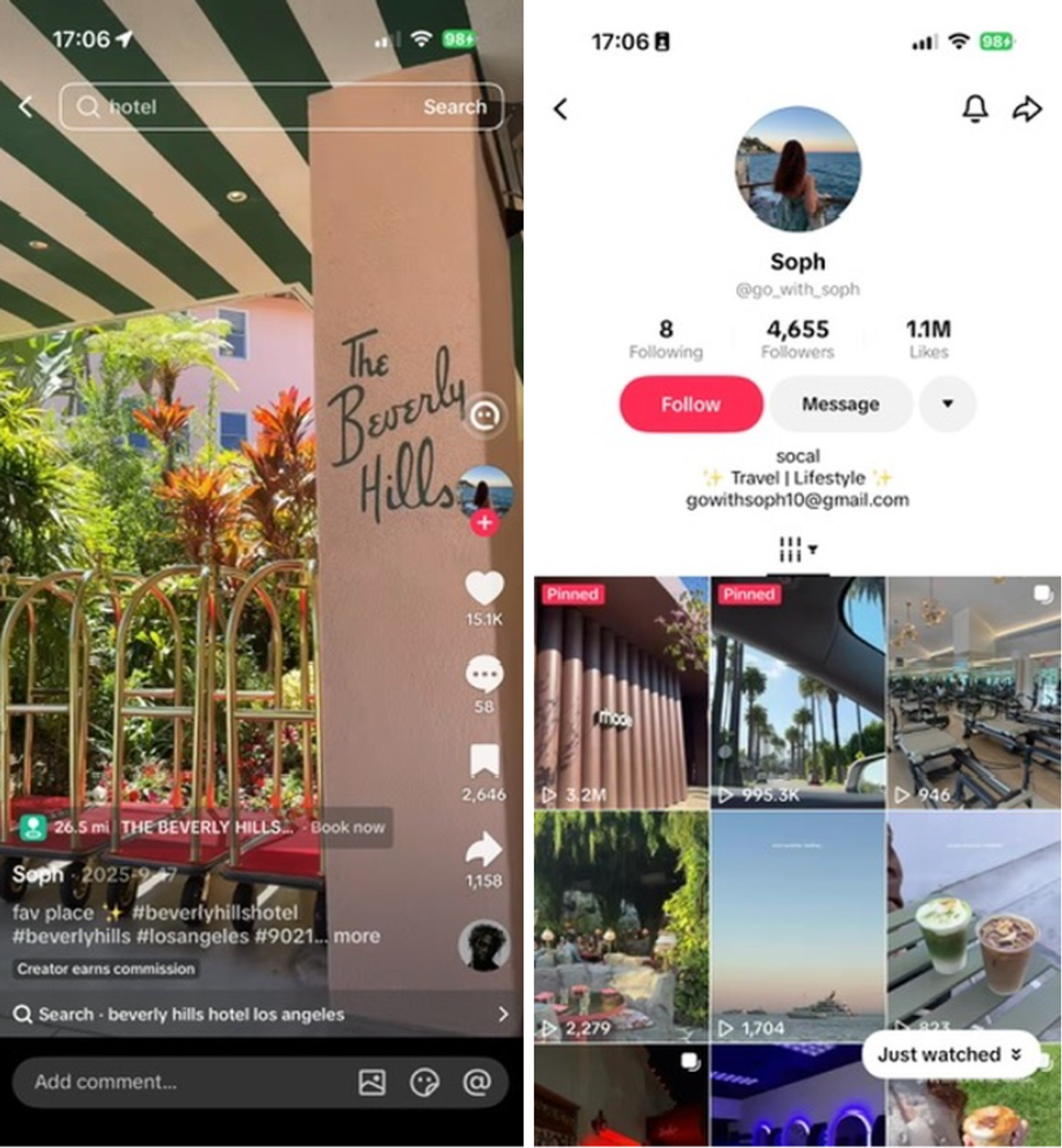
- Hotels and accommodations benefit from a mix of paid creator stays and UGC. A creator partnership produces polished, narrative-driven content from the arrival experience, the room, the breakfast, the view, to the check-out. UGC from real guests fills in the social proof layer: authentic photos and reviews that don't look produced because they weren't. Both matter, and neither replaces the other.
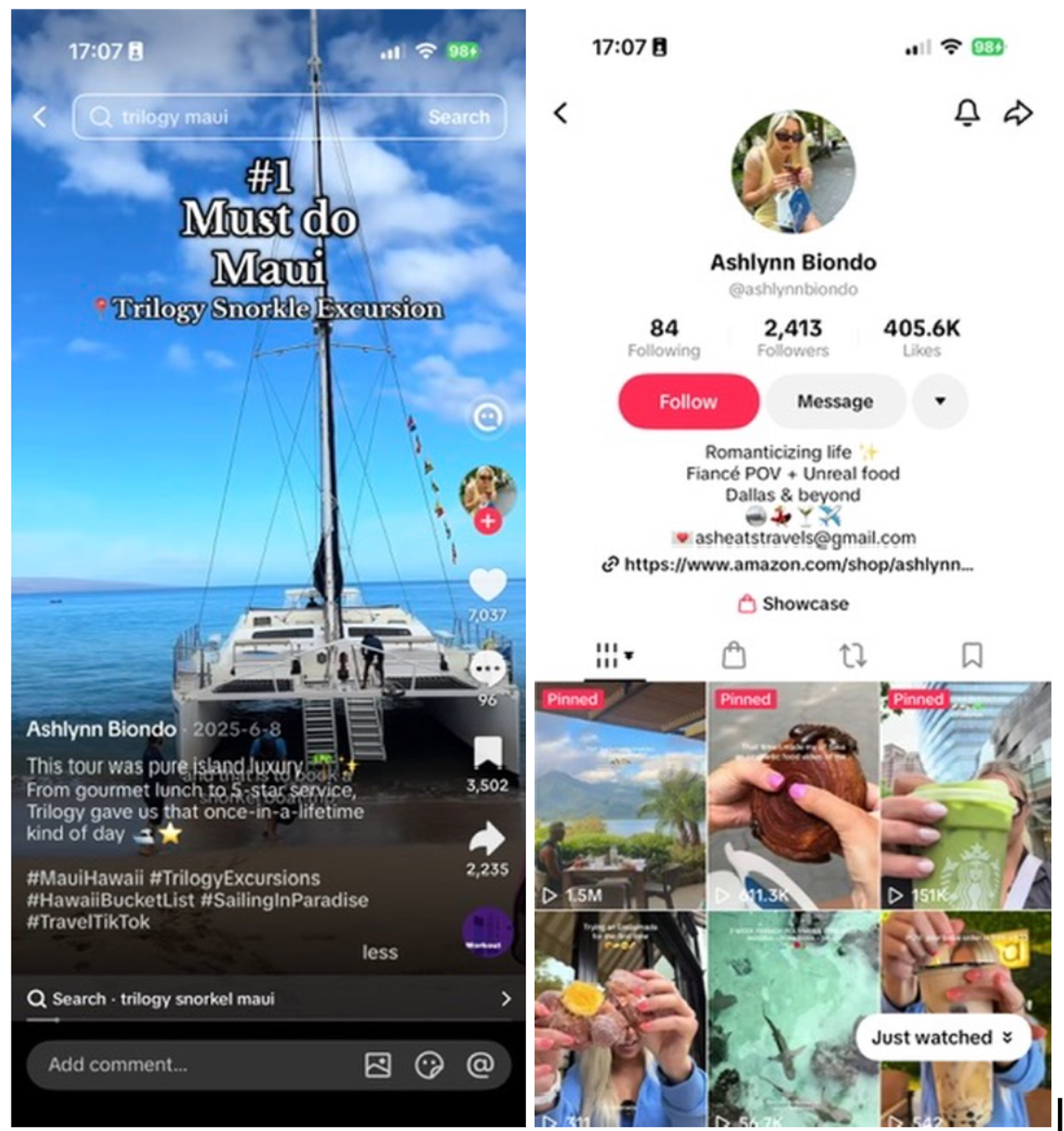
- Travel experiences like snorkeling tours, cooking classes, adventure outfitters, and cultural tourism groups are a natural fit for short-form video. The activity itself is the content. The creator's job is to make you feel like you were there—and wish you had been. Briefing for this type of campaign is about capturing the emotional peak of the experience, in addition to documenting the itinerary.
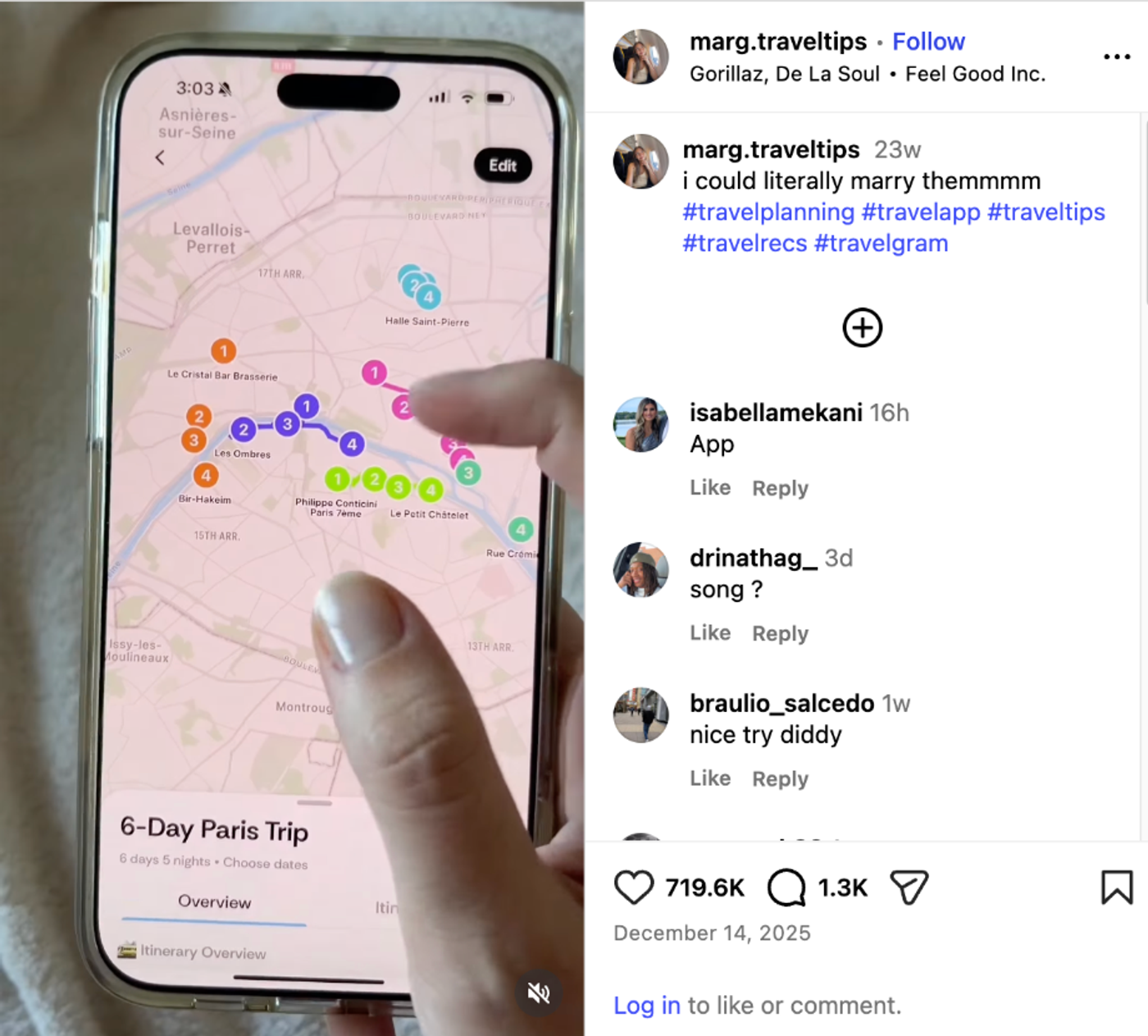
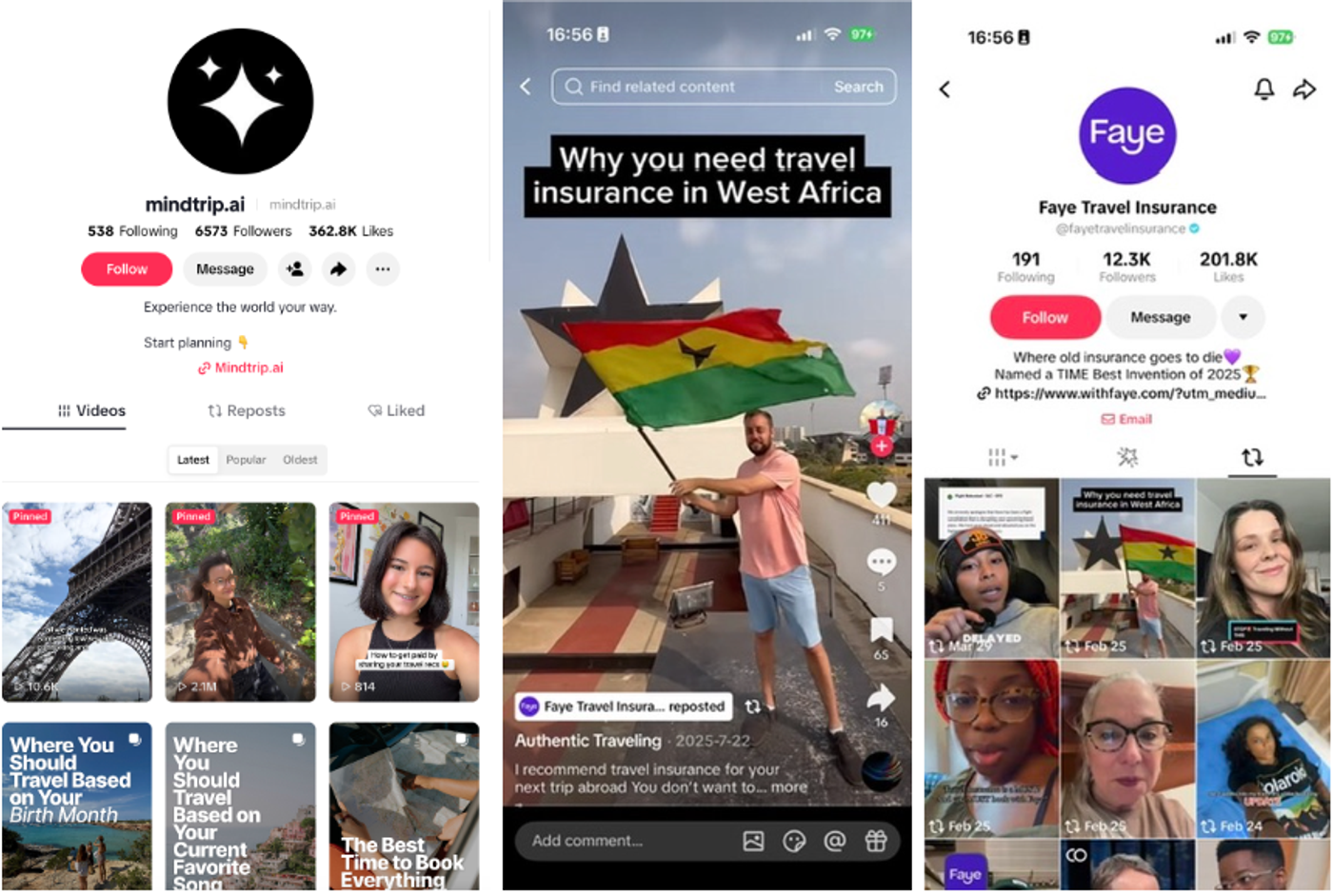
- Travel brands and services like trip planning apps, travel insurance, luggage companies, or booking platforms need creators who can integrate the product authentically into a broader travel story. Nobody wants to watch an ad for travel insurance. But a creator who speaks candidly with a hint of humor about why they started buying it after a trip went sideways in Southeast Asia can earn trust in a way a traditional ad never will.
- Group travel experiences and tourism campaigns often work best with a creator trip model where they bring three to five creators to a destination together, give them genuine access, and let them each tell the story in their own voice. The content diversity you get from five different creators experiencing the same trip is almost always better than one creator following a tight script.
Step 3: Find and Reach Your Creators
With your goals and content type defined, the next step in how to work with travel influencers is to build your creator shortlist by evaluating audience fit, content consistency, engagement quality, and tier.
For sourcing, the most targeted starting point is often your own customer base. Existing customers who already post about your product are warmer leads than any cold discovery, and the content tends to show it. Beyond that, manual hashtag and keyword search on your target platform can work for highly specific niches, though it becomes time-intensive at scale.
The more efficient route is using a UGC platform or creator marketplace. SideShift lets you post a campaign brief and receive applications from creators who match your criteria, which inverts the sourcing problem entirely. Most platforms also allow you to search active creators by niche, so if you're running a travel campaign, you can filter directly for travel creators instead of manually combing through hashtags.
Want to put this into practice?
SideShift connects you with vetted UGC creators who actually deliver. Start your free trial and post your first job in under 10 minutes.
When you reach out, be direct and specific. Explain who you are, why you chose them in particular, what the collaboration involves, and what you're offering in terms of compensation, product, or both. A message that could have been sent to anyone gets treated like it was sent to everyone, so reference something particular about their content or audience. Keep the initial message short. Three to four sentences is enough to get a reply. Save the full content brief for after they've expressed interest.
With your goals and content type defined, build your creator shortlist from audience fit, content consistency, engagement quality and creator tier.
Step 4: Execute With a Brief That Actually Works
Over-scripted briefs produce over-scripted content.
A good travel creator brief includes:
- The one thing you want the audience to remember or feel
- Hard requirements (e.g., brand mentions, required tags, FTC disclosure, any visual guidelines)
- Clear deliverables (what, how many, on which platforms, and in what timeframe)
- What the creator gets to decide on their own, and explicitly saying so
Give creators real context about the experience. What makes it worth featuring? What do past guests always say? What's the thing people miss on their first visit? That context is what enables a creator to make something specific and true, instead of something that looks like every other sponsored travel post.
Always use a contract. At minimum, it should cover deliverables, timeline, payment terms, usage rights, exclusivity window, revision policy, and FTC disclosure requirements.
Step 5: Measure and Pivot
Define your measurement framework before the campaign launches, not after.
- For awareness-focused campaigns: reach, impressions, story views, follower growth on your own channels
- For conversion-focused campaigns: link clicks, promo code redemptions, UTM-tracked booking revenue
- For resonance: saves, detailed comments asking for specifics, and DMs to the creator asking for the link
Run a post-campaign analysis. Which creator drove the most meaningful engagement? Which format performed? Which platform delivered? Use that to adjust the next campaign. The brands that build strong influencer programs do it iteratively, not just by getting everything right the first time.
Scale Your Travel Influencer Program With Sideshift
Building a creator program from scratch takes time, and most travel brands don't have a dedicated team to run it. Finding the right creators, vetting their audiences, negotiating agreements, writing briefs, managing approvals, tracking performance across platforms. It adds up fast.
On SideShift brands can access a network of over 800,000 vetted Gen Z creators, filter by niche, audience demographics, engagement benchmarks, and compensation type, and go from search to signed partnership without the back-and-forth that usually slows everything down.
Whether you're running a UGC campaign for a hotel brand, sourcing creators for a destination trip, or building a long-term influencer program for a travel service, SideShift gives you the infrastructure to do it at scale.
Want to put this into practice?
SideShift connects you with vetted UGC creators who actually deliver. Start your free trial and post your first job in under 10 minutes.
FAQs
1. How much does travel influencer marketing cost?
It varies significantly based on creator tier and deliverables. Micro-influencer campaigns can run $5,000 to $20,000 total for a multi-creator push. Macro or celebrity-level campaigns start at $50k and go up from there. Factor in travel and accommodation costs for any hosted campaigns.
2. How do you measure ROI from a travel influencer campaign?
Define it before the campaign launches. Common metrics include reach and impressions, link clicks, promo code redemptions, and for direct booking brands, UTM-tracked revenue. Saves and story replies are leading indicators of interest worth tracking.
3. What's the difference between micro and macro travel influencers?
Micro-influencers have smaller, more engaged audiences typically 10,000 to 100,000, and tend to drive stronger conversion on niche travel offers. Macro-influencers (100k+) deliver volume and brand awareness. Most campaigns benefit from both.
4. Do you need a formal contract with travel creators?
Yes. A signed agreement protects both you and the creator. It should outline deliverables, timelines, usage rights, exclusivity, and FTC disclosure obligations. This is non-negotiable for any paid partnership.
5. How do you approach a travel creator for a partnership?
Send a direct, specific message. Explain who you are, why you're reaching out to them specifically, what the collaboration would involve, and what you're offering. Generic outreach emails get ignored. Creators respond to brands that have clearly done their homework.