
UGC vs Influencer Marketing: What’s Better for ROI in 2026?
Compare UGC vs influencer marketing to see which delivers better ROI in 2026. Learn cost differences, performance insights, and when each approach works best.
Table of Contents
Should you invest in influencer marketing, or focus on user-generated content (UGC)? Both strategies can drive results, but their impact, cost, and long-term ROI differ. Influencer marketing leverages trusted personalities to reach highly engaged audiences quickly, while UGC taps into authentic content created by your customers, building credibility and relatability over time.
In 2026, marketers need a clear strategy to decide which approach or combination works best. This guide breaks down the key differences between UGC and influencer marketing, explains when each is most effective, and provides actionable tips to measure performance, optimize campaigns, and scale your efforts for maximum ROI. Whether you’re aiming for brand awareness, conversions, or community growth, understanding these dynamics will help you make smarter, data-driven decisions.
What is UGC?
User-generated content, or UGC, is any content created by your audience, customers, or micro-creators rather than by the brand itself. This includes videos, photos, reviews, testimonials, and social posts. The key to UGC’s power lies in authenticity. Audiences trust content from real users more than branded ads, and short-form UGC has been proven to increase engagement, conversions, and social proof. Brands can scale UGC efficiently by leveraging platforms like SideShift, which connects you to thousands of vetted UGC creators who know how to produce content that resonates.
What is Influencer Marketing?
Influencer marketing involves partnering with individuals who have established credibility or reach in a specific niche on social media. Influencers range from nano and micro-influencers with smaller but highly engaged audiences to macro and celebrity influencers with massive reach. Influencer content is often more polished and professional, designed to showcase products while driving awareness or conversions. The primary benefits of influencer marketing are authority, reach, and the ability to quickly amplify campaigns to targeted audiences.
Cost Comparison: UGC vs Influencer Marketing
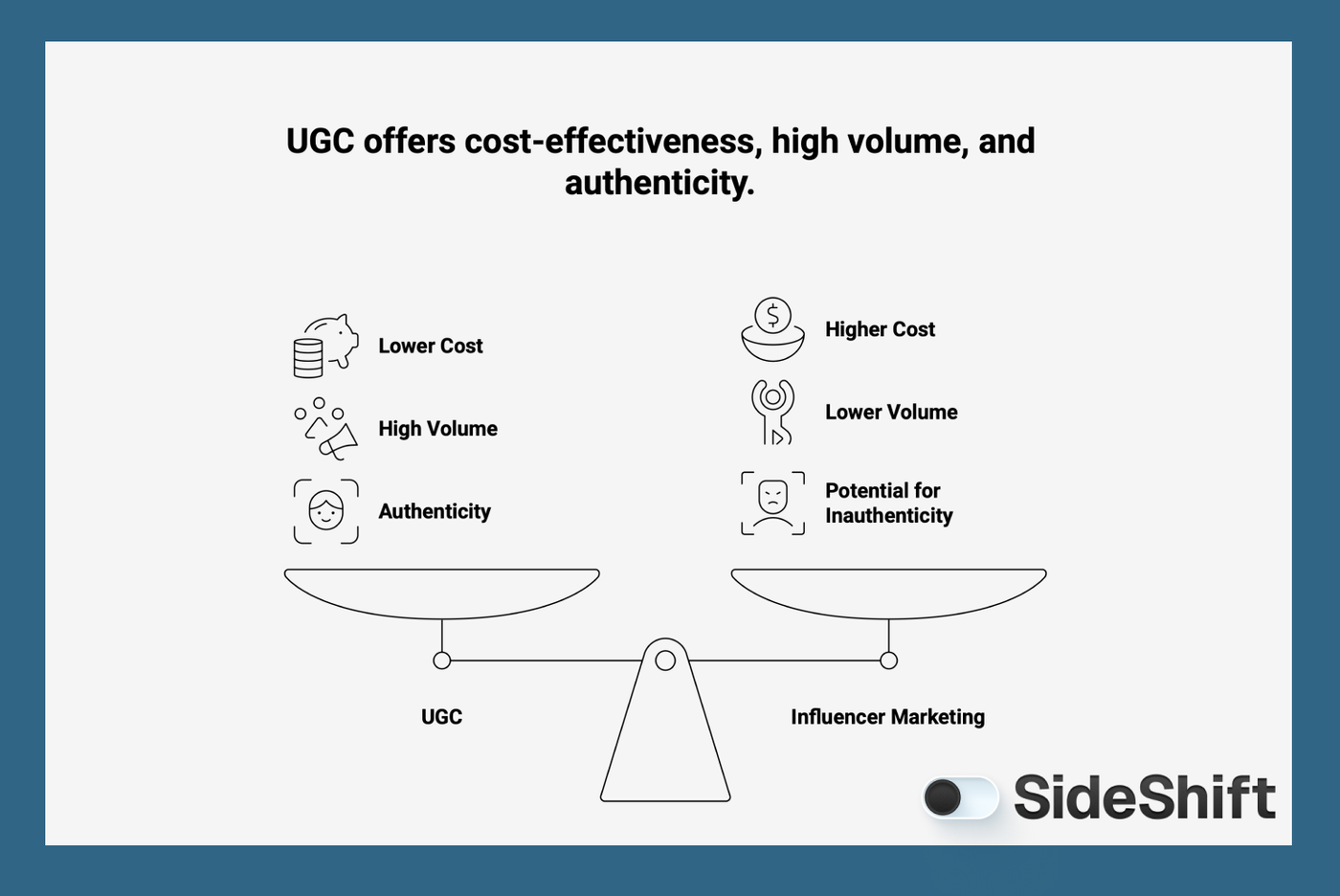
One of the biggest considerations when planning campaigns is cost. UGC is generally more cost-effective because it can be sourced from everyday users, micro-creators, or incentivized audiences rather than high-profile talent. Brands can often generate a high volume of content at a fraction of the cost of traditional influencer campaigns. Influencers, especially macro or celebrity-level, command higher fees and may require long-term contracts. For brands looking to scale campaigns efficiently, UGC offers a better balance of volume, authenticity, and ROI.
Performance Comparison: UGC vs Influencer Marketing
Performance differs between these strategies. UGC tends to drive higher engagement and trust, as audiences perceive it as relatable and organic. Influencer content can deliver strong awareness metrics and reach quickly but may feel less authentic. Combining UGC with influencer content can deliver the best of both worlds: credible, professional content amplified by peer-driven authenticity. Metrics to track include engagement rate, watch-through rate, click-throughs, and conversions. SideShift makes it easy to manage both types of content, track performance in real time, and optimize campaigns across TikTok, Reels, and Shorts.
When to Use UGC vs Influencers
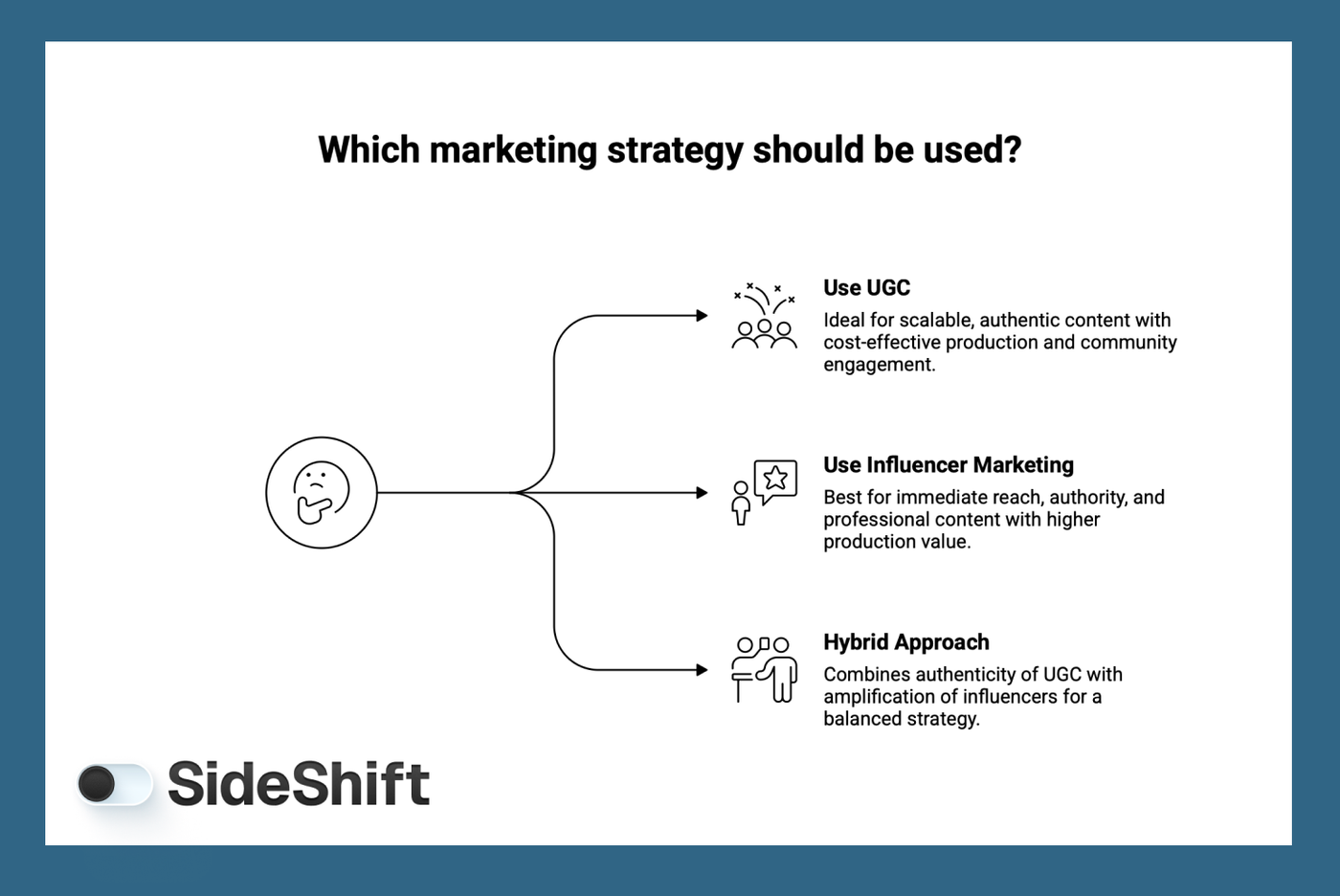
Use UGC when you want:
- Scalable content at high volume
- Relatable, authentic messaging
- Cost-effective production
- Social proof and community-driven engagement
Want to put this into practice?
SideShift connects you with vetted UGC creators who actually deliver. Start your free trial and post your first job in under 10 minutes.
Use influencer marketing when you want:
- Immediate reach with targeted niche audiences
- Authority and credibility in your industry
- Professional, polished content for campaigns that require higher production value
Often, the most effective strategy is a hybrid approach, combining UGC for authenticity and influencers for amplification.
How to Measure and Optimize ROI for UGC and Influencer Campaigns
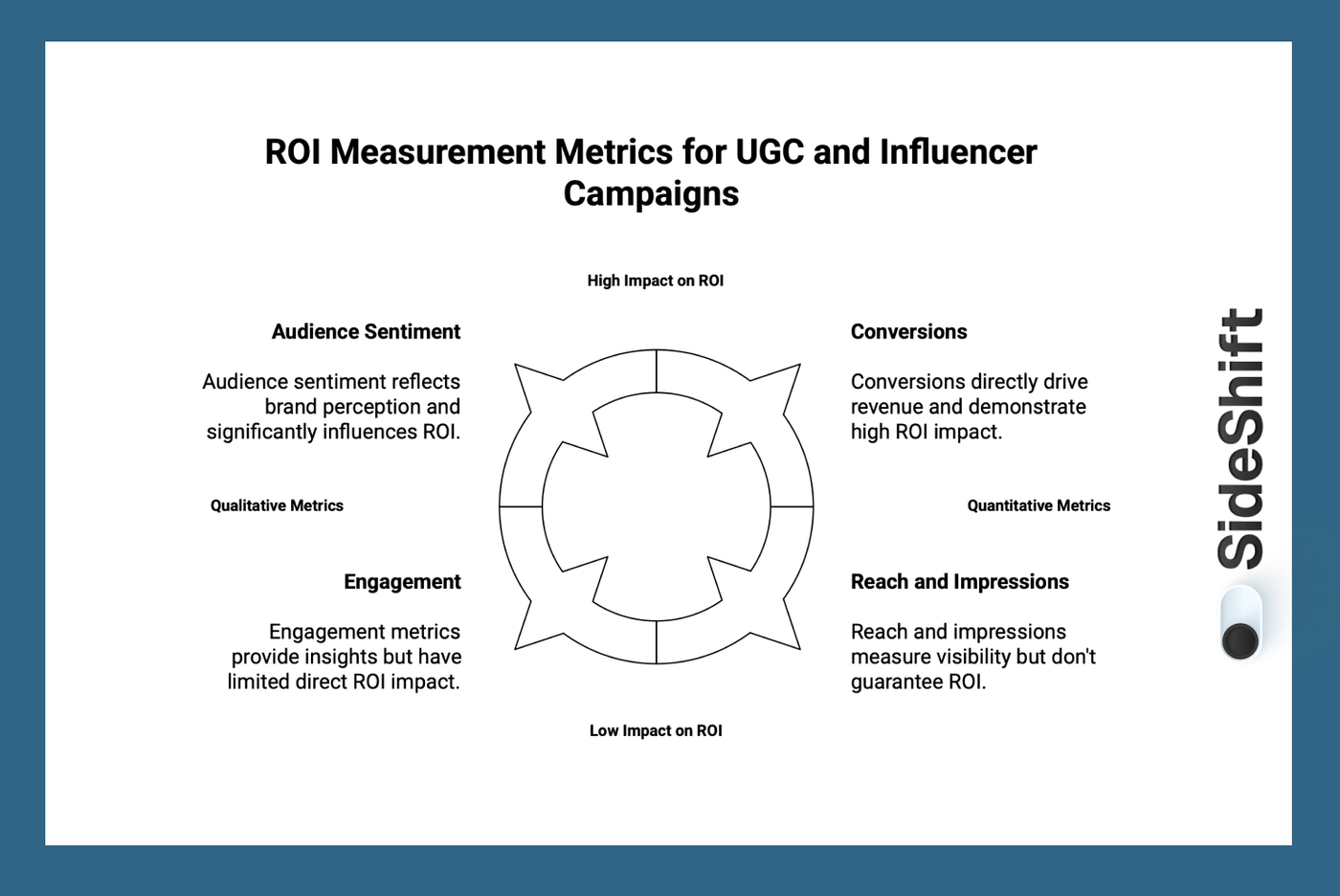
Measuring ROI requires tracking both qualitative and quantitative metrics. For both UGC and influencer campaigns, focus on:
- Engagement: likes, shares, comments, and saves
- Conversions: purchases, signups, or other goal completions
- Reach and impressions: platform visibility
- Audience sentiment: comments and feedback
Test different formats, creators, and campaign styles to see what resonates. Platforms like SideShift allow brands to manage creators, automate payments, track content performance, and iterate quickly to maximize ROI without overloading internal teams.
Final Thoughts
In 2026, the campaigns that deliver the highest ROI balance authenticity, reach, and consistent audience engagement. UGC offers a scalable, cost-effective way to generate content that feels real and relatable, while influencers can amplify your message to broader or highly targeted audiences.
Success comes down to three things: efficient creator management, clear campaign guidelines, and real-time performance tracking. When these elements align, brands can continuously optimize content, boost engagement, and maximize ROI.
Ready to scale your UGC campaigns with thousands of vetted creators producing high-quality content at scale? Explore SideShift today and start building your next high-performing campaign.
FAQs
1.Do you have to be an influencer to do UGC?
No. UGC (user-generated content) is created by everyday customers or micro-creators, not just influencers. Brands leverage this content because it’s authentic, relatable, and resonates with audiences in a way that polished influencers with tens of thousands of followers often can’t.
2. What is the difference between UGC and KOL?
UGC is content generated by regular users or customers, focusing on authenticity and peer influence. KOLs (Key Opinion Leaders) are recognized experts or influential figures in a niche who produce content to guide opinions and purchasing decisions. UGC emphasizes volume and relatability, while KOL content emphasizes authority and credibility.
3. What are the 4 types of influencers?
Influencers are often categorized by reach and audience size:
- Nano influencers: 1K-10K followers; highly engaged, niche audiences.
- Micro influencers: 10K-100K followers; trusted within specific communities.
- Macro influencers: 100K-1M followers; broader reach, moderate engagement.
- Mega/Celebrity influencers: 1M+ followers; extensive reach, often lower engagement rates.
4. Why is UGC so powerful?
UGC builds trust and authenticity. Customers relate to real people using a product, which increases engagement and conversions. Research shows campaigns featuring UGC can drive higher web conversions than those without it. It also provides a scalable content pipeline for brands.
5. How do audience perceptions differ between UGC and influencer content?
Audiences generally view UGC as more authentic and relatable, while influencer content is seen as polished and promotional. Combining both can balance credibility and professional appeal.