
UGC Video: Definition, Benefits, and Use Cases
Learn how UGC videos help brands build trust, improve ad performance, and create reliable social proof with clear examples and practical guidance.
Table of Contents
Customer videos are one of the purest forms of social proof. When someone holds up a product and talks about it in their own way, it carries a kind of credibility no brand script can manufacture. The trouble is, those moments don’t appear as often as brands need them. Most customers won’t pause their day to record a clear demo, a thoughtful explanation, or the little reactions that help someone make a buying decision.
So brands & creators started engineering those moments instead and came up with UGC videos. And as platforms reward authenticity over polish, these videos have become one of the most effective ways to show proof, build trust, and help people understand why a product matters.
In this blog, we'll tell you what a UGC video is, why you should invest in creating those, and some real use cases of UGC videos.
What is a UGC video?
A UGC video is a piece of content made by a creator who acts like a real customer. They’re not hired for their following. They’re hired for their ability to show a product in a way that feels natural, honest, and easy to understand. Brands then use these videos on their own channels, such as ads, product pages, TikTok, Instagram, email, and anywhere they need social proof.
A UGC video can look like:
- Someone unboxing a skincare product and talking through their first impressions
- A creator filming a quick “here’s how it works” demo for a kitchen tool
- A simple testimonial shot on a phone, describing what changed after using the product
- A playful TikTok-style clip showing a before-and-after result
- A walkthrough of an app where the creator narrates what they’re doing
Here's an example of a UGC video where a creator is unboxing products:
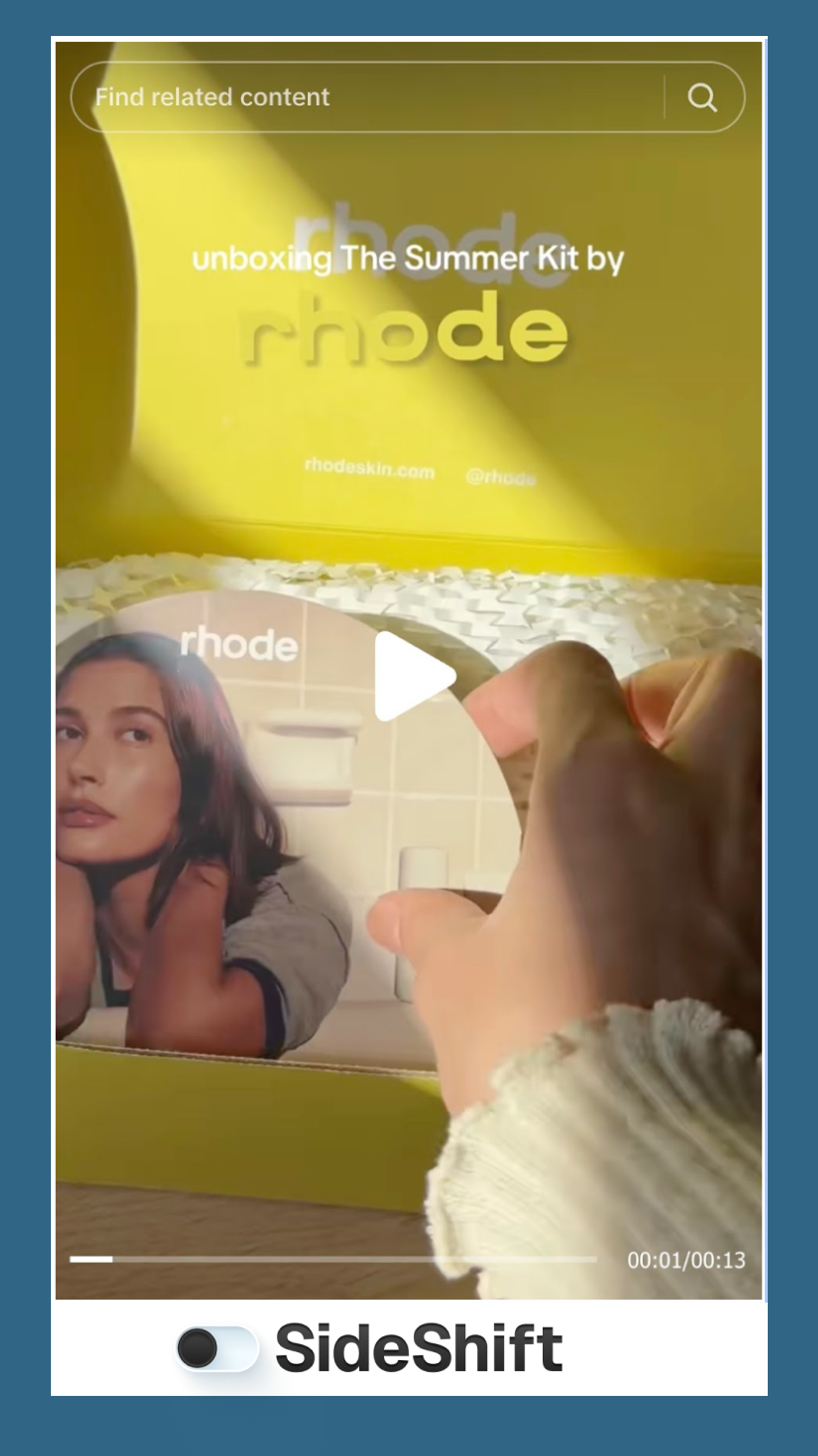
UGC videos feel personal, even when they’re planned. And because they don’t rely on a creator’s audience, brands can test many styles and messages to see what resonates.
Benefits of UGC for brands
UGC works because it gives brands the kind of social proof and clarity that polished ads often miss. Here are three core benefits that matter in day-to-day marketing.
1. It fills the social proof gap when organic reviews are slow
Not every product naturally generates videos or customer testimonials. UGC fills that gap. You can create demos, reviews, and “try-on” moments even if your customers aren’t posting them. It gives your brand the proof it needs to earn trust, especially for new launches, niche products, or higher-consideration purchases.
2. It speeds up testing and reduces creative fatigue
Most brands don’t have the time or budget to shoot big campaigns every month. UGC gives them a steady stream of fresh variations — new hooks, angles, voices, and styles. This lets performance teams test quickly, kill what’s not working, and scale what is. It keeps ads from going stale, which is one of the biggest reasons campaigns slow down.
3. It gives brands reusable content across channels
A single UGC video can appear in ads, on a landing page, in email flows, on TikTok or Instagram, and even inside retargeting campaigns. It’s flexible content that stretches your budget and lets you test different messages without producing expensive shoots every time.
Want to put this into practice?
SideShift connects you with vetted UGC creators who actually deliver. Start your free trial and post your first job in under 10 minutes.
Real use cases of UGC videos
Brands can use UGC videos wherever they need clarity, trust, or a familiar voice that helps someone move closer to buying. Here are some of the best places to use UGC videos:
Product launch support
When a new product has no existing reviews or social proof, UGC fills the gap. Creators can show first impressions, simple demos, and early reactions that help people understand what’s new and why it matters. It gives the launch a “lived-in” feel from day one.
Paid ads that blend in
Performance teams rely on UGC for Meta, TikTok, and Instagram ads because it looks like something a regular person filmed. That native look of UGC ads helps the content travel further in the feed and often reduces the cost of getting someone’s attention.
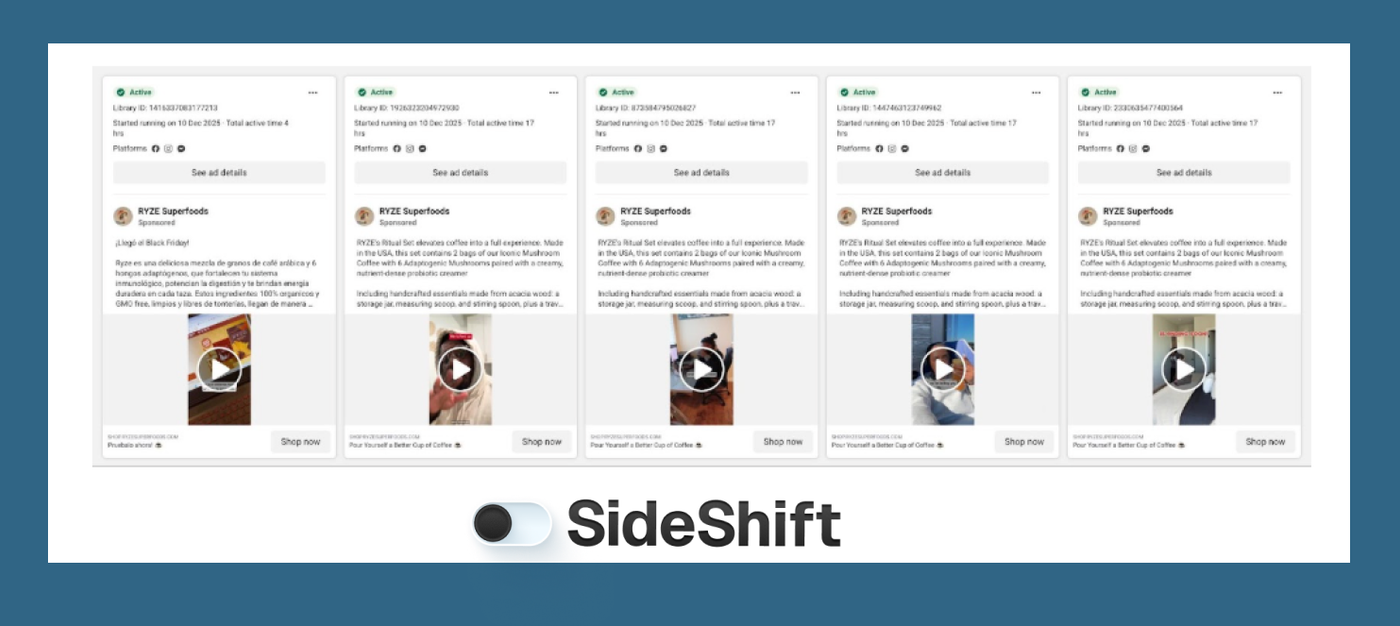
For example, Ryze, the coffee brand, uses content generated by creators to run their ads:
Landing page and PDP content
A short testimonial or a quick explainer video can lift conversions on product pages. People want to see the product in real hands, not just studio shots. UGC fills that space and answers the silent questions customers have while browsing.
Retargeting campaigns
When someone has already shown interest, a straightforward UGC clip — a review, a before-and-after, or a quick walkthrough — can be enough to nudge them back. It adds reassurance without feeling pushy.
TikTok Shop and creator-driven commerce
UGC works especially well for shopping experiences built around short videos. Creators make simple, high-energy clips that drive direct purchases, and brands repurpose the best ones as ads.
App and software walkthroughs
For mobile apps, fintech tools, health trackers, and productivity platforms, UGC creators can record simple “here’s how I use it” videos. It turns abstract features into something people can picture in their own routines.
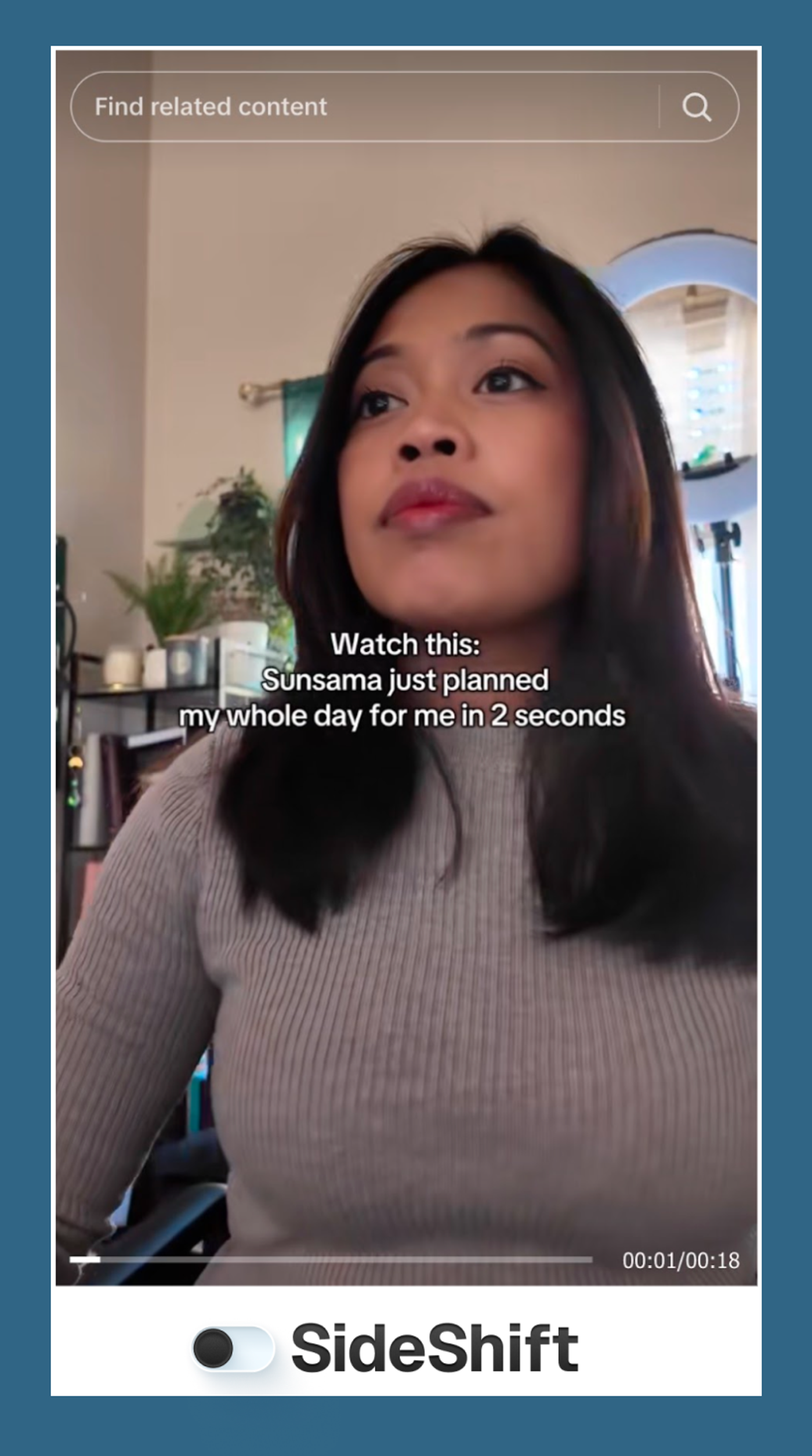
Here's an example of a UGC video created for a productivity app
Email and SMS flows
Welcome sequences, abandoned cart messages, and post-purchase flows all perform better when there’s something real to show. A short UGC video can explain a feature, demonstrate how to set something up, or remind someone why they were interested in the first place.
Amazon, Walmart, and marketplace listings
Brands use UGC to strengthen credibility on marketplaces where people compare similar products. A creator demo or review helps listings stand out and reduces doubt for buyers who are choosing between options.
Common mistakes brands make with UGC
UGC works best when it feels natural and grounded in real use, but brands sometimes unintentionally push it in the opposite direction. These are the mistakes that quietly hold results back, even when the creator is talented and the product is strong.
- Over-scripting the video: When a brand sends long talking points or asks the creator to repeat specific phrases, the video starts to sound like an ad. Viewers pick up on that immediately. Creators do better when they understand the goal and a few key points, then speak in their own words.
Want to put this into practice?
SideShift connects you with vetted UGC creators who actually deliver. Start your free trial and post your first job in under 10 minutes.
- Ignoring how each platform behaves: A video that performs well on TikTok might not work on Instagram, and something made for ads won’t always fit a brand’s organic feed. Treating every channel the same leads to lower performance. UGC should match the rhythm, pacing, and tone of the place where it will live.
- Not giving creators the right context: Many creators can only produce strong UGC when they understand what problem the product solves, who the audience is, and what the viewer needs to feel by the end. Without this context, the video may look fine but miss the mark entirely.
- Skipping usage rights clarity: Brands sometimes assume they can use a creator’s video anywhere once they pay for it. But usage rights vary. If it isn’t discussed up front, the brand may later find they can’t run ads with the content they loved most.
- Expecting one video to solve everything: UGC works through testing and variation. One video can’t explain the product, drive conversions, and anchor a campaign all at once. Brands get better results when they treat UGC as a set of small, clear pieces rather than one “perfect” asset.
These mistakes are easy to fix, and once they are, UGC becomes more predictable and far more effective.
Where to find UGC creators
Some places for finding UGC creators are built for hiring, and others are more manual, but all of them give you a way to find the right creators for your brand.
SideShift
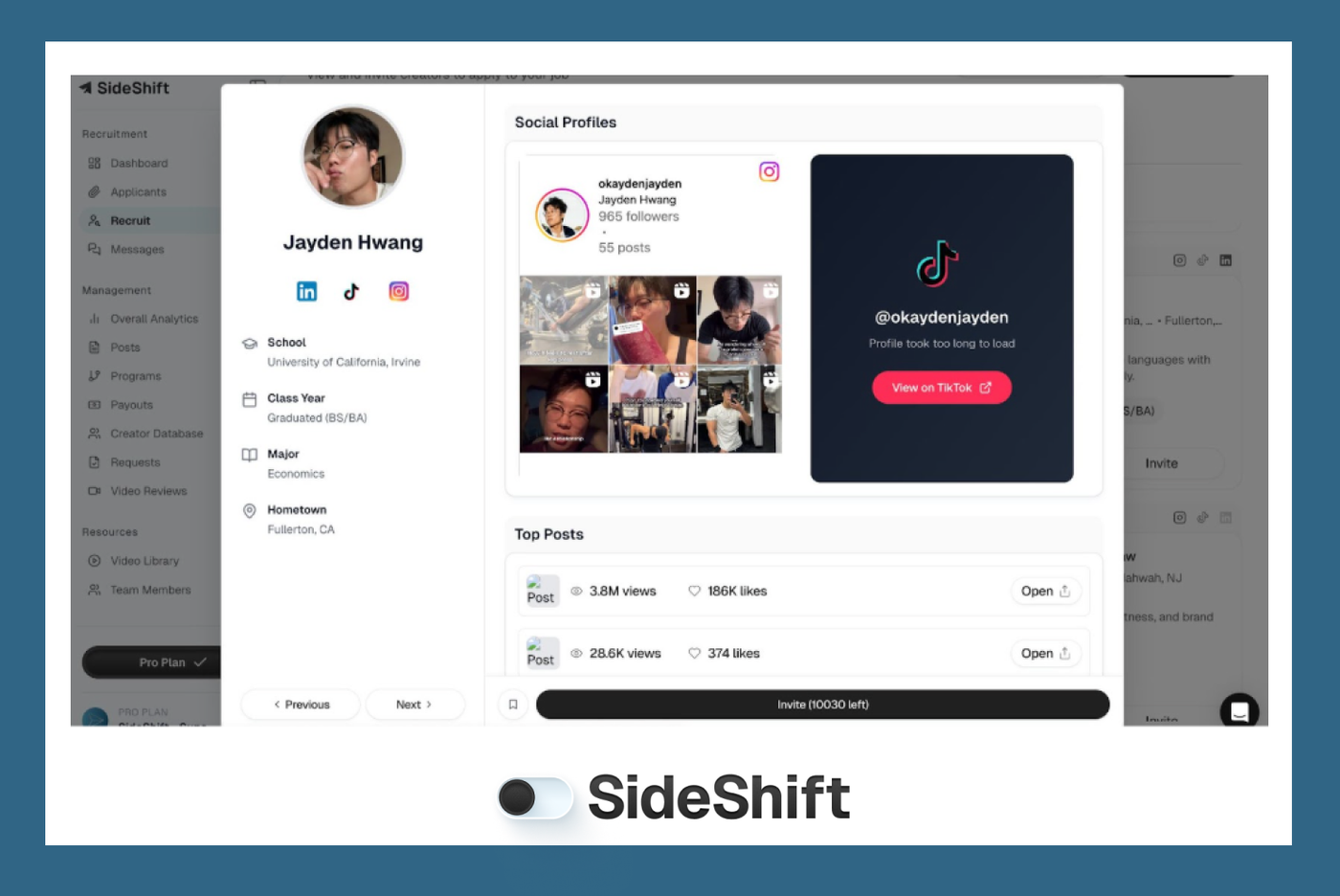
If you want a place built specifically for UGC hiring, SideShift is the most direct path. You can browse creator portfolios, filter by niche or style, send briefs, and track everything in one dashboard. It removes the back-and-forth across apps and gives you a clear way to compare creators side by side. For teams that want consistency or are scaling up UGC, this is the easiest starting point.
TikTok and Instagram
You can search hashtags like #ugccreator, #ugcvideo, or product-specific phrases. Many creators post sample videos or past paid work on their profiles. Then you can filter from the list to find the ones that suit your brand. This approach takes more time, but it helps you find people with a style that fits your brand naturally.
Creator communities and groups
There are active UGC Facebook groups, Discord servers, and Slack communities where creators look for brand opportunities. You can share your brief and receive direct replies from people interested in the niche you’re targeting.
Your existing customers
Sometimes the best creators are people who already use your product. They may not think of themselves as creators, but they know the product well and can speak about it honestly. A simple callout in your newsletter or social channels often surfaces great candidates.
How SideShift helps brands work with UGC creators
Once you know you want to use UGC, the harder part is managing the process. It involves finding creators, sharing briefs, tracking content, and keeping everything organized as campaigns grow. SideShift solves that workflow problem. It gives brands one place to:
Want to put this into practice?
SideShift connects you with vetted UGC creators who actually deliver. Start your free trial and post your first job in under 10 minutes.
- Source creators,
- Review portfolios
- Review videos
- Send payments
…and do so much more
You can filter creators by category, see examples of their past work, and understand their style before reaching out. If you want to test multiple hooks or create a batch of videos for ads, you can brief several creators at once and track performance in real time. And since the platform handles payouts and admin tasks, brands can focus on the content itself rather than the paperwork around it.
Find creators for generating UGC videos on SideShift today, and see the difference it brings to your marketing strategy.
FAQs
1.Why do UGC ads outperform traditional ads? UGC ads blend into users’ feeds more naturally, which reduces ad fatigue. Because they feel relatable and unscripted, they often generate higher engagement, stronger watch time, and better conversion rates.
2.Which platforms work best for UGC ads? UGC ads perform especially well on platforms like TikTok, Instagram Reels, Facebook, and YouTube Shorts. These channels prioritize short-form, authentic video content that aligns perfectly with UGC formats.
3.Can UGC ads be reused across campaigns? Yes. One of the biggest advantages of UGC ads is reusability. Brands can repurpose the same content across multiple campaigns, audiences, and platforms, maximizing ROI from a single asset.
4.Do UGC ads require ongoing testing? Absolutely. UGC ads are most effective when tested at scale. Brands typically test multiple hooks, creators, and messaging angles to identify top performers and iterate quickly.