


Creator Management: How to Organize and Scale Content Production
Learn how to streamline creator management, build scalable workflows, and organize content production with the right systems, tools, and best practices.
Table of Contents
Creator management has become one of the most important operational systems inside modern marketing teams with a social media presence. At SideShift, we’ve seen brands go from producing a handful of UGC clips per month to running multi-creator, high-volume pipelines that generate hundreds of assets across TikTok, Instagram, and paid ads. What separates the teams that scale from the teams that stall isn’t budget or creative talent - it’s workflow. Brands that build a strong creator management system produce content faster, cheaper, and at a higher quality than those relying on scattered spreadsheets and endless DM threads.
UGC may look effortless on the surface, but coordinating dozens of creators across multiple timelines reveals just how chaotic the process can get without structure. The moment content demand grows, teams begin losing track of who’s delivering what, creators get confused about expectations, internal reviews slow everything down, and the entire pipeline becomes reactive instead of predictable. Effective creator management turns that chaos into smooth, high-velocity production-something only a few brands have mastered, but all need.
SideShift works with 1,000+ brands across industries, and we’ve learned that the creator programs that thrive share this core trait: They set up systems for communication, content flow, approvals, payouts, and analytics. They create a rhythm that both creators and internal teams can rely on. As a result, they scale production without burnout, without losing quality, and without hiring a full-time creative ops team.
What Is Creator Management?
Creator management is the process of organizing, coordinating, and supporting the creators who produce content for your brand. It blends creative direction, project management, and relationship-building into a single operational workflow. The goal is to ensure creators know exactly what to make, when to deliver it, how it will be reviewed, and how they will be paid.
Why care about scaling a community of creators for your brand? Consumers are roughly 9.8× more likely to trust UGC than influencer content or polished ads.
In practice, this side of marketing often becomes the biggest hidden bottleneck. Without clear systems, teams get overwhelmed by back-and-forth messages, last-minute revisions, disappearing creators, and inconsistent outputs. With the right structure, creator management becomes a scalable engine-one that fuels success, strengthens organic social presence, and feeds paid marketing with content that’s both authentic and conversion-ready.
Understanding Content Production at Scale
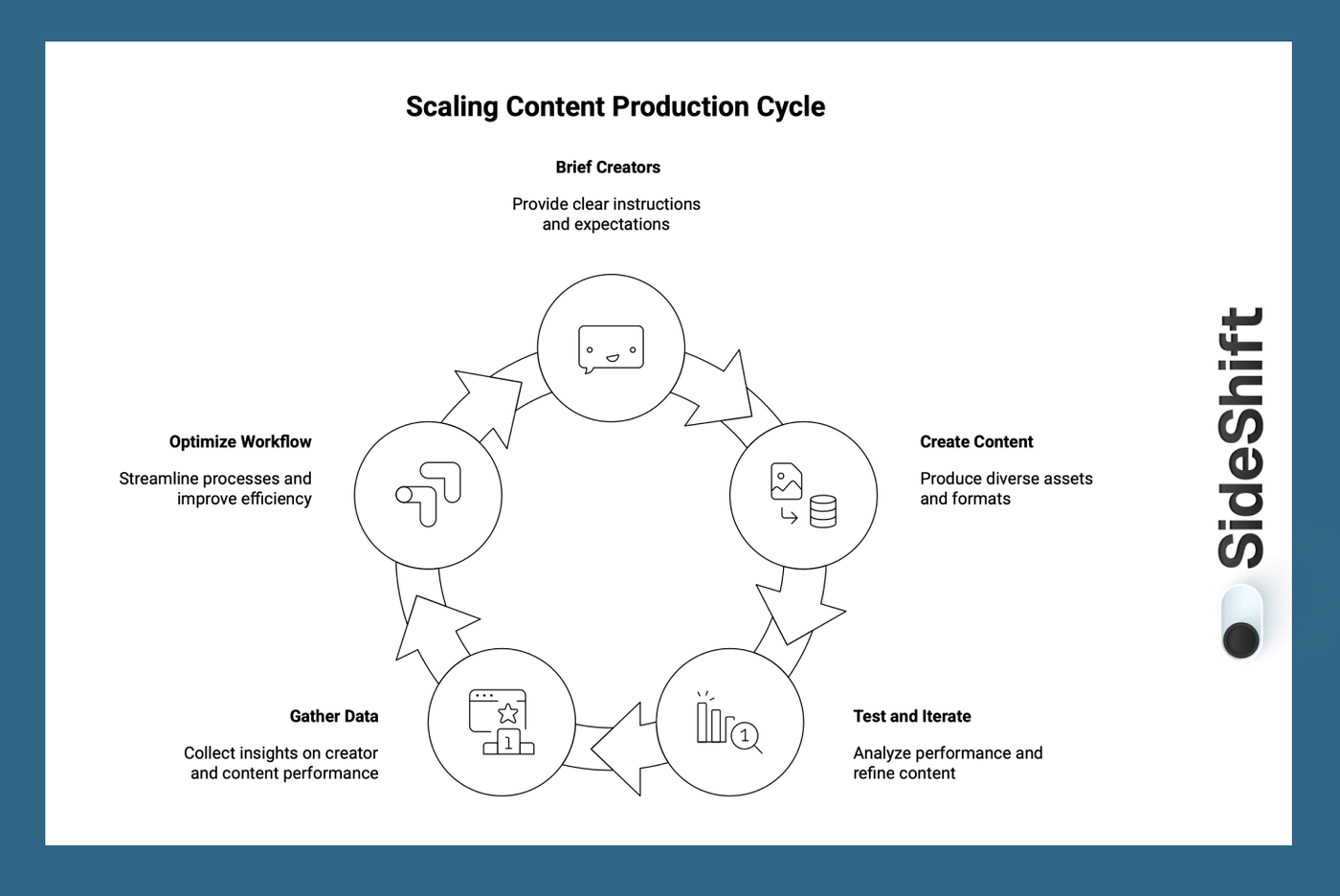
Producing content at scale requires a shift in mindset. Instead of creating one “perfect” hero asset, brands lean into iteration, volume, and variation with high volumeUGC. Scaling means managing dozens of hooks, multiple creators, different formats, testing different scenes and scripts, and gathering enough data to know what performs best.
This only works when the content pipeline is predictable. Brands that scale know where every asset is in the process-from briefing to delivery to payment. They understand which creators consistently deliver high-quality work, which angles drive the strongest ROI, and which stages of the workflow slow down production.
SideShift is the perfect partner for your creator management handles vetting, contracts, and payouts and analytics for you.
Want to put this into practice?
SideShift connects you with vetted UGC creators who actually deliver. Start your free trial and post your first job in under 10 minutes.
Best Practices in Creator Operations
The strongest creator operations teams we see on SideShift all follow similar principles. They centralize communication, so creators don’t get mixed messages across different apps. They use standardized briefs so every creator receives clear expectations. They build fast review cycles, ensuring creators get feedback quickly and keep momentum. And they track everything-from deadlines to final performance-to understand how the workflow can improve over time.
Creator ops isn’t glamorous, but it’s the backbone of high-volume UGC production.
Building an Efficient Creator Workflow
An efficient workflow removes uncertainty. With an efficient and clear workflow, creators know how to get started, when to deliver drafts, how feedback will be shared, how approvals work, and how and when they will be paid. Simultaneously, internal teams know exactly what’s in production and what requires attention. The more predictable the workflow, the faster teams can scale.
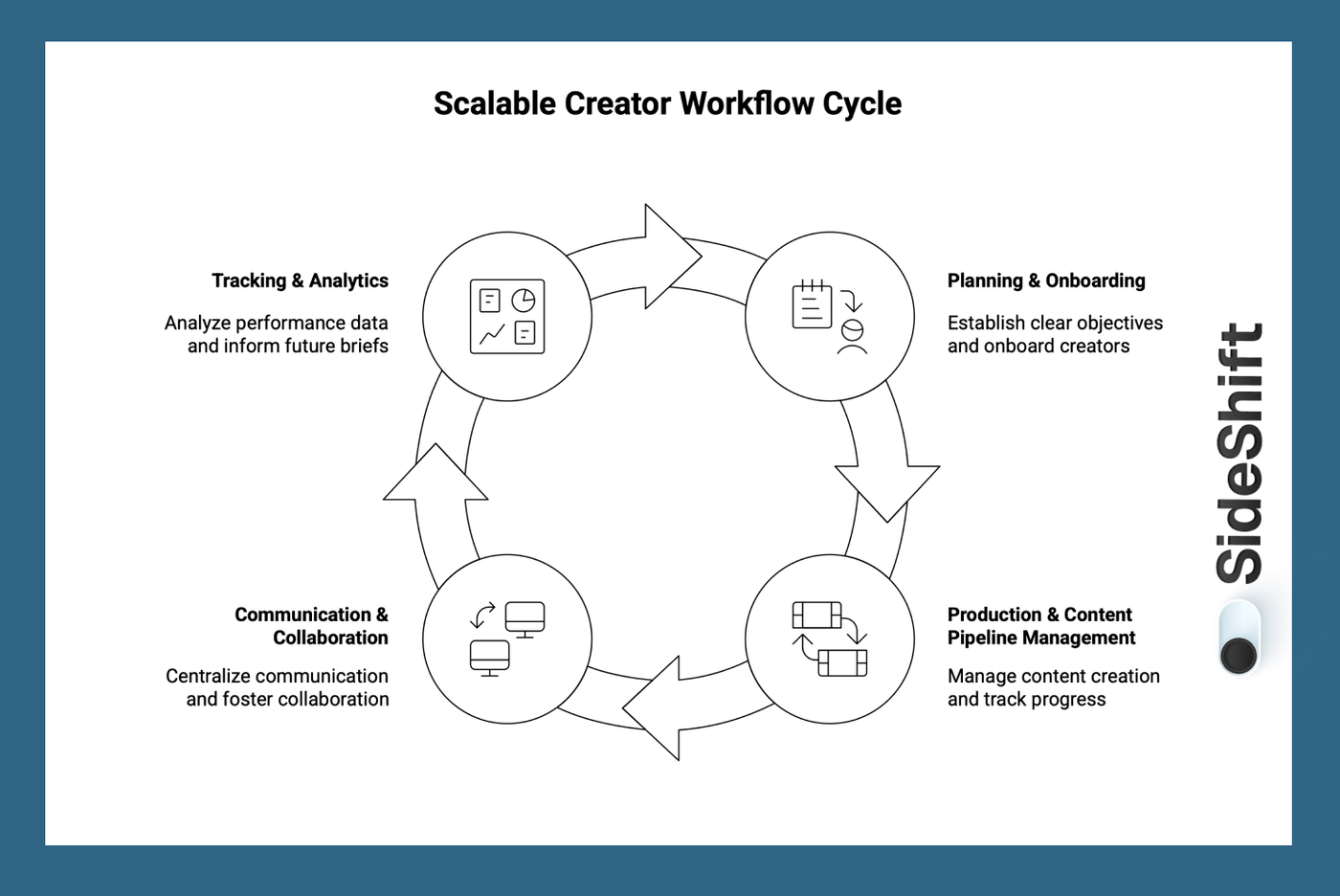
Below are the key stages of a scalable creator pipeline:
Planning & Onboarding
Strong creator programs begin long before the first video is recorded. Brands that scale plan campaigns with clear objectives-whether it’s testing six new hooks, building evergreen ad variations, or feeding TikTok Shop with daily organic content. From there, onboarding becomes a frictionless path. Creators receive a warm introduction, a clear brief, brand guidelines, deadlines, and any reference examples. When onboarding is clear and complete, creators deliver better content with fewer revisions and far fewer delays.
Platforms like SideShift make this smoother by letting brands handle recruitment, approvals, briefs, contracts, and communication all in one place, which eliminates the scattered “DM chaos” that slows many early-stage programs.
Production & Content Pipeline Management
Once onboarding is complete, creators enter the production stage. Here, consistency is everything. Brands that scale successfully use structured steps: creators confirm their concept, submit drafts, move through edits, and finalize the asset. A transparent pipeline helps teams track where everything stands without manually chasing updates. This is especially important when producing content at high volume. When the system is organized, creators stay confident, timelines stay tight, and internal teams regain hours typically lost to tracking and follow-ups.
Communication & Collaboration
Communication is where creator programs succeed or fail. Creators rely on clear expectations, clear deliverables, and quick responses. When communication is centralized-rather than scattered across email, Instagram DMs, and Slack-creators feel supported and stay engaged longer. Smooth collaboration encourages creators to produce their best work and keeps them excited to work with your brand again. It also reduces revision cycles, accelerates delivery, and fosters more consistent creative quality.
Tracking & Analytics
The most scalable creator programs treat performance data as a feedback loop. After content goes live, teams review analytics across TikTok, Instagram, YouTube, or paid campaigns. They look at watch time, engagement, view-through conversions, and retention curves to understand which creative angles resonate. This data informs future briefs, guides recruitment decisions, and helps brands identify their highest-performing creators. With SideShift’s analytics tools, teams can see all this information in one place, turning performance insights into actionable next steps.
Want to put this into practice?
SideShift connects you with vetted UGC creators who actually deliver. Start your free trial and post your first job in under 10 minutes.
Challenges in Scaling Content Production
Scaling isn’t without friction. Quality can dip if briefs are unclear. Timelines can slip when approval loops get too long. Creators may disengage if communication feels scattered or payments are delayed. The key is catching these issues early and addressing them operationally. Most problems aren’t creative when it comes to UGC campaigns, they’re structural.
Tools and Software for Creator Management
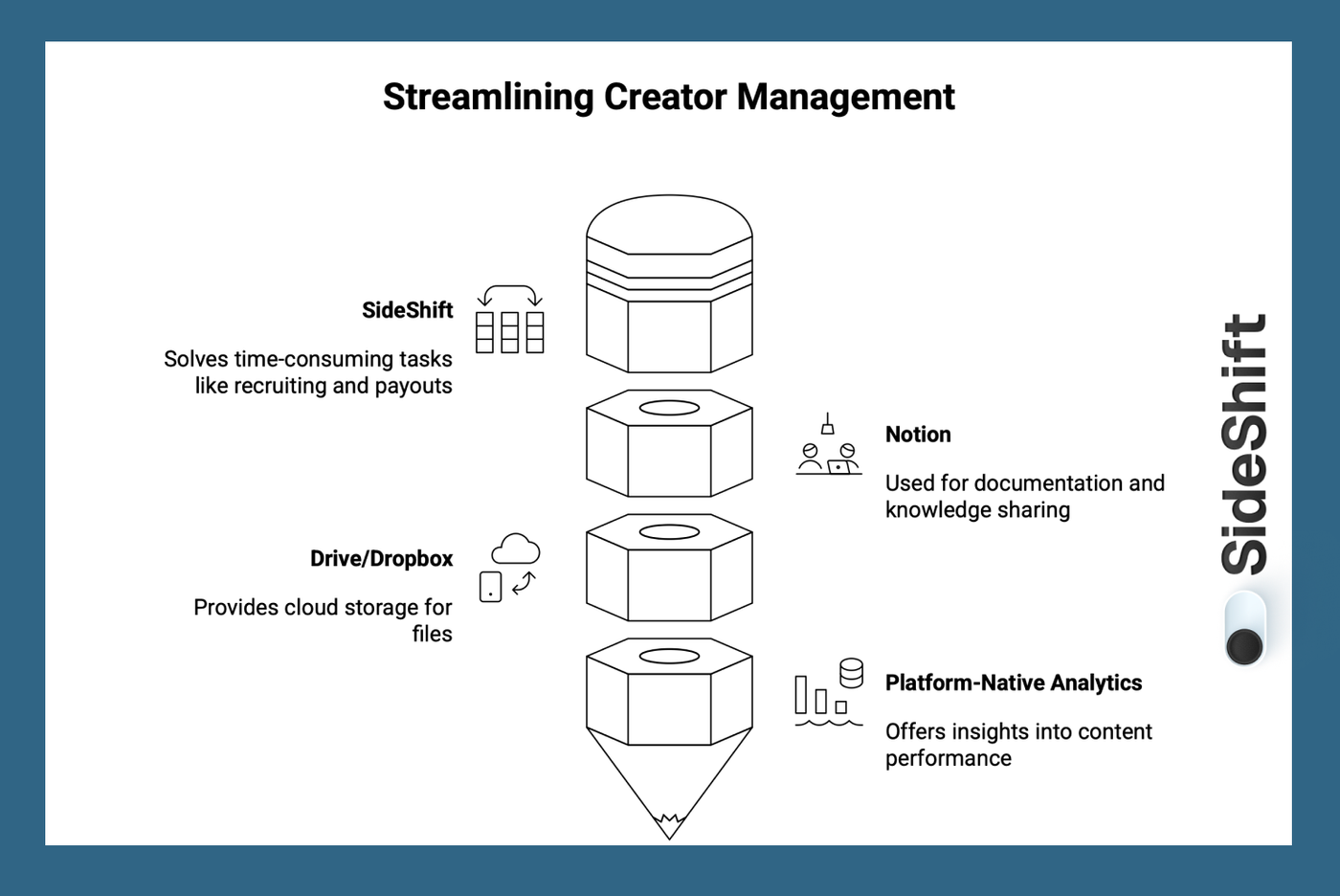
A reliable tool stack can dramatically speed up production. SideShift solves the most time-consuming parts of creator ops-recruiting creators, managing briefs, tracking deliverables, sending contracts, handling payouts, and centralizing analytics tools. Many teams complement SideShift with tools like Notion for documentation, Drive or Dropbox for storage, and platform-native analytics for performance review. The best tool stack is the one that reduces friction, not the one with the most features.
Key Takeaways
Scaling UGC content production requires structure. A well-designed creator management workflow streamlines onboarding, accelerates production, strengthens collaboration, and ensures content quality improves over time rather than declining. With the right systems in place, teams can move from producing a few videos per month to creating dozens or even hundreds without sacrificing quality. SideShift was built to make that scale possible.
Ready to scale your UGC content effortlessly? Start using SideShift today to streamline creator management, accelerate production, and consistently deliver high-quality content at scale.
FAQs
1. What is the best way to manage multiple creators at once?
The most effective approach is to centralize everything-briefs, messages, deliverables, contracts, and payments-so teams always know where content stands.
2. How can brands scale UGC production efficiently?
Efficient scaling comes from predictable workflows and cohort-style creator hiring instead of scattered one-off collaborations.
3. Which tools help streamline creator workflows?
SideShift handles recruitment, briefs, content tracking, contracts, analytics, and payouts, supported by tools like Drive, Notion, and platform-native analytics.
4. How do you balance content volume with quality?
Clear briefs, fast feedback, strong communication, and performance insights help maintain quality even as volume increases.
5. What are best practices for paying and incentivizing creators?
Timely payments, transparent rates, and hybrid models (retainer + performance bonuses) keep creators engaged and consistently motivated.