


Mom Influencer Marketing: The 2026 Guide for Brands
Mom influencers drive trust-based purchase decisions for baby, kids, family, and household brands. See the 2026 strategy guide with top creators and pricing.
Table of Contents
Mom influencer marketing has quietly become one of the motors of the creator economy. Baby gear, kids' apparel, household items, family services: these are not impulse buys. A parent researching a car seat or a stroller is looking for someone who has already lived through the decision, made the mistakes, and can tell them what actually works.
For brands, this matters because women control 85% of purchases across multiple industries in the U.S. alone. If a mom gives a useful, trustworthy recommendation for another mom, chances are that product will actually be purchased.
Mom content also has a heavy relatability component. As they post their household routine, other women with the same responsibilities to juggle every day see themselves in them. This bond creates highly engaged communities, which is gold for a campaign.
This guide walks you through what’s relevant, what to consider, and how to build a mom influencer marketing strategy that converts.
Why Mom Influencer Marketing Is Different From Other Niches
Mom influencers aren’t lifestyle influencers who occasionally post their children. Much of their online presence revolves around parenthood, the challenges and responsibilities of being a mom. While a lifestyle influencer would post a vlog titled “travel with us to Orlando,” a mom influencer version would be “travel with me to Orlando as a mother of 2 under 2.”
This puts mom influencers in a different shelf of content creators. “The difference often appears in the audience response: people ask mom creators practical questions about safety, cost, routines, and whether a product genuinely made their lives easier,” says Canyon Pergande, Co-Founder & COO at SideShift.
Parenting purchases are high-stakes by nature. They involve a child's safety, comfort, or development, which means parents research harder. In some cases, a mom influencer is the quickest answer to another parent’s question. “Mom creators tend to be especially strong for products where trust and household adoption matter more than impulse reach,” Pergande says.
Parenting and Mom Creator Subsegments Brands Should Know
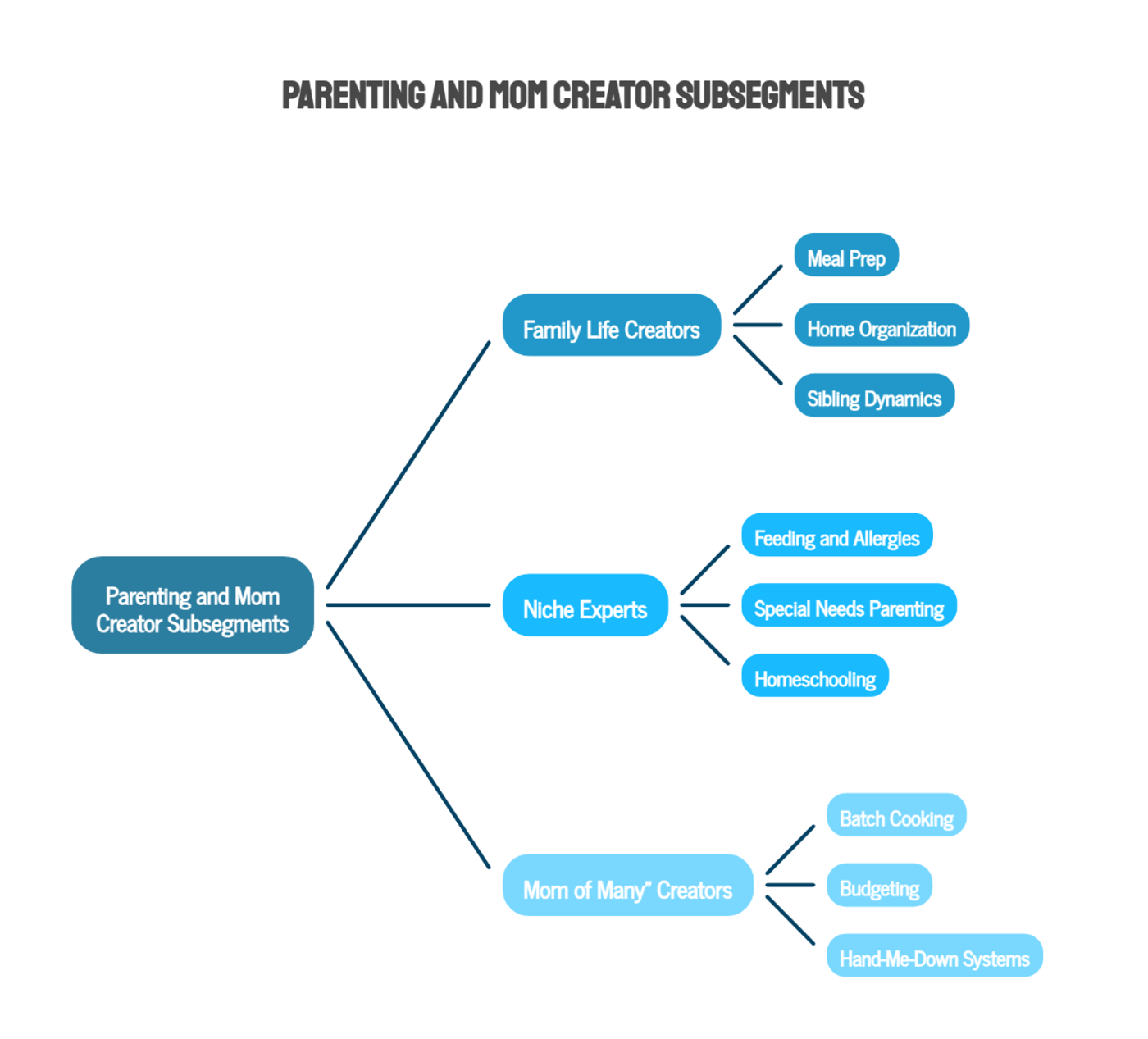
“Mom influencer” is often used as a catch-all, but this segment actually breaks down into distinct creator types, each with different content styles, audience expectations, and ideal use cases.
- Family life creators: Their strength is reach and relatability, and their content is often a mix of meal prep, home organization, sibling dynamics, seasonal routines. They're a good fit for household goods, general baby gear, and family services with broad appeal.
- Niche experts: They approach motherhood from one point-of-view and go deep on that lane. Think feeding and allergies, special needs parenting, or homeschooling, for example. They’re good for campaigns that speak directly to their specific situation (e.g, medical devices, allergen-free food) because their credibility is built on expertise in that one area.
- “Mom of many” creators: Their main theme is managing logistics at scale—batch cooking, budgeting, hand-me-down systems. They're strong partners for bulk household goods, meal-planning services, and value-oriented child items, since their content often focuses on efficiency and cost management.
Sometimes these categories cross each other. For example, in a family of five children, one is special needs, which means that mom content will have a mix of angles.
Want to put this into practice?
SideShift connects you with vetted UGC creators who actually deliver. Start your free trial and post your first job in under 10 minutes.
How Brands Can Use Mom Influencers in Campaigns
Good campaigns with mom influencers will let the creator be themselves and naturally insert the product in their routines. It’s even better if the influencer already has a history of using other products from the brand in non-sponsored content or if the campaign brings a solution to a common problem in that community.
- User-generated content: UGC content is one of the most effective formats in mom influencer marketing, because it allows the creator to show the value of the product in action, and the content can be repurposed for paid ads. For example, a baby gear brand launching a new car seat can partner with a creator mom for an honest installation walkthrough and real-world testing in her vehicle.
- Brand awareness campaign: Mom influencers are the best voices to put brands for children on the radar of other moms, especially if it brings a solution to a very specific or painful problem. A children's apparel brand expanding into adaptive clothing lines will likely gain more mileage from a month-long partnership with three or four special-needs parenting creators than with broad lifestyle accounts.
The common thread: pairing the product to the subsegment whose audience already has the specific pain point that product solves, rather than defaulting to whichever creator has the largest following.
What Pricing in Mom Influencer Marketing Looks Like
Pricing in this industry tracks fairly closely with general influencer marketing benchmarks. It all comes down to engagement rate, the brief, number of deliverables, platform, and content format.
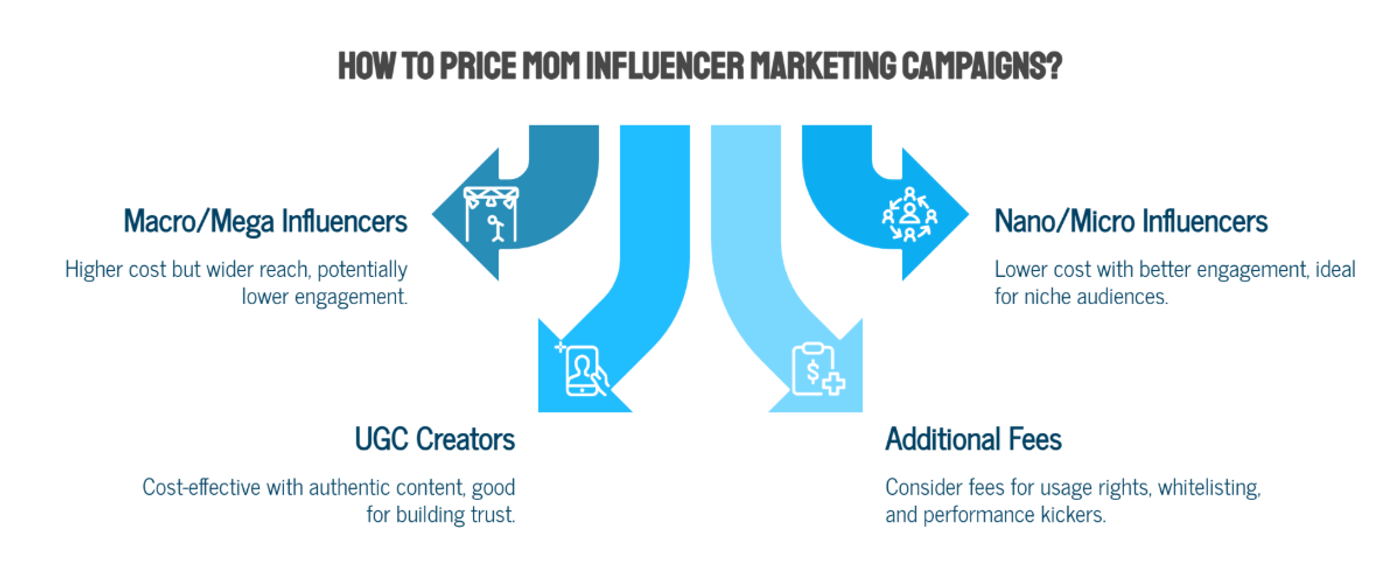
Macro and mega influencers tend to be on the pricier side, but often have lower engagement rates, while nano and micro influencers, and UGC creators, typically have a better cost-benefit ratio.
Also be prepared to negotiate potential additional fees for usage rights for repurposing content in paid ads, whitelisting fees for running the post directly from the creator's handle, and affiliate or performance kickers (commission on top of a smaller flat fee) for brands wanting to tie part of the spend to actual conversions.
FTC Guidelines and Safety Considerations in Mom Influencer Marketing
Marketing to parents about products used by or for children without checking the Federal Trade Commission’s (FTC) recommendations for social media creators is one of the most common mom influencer marketing mistakes. Here’s what to have in mind:
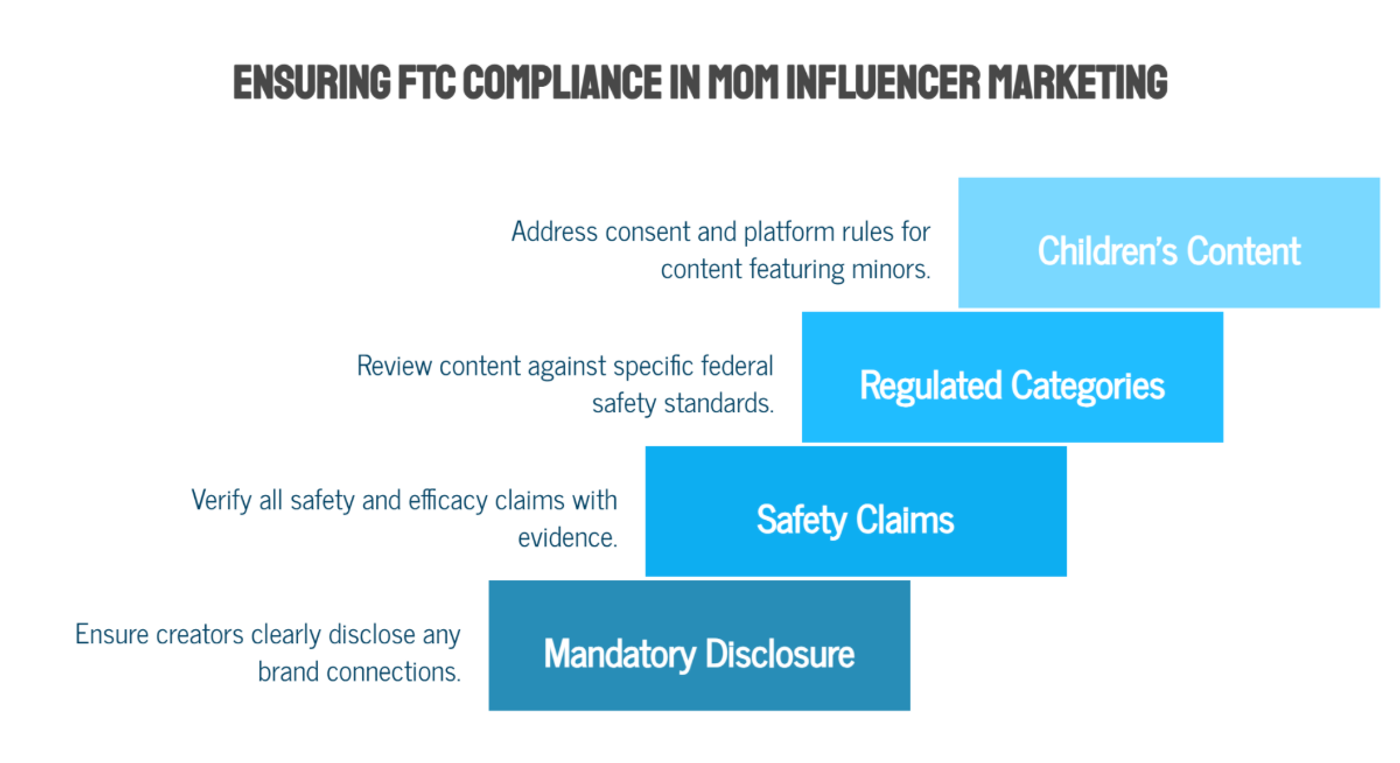
1. Disclosure is mandatory. The FTC's Disclosure Guide requires any material connection between a creator and a brand, payment, free product, discounts, affiliate commissions, or early access to be disclosed clearly and conspicuously, not buried in a caption or hashtag stack.
2. Safety and efficacy claims need a paper trail. A creator cannot claim a product has health benefits or meets a specific safety standard unless that claim is verifiable. This matters enormously in baby gear, where overstated safety claims create both regulatory risk and real harm if a parent makes a purchasing decision based on an inflated claim.
Want to put this into practice?
SideShift connects you with vetted UGC creators who actually deliver. Start your free trial and post your first job in under 10 minutes.
3. Regulated categories need extra review. Products like car seats, cribs, formula, and certain feeding equipment fall under specific federal safety standards (Consumer Product Safety Commission regulations, in many cases), and creator content promoting them should be reviewed against those standards before publishing, not just brand style guidelines.
Brands should also be aware of content featuring children, which raises its own set of considerations around consent, state laws, and platform-specific rules about content involving minors. Brands should have clear guidelines with creators about what's appropriate to show and consider only requesting content featuring children when it’s truly necessary for the campaign.
Finding the Right Mom Influencers for Your Campaign
In this segment, consistency and trust are more important than follower count. If you’re doing a formula campaign, a niche expert with 10,000 followers who has spent a year documenting real feeding therapy will outperform a 60,000-follower lifestyle generalist who occasionally posts about being a mom, because her audience showed up for that exact problem and trusts her judgment on it.
Start with these steps to find mom influencers your audience will trust:
Step 1: Define What You Need
Before opening any platform, get specific about what the campaign actually needs:
- Which parent-creator subsegment fits the product?
- What life stage or parenting situation does the audience need to be in?
- Which platform does that audience actually spend time on?
- Do you need broad awareness or a highly specific, high-intent audience?
A car seat brand chasing safety credibility has completely different criteria than a subscription meal-kit brand chasing broad household reach. Getting specific here up front saves hours of vetting creators who simply aren't the right fit.
Step 2: Make a Targeted Search
Social media is oversaturated with creators, so searching through hashtags and keywords might be too time consuming. Creator marketplace platforms like SideShift are often more productive. SideShift lets you filter creators by subsegment, platform, location, and audience demographics. You end up with a more assertive choice for your brand in less time.
Step 3: Analyse Relevant Data
Once a mom influencer profile catches your attention, make a performance prediction analysis:
- Engagement rate: If it’s a smaller creator, look for 5% to 10% engagement rate and 3% to 6% if it’s a mid-size creator. For larger influencers, an ideal engagement rate ranges from 1% to 3%.
- Comment quality: Are other parents asking follow-up questions and sharing their own experiences, or is it just emoji and generic comments?
- Consistency: Do they post about this topic regularly and organically, or only when a brand pays them to? Do they post on a consistent schedule or go weeks without posting?
- Audience alignment: Does the audience actually match the product's target life stage or are they passively consuming parenting content without a real need for it right now?
- Partnerships performance: How many brand partnerships have they run recently? Does their sponsored content perform close to their organic content?
Build Your Mom Influencer Marketing Strategy with SideShift
Want to put this into practice?
SideShift connects you with vetted UGC creators who actually deliver. Start your free trial and post your first job in under 10 minutes.
Mom and parenting creators offer something rare in performance marketing: an audience that's already primed to trust them.
That's why you don't need a mega influencer with millions of followers charging tens of thousands of dollars. Instead, you need creators whose content, audience, and values genuinely align with your brand and products. Finding and vetting those creators manually, however, can be a daunting task, especially for brands running influencer campaigns at scale.
SideShift can do heavy lifting for you, with a platform that provides vetting, outreach, payment, and a performance tracking dashboard all in one place. Test a pool of influencers, see what’s working in real time, and adapt your strategy as you see fit.
FAQs
1. How much does it cost to work with mom influencers?
Mom influencer rates can range from a few hundred dollars for smaller collaborations to several thousand dollars or more for larger campaigns. Pricing depends on factors such as audience size, engagement, content format, usage rights, whitelisting, exclusivity, and campaign scope.
2. What's the biggest mistake brands make with mom influencer marketing?
Picking creators by follower count instead of subsegment fit. A niche expert with a small, highly relevant audience will often outconvert a large generalist account when the product ties directly to that creator's area of credibility.
3. How do you know if your mom influencer marketing campaign is working?
Track earned media value, click-through rate (CTR) in your site or product link, conversion and cost per acquisition (CPA), and your return on investment (ROI), which measures your profit in the campaign.
4. Are dad creators part of mom influencer marketing?
Yes. Dad creators are a distinct and growing subsegment, especially strong in gear reviews and outdoor family activities.