


Influencer Marketing for Tech Brands: A Strategy Guide
A strategy guide for influencer marketing for tech brands, covering how to find the right creators, choose platforms, and measure ROI.
Table of Contents
Influencer marketing looks different in tech than it does in fashion or beauty. An unboxing video is unlikely to close an enterprise deal, and a viral post does not necessarily translate into qualified leads. Tech purchases tend to involve longer sales cycles, more research, and buyers who need to understand a product before they are ready to consider it.
That changes the role influencers play. For tech brands, the most valuable creators are often people with expertise and credibility in a specific field, even if their audiences are relatively small. Developers, founders, consultants, analysts, and industry educators can all influence how buyers discover, evaluate, and ultimately trust a product.
This guide covers how influencer marketing strategy for tech companies differs from traditional consumer campaigns, which creators are worth working with, and how to build a strategy around business outcomes rather than reach alone.
Why Does Influencer Marketing Work Differently for Tech Brands?
Tech products often require more explanation than consumer products. Before buying, a customer may need to understand what the product does, how it compares with existing tools, whether it fits their workflow, and whether the investment makes sense. In B2B tech, that decision may also involve several people across technical, financial, and operational teams.
Influencer marketing can support that research process. A developer showing how they use a tool, a founder discussing software they rely on, or an industry expert comparing approaches can give potential customers context that a traditional ad cannot.
This also means audience size is only one part of evaluating a creator. A smaller creator who regularly reaches the people involved in purchasing or using the product may be more relevant to a tech campaign than a larger account with a broad audience. The goal is to identify creators whose expertise and audience align with the people the brand is actually trying to reach.
Who Counts as an Influencer in Tech?
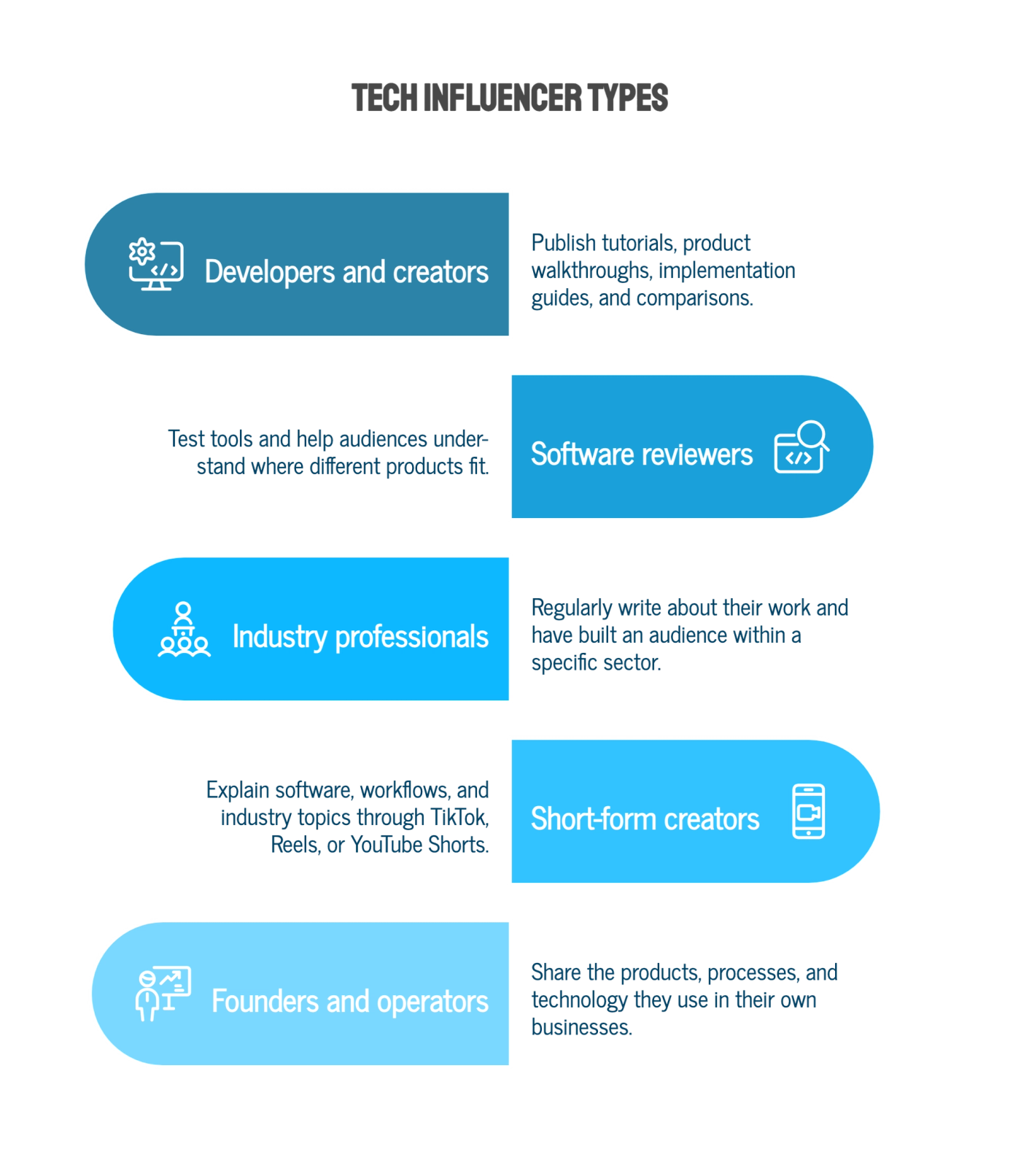
Tech influencers are not limited to creators who make content about software. Depending on the product and its customer, the right partner might be a developer with a technical YouTube channel, a SaaS reviewer, a founder who writes regularly on LinkedIn, or an operator known for their expertise in a particular industry.
Common examples include:
- Developers and technical creators who publish tutorials, product walkthroughs, implementation guides, and comparisons
- Software reviewers and educators who test tools and help their audiences understand where different products fit
- Industry professionals on LinkedIn who regularly write about their work and have built an audience within a particular role or sector
- Short-form tech creators who explain software, workflows, and industry topics through TikTok, Reels, or YouTube Shorts
- Founders and operators who share the products, processes, and technology they use in their own businesses
A cybersecurity creator with 15,000 followers may be speaking directly to the people who research, recommend, or buy security software. That's often more useful than reaching 150,000 people with little connection to the category.
Look at the audience before the follower count. Who are they? Why do they follow this person? Are they the same people who would realistically use or buy the product?
Want to put this into practice?
SideShift connects you with vetted UGC creators who actually deliver. Start your free trial and post your first job in under 10 minutes.
How Do You Build a B2B Tech Influencer Marketing Strategy?
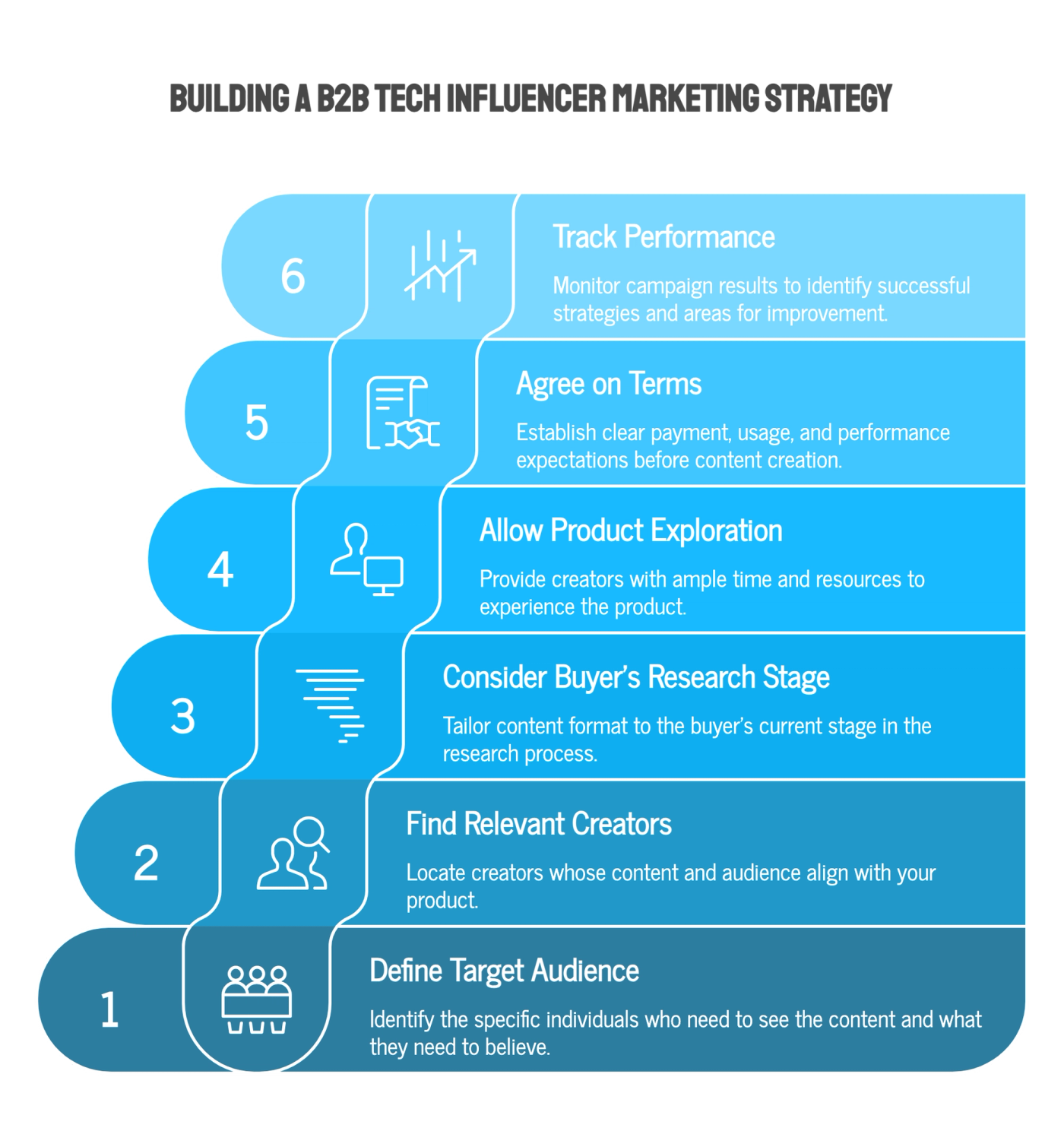
A strong B2B tech influencer marketing approach starts with the buyer, not the creator. Before reaching out to anyone, define exactly who needs to see the content and what they need to believe before they'll consider the product.
- Find creators those people already follow. Don't make follower count the first filter. Look at what the creator talks about, who engages with their content, and whether the product makes sense alongside the topics they already cover. Someone with 8,000 developer followers may be a better match than a general tech creator with 300,000.
- Think about where the buyer is in their research. A short video might be enough to introduce a product they've never heard of. Someone actively comparing options will probably want more: a walkthrough, tutorial, comparison, or a closer look at a particular feature.
- Let creators use the product before they talk about it. Give them an account and enough time to actually explore it. For more technical products, that could also mean access to a sandbox environment, sample data, documentation, or someone on the team who can answer questions. The creator should have enough experience with the product to talk about it without relying on a script.
- Sort out payment and usage before the content is made. Agree on the creator fee, deliverables, timeline, revisions, and where the brand can reuse the content. If there are performance bonuses for sign-ups, demos, or other results, define those terms upfront too.
From there, track what happens after the content goes live. The first campaign can show you which creators, topics, and formats are worth scaling rather than forcing every partnership into the same campaign structure.
Which Platforms Work Best for Influencer Marketing in Tech?
Where you run a campaign should depend on the product, the people buying it, and the type of content you want creators to make.
- LinkedIn is a natural fit for B2B tech. Founders, executives, marketers, sales teams, and other professionals are already there talking about their work, which gives creators room to discuss a product in the context of an actual business problem.
- YouTube makes sense when the product needs more than a quick introduction. Tutorials, demos, reviews, and comparisons give creators time to actually show the software and explain how they use it.
- TikTok can work for products that lend themselves to quick demos, tips, or educational content. It's also worth considering when the audience includes developers, creators, entrepreneurs, or people earlier in their careers.
- X is still home to active startup, developer, AI, and tech communities. It can be useful for reaching people who already follow conversations around a particular product category or industry.
- Instagram is a better fit when the product has a strong visual or lifestyle component. Consumer apps, creator tools, design software, productivity products, and other products that are easy to demonstrate can translate well to Reels and Stories.
Want to put this into practice?
SideShift connects you with vetted UGC creators who actually deliver. Start your free trial and post your first job in under 10 minutes.
- Facebook may be useful when the audience is active in industry or professional groups, or when creator content is being repurposed for paid campaigns. Its role will depend more heavily on the customer and campaign than the other platforms above.
A campaign also doesn't need to be everywhere. Start with the platforms your customers already use and the formats that give creators enough room to show why the product is useful.
What Content Formats Perform Best for Tech Products?
Technical audiences respond to specificity. Content that shows exactly how a product works, with real screens, real data, and real use cases, gives people much more to work with than broad brand messaging.
A few formats that tend to work well in tech:
- Hands-on product walkthroughs and demos
- Head-to-head comparisons against competitors
- Integration or setup tutorials
- Honest reviews
- Short-form explainers focused on a specific feature or use case
GPTZero is a good example. The AI detection platform worked with SideShift on a five-month creator campaign that included walkthroughs, skits, and challenges created specifically for a student audience. Across 22,300 creator posts, the campaign generated 421.2 million views and more than one million new users.
Creators also need enough freedom to talk about a product like a real person would. A review that covers where a product works well, where it doesn't, and who it's actually useful for gives the audience more information than a scripted list of selling points.
How Do You Measure ROI on Tech Influencer Campaigns?
Views, impressions, and engagement can tell you whether people are seeing the content, but tech brands should also track what happens afterward. Use unique landing pages, demo links, promo codes, and UTM parameters to connect creator content with site visits, sign-ups, demo requests, or purchases.
For products with longer sales cycles, a click may only be the beginning. If that data can be connected to the CRM, you can see which creators are bringing in leads that actually move through the sales process. Over time, that gives you a much better basis for deciding who to work with again and where to spend more of the campaign budget.
Common Mistakes Tech Brands Make with Influencer Marketing
One of the easiest mistakes is choosing creators based on their numbers without looking closely at who follows them. A large tech audience isn't automatically the right audience for a cybersecurity platform, developer tool, or B2B SaaS product.
Giving creators too much of a script can also work against you. They know how they normally talk about products and what their audience expects from them. Give them the technical information they need to get the details right, but leave room for them to explain the product in their own way.
Views can also look great in a campaign report, but they don't tell you whether anyone signed up, requested a demo, or eventually became a customer. Decide what you want people to do after seeing the content before the campaign starts, and make sure you have a way to track it.
Want to put this into practice?
SideShift connects you with vetted UGC creators who actually deliver. Start your free trial and post your first job in under 10 minutes.
Scale Your Tech Influencer Marketing Strategy with SideShift
Running influencer marketing for tech brands well means managing a lot of moving pieces at once from sourcing creators with the right niche credibility, coordinating access to product demos or sandbox accounts, tracking deliverables across multiple platforms, and tying every campaign back to the pipeline.
SideShift brings that entire process into one system, from creator sourcing and vetting through contracts, payments, and performance tracking, so tech teams can run influencer campaigns with the same rigor they'd apply to any other growth channel.
FAQs
1. Is influencer marketing effective for B2B tech companies?
Yes, when the strategy is built around niche credibility rather than broad reach. A smaller, highly relevant creator audience tends to be a better fit for B2B tech products, since the people watching are closer to an actual buying decision and the product is generally more niche to begin with.
2. What's the difference between influencer marketing and UGC for tech brands?
Influencer marketing leverages a creator's existing audience and credibility, while UGC is typically content used in a brand's own channels regardless of the creator's following. Many tech brands use both together.
3. Which social platform works best for tech brand influencer marketing?
LinkedIn tends to perform best for enterprise B2B tech, while YouTube and TikTok work well for developer-focused or younger technical audiences. Most brands see the strongest results pairing one primary platform with a secondary one.
4. How much should tech brands budget for influencer marketing?
Budgets vary widely based on creator tier and campaign scope. Many tech brands start by testing a few niche creators before committing to a larger partnership.
5. How do you find the right influencers for a tech brand?
Start with the exact roles involved in the buying decision, then look for creators who already have credibility with those specific roles, whether that's through technical tutorials, product reviews, or industry commentary.