


Influencer-Generated Content (IGC) vs UGC: What's the Difference?
Influencer-generated content (IGC) is content made by paid influencers, distinct from organic UGC. See how IGC works, when to use it, and pricing in 2026.
Table of Contents
Influencer-Generated Content (IGC) is paid content made by an influencer to promote a brand in their social media profiles. When a brand pays for an IGC, what they want is access to the influencer’s audience and reach, which helps create awareness and buzz around the brand.
On the other hand, User Generated Content (UGC) is organic content made by small creators or everyday customers, usually handed over to the brand to post on its own channels. Brands work with UGC creators when they need content that feels native to the platform, less polished, and more relatable.
Neither is good or bad: they have different characteristics and benefits. What you can do is learn what these strategies have to offer so you’re able to make the best decision for your business.
What is Influencer-Generated Content?
Influencer-Generated Content is content created by an influencer with an existing, established audience, briefed and paid for by a brand, and published on the influencer's own social channels. Think of a beauty creator posting a get ready with me video that features a specific skincare line or a fitness influencer posting their workout routine featuring a certain supplement.
The defining trait of IGC is that it's a partnership, not a transaction for footage alone. The influencer is compensated for the content itself and access to the trust they've built with their followers. That's why IGC tends to feel less like an ad and more like a recommendation. It's published in a feed the audience already follows, by a voice they already trust.
IGC is:
- Planned through a creative brief, campaign goals, and approval rounds
- Paid in cash, products, or a hybrid of the two
- Published by the creator, not the brand
- Backed by an existing audience, which is part of what the brand is paying for
Brands often negotiate usage rights with influencers to repurpose strong IGC as paid ads. This strategy is known as whitelisting, Spark Ads on TikTok, and Partnership Ads on Meta.
Examples of Influencer-Generated Content
Influencer-generated content for brands mostly revolve around four main categories: reviews, demonstrations, tutorials, and unboxings. They can come in videos (Reels, TikTok, YouTube, Stories) or in static posts and often overlap.
Review
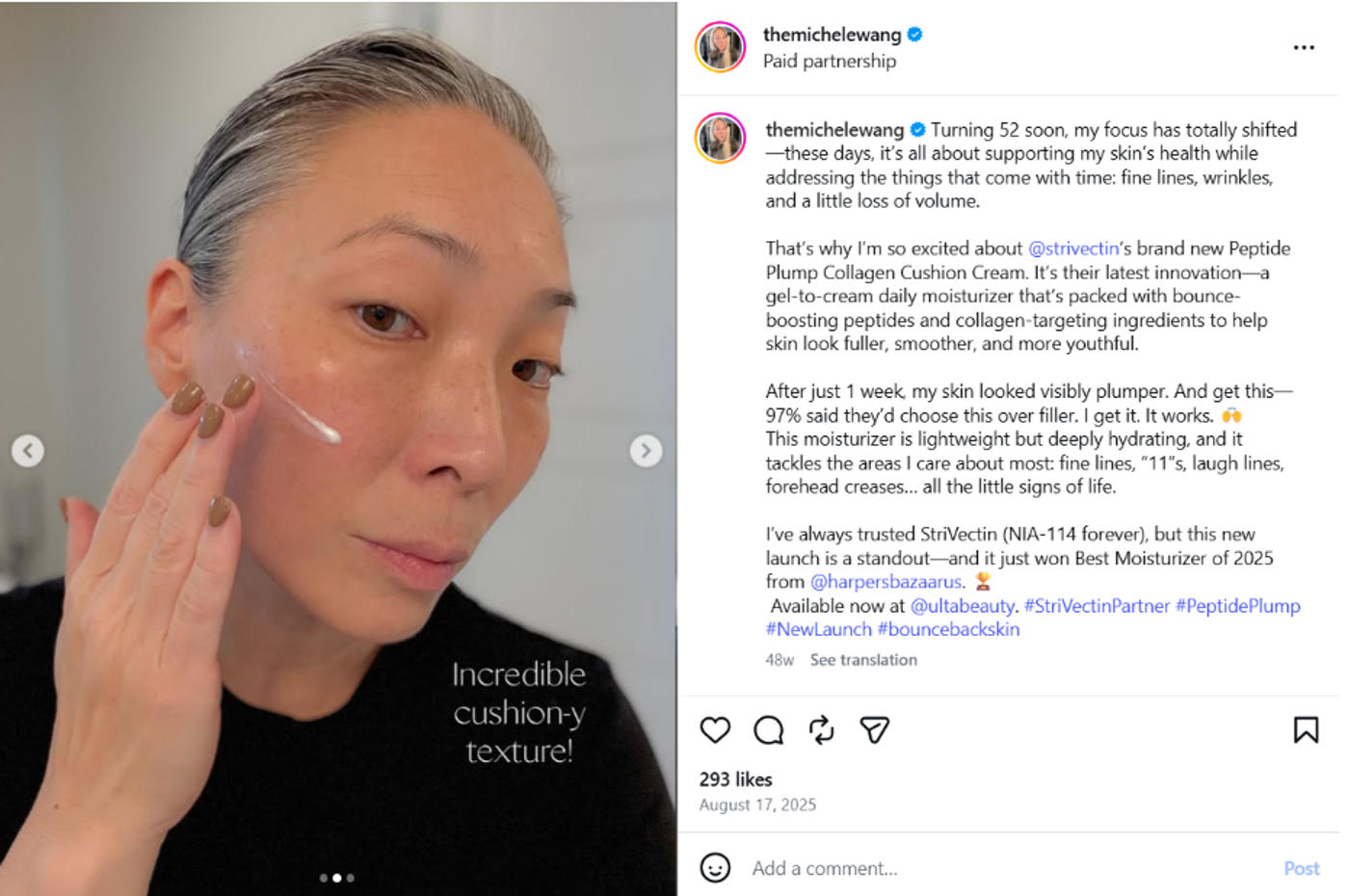
In reviews, influencers give their opinion about a product, getting into details about characteristics and benefits. It often overlaps with demonstrations because influencers will typically give their impressions while using the product on camera. Even if it's sponsored content, it’s important that an influencer-generated review feels genuine and provides helpful information to the audience.
Demonstration
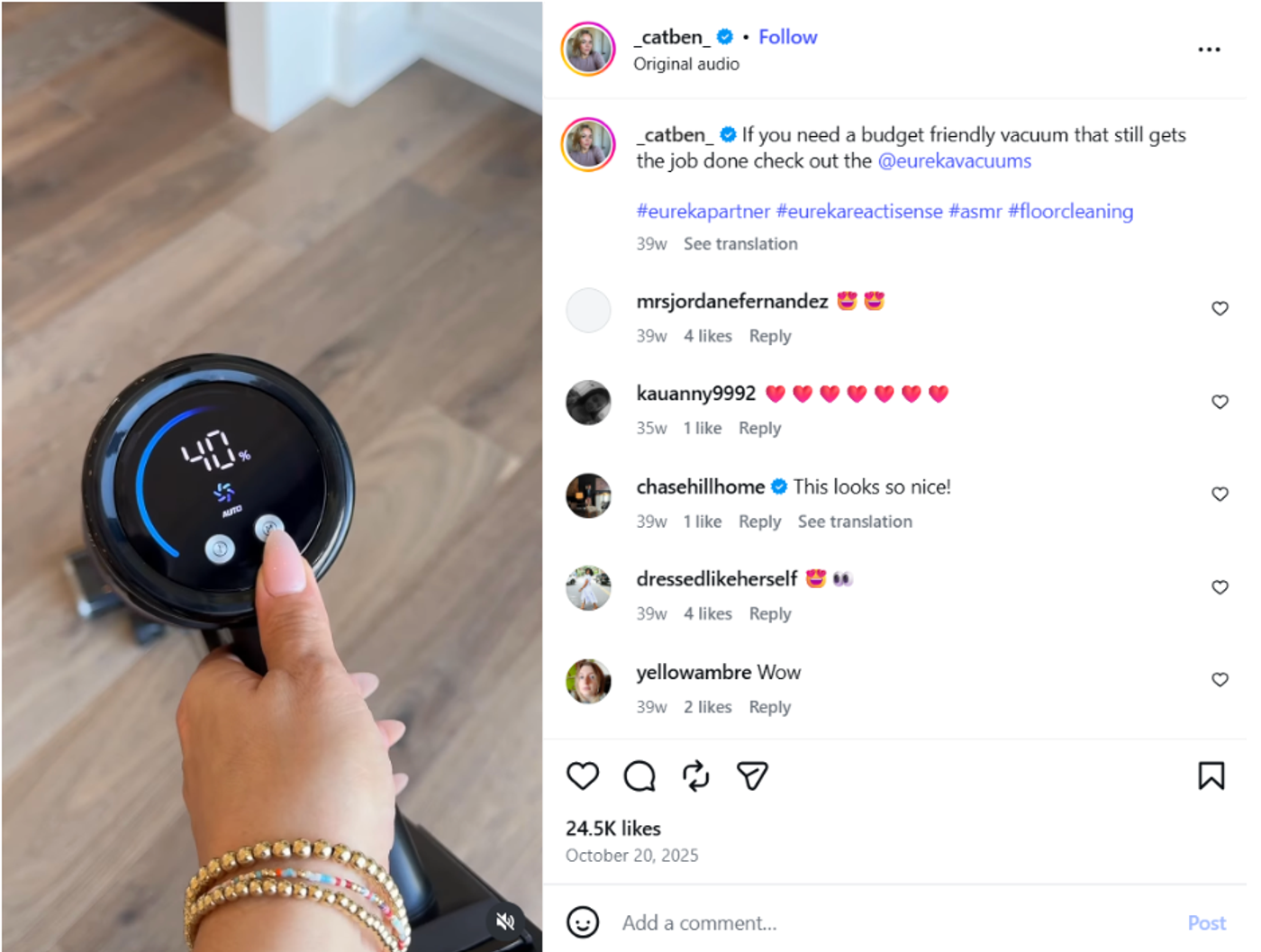
In demonstrations, the influencer integrates that product to a part of their life to give their followers a view of how it looks or works in real life. For example, in a Reel for Eureka Vacuums, the influencer Catherine Benson vacuums her house with one of their tools, showing how it works in floors, carpets, and its different features.
Tutorial

Tutorials are educational content and typically used by brands that need to educate their consumers about a new launch or new consumers getting to know their products. Similarly to demonstrations, tutorials take the product out of the context of a perfect ad and put it in an every-day-life scenario.
Want to put this into practice?
SideShift connects you with vetted UGC creators who actually deliver. Start your free trial and post your first job in under 10 minutes.
UGC vs IGC: Key Differences
IGC and UGC are often used interchangeably and they do share similarities, but aren’t the same thing. The main differences between them are who creates it, where it’s posted, and how it’s priced.
Creator
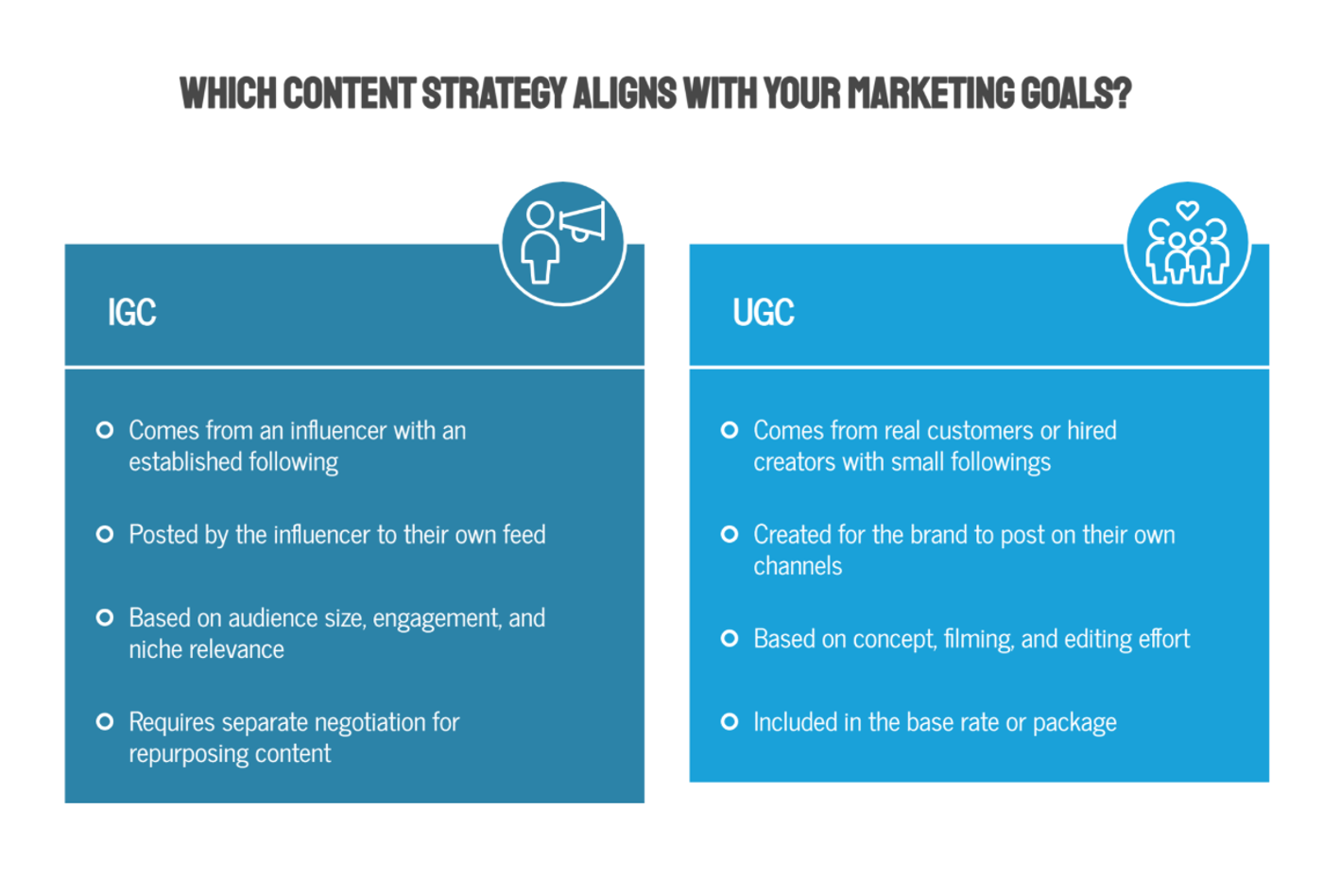
- IGC always comes from an influencer with an established following and that following is what interests brands the most.
- UGC comes from real customers, fans, or hired UGC creators who typically have a small social following. Some UGC is organic, while some is commissioned but still made to look organic.
Channel
- IGC is posted by the influencer, to their own feed or Stories, where their followers see it natively.
- UGC is created for the brand to post on the brand's own Instagram, TikTok, website, product pages, or paid ads.
Some campaigns blur this line intentionally, an influencer posts on their own channel and grants the brand rights to run that same asset as a paid ad. When that happens, you're essentially paying for both IGC and an extended UGC-style usage license in one deal.
Pricing
- IGC is priced per deliverable but audience size, engagement rate, niche relevance, and production play a huge role in the final fee.
- UGC is typically priced per deliverable. The concept, filming, and editing are the main determinants of the price.
Usage rights
- IGC typically treats usage rights as a separate negotiation. If you want to repurpose an influencer's post as paid ad creative or run it across other channels, that needs to be agreed and priced beforehand.
- UGC content typically includes usage rights in the base rate or as part of a package, since the whole point of the deliverable is for the brand to use it.
How Much Does IGC Cost?
Influencer marketing doesn’t have a fixed price. However, their audience can give you an estimate of how much an influencer costs, since most take their popularity into account when negotiating a brand deal.
- Nano influencers (1,000-10,000 followers): fees typically range from $10 to $200 per post.
- Micro influencers (10,000-100,000 followers): fees typically range from $100 and $1,500 per post.
- Macro influencers (100,000-1 million followers): fees can range from $7,500 to $20,000 per post.
- Mega influencers (1 million+ followers): anywhere from $20,000 to over $100,000 per post.
Brands also work with influencers in long-term partnerships, such as ambassador programs, where influencers will create content for the brand on a recurring basis for a monthly payment and performance-based incentives, like a percentage of the sales originated from their content.
Note that content format is also a huge part of pricing. For example, a static Instagram post will typically be less expensive than a Reel, which takes more time to produce and edit. Following the same logic, a 20-minute YouTube tutorial will likely be more expensive than a 1-minute unboxing video on TikTok.
When to Use IGC vs UGC
Want to put this into practice?
SideShift connects you with vetted UGC creators who actually deliver. Start your free trial and post your first job in under 10 minutes.
Neither format is necessarily better than the other. They solve different problems and should be chosen according to your brand's overall needs and objectives.
Reach for IGC when you need:
- Content that benefits from the influencer's personal credibility
- Brand awareness or trust-building with a new customer segment
- A campaign where the influencer's following is the focus of interest
Reach for UGC when you need:
- High-volume, testable ad creative for paid social, landing pages, and product pages
- Content that feels authentic without paying for reach you don't need
- Fast iteration, since UGC creators typically turn around content faster
Many of the strongest content strategies in 2026 run both in parallel: IGC to build initial trust and reach with an audience, then UGC (often modeled after whatever creative angle performed best in the IGC campaign) to scale that message as paid ad creative at a much lower cost per asset.
Scale Your IGC and UGC Strategy with SideShift
Running IGC and UGC campaigns requires two things: the right creators and structure. Without the right selection of voices and the proper tool to track their performance, you could end up wasting resources and misrepresenting your brand.
SideShift gives you both: access to a base of 800,000+ pre-vetted creators and a dashboard where you can track the key performance indicators of your campaigns. Plus, you can also handle contracts, briefing, and payment all in one place, allowing you to scale your marketing strategy faster and more efficiently.
FAQs
1. Is IGC the same as influencer marketing?
Not exactly. Influencer marketing is the broader strategy, IGC is the content output of that strategy. All IGC comes from influencer marketing partnerships, but influencer marketing campaigns can also include things like affiliate links or event appearances that aren't strictly content.
2. Can UGC creators become IGC creators?
Yes. As a UGC creator's following grows, brands may start paying them to post on their own channel instead of just delivering footage, at which point the same creator is now producing IGC.
3. Do you need a contract for IGC and UGC?
Yes. Both should include clear terms on deliverables, timelines, revisions, and usage rights. IGC contracts additionally need disclosure requirements and, if relevant, terms for repurposing the post as paid media.
4. Which converts better, IGC or UGC?
It depends on the goal. IGC tends to perform well for awareness and trust in a new audience segment. UGC tends to perform well as scalable paid ad creative, since it doesn't rely on any one influencer's reach to work.
5. Can you use IGC without paying for usage rights?
No, not beyond the influencer's own post. If you want to run that content as an ad, put it on your website, or use it past the original post's lifespan, you need explicit usage rights, negotiated and priced separately from the base content fee.