


How to Use Instagram Reels to Grow Your Business in 2026
Learn how to use Instagram Reels to grow your business in 2026, from format specifics and posting cadence to why UGC should be part of your marketing strategy.
Table of Contents
If you're trying to get your brand discovered by people who don't already follow you on Instagram, Reels are the primary door in. But "post more" isn't a strategy on its own, and a lot of businesses are burning time on Reels that never leave their existing follower base. So, how do you use Instagram Reels for business effectively?
It comes down to three things: getting the format specifics right, posting consistently enough for the algorithm to trust you, and understanding what kind of content Instagram is built to reward right now. (That last point matters more than most businesses realize, and it's where a lot of brand-made content is quietly working against itself.)
None of this requires a big production budget or an in-house video team. Most of what works on Reels, a fast hook, a native feel, a sound that's currently trending, is achievable with creators well-versed in the platform. If you want to know in detail how to do it, keep reading.
Instagram Reels For Business: How To Build Your Content
Before strategy, get the mechanics right. Well-planned Reels that ignores basic format good practices will underperform no matter how good the idea is.
What Is the Best Length for Reels?
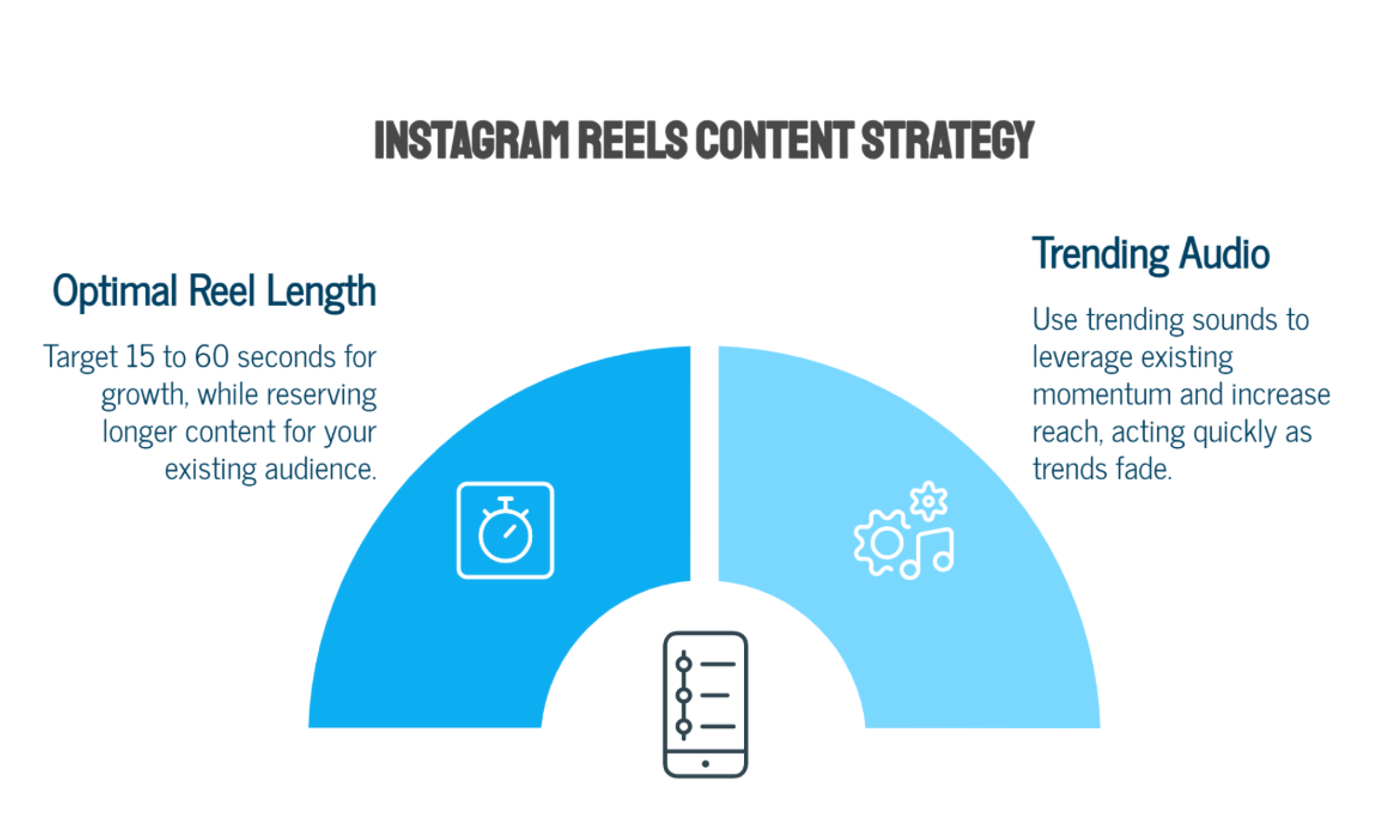
Check your Instagram's discovery page and click on every Reel in there. You'll see that all of them are less than 60 seconds long.
Instagram allows Reels recorded in-app up to about three minutes and up to 15 or 20 minutes for pre-edited uploads, depending on your account's rollout. However, Instagram's discovery algorithm stops pushing Reels longer than three minutes to people who don't follow you.
For a business trying to reach new people, the real sweet spot is much shorter: somewhere between 15 and 60 seconds. This means anything past that point functions as content for your existing audience, not a growth tool.
Save your longer, deeper-dive Reels (tutorials, behind-the-scenes walkthroughs, Q&As) for content aimed at people who already know your brand, and keep growth-focused Reels tight.
What Audio Should You Use?
Audio is one of the strongest signals Instagram's algorithm uses to decide who else to show a Reel to. Using a trending sound places your content inside that sound's existing momentum, which can mean meaningfully more reach than the exact same video with generic or no audio attached.
The catch is timing. Trending audio has a short shelf life, often just days, so the sound that worked for a competitor two weeks ago is probably already fading. Check the Reels tab and your niche's top-performing content regularly and when you find a sound gaining traction, move fast.
This is also an area where creators tend to have an edge over an in-house team: people who post frequently develop a real-time feel for which sounds are climbing, since they're immersed in the app's trends daily in a way a brand's marketing calendar usually isn't.
How Do You Hook Viewers?
Instagram decides whether to keep showing your Reel to new people based largely on early retention, which is decided in the first three seconds of the video.
Want to put this into practice?
SideShift connects you with vetted UGC creators who actually deliver. Start your free trial and post your first job in under 10 minutes.
If a viewer scrolls past before that window is up, the algorithm reads it as a weak signal and slows distribution, regardless of how strong the rest of the video is. That's why you need to work on hooks that capture the viewers attention right away.
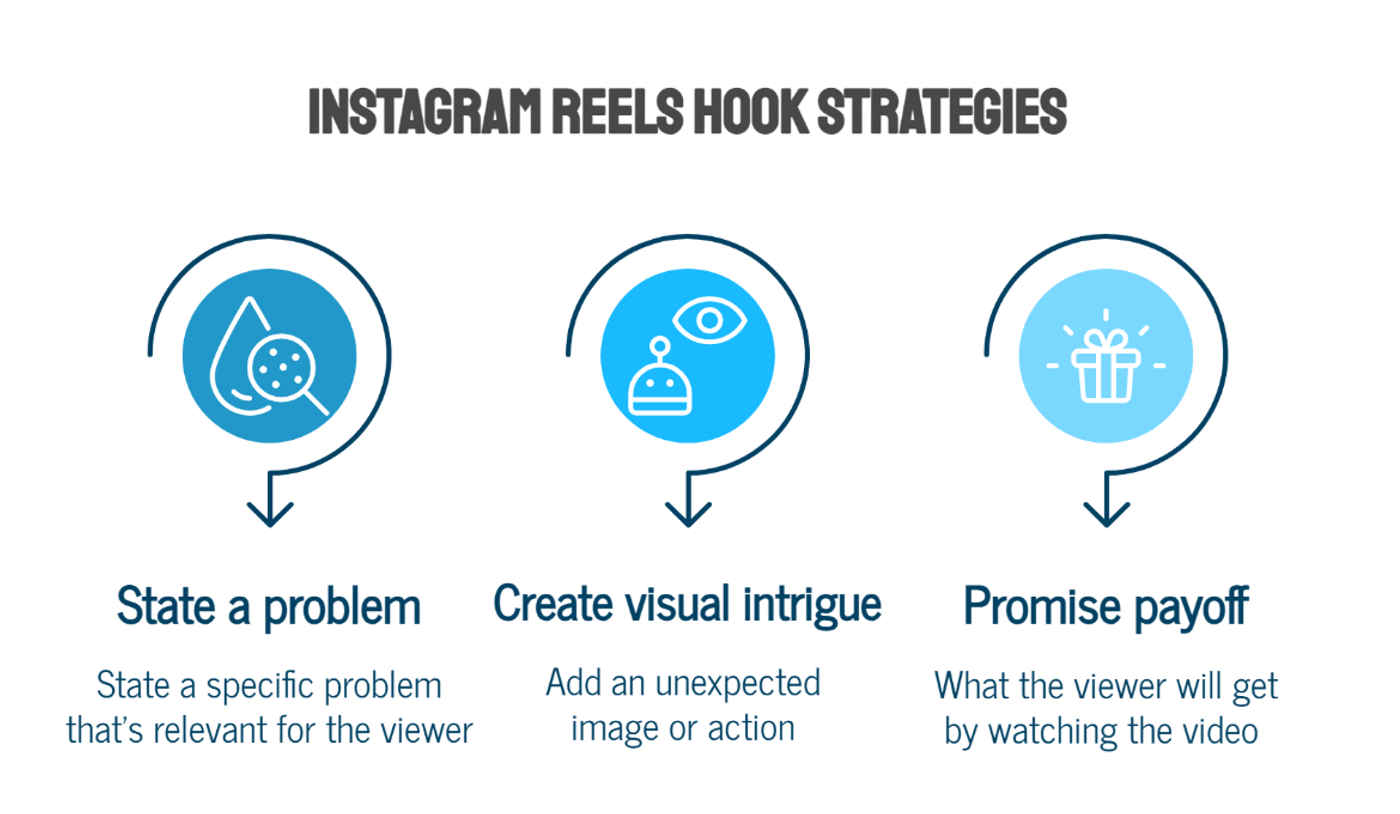
Strong hooks usually do one of these three things immediately:
- States a specific, relevant problem ("Here's why your skin keeps breaking out")
- Creates visual intrigue, like an unexpected image or action that makes someone want to know what happens next
- Promises a concrete payoff ("3 things I wish I knew before buying a couch online")
What doesn't work is a slow build, a logo intro, or a soft opening line that takes five seconds to get to the point. On Reels, you don't get a warm-up, the hook has to be the first thing on screen.
Keep It Native to the Platform
The instinct is to treat Reels like a smaller, cheaper version of a traditional ad: good lighting, a clean set, a scripted voiceover, a logo at the end. But polished production alone isn't necessarily what makes a Reel perform.
Obviously produced brand content can trigger the same skepticism audiences have toward traditional commercials, which shows up as lower watch time and engagement, the exact signals the algorithm uses to decide how far to push a video.
Reels performs better when it doesn't look like an ad. Content that feels shot on a phone, in a real setting, by a real person talking directly to camera reads as native to the format, the same way it does on TikTok.
This is where UGC (user-generated content) and creator partnerships become more than a nice-to-have; they can give brands a genuine performance advantage.
A UGC creator filming a product demo, a review, or a day-in-the-life moment featuring your product, produces content that already looks and feels like the rest of what a viewer scrolls through on Reels. It doesn't need to fake authenticity, because it's actually made the way native content is made: on a phone, in the creator's own voice, without a script reading like brand copy.
That authenticity can lead to stronger retention and engagement, which can give the content a distribution advantage.
For a business, a mix that leans heavily on UGC, supplemented by the occasional in-house Reel for announcements or brand moments, can be a stronger approach than relying entirely on polished, internally produced video, particularly when the goal is engagement and reaching new audiences.
How Much Should Your Business Post on Reels?
Consistency matters more than volume, but volume still matters. Posting Reels sporadically, three one week and none for the next month, sends a weak, inconsistent signal to the algorithm and makes it harder for any single post to build momentum off the last one.
For most businesses, a realistic and sustainable cadence is three to five Reels per week. That's frequent enough to give the algorithm regular signals to learn from and enough content to test different hooks, formats, and topics, without requiring a production pipeline most small teams can't sustain.
Want to put this into practice?
SideShift connects you with vetted UGC creators who actually deliver. Start your free trial and post your first job in under 10 minutes.
Businesses with more resources or an active creator partnership can push higher, but showing up reliably at a lower volume will outperform an ambitious posting schedule that quietly falls apart after two weeks.
The other piece of cadence is consistency in timing and format. Posting around similar times of day and keeping a recognizable style (a consistent intro beat, caption format, or visual identity) helps your account build a pattern that both the algorithm and your audience come to recognize, which compounds over time in a way that scattered, one-off posts don't.
How To Build Your Instagram Reels Marketing Strategy
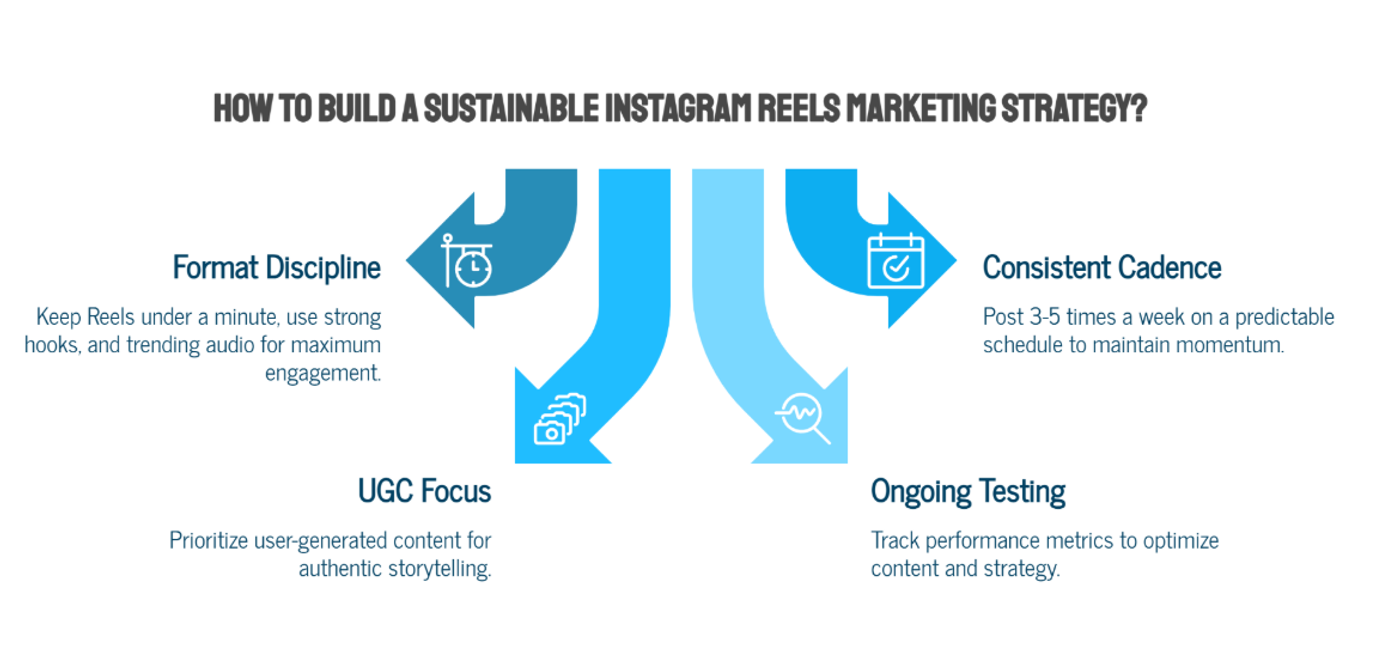
A sustainable business Reels strategy comes down to four things working together, not any single tactic in isolation:
- Format discipline: Keep growth-focused Reels under a minute, lead with a strong hook in the first three seconds, and use trending audio while it's still trending.
- Consistent cadence: Aim for three to five posts a week, on a predictable rhythm, rather than sporadic bursts of activity.
- Content mix weighted toward UGC: Let real people, not a polished studio setup, carry most of the storytelling.
- Ongoing testing: Track which hooks, sounds, and creators are actually driving watch time and shares, and shift the mix toward what's working rather than sticking to a fixed plan. A creator marketplace makes this easier to do at scale, since you can run the same concept with a handful of different creators at once and compare performance side by side.
None of these four elements works especially well on its own. A perfect hook on a Reel posted once a month won't build momentum. A great posting cadence filled with over-produced content won't get the algorithm's attention the way native-feeling content does. It's the combination that compounds.
Test Reels with SideShift, Then Scale What Works
The fastest way to find out what actually works on Reels is to test more than one version at a time.
SideShift lets you run that testing loop with real, talented creators: brief a handful of creators on the same concept, get back several distinct takes on a hook, sound, or format, and see which ones actually hold attention before committing your posting calendar to one direction.
Once a format or creator is clearly outperforming the rest, scaling is just a matter of bringing in more creators and replicating the winning approach, rather than starting from scratch. Performance data, content delivery, and payments all stay within the platform, so the process from testing to scaling doesn't require you to manually manage a growing list of creators.
FAQs
1. How long should a business Instagram Reel be?
For growth and discovery, keep Reels under a minute, with 15 to 60 seconds. Reels longer than three minutes aren't distributed to people who don't already follow you, so you'd be limited to your existing audience.
Want to put this into practice?
SideShift connects you with vetted UGC creators who actually deliver. Start your free trial and post your first job in under 10 minutes.
2. How many Reels should a business post per week?
There isn't a set amount, but it's recommended to post 3 to 5 Reels a week on a consistent schedule. When it comes to social media, a sustainable cadence performed reliably is better than lots of irregular posting.
3. Why does UGC perform better than polished brand content on Reels?
UGC and creator content is filmed in a style that already matches what audiences expect to see on Reels: native, unscripted, and shot like a real person's content rather than an ad. That authenticity drives stronger watch time, saves, and shares, which are engagement signals Instagram's algorithm uses to decide how widely to distribute a video.
4. How to use Instagram Reels for business marketing?
Focus on short, hook-driven videos under a minute, post consistently (3 to 5 times a week), and lean on creator, UGC-style content over polished brand video. Layer in trending audio while it's relevant, and track which formats and creators drive the most watch time so you can shift budget toward what's actually working.
5. What makes a Reel go viral?
Virality on Reels usually comes down to strong early retention: a hook in the first three seconds that stops the scroll, a pace that holds attention through the whole video, and a payoff (useful, funny, or surprising) that makes someone want to share or save it. Trending audio and native, unscripted-feeling content also help, since both align with what the algorithm is already primed to push. There's no guaranteed formula, but content that performs well on these signals has a meaningfully better shot than content that doesn't.