


How to Get Influencers to Promote Your Product
Learn how to get influencers to promote your product, from finding the right fit to writing a pitch that actually gets a response, with five simple tips.
Table of Contents
You're wondering how to get influencers to promote your product, so you already know the power of influencer marketing. But you probably also know that influencers don't often promote a product "just because." It's usually either a business transaction or the result of a genuine connection with the brand.
Either way, doing the groundwork is how you land a partnership: finding a creator who's a genuine fit, matching your offer to their tier, and reaching out in a way that actually gets read. Vague or poorly targeted outreach, especially when it asks for something without offering anything specific in return, is likely to get ignored.
This guide walks through five practical steps to get influencers to promote your product, plus what to offer when your budget doesn't stretch to a full sponsorship.
5 Tips for Getting Influencers to Promote Your Product
These five steps cover what to sort out before you reach out, how to actually make contact, and how to turn a single collaboration into something that keeps paying off.
1. Pick Influencers Who Relate to Your Product
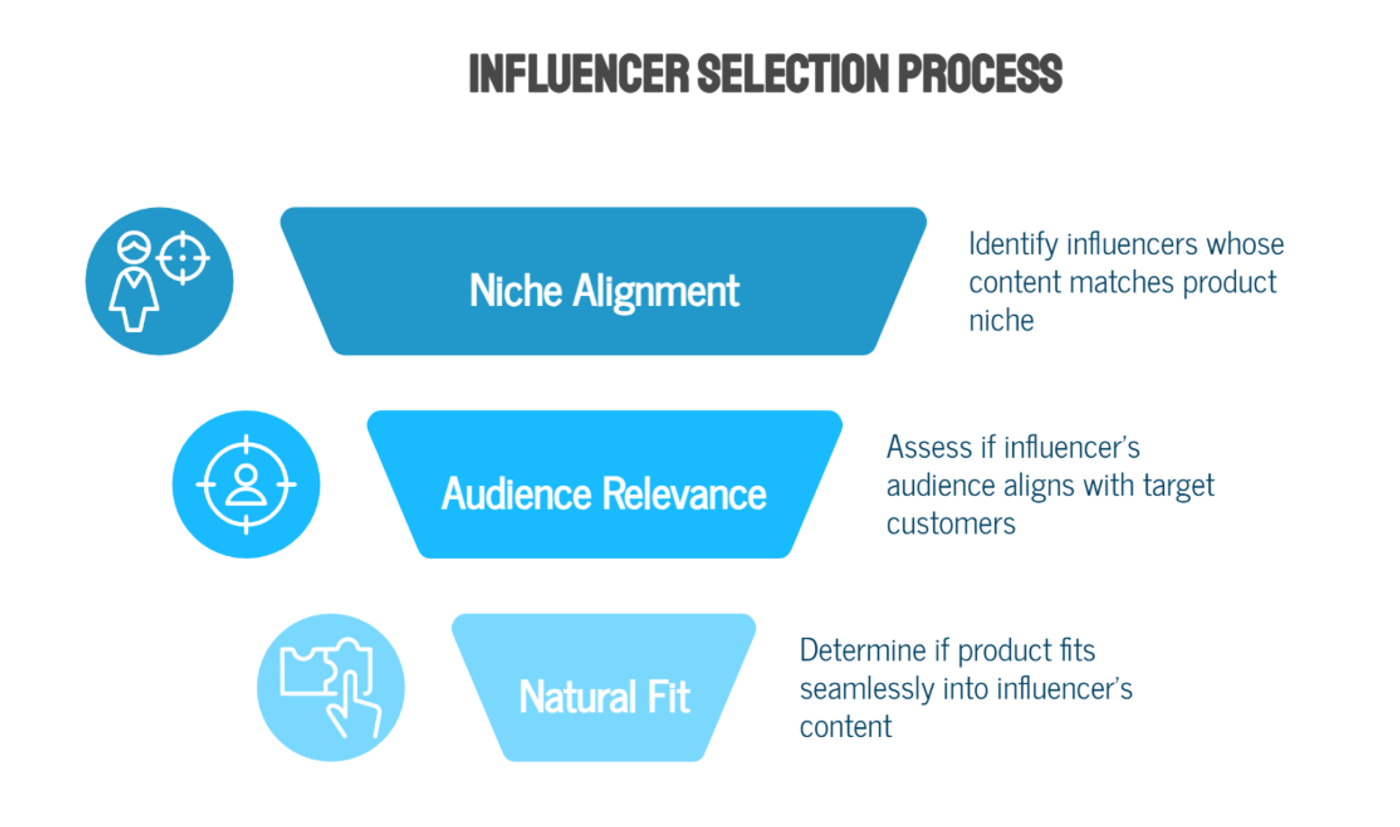
Before writing a single outreach message, look at your offer from a creator's perspective. Influencers are more likely to say yes to a product that fits naturally into content they'd already make, not one that requires them to force an unnatural mention into their feed.
That means looking for influencers whose existing niche already overlaps with your product, rather than defaulting to whoever has the biggest following. A creator whose content already lives in your category has an obvious, natural angle to work with, which makes saying yes an easy decision instead of a stretch.
A large, general-audience influencer might technically reach more people, but if your product doesn't fit anywhere in their usual content, they have to invent a reason to feature it, and that effort (and the risk of it looking forced) is exactly what makes creators hesitate or decline.
The benefit runs in the other direction, too. A big, broad audience sounds appealing on paper, but most of it will never be a realistic customer for a specific product. Paying for exposure to people who were never going to buy isn't a bargain just because the follower count is high.
A smaller, niche-aligned creator's audience is self-selected around the exact interest your product serves, so the impressions you do get are far more likely to convert, and the content itself reads as a relevant recommendation instead of an ad dropped into an unrelated feed.
2. Check If Your Budget Matches Their Influencer Tier
Influencer rates vary enormously by following tier, plus other factors like engagement and niche. For example, while micro influencers (10,000–100,000 followers) run from about $100 to $1,500, macro influencers (100,000–1 million followers) typically charge $7,500 to $20,000. Reaching out to someone well outside your realistic budget wastes both your time and theirs.
So, have a rough sense of what your budget actually buys. If your budget only supports a handful of placements, a wider roster of nano or micro creators will usually stretch further and generate more total engagement than a single higher-tier placement.
Want to put this into practice?
SideShift connects you with vetted UGC creators who actually deliver. Start your free trial and post your first job in under 10 minutes.
If your goal is a big, single moment of visibility and the budget supports it, a macro placement might be worth prioritizing instead. But pitching a macro or mega creator with a micro-sized budget isn't just unlikely to work; it can also come across as not having done basic research, which isn't the impression you want to make with someone you're hoping to build a relationship with.
3. Build an Intentional, Personalized Pitch
A pitch works when it reads like it was written for that specific creator, not copy-pasted to 50 others. A few principles make the difference:
- Reference something specific about their content. A recent post, a recurring theme in their videos, or a detail about their audience shows you actually looked at their profile before reaching out.
- Lead with a concrete idea, not a vague ask. Instead of "would you be interested in a collab," describe what the content could actually look like and why it fits their audience.
- Make your ask and your offer both clear. State plainly what you're proposing, whether it's a paid post, an affiliate arrangement, or a gifted product, and what's in it for them.
- Follow up once, politely. Creators get a lot of messages. A single follow-up after a week is normal and often what actually gets a response.
Getting all of these right doesn't guarantee a yes, but skipping any one of them makes a no far more likely. A pitch that's personalized and concrete puts you in a small minority of the messages a popular creator receives in a given week.
4. Find the Right Moment to Make Contact
When you reach out matters almost as much as what you say. Avoid pitching around a creator's biggest content pushes, a launch of their own product, a major collaboration, or a holiday rush, when they're least likely to have bandwidth for a new brand relationship.
Reaching out with enough lead time before a relevant seasonal moment (a few weeks before a holiday, a product category's peak season) also gives a creator room to plan content properly instead of scrambling to meet a tight deadline, which tends to show in the quality of what they produce.
If a creator posts on a fairly predictable schedule, timing your outreach a few days ahead of a natural gap gives your pitch room to be considered, rather than getting buried under the fresh wave of comments and DMs that follow a new post.
None of this needs to be an exact science, but a little awareness of a creator's calendar before reaching out signals that you see them as a partner with their own priorities, not just a slot to fill in your own campaign timeline.
5. Consider Building a Relationship Before Asking for a Promotion
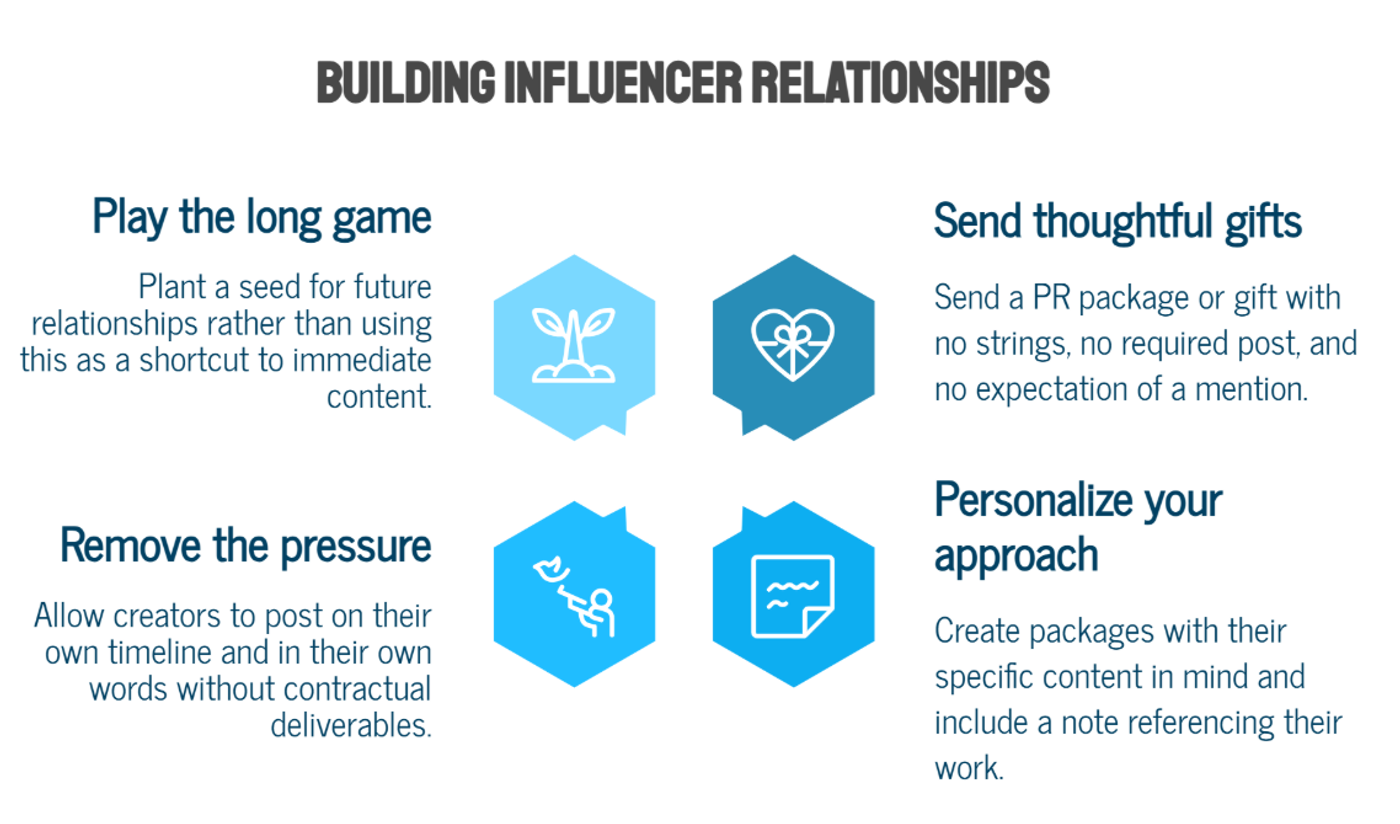
Not every first touchpoint with a creator needs to come with an ask attached. Sending a thoughtful PR package or gift, with no strings, no required post, no expectation of a mention, can be a more effective opener than a pitch, especially with a creator you'd genuinely like to work with long-term.
Want to put this into practice?
SideShift connects you with vetted UGC creators who actually deliver. Start your free trial and post your first job in under 10 minutes.
The key word is thoughtful. A generic gift box sent to a hundred creators at once reads as exactly that. A package that's clearly been put together with their specific content in mind, a note that references something real about what they make, lands very differently. It signals that you see them as a specific person whose work you've paid attention to.
Removing the ask removes the pressure, too. A creator who receives a genuine, no-obligation gift is free to post about it if they're actually excited, on their own timeline, in their own words, rather than fulfilling a contractual deliverable. And even if they don't post at all, you've still made a positive impression with zero downside, which matters if you plan to make a paid ask down the line.
This approach works best as a longer game rather than a fast conversion tactic. Think of it as planting a seed with creators you'd like a future relationship with, rather than a shortcut to immediate content. By the time you do make a paid pitch, the creator already recognizes the brand name and has a positive association with it, which makes that follow-up outreach land very differently than a cold first contact would.
What to Offer When You Don't Have a Big Budget
A flat-fee sponsorship isn't the only way to get a creator's attention and it's not always the best starting point for a smaller brand anyway.
Gifting a product in exchange for content works well with creators who are a genuine fit and don't yet expect a flat fee for every mention. Affiliate arrangements, where a creator earns a commission on sales they drive, remove the upfront cost entirely and let the creator's own results determine their payout.
And when a full influencer partnership isn't in reach yet, a UGC-only deal is worth considering: rather than paying a creator to post on their own channel, you're typically paying for the content itself (a demo, a review, an unboxing) that your brand can then use as ads or on your own social accounts, depending on the usage rights included in the agreement.
UGC creators typically charge far less than an influencer sponsorship because you're not paying for their reach, only their production. It's often one of the more realistic entry points for a business that can't yet afford influencer rates but still wants authentic, creator-made content to work with.
Common Reasons Influencers Say No (and How to Avoid Them)
Even a well-crafted pitch gets turned down sometimes, but a lot of rejections come from a handful of avoidable issues rather than a genuine mismatch.
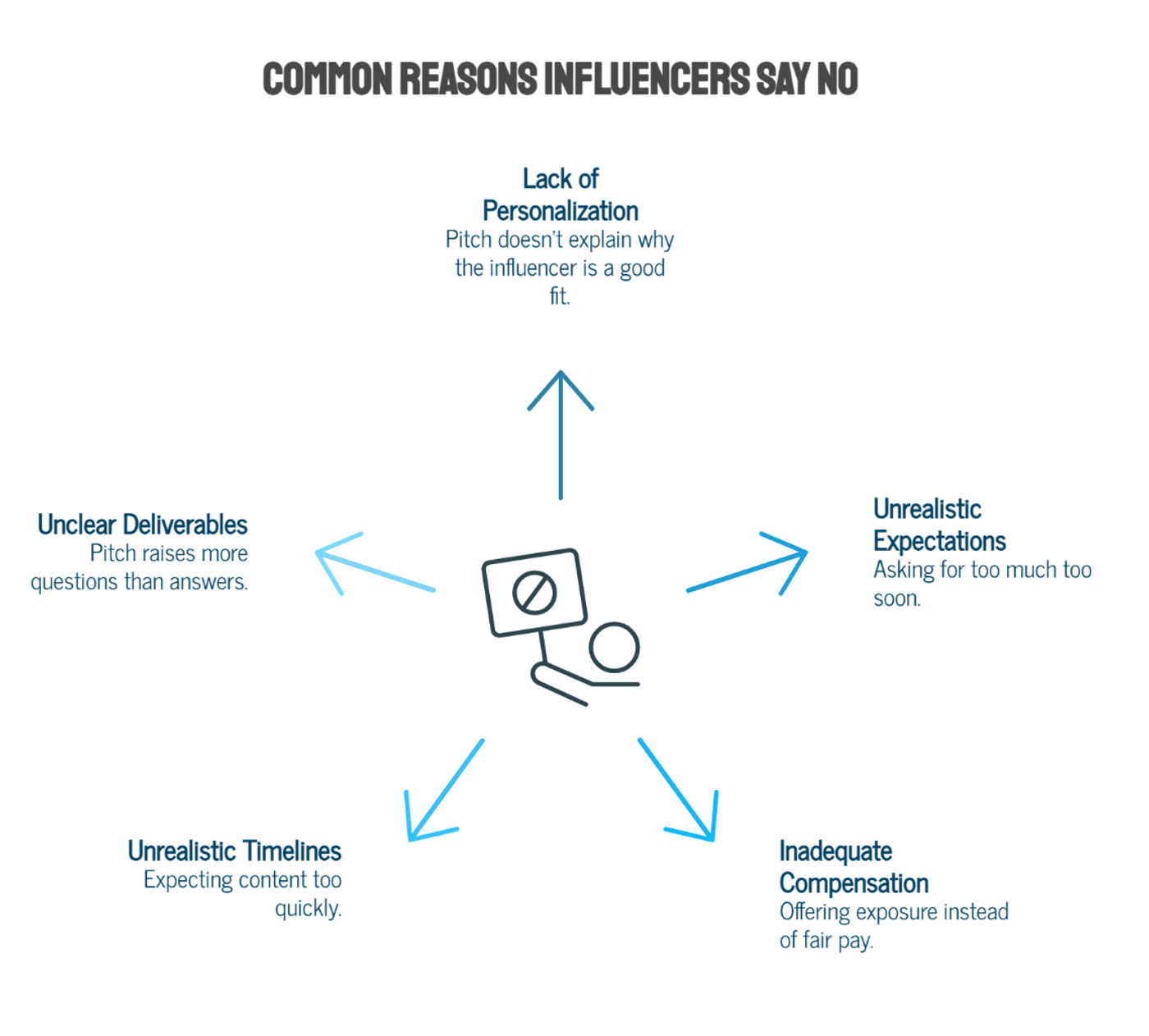
- The pitch doesn't explain why them specifically. A message that could have been sent to a hundred other creators reads that way, and it signals the brand hasn't actually thought about audience fit.
Want to put this into practice?
SideShift connects you with vetted UGC creators who actually deliver. Start your free trial and post your first job in under 10 minutes.
- The ask is too vague or too large for a first collaboration. Requesting a multi-post series or exclusive commitment from a creator you've never worked with before is a big ask with no track record behind it. Starting smaller gives both sides a lower-risk way to see if the partnership works.
- The compensation doesn't match the ask. Offering only "exposure" for a creator with a real, engaged audience is one of the fastest ways to get ignored, especially from creators who receive that offer regularly and have learned to filter it out.
- The timeline is unrealistic. Reaching out expecting content within 48 hours, without accounting for a creator's existing schedule, tends to get deprioritized in favor of pitches that respect their time.
- There's no easy way to actually say yes. A pitch that raises more questions than it answers, with unclear deliverables and no mention of payment or product, forces the creator to do extra work just to figure out what's being proposed, and many won't bother.
For practical examples of how to put this into practice, see our influencer outreach templates, with ready-to-use pitches for different collaboration scenarios.
Also, if a well-targeted pitch still gets a no, it's worth asking directly (briefly and politely) what didn't fit. Creators are often willing to explain and that feedback can sharpen your next outreach far more than guessing.
Where to Find Influencers Who Fit Your Brand
Finding influencers to work with doesn't need to mean hours scrolling through random profiles on social media. A few channels make it easier to find creators who are already primed to say yes.
- Hashtag and tagged-post research: Search hashtags relevant to your product category to see who's already creating content in that space. Also check who your competitors or adjacent brands have worked with.
- Your own customers: Some of your best potential partners are already buying and posting about your product without being asked. A quick look at who's tagging your brand organically can surface creators with genuine, pre-existing enthusiasm.
- Creator marketplaces: Platforms like SideShift let you search and filter creators by niche, platform, and audience size that are already actively looking for brand partnerships, which cuts down on the cold outreach and guesswork significantly.
Whichever channel you start with, the goal is the same: build a shortlist of creators who are already a plausible fit before you spend time crafting individual pitches. A smaller list of well-matched creators will almost always outperform a broad, untargeted outreach blast.
Hire the Right Creators with SideShift
It's easier to get influencers to promote your product when you go after people who are already open to new proposals and ready to make content. Instead of wasting your time knocking on closed doors (or DMs), you get what you want in a few message exchanges.
SideShift can help your brand exactly with that. We connect brands with a pool of 1M+ pre-vetted UGC creators actively open to partnerships. You get access to all relevant information about their online presence before reaching out and can contact them through our platform.
Want to put this into practice?
SideShift connects you with vetted UGC creators who actually deliver. Start your free trial and post your first job in under 10 minutes.
Contracts, payments, and performance tracking are also handled on SideShift's dashboard, giving you a centralized view of your partnerships.
FAQs
1. How do you attract influencers to your brand?
Beyond outreach, no-ask gestures like a well-matched PR gift, a genuine reputation for treating creators well, and a track record of past partnerships also make influencers more likely to want to work with you before you've even reached out. Focus on creators whose existing niche already overlaps with what you sell so the fit is obvious.
2. Should you offer free products or pay influencers?
It depends. Smaller or newer creators are often open to a gifted product exchange, especially for a brand they genuinely like, while more established creators typically expect payment. Affiliate and UGC arrangements offer a middle ground that works for both.
3. How do you find influencers to promote your product?
Search hashtags and tagged posts relevant to your product category, check who your own customers are already tagging you organically, and use a creator marketplace. Prioritizing creators already active in your specific niche will get you better responses than reaching out broadly based on follower count alone.
4. How do you ask influencers to promote your product?
Send a short, personalized message that references something specific about their content, lays out a concrete idea for what the collaboration could look like, and clearly states what you're offering, whether that's payment, product, or a commission.
5. How much does it cost to get an influencer to promote your product?
Costs vary widely by tier: nano influencers typically charge $10 to $200 per post, micro influencers $100 to $1,500, macro influencers $7,500 to $20,000, and mega influencers $20,000 or more. Lower-cost options like gifting, affiliate commissions, and UGC deals are also available for brands without a budget for a flat-fee sponsorship.