


How to Find Local Influencers for Your Business
Learn how to find local influencers for your business, where to look, how to vet them, and what to offer for a collab, even on a small, local marketing budget.
Table of Contents
A creator with a million followers scattered across the country doesn't do much for a coffee shop trying to fill tables on a Saturday morning. Local businesses need a different kind of influencer, one whose audience actually lives, works, or spends time nearby. Enter: local influencers.
Local influencer marketing tends to be more affordable and more accessible than national campaigns, precisely because you're not competing for a creator's biggest, broadest audience. But how to find local influencers for your business?
The good news is that there are multiple channels, free and paid, to discover local creators. This guide covers the whole process: where to find local influencers, how to vet them, and what to offer when your budget is sized for a single location rather than a national brand.
Why Local Influencers Matter for Local Businesses
When you don't work with products that can be shipped, a national influencer's audience is spread across dozens of cities, which means only a small fraction of their followers could ever realistically become your customer.
A local influencer's audience is more likely to be concentrated where your business operates, whether that's a single neighborhood or a metro area. That concentration also tends to come with a closer, more community-based relationship between the creator and their followers.
For a restaurant, for example, a local food blogger's recommendation carries weight because their audience trusts them as someone who actually eats around town, not because they have a massive following. For a business with a limited service area, that kind of hyper-relevant trust is worth more than broad, unfocused reach.
How Do You Find Local Influencers for Your Brand?
Unlike national influencer search, which mostly comes down to niche and audience size, finding local creators adds a third filter: geography. That extra filter means some of the usual search habits (a broad hashtag search, a general niche scroll) work less well here and it's worth leaning on channels that surface location specifically.
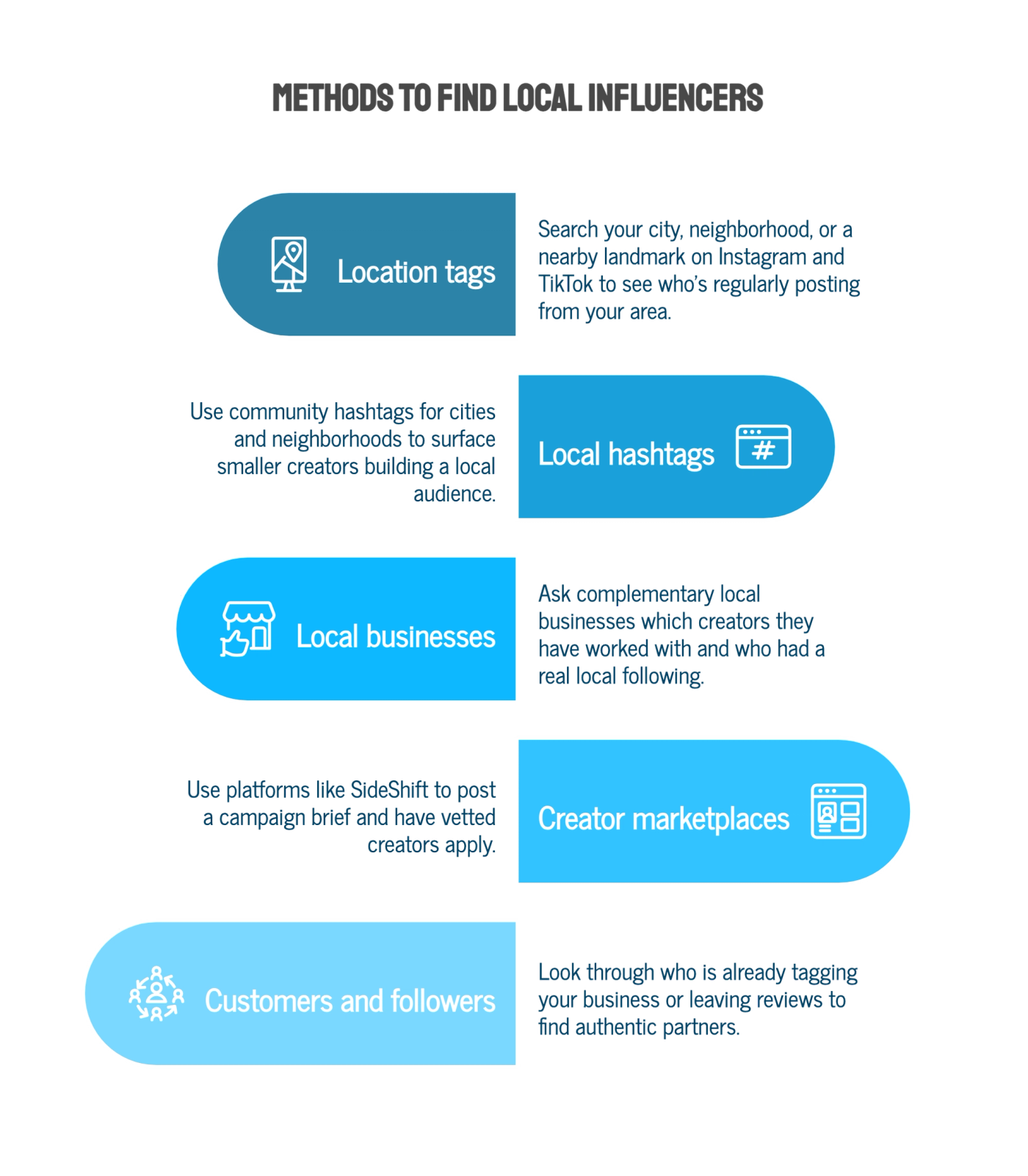
- Location tags and geotags: Search your city, neighborhood, or a nearby landmark on Instagram and TikTok to see who's regularly posting from your area. Creators who consistently tag local spots are usually building a genuinely local following, not a scattered national one.
- Local hashtags: Many cities and neighborhoods have their own community hashtags (#eat[localcityname], a neighborhood name, a regional nickname). These tend to surface smaller creators who are specifically building a local audience rather than a broad one.
- Other local businesses: Ask complementary local businesses which creators they've worked with. A boutique, salon, or restaurant that's already working with influencers can point you toward creators who showed up, delivered, and had a real local following.
- Creator marketplaces with location filtering: Platforms like SideShift let you post a campaign brief and have vetted creators apply, which can be much faster than manually searching social platforms and sending cold DMs. You can review applicants and manage the collaboration through the platform.
- Your own customers and social followers: Look through who's already tagging your business or leaving reviews. A regular customer with a modest but genuinely local following is often an easier and more authentic partner for a UGC campaign than a stranger with more followers but no real connection to your business.
Want to put this into practice?
SideShift connects you with vetted UGC creators who actually deliver. Start your free trial and post your first job in under 10 minutes.
None of these channels needs to be used in isolation, and in practice, the strongest local rosters usually come from combining two or three: a geotag search to build an initial list, a referral from another local business to validate it, and a creator marketplace to bring additional qualified applicants into the mix. The goal at this stage is to build a shortlist worth vetting more closely.
How Do You Vet a Local Influencer?
Not every account with local-looking content actually has a local audience. Before reaching out, check a few things:
- Confirm the audience is actually local. A creator's platform-provided audience insights (if they'll share them) or a scan of comments for local references, neighborhood mentions, event tags, can help confirm whether their followers are actually nearby.
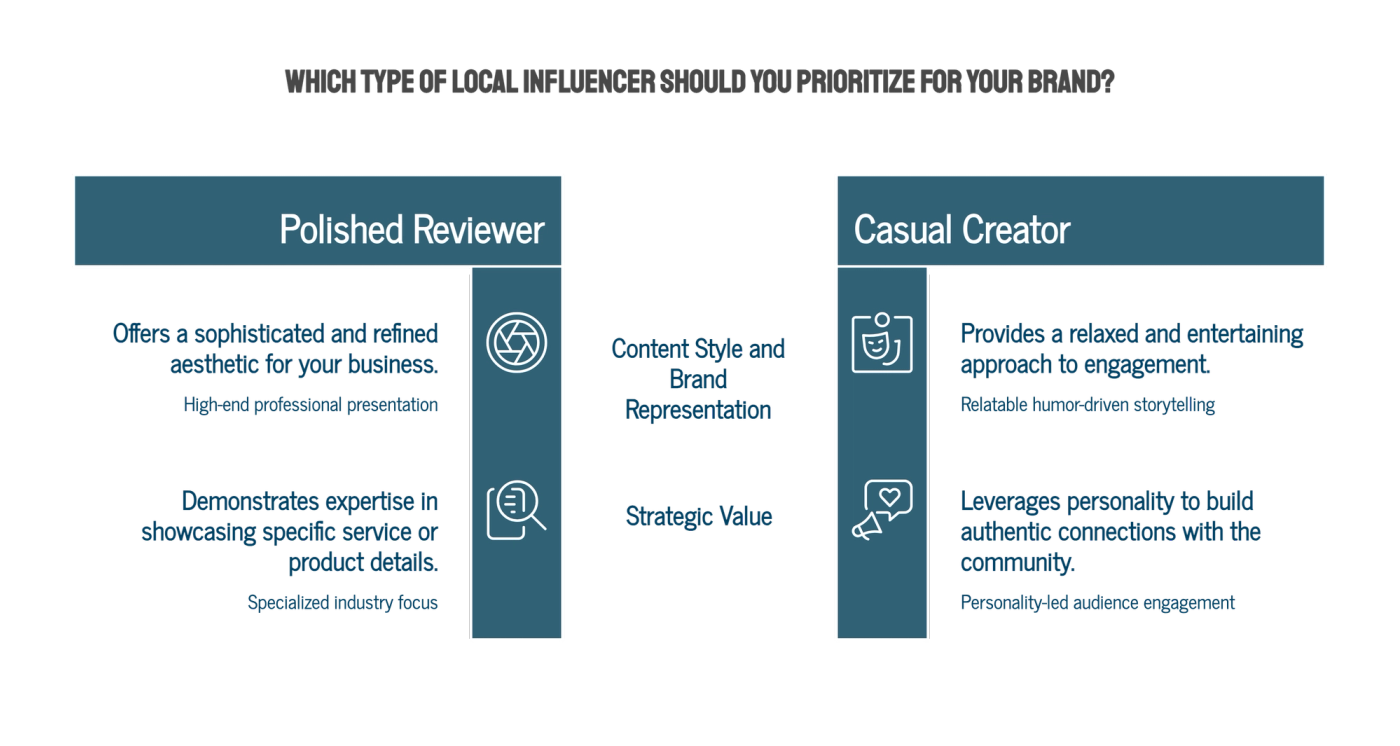
- Check content quality and fit. Does their style, tone, and typical content match how you want your business represented? A creator who does polished restaurant reviews is a different fit than one who does casual, humor-driven content, even if both are local.
- See if they've worked with local businesses before. Past collaborations with other local shops or services are a good sign they understand how to represent a small business.
These checks usually take less time than a single back-and-forth email with a creator who turns out not to be a fit. A little vetting upfront also gives you a stronger case for what to offer: a creator with a confirmed local audience and genuine engagement is worth more to your business than one with a bigger following but neither.
How Do Local Influencers Get Paid?
Local influencer budgets don't need to look anything like national campaign budgets, especially when you're working with smaller creators or focusing on a specific geographic area.
How much a creator charges depends on what you're asking them to deliver. For an influencer campaign, factors such as audience size, engagement, content format, and whether you're paying for access to their audience can all affect the price. A smaller local creator may charge less than a national influencer, while a creator with a highly engaged audience in your target area may command a higher rate.
There's also a difference between hiring a local influencer and hiring a local UGC creator. With an influencer, you're typically paying for both the content they create and the opportunity to reach their audience. With UGC, the creator's follower count may matter much less because you're primarily paying them to produce content that your business can use in its own marketing.
For local businesses with limited budgets, working with local UGC creators can come in handy. You can hire a creator to create photos, short videos, walkthroughs of your space, or product content that your business can then share on its own channels, depending on the usage rights included in the agreement.
Want to put this into practice?
SideShift connects you with vetted UGC creators who actually deliver. Start your free trial and post your first job in under 10 minutes.
Find Local Influencers Faster and Scale with SideShift
Searching hashtags and geotags manually can work, but it can also be time-consuming, especially when you're trying to manage multiple creator relationships at once. A creator marketplace can make the process of finding and working with creators more efficient.
SideShift gives you access to a pool of 1M+ pre-vetted creators. Instead of relying entirely on cold outreach, you can post a campaign brief and have creators apply to work with you. You can then review applicants and manage the collaboration from one place, including briefs, communication, contracts, content approvals, usage rights, and payouts.
For local businesses, this can be useful when you want to work with creators regularly or build a roster of creators who can produce fresh content for your business without managing every collaboration through email and spreadsheets.
FAQs
1. Do local influencers need a large following to be effective?
No. A local influencer's value comes from how concentrated and relevant their audience is to your area, not their total follower count. A creator with a few thousand genuinely local followers can outperform a much larger account with a scattered, non-local audience.
2. Do I need a formal contract for a local influencer collaboration?
Even a simple written agreement, a short email confirming deliverables, timing, compensation, and disclosure requirements, is worth having. It protects both sides and avoids misunderstandings, even for smaller, informal collaborations.
3. How do I reach out to an influencer?
Send a short, specific message that references something real about their content, explains why you're reaching out to them in particular, and clearly states what you're proposing and what's in it for them, whether that's product, payment, or both.
4. How do I hire micro influencers?
Search for creators in your niche and area through location tags, hashtags, or a creator marketplace like SideShift, then reach out with a clear, specific proposal covering deliverables, timeline, and compensation. Once a creator agrees, put the basics in writing before content work begins.
5. Can I find influencers for free?
Yes. Searching location tags, local hashtags, and your own tagged posts and reviews costs nothing but time, and it's often enough to build a solid shortlist for a local campaign. Paid tools and marketplaces speed up the search and add vetting data.