


Home & Lifestyle Influencer Marketing: The 2026 Guide
Home and lifestyle creators drive purchase intent for furniture, decor, home goods, and DTC homewares. See how to run high-converting campaigns in 2026.
Table of Contents
Furniture, decor, and home goods aren't impulse purchases in this economy. Someone weighing a new sofa or a pantry overhaul usually scrolls through dozens of rooms first, comparing not just the product but whether it would actually look right in a space like theirs. That's the gap home and lifestyle creators fill: they show a product living in a real home, from an angle a retail photo can’t replicate.
That visual proof carries real weight on higher-consideration, higher-price purchases. A shopper on the fence about a $1,200 sectional is more persuaded by a creator's honest room tour than another studio catalog shot.
Home content is also highly saveable and shareable, since audiences return to it for inspiration long after the original post, extending a campaign's value well past its initial posting window. This guide covers what makes this niche distinct, the creator subsegments worth knowing, and how to build a home and lifestyle influencer marketing strategy that actually drives purchase intent.
Why Home and Lifestyle Influencer Marketing Works
Home content sells through aspiration and proof at the same time. The aspiration is aesthetic: a well-styled room makes a viewer want that version of their own space. The proof is functional: does the storage system hold what it claims? Does the fabric look that good in daylight? Does the appliance save the counter space it promises?
That combination is also why home audiences tend to be unusually patient with longer-form content. A five-minute room tour or a full renovation reveal holds attention in a way a quick product demo elsewhere wouldn't, because the audience is there to be immersed in the space, not just informed about the product.
Home and Lifestyle Creator Subsegments You Should Know
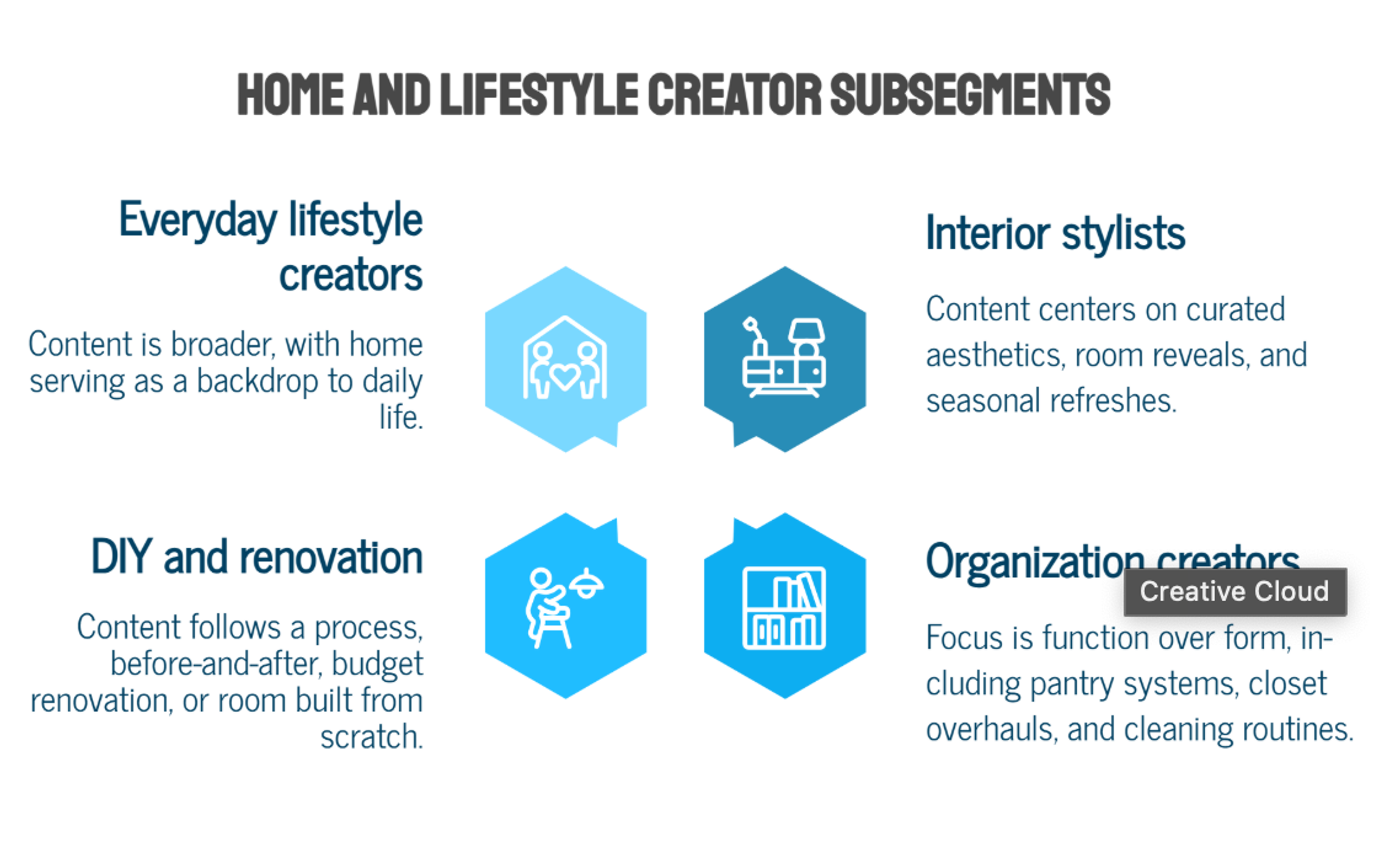
“Home creator” covers a wide range of content types. Matching a product to the right subsegment is crucial to the success of a campaign.
- Interior stylists and decor creators: Their content centers on curated aesthetics, room reveals, and seasonal refreshes. They’re often a strong fit for furniture, decor, art, and any product where visual presentation is the main selling point.
- Organization and home systems creators: Their focus is function over form (think pantry systems, closet overhauls, cleaning routines). They can be the right partners for organizational products and any brand solving a specific household friction point rather than selling a look.
- DIY and renovation creators: Their content follows a process, a before-and-after, a budget renovation, a room built from scratch. This type of creator is well suited to tools, building materials, paint, and larger home improvement products, since their audience is there to see a transformation happen.
- Everyday home and lifestyle creators: Their content is broader, with home serving as a backdrop to daily life rather than the subject itself. They’re a good fit for general home goods and lower-consideration products, where the goal is normalized, repeated visibility rather than one dramatic reveal.
These subsegments often overlap and that overlap is usually where some of the strongest content comes from. For example, a DIY creator's finished kitchen can become a decor and styling moment too.
Want to put this into practice?
SideShift connects you with vetted UGC creators who actually deliver. Start your free trial and post your first job in under 10 minutes.
How Brands Can Use Home and Lifestyle Influencers in Campaigns
The strongest campaigns let the product enter a creator's existing content style rather than asking them to invent a reason to feature it. For example, a paint spray gun fits naturally into a kitchen renovation a creator already has been teasing on their TikTok. A new couch is perfect for a creator who is moving and decorating a new place.
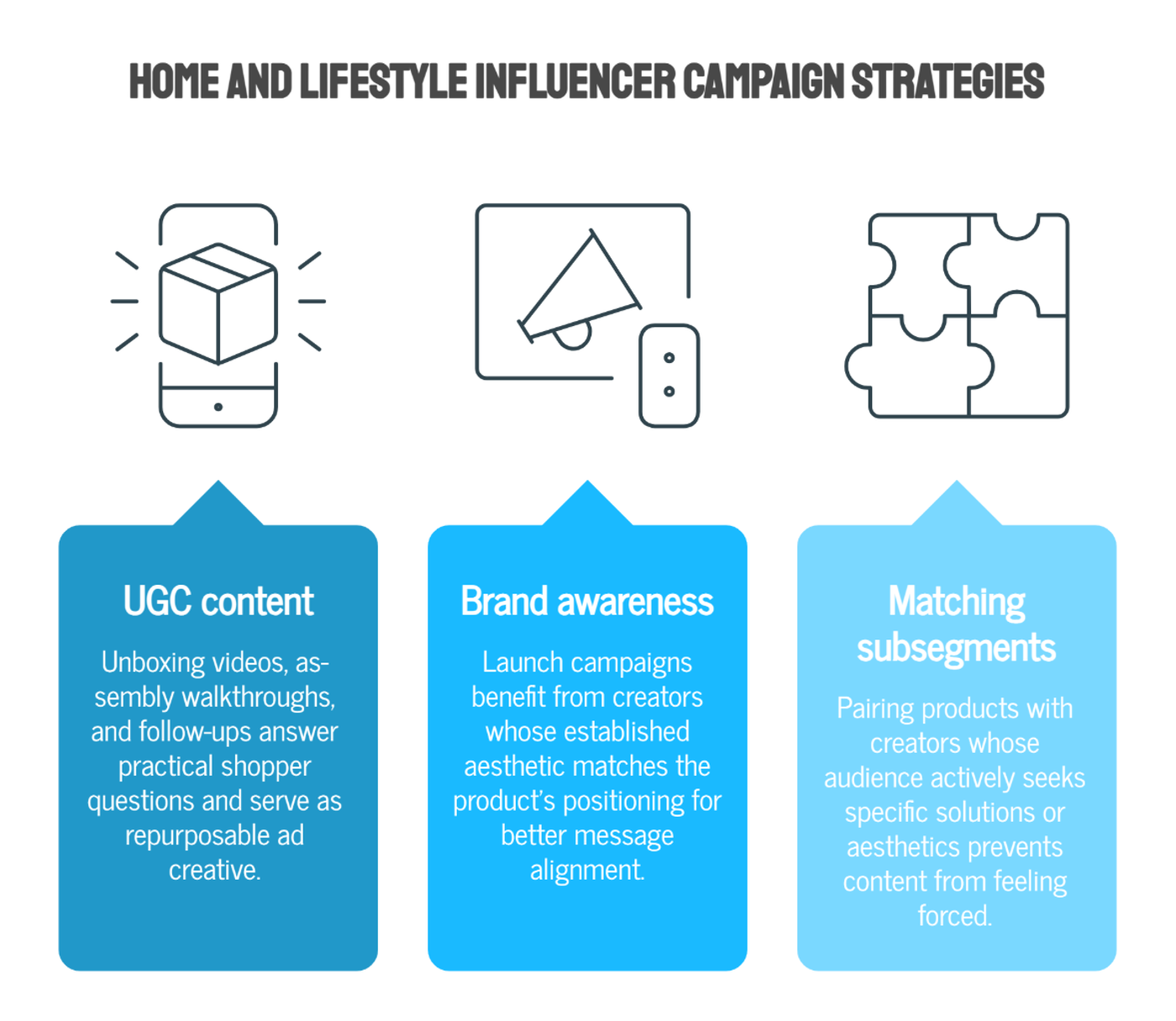
- UGC content: Unboxing videos, assembly walkthroughs, and “living with it for a month” follow-ups answer the practical questions a shopper actually has. This content format is also highly repurposable as paid ad creative once produced.
- Brand awareness for a new product or line: A launch benefits from creators whose established aesthetic already matches the product's positioning. A minimalist furniture brand gets more mileage from a few creators known for clean, pared-back spaces than from a broad style mix that dilutes the message.
- Matching the subsegment to a specific pain point: A modular storage brand converts better with organization creators whose audience is actively looking for that solution than with a general decor account.
The goal should always be to pair the product with the subsegment whose audience already cares about the exact problem or aesthetic it addresses, so it doesn’t feel forced or out of place in the influencer’s content, which tends to push viewers away.
What Pricing in Home and Lifestyle Influencer Marketing Looks Like
Pricing tracks with general influencer marketing benchmarks: engagement rate, deliverable count, platform, and format all factor in. Macro (100,000–1 million followers) and mega (1 million+ followers) influencers command higher rates, potentially crossing $20,000 per post, but often show lower engagement relative to their follower count.
On the other hand, nano (1,000–10,000 followers) and micro influencers (10,000–100,000 followers) are more affordable and tend to offer a stronger cost-to-engagement ratio. UGC creators are in a special place because they often produce content for the brand to use on their own channels and can charge per monthly package.
One thing worth factoring in for this category specifically: home goods and furniture often carry a higher average order value than categories like beauty or apparel, which makes affiliate and commission-based arrangements especially attractive. A modest flat fee plus a commission on a $1,000 furniture sale can outperform a flat sponsorship alone, if the influencer is really capable of driving sales.
Finding the Right Creators for Your Home Campaign
Aesthetic, subsegment fit, and engagement matter more here than in almost any other category, since a mismatched visual style is immediately obvious to a viewer.
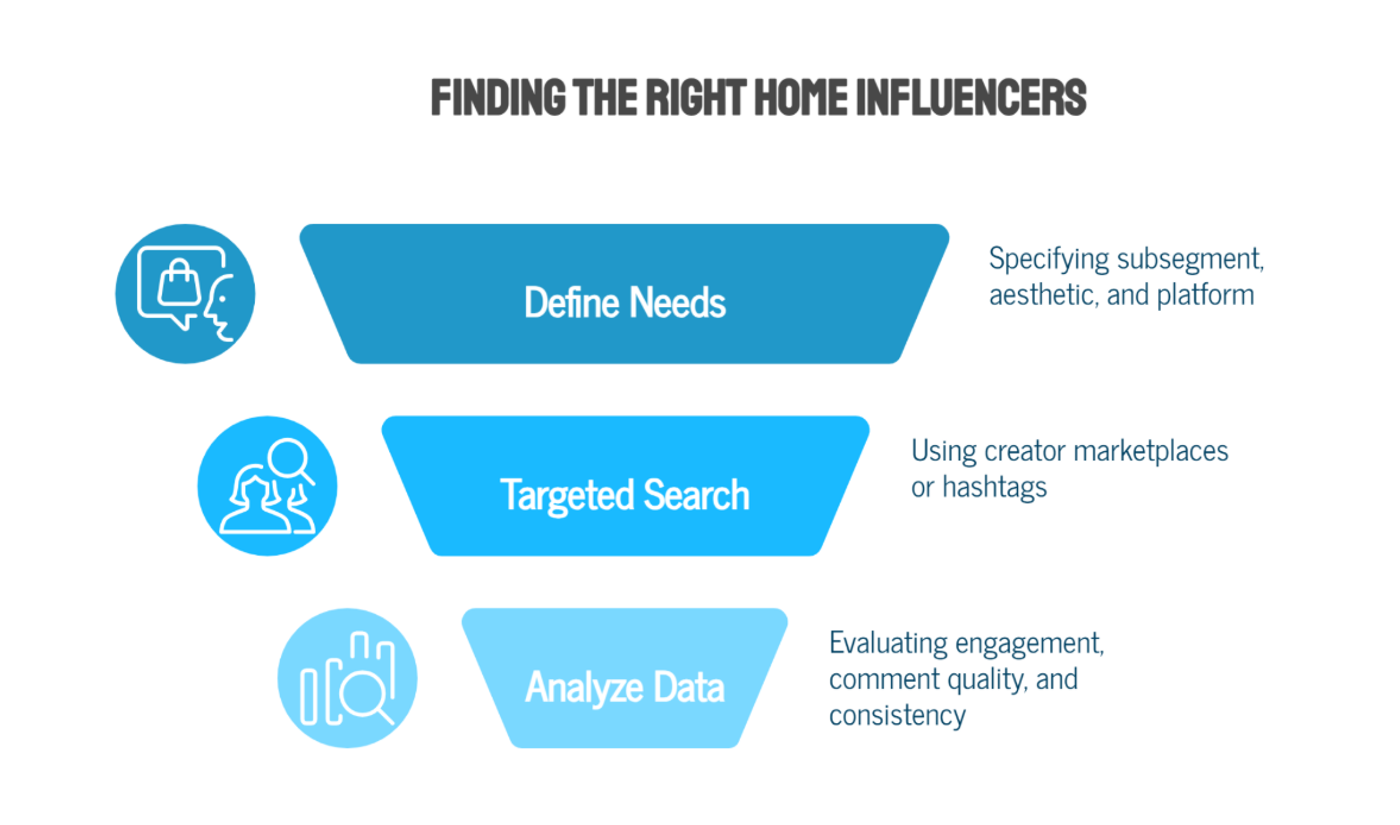
- Define what you need. Get specific before searching: which subsegment fits the product (styling, organization, renovation, everyday lifestyle), what aesthetic the target buyer responds to (minimalist, maximalist, traditional, cottagecore), and which platform that audience spends time on. Instagram and Pinterest skew toward styling and inspiration, while YouTube and TikTok favor longer renovation and process content.
- Make a targeted search. Manually scrolling hashtags works, but it's slow and easy to miss creators whose aesthetic fits but who don't use the obvious search terms. A creator marketplace like SideShift lets you filter by subsegment and platform, narrowing the field considerably faster than a manual search.
Want to put this into practice?
SideShift connects you with vetted UGC creators who actually deliver. Start your free trial and post your first job in under 10 minutes.
- Analyze relevant data. Once a creator catches your attention, check engagement rate relative to their tier, comment quality (are viewers asking where to buy specific pieces or just leaving generic compliments), consistency (do they post in this style regularly or only when paid), and whether their aesthetic and past sponsored content actually match what your product needs to look like in the wild.
Build Your Influencer Strategy with SideShift
Home and lifestyle creators offer something most ad formats can't: a believable, in-context look at how a product actually lives in someone's space. Getting the aesthetic and subsegment match right is what determines whether that content converts or just looks nice.
That means you don’t necessarily need a mega influencer with millions of followers and a five-figure rate. Instead, focus on finding creators whose content, audience, and values actually fit your brand. However, doing that vetting manually gets unwieldy fast, particularly for brands managing influencer campaigns at scale.
SideShift handles that legwork for you, bringing vetting, outreach, payment, and performance tracking together in a single dashboard. Run a pool of creators, monitor results as they come in, and fine-tune your strategy along the way.
FAQs
1. How much does it cost to work with home and lifestyle influencers?
Rates vary by tier and follow general influencer marketing benchmarks, from a few hundred dollars for smaller creators to several thousand for larger accounts. Usage rights, whitelisting, and affiliate or commission structures are common add-ons in this category and might influence the final cost of the partnership.
2. Should home brands prioritize UGC or influencer partnerships?
Both play a role. Influencer partnerships build awareness and aspiration through a creator's existing audience, while UGC (unboxings, assembly walkthroughs, longer-term use reviews) answers practical buyer questions and can be repurposed as paid ad creative.
3. How do you know if a home influencer campaign is working?
Track click-through rate to your product pages, conversion rate, cost per acquisition, and, where affiliate links or codes are used, direct attributed sales. Saves and shares are also worth watching in this category, since home content tends to get revisited well after it’s first posted.
4. What platforms work best for home and lifestyle influencer marketing?
Instagram and Pinterest tend to perform well for styling and decor inspiration, while YouTube and TikTok are stronger fits for renovation, DIY, and process-driven content where a longer format helps show a transformation in full.