


Fake Influencers: How to Spot Them Before You Pay
Learn how to spot fake influencers before they waste your budget, where the problem is concentrated, and how to vet creators properly before closing a deal.
Table of Contents
Fake influencers are people who inflate their following and engagement by purchasing followers or participating in engagement pods (groups of people who agree to boost each other's social accounts). The main goal is obvious: to get brand deals and make money without putting in the work to build real trust with an audience.
The good news is that this problem isn't evenly spread across the influencer marketing industry. It's more heavily concentrated in certain tiers, particularly among macro influencers. Once you know where to look and which red flags to check, most fake influencers are easy to catch before a contract is even signed.
What Categorizes a Fake Influencer
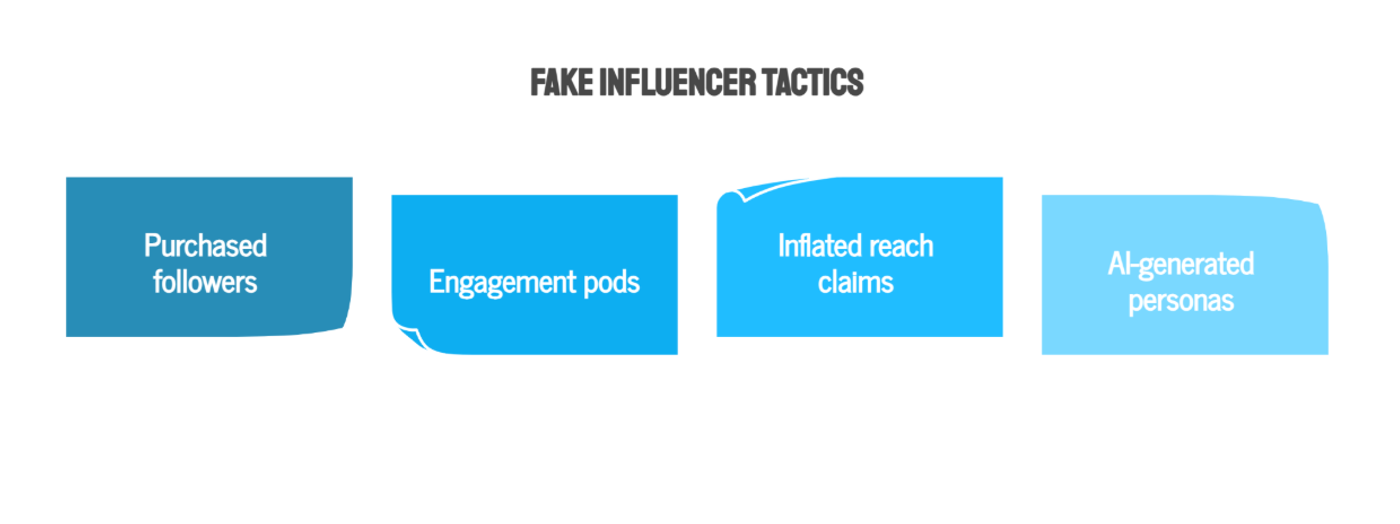
“Fake” covers a range of tactics that creators rely on to look like legitimate influencers. The common thread is a gap between what a profile appears to offer and what it actually delivers.
- Purchased followers: Bulk-bought followers, usually bot accounts or inactive profiles, inflate the number a brand sees at a glance without adding any real audience underneath it.
- Engagement pods and bot comments: Groups of accounts (sometimes real people, sometimes bots) automatically like and comment on each other's posts to simulate organic engagement.
- Inflated reach claims: Creators or their agencies present impressions or reach numbers that don't match what's actually verifiable through the platform's own analytics.
- AI-generated or heavily managed personas: This is a smaller but growing category: accounts built or substantially run by a team rather than reflecting a single real creator's genuine following and voice.
None of these tactics show up in isolation on a profile that's actually gaming its numbers. A purchased-follower account usually also has thin comment quality, while an engagement pod often overlaps with a demographic mismatch once you look closely. Spotting two or three of them together is usually enough to know you're looking at a problem.
How Do You Spot Fake Followers on Influencer Profiles?
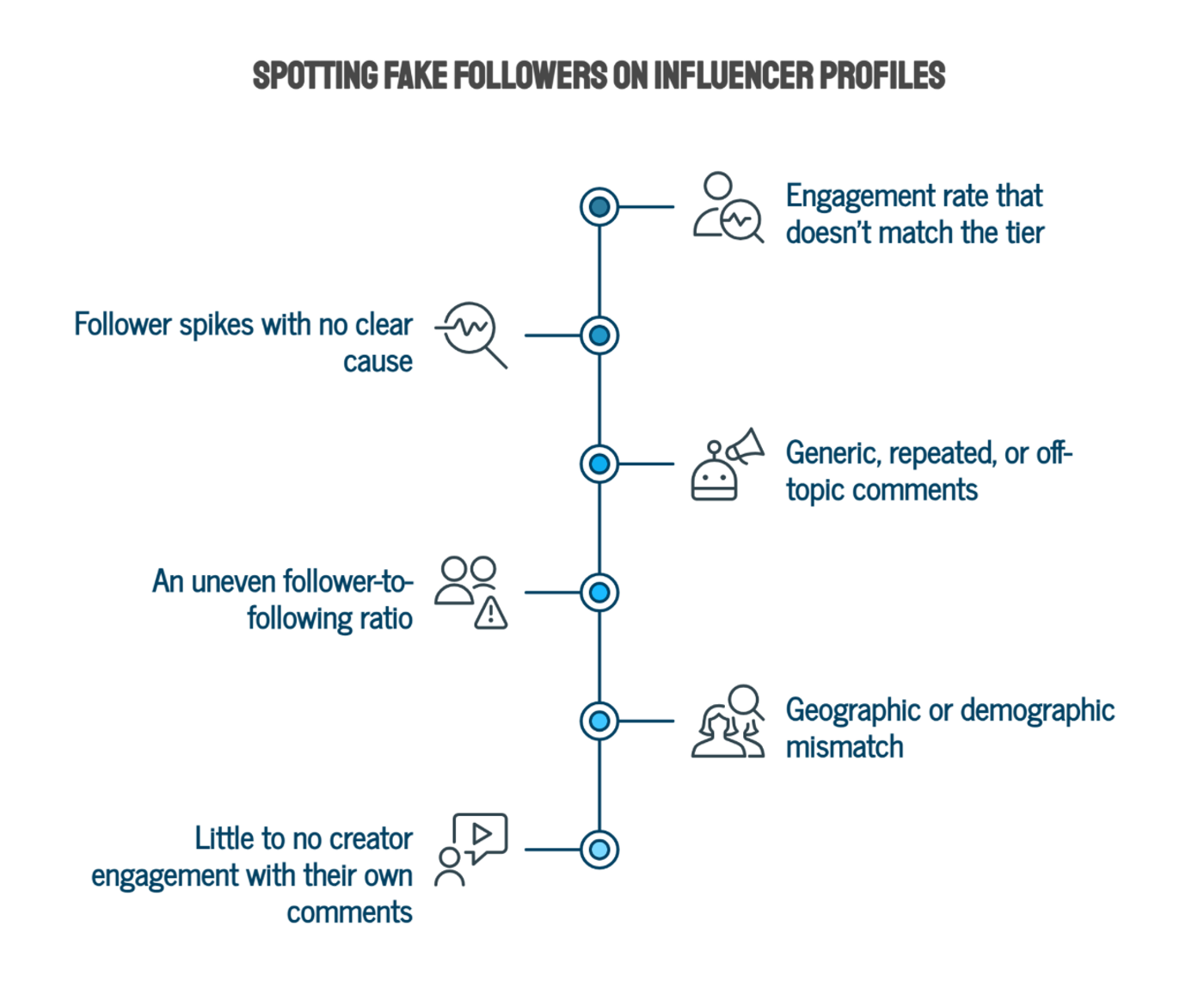
There are a few consistent red flags that show up across most fraud cases, and most of them can be checked without any paid tool.
- Engagement rate that doesn't match the tier: Every follower tier has a rough engagement benchmark. An account that’s well below the typical range for its size, or suspiciously above it in a way that doesn't match comment quality, is worth a closer look.
- Follower spikes with no clear cause: A sudden jump in followers that doesn't correspond to a viral post, a press mention, or any other visible trigger is a common sign of a purchased batch.
- Generic, repeated, or off-topic comments: Comments like “Love this!!” or “So cute” repeated across dozens of posts, or comments that have nothing to do with the actual content, are a hallmark of bot activity or engagement pods.
- An uneven follower-to-following ratio: A large number of followers paired with an unusually low number of accounts followed back, or the reverse, can indicate a bought or bot-heavy audience. This does not apply to celebrities.
- Geographic or demographic mismatch: If a creator's stated audience doesn't match what's visible in comment language, tagged locations, or platform-provided audience breakdowns, the numbers may not reflect a real, relevant audience for your brand.
Want to put this into practice?
SideShift connects you with vetted UGC creators who actually deliver. Start your free trial and post your first job in under 10 minutes.
- Little to no creator engagement with their own comments: Genuine creators, especially at smaller tiers, tend to reply to their audience. A large account that never engages with its own comment section is a minor but real signal.
No single flag on this list is automatic proof of fraud on its own. A slow week, a quiet creator, or one unusual comment can happen to a perfectly legitimate account. What matters is the pattern.
An account showing two or more of these signs together, especially engagement rate and comment quality at the same time, is worth pausing on before you move forward, regardless of how good the rest of the profile looks.
In Which Influencer Tier Is Fraud More Common?
Fake influencers typically sit in the macro influencer tier, which corresponds to creators with 100,000 to 1 million followers. The economics explain why: macro is the tier where the financial incentive to inflate numbers is highest.
Crossing from 80,000 to 100,000 followers, or from macro into mega territory, can unlock meaningfully higher rate cards, since it’s estimated that macro influencers make $7,500 to $20,000 per post.
Nano and micro influencers sit on the other end of that incentive structure. The dollar value of a typical nano or micro deal is usually too small to justify the cost and risk of buying followers, and their audiences tend to be small enough that fake engagement is glaringly obvious.
A nano account with 4,000 followers and a sudden batch of generic bot comments stands out immediately, both to a brand doing a manual check and to the creator's own real followers. That built-in visibility, combined with a weaker financial motive to cheat in the first place, is a big part of why nano and micro creators tend to be authentic more often than not.
It doesn't mean every micro creator is automatically trustworthy, but the base rate of fraud at that tier tends to be lower, which is worth factoring into where you concentrate your vetting effort and your budget.
How Can Brands Avoid Fake Influencers?
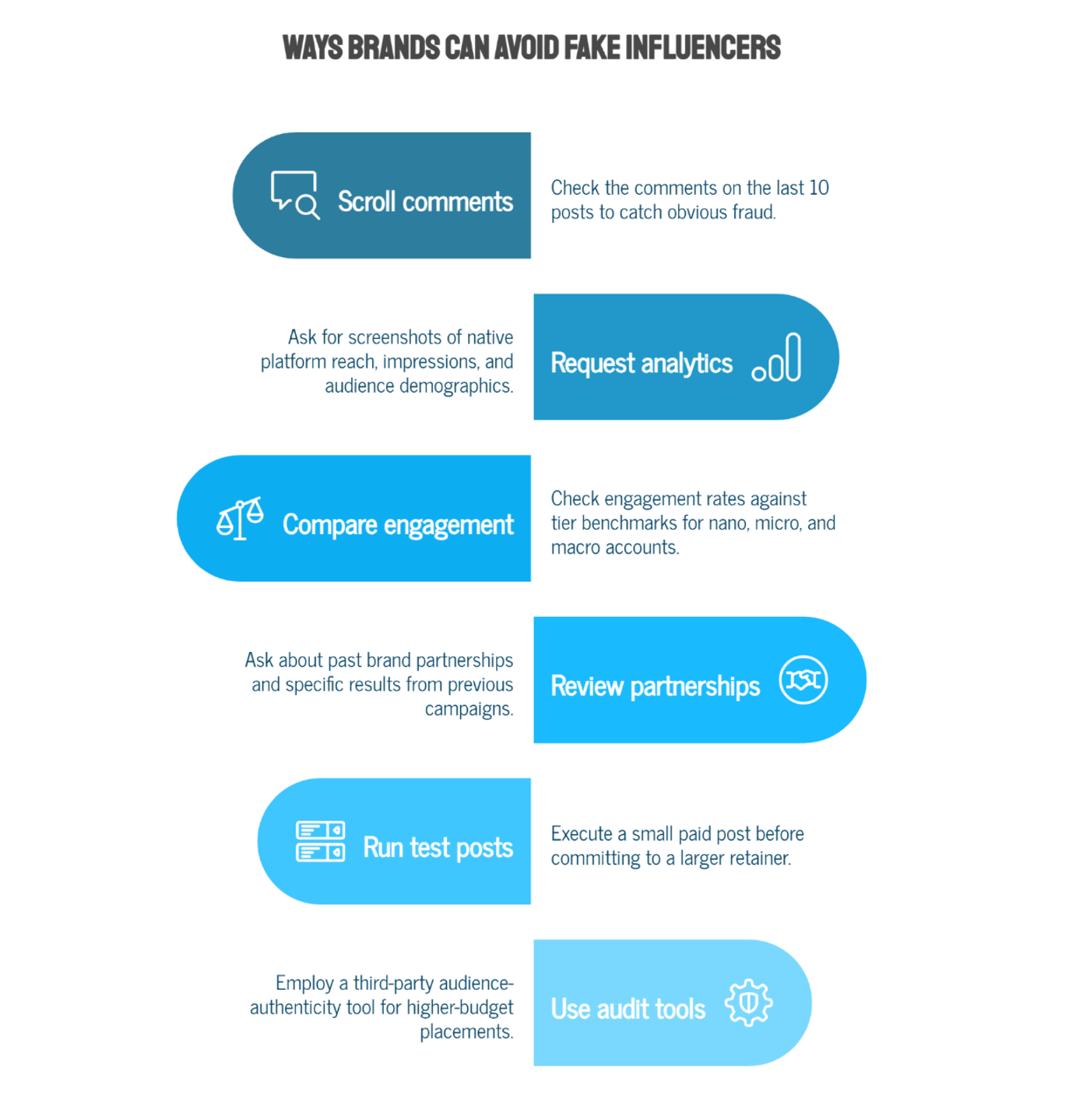
Vetting an influencer is mostly about checking their numbers and previous results working with brands.
- Scroll the comments on the last 10 posts. This is the single highest-signal, lowest-effort check available and it catches most obvious fraud on its own.
- Ask for a screenshot of native platform analytics. Reach, impressions, and audience demographics from the creator's own Insights or Analytics tab are harder to fabricate convincingly than a follower count alone.
- Compare engagement rate against tier benchmarks. As a rough guide, nano accounts often run in the high single digits, micro in the mid single digits, and macro accounts typically compress into the low single digits. An account far outside its tier's normal range in either direction deserves a second look.
- Ask about past brand partnerships and results. A creator with a real track record can usually point to specific past campaigns and describe what worked. A vague or evasive answer here is itself a signal.
Want to put this into practice?
SideShift connects you with vetted UGC creators who actually deliver. Start your free trial and post your first job in under 10 minutes.
- Run a small test before a big commitment. For a first-time partnership, especially at the macro tier where the stakes are higher, a smaller paid post before a larger retainer limits your exposure while you confirm the account performs the way it claims to.
- Use a third-party audit tool for larger deals. For higher-budget placements, a dedicated audience-authenticity tool can catch patterns a manual check might miss.
Find Real, Vetted Creators on SideShift
Avoiding fake influencers largely comes down to knowing where you're looking and who you're working with before you commit a budget, and that's easier when the sourcing pool has already been screened and the payment structure protects you if a creator doesn't deliver.
SideShift's network leans heavily toward nano and micro creators, the tiers where authentic engagement is most common, and every creator on the platform is already vetted.
Our creators don’t get paid until you approve the work, so a creator who doesn’t deliver costs you nothing. And if a creator goes silent, you can replace them from the same applicant pool, without losing the budget or the timeline.
The result is a safer way to scale creator partnerships without sacrificing authenticity or putting your budget at risk.
FAQs
1. How can you tell if an influencer has fake followers?
Check their comments for generic or repeated messages, compare their engagement rate to their follower tier's typical range, and look for follower spikes with no clear cause like a viral post.
2. How to tell if a follower is a bot?
Bot accounts typically have no profile photo, a username made up of random letters and numbers, few or no posts, and little to no bio information. They often follow a large number of accounts while having very few followers themselves, and any comments they leave tend to be generic, repeated across many unrelated posts, or oddly disconnected from the actual content.
3. How do brands avoid fake influencers and bots?
The most reliable approach combines a manual check (scrolling recent comments, reviewing native platform analytics) with structural choices, like favoring nano and micro creators where fraud is less common, working through a pre-vetted creator marketplace like SideShift, and using a third-party audit tool for larger deals.
4. What should you do if you already paid an influencer who turned out to be fake?
Document the gap between promised and actual performance, then review your contract for any clauses covering audience authenticity or minimum results, which may support a refund or make-good post. Build authenticity checks into future contracts to reduce the risk going forward.
5. How do fake followers work?
Fake followers are bulk-purchased in batches, usually from click farms or bot networks that sell thousands of accounts at a time for a fee, then added to a profile all at once or drip-fed in to look more natural. The accounts behind them are typically inactive, automated, or repurposed bot profiles with no real person engaging on the other end, which is why they inflate a follower count without ever showing up as genuine likes, comments, or sales.