


How to Collaborate With TikTok Influencers: Tips for Brands
Learn how to collaborate with TikTok influencers, from briefing and creative feedback to performance tracking and TikTok-native content.
Table of Contents
If you’re searching for advice on how to collaborate with TikTok influencers, chances are you already know what you want, but don’t know how to execute your idea.
First and foremost, you have to understand the platform you’re on. TikTok rewards content that behaves like TikTok, not like an ad with a creator's face on it. For example, Spark Ads, which run through a creator's own account and preserve the organic engagement on the post, have shown +30% completion rate and +142% engagement rate compared with standard in-feed ad formats, according to a TikTok audit.
This gap is driven largely by how native the content feels, not how much was spent producing it. And this influences what your approach should be in a TikTok influencer collaboration for your brand.
This guide covers that middle phase, once a creator is signed and the working relationship starts: briefing creators, working within TikTok's native creative norms, running feedback loops that don't kill the campaign, and monitoring performance after publishing.
Working with TikTok Creators: Brief, Creative, and Feedback
After finding the right TikTok influencers, making your pitch, and getting their “yes,” you’ll need to focus on three key pillars of the collaboration: the brief, TikTok creative norms, and feedback.
1. Write a Clear and Concise Brief
Good TikTok briefs read more like a set of guardrails than a script. Creators know their audience's viewing habits better than a brand ever will, and briefs that over-specify shot lists and exact lines tend to produce content that looks like every other branded video, which is exactly what performs worst. Here’s what to put in your brief:
- The core message: Give creators the one or two things you need the video to communicate, then let them translate it into their own voice. A creator explaining why they use a product in their own phrasing will always sound more credible than one reading brand copy.
- Product or offer details that must be accurate: Pricing, claims, promo codes, and anything regulatory or legal should be spelled out precisely. This is not the place to leave room for creative interpretation.
- The deliverable requirement: One TikTok video, one Spark Ad-ready video, a Story, a carousel of images. Be explicit about the format and length and whether it's for organic posting, paid amplification, or both.
- A list of dos and don'ts: This includes things you can't say, competitor mentions to avoid, disclosure requirements (#ad, #sponsored, or partnership labels as required by law and TikTok's own policies). Keep this to the essentials rather than a page of restrictions.
- Reference examples: If you have a video style you like, a specific hook format, a transition, a tone, link to it as inspiration. Don't ask the creator to replicate it beat for beat.
2. Speak TikTok's Native Language
Marketers are trained to want polish: clean lighting, steady shots, a clear logo moment. But that’s not what TikTok audiences typically pay attention to. The goal isn't lower production value for its own sake, but content built for people who want to watch a TikTok, not a commercial.
Want to put this into practice?
SideShift connects you with vetted UGC creators who actually deliver. Start your free trial and post your first job in under 10 minutes.
It also doesn't mean erasing your brand's identity. You’ll simply translate it into a language TikTok audiences already recognise and identify with. The product, the message, and the brand voice can all stay intact; what changes is the packaging.
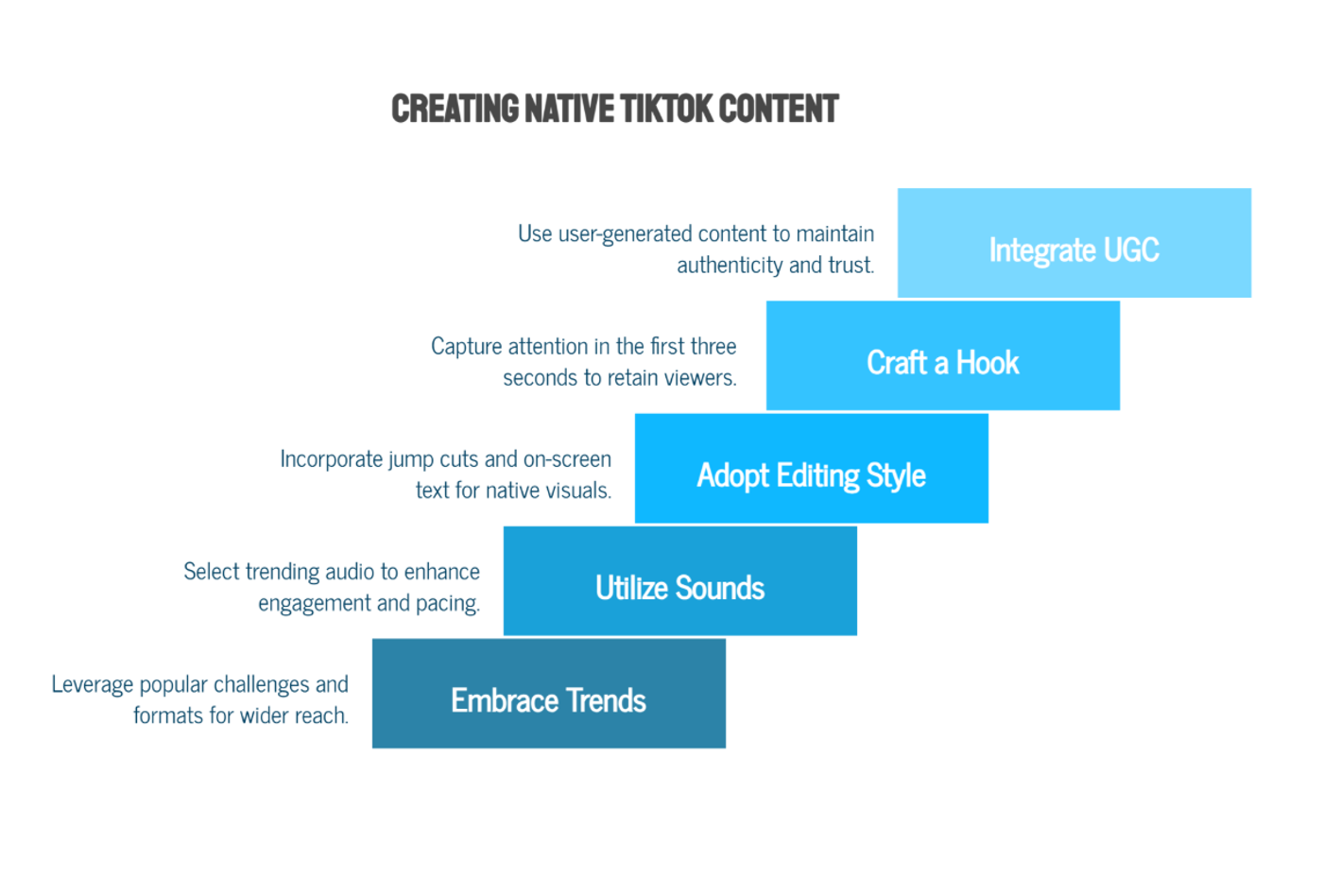
That “packaging” comes down to a handful of creative decisions that determine whether a video feels like TikTok content or a traditional ad.
Trends
TikTok's algorithm favors content that plugs into what's already circulating, whether it’s a challenge or joke format the audience already recognizes. A video built on a live trend gets a distribution boost and a built-in shorthand with viewers that a from-scratch concept doesn't have. Trends also move fast and expire within days, so it’s important to act on them fast.
Sounds
The audio a creator chooses is doing more work than most brands assume. It can place a video inside a trending sound's algorithmic wave, set the pacing of the edit, and signal to viewers within the first second whether the content is native or an ad.
Creators track which sounds are climbing in their niche in real time; a brand picking the audio from the outside is usually working off stale data. Consider letting the creator make a short list of sound suggestions for you to pick from.
Editing style
Jump cuts, on-screen text, quick pacing, and handheld camera work are TikTok's native visual language, not signs of a rushed production. Let the creator edit in their own established style, or something as close as possible. Their existing editing rhythm is part of why their audience likes and trusts them.
Hook
The first three seconds of a TikTok video determine whether a viewer keeps watching. Work with the creator to find the most attention-grabbing way to open a video. If possible, let them lead this decision, since this is where their instinct for their own audience matters most.
3. Make Feedback Rounds Short and Fast
Because TikTok is fast-paced, especially when it comes to trends, a slow review process can kill the timeliness that made the content idea work. Build a same or next-day turnaround into the collaboration from the outset. Consider these principles to keep revision loops productive:
- Give feedback on outcomes, not delivery. Instead of “say this line differently,” try “we need it clearer that this solves [specific problem] in the first five seconds.”
- Separate must-fix from nice-to-have. Compliance and accuracy issues are non-negotiable. Stylistic preferences aren't worth spending a creator's goodwill and valuable time on.
- Cap it at two rounds. One for anything materially wrong, such as inaccurate claims, missing disclosure, wrong offer details, and one for adjustments. A third round usually means the brief wasn't clear enough at the start, not that the creator missed the mark.
How Do You Measure the Success of a TikTok Influencer Collaboration?
Once a video is live, the work shifts from creative oversight to performance tracking, and TikTok gives you signals fast. You'll usually know within the first few hours whether a piece of content is finding an audience.
Want to put this into practice?
SideShift connects you with vetted UGC creators who actually deliver. Start your free trial and post your first job in under 10 minutes.
What to track once a post goes live:
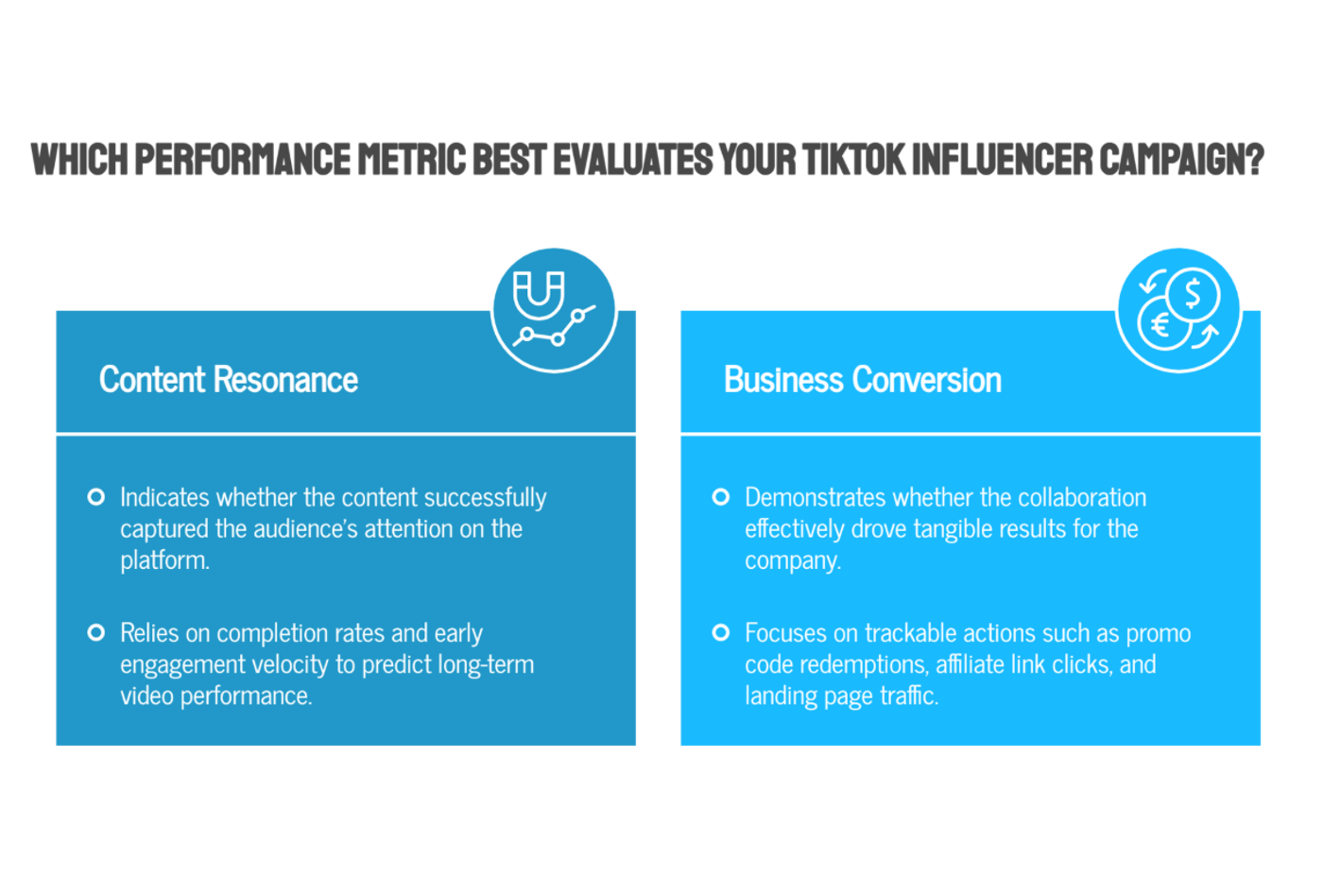
- Completion rate: The percentage of viewers who watch the video through to the end is usually a better quality signal than raw view count and a strong predictor of whether the algorithm will keep pushing it into more feeds.
- Early engagement velocity: Comments, shares, and saves in the first hour or two tend to signal how far a video will travel.
- Comment sentiment: Questions about the product, tagged friends, and debate in the replies signal genuine interest. Generic emoji comments don't tell you much either way.
- Conversion signals: This includes promo code redemptions, affiliate link clicks, landing page traffic, or whatever action is actually trackable for the deal you structured.
Completion rate and engagement tell you whether the content resonated on TikTok; conversion tells you whether it moved your business.
Scale Your TikTok Influencer Collaborations on SideShift
In the end, TikTok collaboration requires trust in the creators you chose to work with and an efficient, fast-paced system for briefing, reviewing, and tracking. But running this process manually across dozens of creators can get unwieldy fast, causing delays and miscommunications that can set your campaign back.
SideShift helps teams manage TikTok creator campaigns, from brief to published posts to performance data. If you need more creators to scale your campaign, you can source in a pool of 800,000+ pre-vetted creators and close contracts, all inside one platform. Your workload gets simplified without your business suffering.
FAQs
1. How much creative control should a brand keep over a TikTok video?
Enough to protect accuracy, compliance, and disclosure. Wording, pacing, and visual style are best left to the creator, since that's what makes content read as native rather than a commercial.
2. How much does it typically cost to collaborate with an influencer on TikTok?
A TikTok video can be as cheap as $50 if you’re working with nano influencers (1,000-10,000 followers), and as expensive as $100,000 if you’re working with a mega influencer (1 million+ followers). There are multiple factors that will determine the final price of a collaboration or how much an influencer costs in general, such as engagement rate, industry, and complexity of the content.
3.How soon can you tell if a TikTok collaboration is working?
Often within the first few hours. Completion rate and early engagement velocity are usually strong enough signals well before a campaign wraps.
4. How do you ask an influencer to collaborate?
For brands, working with creator sourcing platforms like SideShift is a simple and efficient way to find and contact creators for collaborations. Keep the initial outreach short and specific: who you are, why you're reaching out to them in particular (reference a recent video or their niche), what you're proposing, and what's in it for them.