


Cannabis Influencer Marketing: A Guide for Brands (2026)
Cannabis brands face strict ad restrictions. Learn how influencer marketing can help, including platform rules, creator types, and 2026 strategies.
Table of Contents
Meta will not run your ad. Google will not run your ad. TikTok will not run your ad. Across major digital platforms, cannabis brands face strict advertising policies that restrict or prohibit paid promotion of cannabis products and related content.
So, how can cannabis brands grow digitally when traditional paid advertising isn’t an option? Cannabis influencer marketing offers a way forward.
With so many restrictions (and some straight out prohibitions) to advertise, influencer marketing gives brands an organic channel that scales awareness the way paid ads would. That's why it has moved from a nice-to-have to core infrastructure for many cannabis brands.
But influencer content comes with its own set of restrictions. Here we’ll cover platform guidelines, what the creator pool in this industry looks like, pricing, and what to consider when building a marketing strategy.
The Value of Influencer Marketing for Cannabis Brands
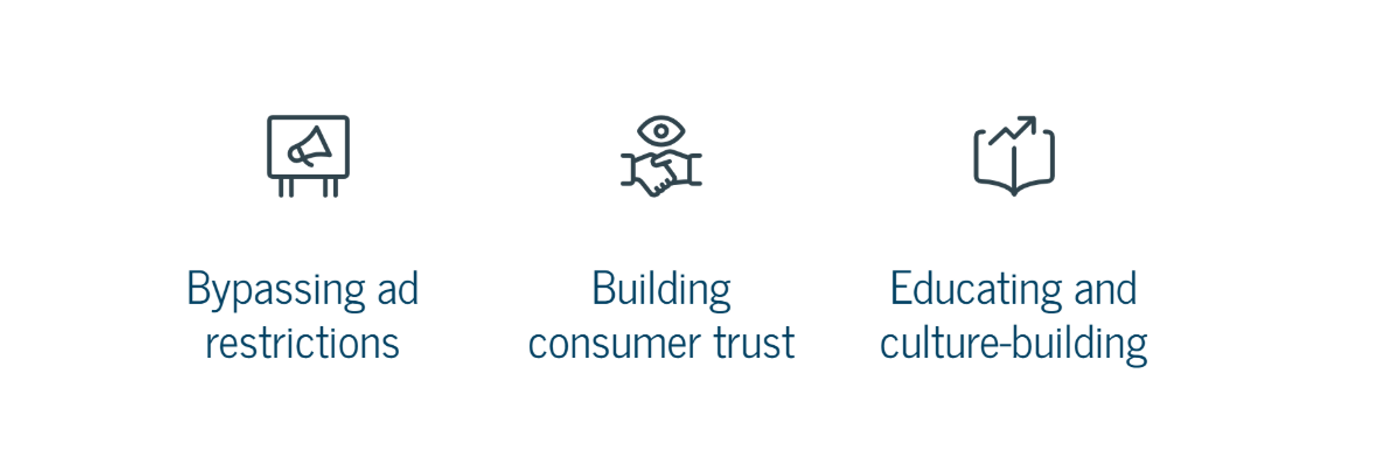
Most industries run creator partnerships alongside paid ads. Cannabis brands generally can’t. Major social media platforms restrict or prohibit paid cannabis advertising, which means many of the audience discovery, targeting, and retargeting tools other industries rely on simply aren’t available.
Content creators, however, can still talk about cannabis and related topics, as long as their content doesn’t cross into prohibited product promotion. That makes them a valuable way for brands to reach audiences they can’t access through traditional paid channels.
There's a second important reason: trust. Cannabis sits inside a legal and cultural gray zone for a lot of consumers, and recommendations from creators who already use the product can carry a lot of weight. A dispensary mentioned by someone a consumer already follows can feel more like a referral than an advertisement.
That makes creator selection about more than creative ability or audience size. It requires judgment around compliance history, audience fit, and risk tolerance, too. The strongest partnerships are often those where creators can educate their audiences and help build cannabis culture without making every piece of content feel like a direct product advertisement.
For brands, that means finding creators who can build trust and awareness while staying within the boundaries of what they can safely promote.
Rules For Cannabis Content: Meta, TikTok, X, Reddit, and YouTube
Every platform treats cannabis differently and the rules shift often, so content that worked six months ago can get an account flagged today. Brands and creators should always check the latest platform policies before publishing or promoting cannabis-related content.
Instagram and Facebook
Meta permits lifestyle, educational, and brand-storytelling content. What it doesn't allow are medical claims or anything that functions as a sale, such as pricing, discount codes, “DM to order,” or direct storefront links. When it comes to ads, legal CBD products can be advertised with a LegitScript certification and Meta’s approval.
TikTok
TikTok is the strictest platform for this category. Cannabis visuals and videos of consumption risk removal under its controlled substances policy. If you search for “cannabis” or “marijuana,” the platform will redirect to a substance awareness page. However, searches for CBD or misspelled terms like “cannabiz” may surface videos where creators discuss the topic.
Want to put this into practice?
SideShift connects you with vetted UGC creators who actually deliver. Start your free trial and post your first job in under 10 minutes.
YouTube
YouTube allows educational and review-style content, generally with age restrictions applied, but not unrestricted monetization or direct store links in a description. This makes it useful for long-form, search-driven content, such as strain reviews, dispensary tours, and cultivation explainers, that have evergreen value.
X (Twitter)
X takes a more permissive approach to cannabis-related content, and licensed cannabis brands may be eligible to run paid promotion in certain legal U.S. markets, provided they meet X’s licensing and advertising requirements and do not promote or offer the sale of cannabis.
Reddit allows cannabis-related discussion, but each subreddit has its own rules. Large communities like r/trees, r/weed, and r/cannabis allow genuine discussion but often enforce strict anti-promotion rules. Reddit restricts direct sales of recreational drugs, while CBD ads are allowed in the U.S. subject to certain restrictions.
How State Laws Affect Influencer Marketing For Cannabis
Platform policies operate alongside state laws that determine whether cannabis can be legally sold and what businesses can promote. As of 2026, 24 states have legalized recreational cannabis for adults 21 and older, while 16 states have legalized medical cannabis programs.
The same piece of content may be allowed in one state but raise compliance concerns in another. Brands can help manage these differences by geo-targeting campaigns to appropriate markets and closely monitoring changes in legislation. Platforms may also restrict ads from targeting markets where cannabis remains illegal.
Cannabis Influencer Partnerships: Finding the Right Creators
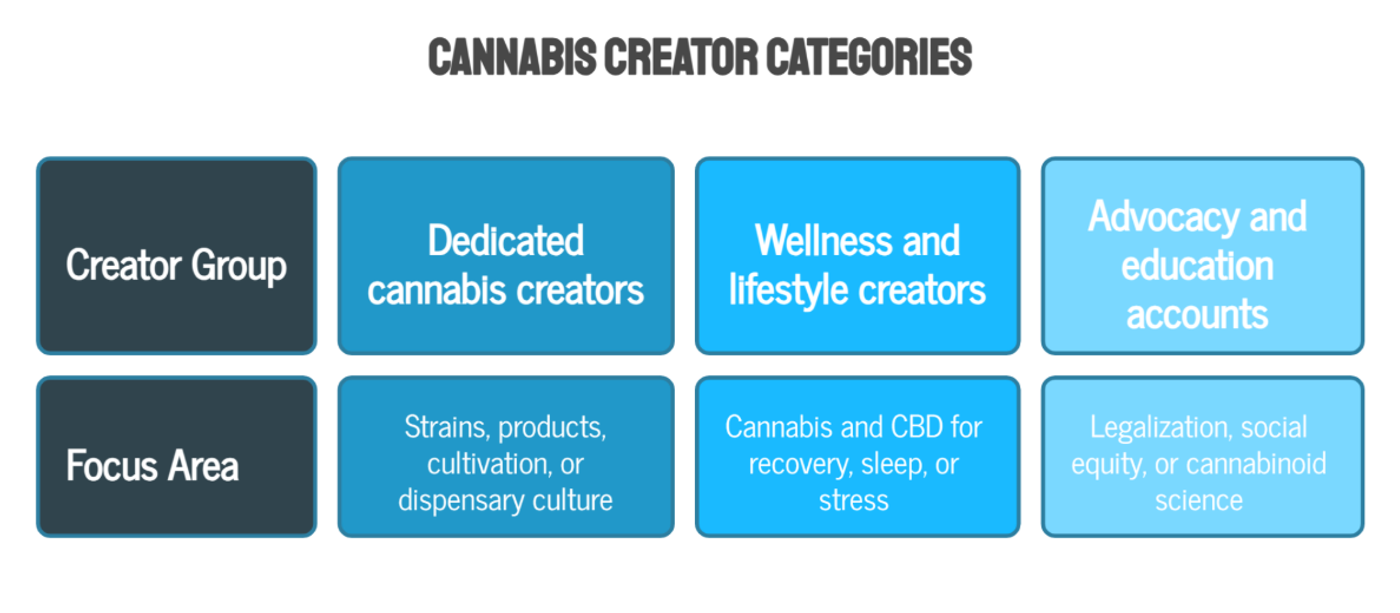
The cannabis creator landscape falls into a few distinct groups:
- Dedicated cannabis creators post primarily about strains, products, cultivation, or dispensary culture. Their audiences are highly relevant but often capped in size, since platform restrictions limit how much cannabis-specific content can circulate organically.
- Wellness and lifestyle creators talk about cannabis and CBD as part of a broader routine (e.g. recovery, sleep, stress management) without necessarily building their whole platform around it.
- Advocacy and education accounts focus on legalization, social equity, or cannabinoid science, and typically face less moderation since their content centers on education and information rather than consumption.
Each type of creator can serve a different role in a cannabis marketing strategy. Lifestyle creators are particularly valuable for normalization and broad awareness, showing how a brand can fit naturally into an adult routine. Cannabis advocates and education-focused creators can be stronger when a category requires more explanation, credibility, or nuance. The strongest programs often use both: lifestyle creators make the category feel more mainstream, while advocates add depth and trust.
When assembling a team, brands should look beyond audience size and content quality. Compliance history, past partnerships, and overall brand safety matter just as much. You can do this vetting manually or work with a creator marketplace like SideShift that surfaces this track record upfront. Explore cannabis creators to start building a shortlist.
What a Strong Cannabis Influencer Marketing Campaign Looks Like
The most effective influencer marketing campaigns for cannabis brands share a few traits:
- Run continuously rather than spiking around a single date like 4/20, since concentrating a year's budget into one window wastes the compounding value creator content builds over time.
Want to put this into practice?
SideShift connects you with vetted UGC creators who actually deliver. Start your free trial and post your first job in under 10 minutes.
- Lean on wellness and lifestyle creators just as much as dedicated cannabis creators, because adjacent-category content often carries the same credibility with less platform risk.
- Treat owned channels (e.g. email, SEO-driven blog, a brand's own YouTube library) as the real destination for creator content, since a platform can restrict or shut down content from a cannabis influencer overnight due to shifts in policy.
- Stay on top of in-platform and state-level compliance by avoiding images and claims, and build those guidelines directly into the creator’s brief, since a content flag or account suspension can affect the brand’s image.
Scale Your Influencer Program with SideShift
If paid ads are off the table and organic reach alone isn't moving the needle, the fix isn't simply a bigger budget. It's a repeatable system for finding the right creators, briefing them within platform guidelines, and tracking what converts.
SideShift helps brands source pre-vetted, niche-relevant creators and manage briefs, content rights, approvals, and performance data in one place, so scaling past a handful of partnerships doesn't mean scaling the manual work along with it.
FAQs
1. Can cannabis brands run paid influencer ads on TikTok?
No. TikTok has strict restrictions around cannabis and other controlled substances, and paid promotion of cannabis-related content is generally not permitted. Organic content can also face restrictions or removal depending on what it depicts.
2. Which platform is best for cannabis brand marketing in 2026?
There's no single best one, as each serves a different purpose. Instagram works well for visual brand identity, YouTube for long-form, search-driven content, X for related content and certain paid campaigns in eligible U.S. markets, and Reddit for reaching informed audiences through genuine community participation. Most brands benefit from a presence across several platforms.
3. Are wellness or fitness influencers a good fit for CBD and cannabis brands?
Often, yes. Creators whose primary content is fitness, wellness, or recovery can be a good fit when cannabis or CBD is presented as part of a broader routine rather than the focus of the post. This approach may also reduce some of the risks associated with dedicated cannabis content, while still reaching an interested audience.
4. Where can you find cannabis influencers?
If you’re a brand looking to work with cannabis influencers, a creator marketplace like SideShift can help you discover creators and review their track record before starting a partnership.