


Brand Deals For Small Creators: Realistic Tips To Get One
No massive following? No problem. Here are a few tips to find and land brand deals for small creators, whether you're a nano creator or micro influencer.
Table of Contents
As a nano or micro influencer searching for brand deals for small creators, you’re probably tired of hearing “Just grow your following first” as advice. And you’re right, more followers is not the answer (and definitely not easy to achieve quickly).
Brands working with a limited budget or testing a new creator strategy often prefer nano (1,000-10,000 followers) and micro (10,000-100,000 followers) creators over bigger names, and not as a consolation prize.
Smaller creators often have more engaged audiences, rates that let a brand test a partnership, a product angle, or a new audience without committing a huge chunk of their budget to one creator, and more authentic-feeling content than mega influencers that post sponsored content five times a day.
The takeaway: You're not competing with mega influencers for the same deals. You're playing a different game, one where your small following is not the only deciding factor but can actually play in your favor. This guide walks you through the realistic, practical steps to start landing brand deals at whatever size you're at right now.
4 Tips to Get Brand Deals as a Small Creator
These tips focus on the essentials you have to be considered for a brand partnership and where to look for opportunities in the first place.
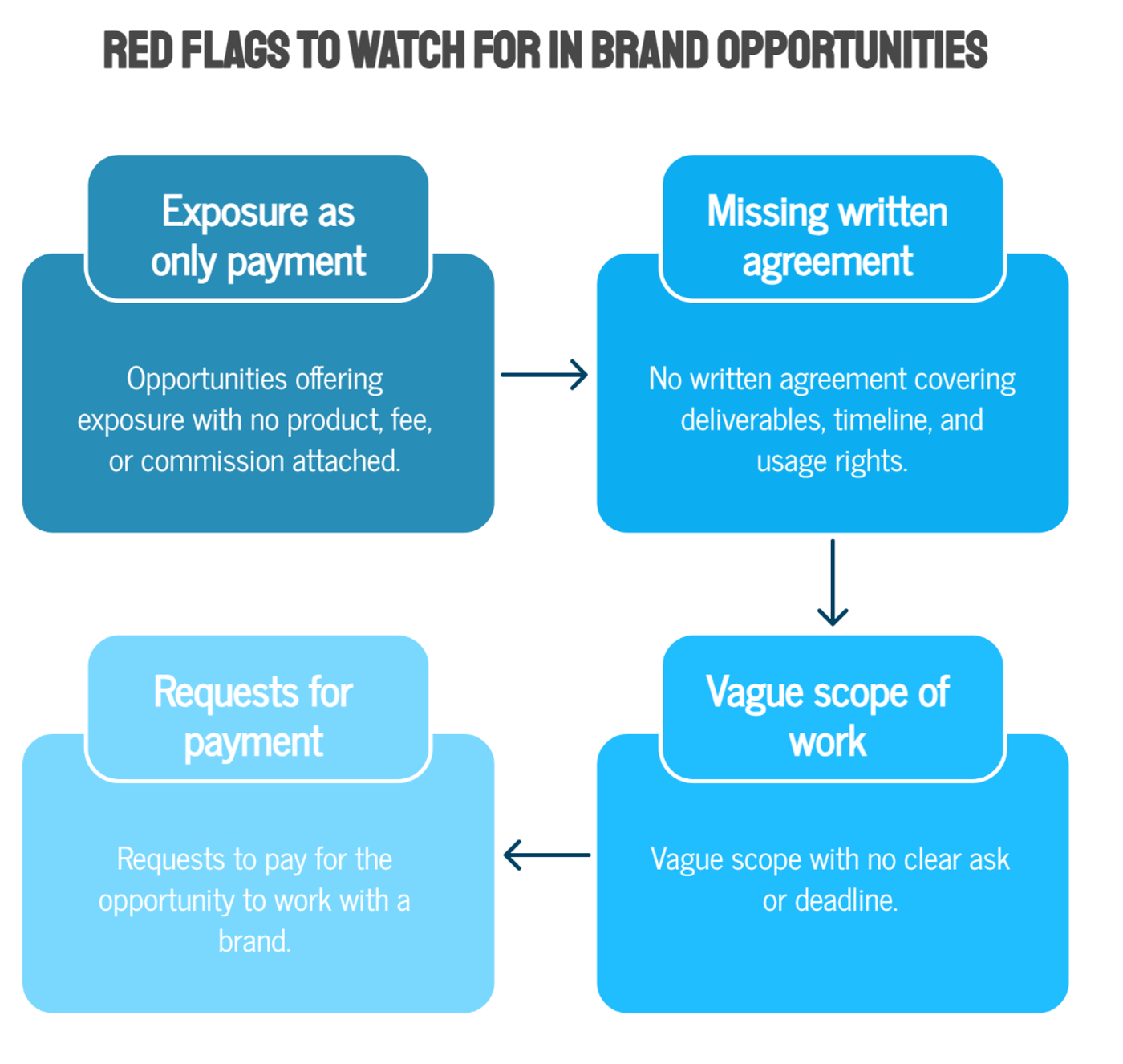
1. Create a Consistent Personal Brand
You don’t need overly produced videos. Brands actually love content that feels native to the platform. But inconsistent content, a flaky posting schedule, and bad behavior on social media can send the wrong message and push brands away.
A brand scrolling your page should be able to tell within a few posts what kind of creator you are and what a sponsored post from you would look like.
Do this instead:
- Define a clear niche. “Lifestyle creator” is too broad. “I make quick dinner recipes for people who hate meal prep” tells a brand exactly who your audience is and what type of content you make. A defined niche also makes it easier for you to say no to deals that don't fit, which keeps your page consistent and your audience's trust intact.
- Have a consistent posting rhythm and content type. Brands are evaluating whether you'll actually deliver on time and in a format they can predict. You don't need to post daily, but you do need a rhythm you can sustain and a recognizable lane, whether that's a specific video format, a consistent aesthetic, or a recurring content series.
- Keep a clean, professional presence. Brands vet creators before reaching out, and a page full of unresolved controversy or unprofessional conduct in comments and captions is an easy reason to pass, regardless of how good your content is. This doesn't mean sanitizing your personality, but being thoughtful about what you post and how you engage: responding to comments, avoiding unnecessary drama, and generally acting like someone a brand would feel safe attaching their name to.
2. Create Your Media Kit or Portfolio
Skipping self-promotion is a luxury only macro and mega influencers have. As a nano or micro creator, you should have a media kit or portfolio linked in your profile. (If it sounds like you’re applying for a job is because, technically, you are.)
Want to put this into practice?
SideShift connects you with vetted UGC creators who actually deliver. Start your free trial and post your first job in under 10 minutes.
Here’s what you should include:
- Basic information: your niche, audience demographics, and your contact info.
- Introduction: a short “about me” blurb that explains who you are and why your audience trusts you.
- Basic engagement stats: such as your average likes, comments, saves, and reach per post from your platform's native analytics. Brands care about this more than your total follower count, since it's the clearest signal of whether your audience actually pays attention.
- Your best content: three to five posts that show your content style, how you talk about products, even if it’s not sponsored. Pick pieces that represent the range a brand might actually ask for, like a talking-to-camera video and a product-in-use clip, for instance.
Remember that brands are hiring a voice, not just a stat sheet. They should be able to look at your portfolio and picture exactly what their campaign would look like on your page.
Your media kit doesn't need to be fancy, it needs to exist, and it needs to be easy to update as your numbers change.
3. Look for Opportunities in Small-Creator Friendly Spaces
As a small creator, you may not be in the position to make a partnership with a multi-billion dollar tech company yet. Look for businesses that are usually more prone to work with nano and micro influencers and position yourself in the right places to be found.
- Creator marketplaces: Platforms like SideShift connect brands actively looking for nano and micro creators with the creators themselves, cutting out a lot of the cold outreach. You build a profile, apply to open campaigns, and brands can find and message you directly, which is often the fastest way to land a first paid deal without a network.
- Hashtag research: Search hashtags and tagged posts in your niche to see which brands are already working with creators your size. If a brand is regularly reposting nano influencers, they're an easier target than one that only works with celebrities.
- Local and small businesses: A local coffee shop, boutique, or service business is far more likely to say yes to a nano creator than a national brand is, and these relationships are a great way to build real case studies for your media kit.
4. Start with Affiliate or UGC-Only Deals to Build a Track Record
If flat-fee sponsorships feel out of reach right now, affiliate and UGC deals are a realistic way in. In an affiliate marketing arrangement, you earn a commission when your content drives a sale, so there's no follower minimum a brand needs to justify paying you.
There are also in-platform affiliate partnerships, like Instagram’s affiliate program. These let you start earning through product links or in-app tags without needing to be handpicked by a brand first. It's a low-barrier way to build a track record and some income while you pitch bigger deals.
Want to put this into practice?
SideShift connects you with vetted UGC creators who actually deliver. Start your free trial and post your first job in under 10 minutes.
In a UGC deal, you're paid to produce content for a brand, often to post on their own channels rather than yours, which means brands are evaluating your production quality and storytelling, not your reach at all.
Both are lower-pressure ways to get your first paid brand relationship on record, build case studies for your media kit, and work out your process before you're negotiating bigger flat-fee deals.
How to Pitch a Brand Directly
A cold pitch works when it's specific. Brands get generic “I'd love to collab!” messages constantly and ignore almost all of them.
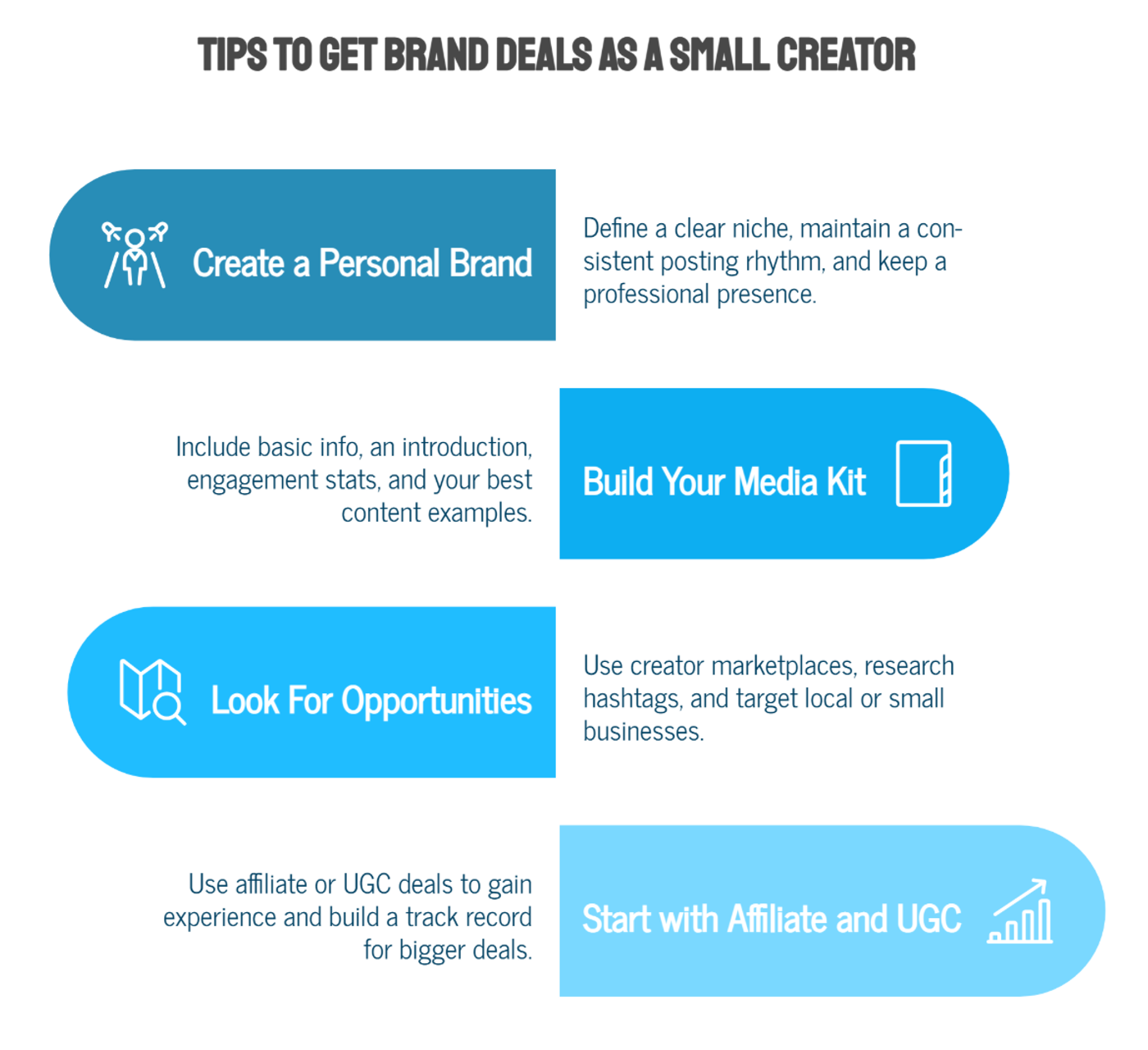
- Do five minutes of research first. Know what the brand sells, who their audience seems to be, and whether they've worked with creators before. Reference something specific in your message.
- Lead with what you'd actually make. Instead of just asking if they do collabs, describe a concrete content idea: the format, the hook, and why it fits their product. Brands are more likely to respond to ideas, not requests.
- Attach your media kit and a couple of relevant content examples. Make it as easy as possible for them to see your work without clicking through your whole profile.
- State your ask clearly. Whether it's a gifted product, a flat fee, or an affiliate arrangement, say so. Vague pitches get vague (or no) responses.
- Follow up once. A single polite follow-up after a week is normal and often what actually gets a reply. More than that starts to feel like pressure.
If you don't want to go through that process, a creator marketplace can do the work for you. Platforms like SideShift allow creators to build a profile once and apply to campaigns from brands who are already looking for creators your size, which skips the cold outreach entirely and puts the response rate back in your favor.
Red Flags to Watch For in Opportunities
Not every opportunity is worth your time, especially early on when it's tempting to say yes to anything.
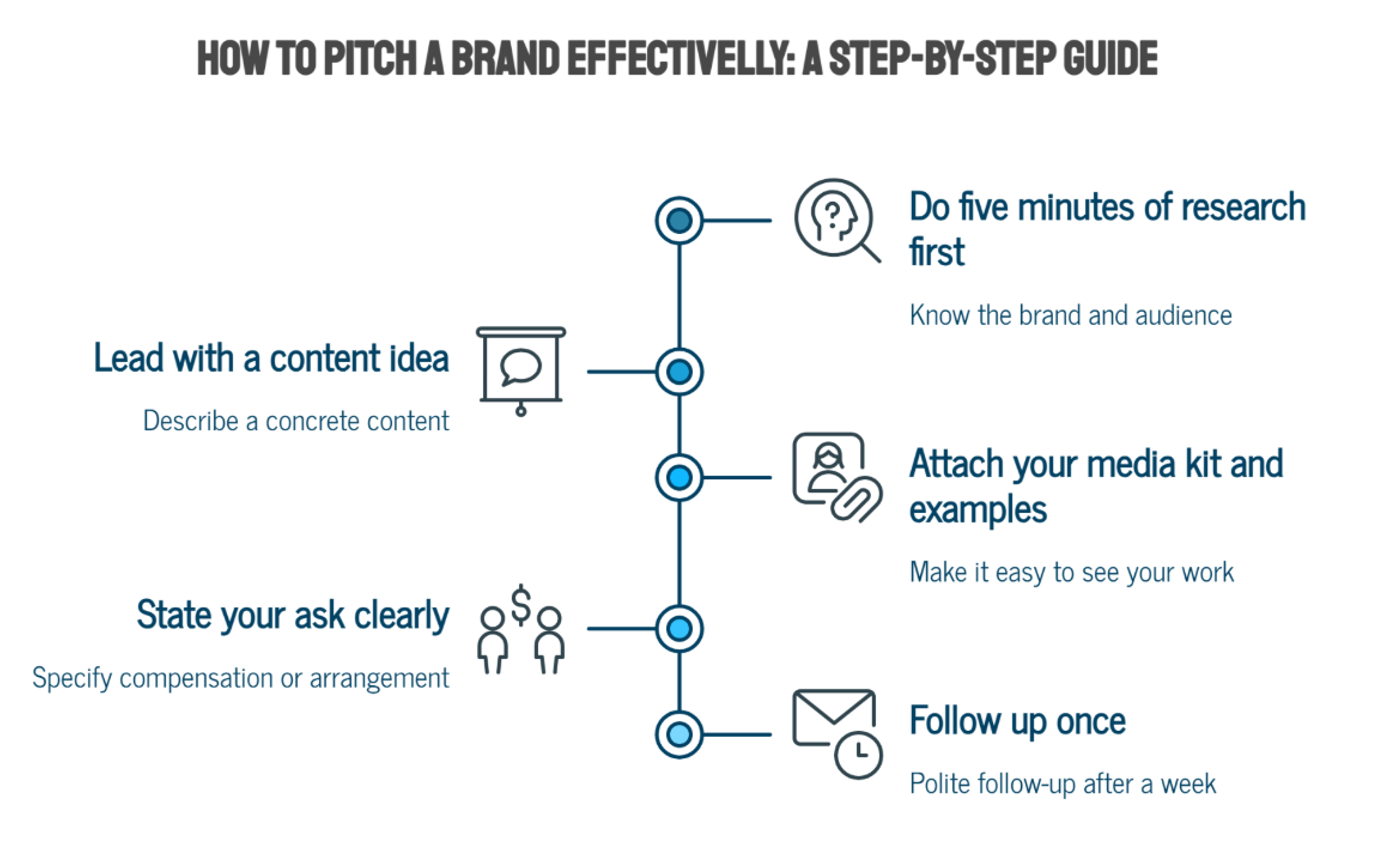
- Exposure as the only payment, with no product, fee, or commission attached
- No written agreement covering deliverables, timeline, and usage rights
- Vague scope (“just post about us sometime”) with no clear ask or deadline
- Requests to pay for the “opportunity” to work with a brand
A gifted product in exchange for content can be a fair trade early on, especially with a brand you genuinely like. The red flag isn't the gifting itself, it's a brand that expects real deliverables while offering nothing concrete in return.
Find Brand Deals with SideShift
Landing that first deal is the hardest part, and a lot of that difficulty comes down to not knowing where brands are actually looking. SideShift removes the guesswork by putting your profile directly in front of brands actively hiring creators your size.
Build your profile, showcase your content and engagement, and apply to campaigns from a base of 1,500+ brands looking for creators across every niche, from food and beverage to beauty and tech. No cold DMs required, you can simply apply for a project and be contacted directly by brands.
Want to put this into practice?
SideShift connects you with vetted UGC creators who actually deliver. Start your free trial and post your first job in under 10 minutes.
Join SideShift for free today.
FAQs
1. How many followers do I need to get brand deals?
There's no universal minimum. Brands running UGC campaigns regularly work with creators in the 1,000 to 10,000 follower range, sometimes lower, as long as engagement and content quality are strong.
2. Can I get brand deals with under 1,000 followers?
Yes, it’s possible to get sponsored with few followers, especially through affiliate programs, UGC-only deals, or local business partnerships, all of which prioritize content quality and niche fit over reach.
3. How much should a nano or micro influencer charge?
Rates vary by platform, niche, and deliverables, but many nano and micro creators start with flat fees in the low hundreds per post, or with commission-based affiliate arrangements that scale with performance. A media kit with your engagement stats helps you set a defensible rate.
4. Where to find brand deals for micro influencers?
The most reliable places are creator marketplaces like SideShift, where brands actively looking for micro-tier creators post open campaigns, plus Instagram affiliate programs (and other similar initiatives), brand tags in your niche, and local businesses that are often more open to micro creators than national brands.
5. How do brand partnerships for nano creators work?
Most nano creator partnerships start small: a gifted product, a flat fee in the low hundreds, or a commission-based affiliate arrangement rather than a large retainer deal. Brands typically ask for a media kit, a couple of content examples, and a clear proposed deliverable before agreeing to terms, so nano creators who come prepared with those assets tend to close deals faster than ones who wait to be discovered.